How to Spend a Week in Nepal
Seven days in Nepal offers the perfect blend of nature and culture, adventure and relaxation. The country has something to offer for all kinds of travelers whether looking for an active or relaxed experience. With a week-long tour you can expect to explore some of the nation’s most famous sites, from the frenetic streets of Kathmandu to serene lakes in Pokhara and even absorb the beauty of the Himalayas. While a week’s period may not be enough to hike to Everest Base Camp or take other longer expeditions, it is sufficient to experience Nepal’s diverse landscapes and cultures.
For the intrepid tourist a week in Nepal is the perfect opportunity to embark on short treks for incredible Himalayan vistas. Besides, you can paraglide above Pokhara’s stunning lakes, white-water raft on Nepal’s fast-flowing rivers or go on a Chitwan National Park wildlife safari to spot Bengal tigers and rhinos. Even within the limited time, these activities will give you an exciting and memorable experience of the nation’s natural beauty and adventure potential.
At a cultural level, seven days is enough to soak up Nepal’s traditional and historic threads. Begin in Kathmandu with visits to Swayambhunath, Pashupatinath and the medieval city of Bhaktapur, renowned for intricate Newari architecture. In Pokhara, visit Bindabasini Temple, Gupteshwor Mahadev Cave or a World Peace Pagoda to take in its peacefulness and spirituality. All of these places have something special to offer from Nepal’s heritage and culture, with so much to see in a short time.
Spending a week in Nepal is most likely to leave you with an awe for the stunning landscapes, vibrant culture, thrilling adventures and warm hospitality. Regardless of whether you are hiking in mountains, exploring ancient temples or looking for peaceful retreats, it offers all that to make you return again and again.
Top Places to Visit in Nepal During a One Week Stay
Kathmandu
Being Nepal’s cultural hub and capital, Kathmandu is the best place to start your tour of the country. With its old temples, lively marketplace and vibrant vibe the city welcomes visitors to a plunge into the core of Nepal’s culture and history. Whether you feel like discovering historical landmarks, interacting with the people or immersing yourself in the city’s energetic atmosphere, Kathmandu has something for all visitors.
The city itself houses four of the marvelous UNESCO World Heritage Sites of the Swayambhunath Stupa, Pashupatinath Temple, Boudhanath Stupa and Kathmandu Durbar Square. These ancient monuments exhibit the cultural and religious richness of Kathmandu and the elegance of medieval architecture. With a stay of a week in Nepal you can visit all these sites and experience the essence of Nepal’s past and cultural and spiritual existence.
Besides, the narrow streets in the city center are lined with several eateries, cafes and shops. You can shop for souvenir goods like pashmina scarves, local handicrafts and intricate jewelry. Strolling along crowded alleys you can chat with friendly locals who will share their stories about their history, traditions and culture. It is also a good opportunity to sample genuine Nepalese street food, so a visit is well worth taking for foodies and culture vultures alike.

Bhaktapur
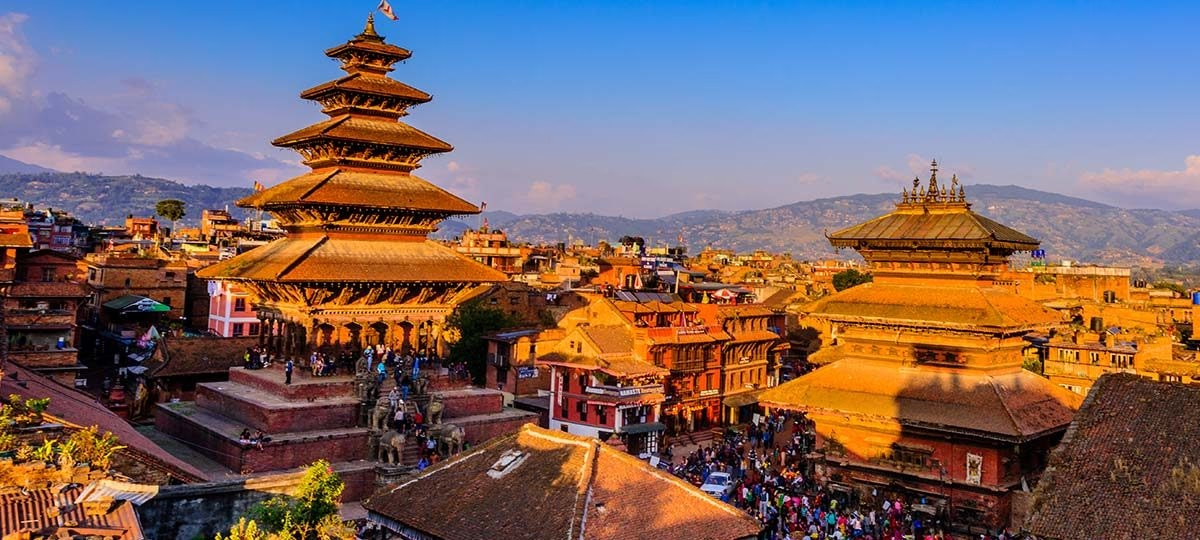
Bhaktapur is generally numbered among the best-preserved medieval cities of Nepal. It gives a glimpse into Nepal’s cultural past. Unlike the more congested roads of Kathmandu, Bhaktapur is serene in its ambiance which transports you to a time warp. The city boasts well protected Newari architecture of temples, courtyards and palaces built in intricate wooden and brick architecture.
The UNESCO World Heritage Site of the Bhaktapur Durbar Square is the city’s centre with masterpieces like the Vatsala Temple, Fifty Five Window Palace, Nyatapola Temple, Golden Gate etc showcasing the beauty of traditional architecture.
While walking through the narrow city streets you can see people carrying on their ancient traditions from pottery to weaving. Besides, the city is famous for its cuisine, most notably juju dhau, a creamy, full bodied yogurt that is an absolute delicacy. Another worth trying is yomari, a traditional Newari cuisine of steamed rice flour dough filled with sweet fillings like jaggery and sesame seeds. These culinary delights coupled with the rich cultural heritage makes the city a mix of history, tradition and authenticity.

Chitwan
Located in the Terai lowlands, Chitwan is a paradise for wildlife enthusiasts. Nature lovers and adventure seekers are also greatly delighted by the visit to the renowned UNESCO World Heritage Site of the Chitwan National Park in the place.
This biodiverse region is home to a wide variety of wildlife such as the one horned rhinoceros, Bengal tigers, Asian elephants, Sloth Bear, Wild Boar etc. The adventurous jungle safari in the park on a jeep or elephant back allows you to see these graceful creatures in their natural habitat. Besides, a guided bird watching tour will allow you to see an incredible diversity of birdlife from colorful kingfishers to the eye catching hornbill while gaining information about their habitat and behavior from a knowledgeable guide.
You will also have the opportunity to take a canoe ride on the Rapti River where you can see sunbathing crocodiles, bathing elephants and other species of aquatic and amphibious. In addition, the visit to the Elephant Breeding Center will allow you to learn how these giant creatures are conserved and protected.
The region is also rich culturally with the Tharu inhabitants offering firsthand knowledge of their unchanged way of life through local cuisines, village tours and traditional dance performances. Overall, Chitwan is perfect for you if you want a mix of adventure, nature and culture.

Pokhara
Pokhara is one of Nepal’s most scenic cities due to its stunning and abundant natural scenery spreading everywhere. More importantly, the panoramic views of the snow capped mountains provide the perfect backdrop for your outdoor activities in Pokhara.
You can take a relaxing boat ride on Phewa Lake while enjoying the view of the Annapurna range or catch the sunrise over these mountains from nearby Sarangkot Hill. You can visit Tal Barahi Temple, a picturesque pagoda-style architecture situated on a small island in the middle of the lake.
Paragliding is among the popular adventure activities in Pokhara offering an exhilarating flight over the Phewa Lake with panoramic views of the city and the Himalayan peaks. For those seeking more adrenaline, zip-lining, canyoning and mountain biking are available. Besides, Pokhara is a cultural sightseeing haven with the International Mountain Museum, Bindhyabasini Temple, Gupteshwor Mahadev Cave and World Peace Pagoda being the main attractions.
In addition, the town features its picturesque lakeside area where strolls can take you for eating, shopping or just sitting in and watching beautiful views. Overall, there is so much to get involved with between adventure, exploration and rest.

Lumbini
Lumbini which is located in the Terai plains of Nepal is a site of great spiritual significance. It is the birthplace of Lord Gautam Buddha and a wonderful UNESCO World Heritage Site.
Lumbini draws pilgrims and travelers from around the world who wish to witness the origins of Buddhism. The center of Lumbini is the Maya Devi Temple which marks the precise spot where Queen Maya gave birth to Buddha in the 6th century BC. The temple complex is surrounded by sacred gardens, holy ponds and a number of monasteries each built by different nations which shows Buddhism’s global presence and influence.
Visitors can also go to the Lumbini Museum which contains the relics and manuscripts of the ancient days about the life of Buddha. You can also view the Ashoka Pillar, a historic place constructed by Emperor Ashoka in 249 BCE announcing the area as Buddha’s birthplace.
The peaceful ambiance of Lumbini makes it an ideal site for contemplation, meditation and spiritual growth. If you are a Buddhist practitioner or just appreciate having some quiet and peaceful spot where you can unwind, then Lumbini gives a very enriching and relaxing experience in your week in Nepal.

Ghandruk
Ghandruk is a picturesque village in the Annapurna Region. It is the ideal destination for anyone wishing to experience the beauty of the Himalayas without undergoing a tough trek. At an altitude of 2,012 meters, Ghandruk offers a relaxed, village based experience for people who prefer an easy visit to the mountains. The village provides astounding panoramic views of the Annapurna, Gangapurna and Machapuchare peaks. The peaceful ambiance of the village and panoramic views of the high Himalayas are a haven for people looking to escape city chaos.
Ghandruk is populated by the Gurung ethnic group who are renowned for their genuine hospitality and unique culture. The traditional stone houses, local crafts and customs, all provide you with a glimpse into the culture and lifestyle of people. The village has the Ghandruk Museum which is a great place to go to gain insights into the history, traditions and artifacts of the Gurung society.
For one week travelers in Nepal, Ghandruk can be a great choice to explore the traditional lifestyle of local people and Marvel at the spectacular mountains. Whether you are an adventure seeker looking to explore treks like the Ghorepani Poon Hill trek or simply wish to dip in the village life of the mountain folk, Ghandruk is a truly enriching experience that makes it a destination you must visit, even on a short trip to Nepal.

Trekking Options
If you are a trekking enthusiast and would like to do it within a week’s period of time in Nepal, you can opt short treks like Shivapuri Nagarkot Trek and the Poon Hill Trek that provide both scenic beauty and a decent cultural experience.
Shivapuri Nagarkot Hike
It is the ideal option for people wanting to experience the Himalayas within a shorter time frame. The trek starts from Sundarijal which is an easy drive from the capital. It takes you across the biodiverse region of the Shivapuri National Park through serene forest trails. On the way, you may encounter a number of wildlife species including monkeys, deer and several variety of birds.
The hike gradually proceeds to Nagarkot which is a hilltop town renowned for sunrise views over the Himalayan range. This walk is straightforward and can be completed in 3 to 4 days and is thus the perfect option for a week’s holiday.

Poon Hill Trek
During your Nepal itinerary 7 days, you can take the Ghorepani Poon Hill trek which is short and moderate through the Annapurna Conservation Area. The treks offer one of the finest views of the Himalayas within just a few days.
Poon Hill Trek is one of the best short treks in Nepal noted for magnificent views of the Annapurna and Dhaulagiri ranges. This trek generally commences from Tikhedhunga or Nayapul which is easily reachable by a short scenic drive from Pokhara. The trek follows trails that are marked well, passing through the traditional Gurung villages having rich local culture and dense rhododendron forest teeming with wildlife.
The most important attraction of the trek is sunrise from Poon Hill (3,210 meters) where you will see a hypnotic and memorable view of the lofty Himalayas bathed in the golden hue of sunrays. The Poon Hill Trek is worth it with its variety of experiences combining natural beauty with cultural exposure and eye filling mountain views.

Trip Customization
We can organize your trip in a way that your time in Nepal is spent exactly as you desire. Whether you are interested in trekking, rafting or simply enjoying the stunning vistas, we can modify the activities so that they suit your pace and nature of experience. Depending on how much time you have and what adventure level you are seeking we will plan a tour to fit all your needs. Based on your preference, we will make sure to craft a personalized experience that maximizes your time spent in Nepal.
Best Time to Spend a Week in Nepal
Autumn
The autumn season (September-November) is generally the best time for a week’s trip in Nepal. This is the post monsoon period when the weather is stable, clean and crisp. For trekkers, autumn provides excellent trail conditions after the monsoon rains have washed them clean.
The weather is pleasant with temperatures ranging from 15 to 20 degrees Celsius during the day in valleys and cooler at higher altitudes which are just perfect for venturing outdoors or sightseeing. Moreover, the air is clear, providing unobstructed views of the surrounding sceneries. Dashain and Tihar festivals fall at this time adding more charm to the trip.
Spring
March to May in spring is also a perfect time to visit Nepal. It is noted for clear skies and comfortable temperatures. Lowland temperatures range from 20 to 25 degrees Celsius while the upper altitude is slightly colder. This is the time when flowers blossom making the scenery colorful and scenic, hence adding beauty to the environment. It brings with it the festival of Holi, which is celebrated in color and spirit giving you a rich cultural experience.
Winter
Winter from December to February is not the optimum time for visiting Nepal. However, it gives you a peaceful atmosphere with less crowd. The cities like Kathmandu, Lumbini and Bhaktapur are less filled in these months and you are able to view the monuments without the peak season chaos.
For the trekkers, there is a possibility of trekking during winter season, particularly at lower altitudes such as Ghorepani Poon Hill Trek and Langtang Valley. The treks to places like Everest Base Camp and Annapurna Circuit, however, are extremely cold with below-zero temperatures at higher altitudes. For those who are well prepared for the cold and who wish to avoid crowds, winter is the ideal time to travel to Nepal.
Monsoon/Summer
The monsoon period (June to August) is the least favorable time to go to Nepal for outdoor activities. Heavy rain during this period is common and the climate overall is hot and humid. Paths usually get slippery and muddy and the risk of floods and landslides in the Terai and hills increases.
However, for travelers who are not interested in trekking and would like to go on cultural tours, Nepal’s cities are still accessible during the monsoon. The rain does not typically fall all day, so you can still visit the temples, markets and explore local life of people in Kathmandu, Pokhara or Lumbini. The monsoon also greens Nepal, especially in the lower altitude regions making the trip even more scenic and refreshing.

To Sum Up,
An ideal week of traveling to the country depends on the activities you want to undertake. Autumn and spring are the best seasons for trekkers, with perfectly clear skies, mild temperatures and stunning Himalayan views. For those seeking to explore around cultural sites, the weather is fine all year. And the monsoon is best to avoid unless you are looking for a less touristy experience.
Must-Try Nepalese Foods at Nepal in a Week
Apart from its beautiful mountains, rich culture and spiritual heritage, Nepal is also renowned for its variety of delicious cuisine. During your Nepal itinerary 7 days, you shall have the opportunity to enjoy delicious and popular Nepalese foods that symbolize the history, geography and culture of the country. Here are some of the Nepalese foods that you just cannot afford to miss:

Dal Bhat
Dal Bhat is the Nepali staple consumed by citizens across the country, often twice daily. It is simply steamed rice (bhat) served with lentil soup (dal). The dal is typically seasoned with turmeric, garlic and cumin to make for a soothing and pungent meal. Dal Bhat can be complemented with various side dishes such as vegetables (tarkari), pickles (achar) and even sometimes meat curry. It is a healthy, comforting meal that will fill your stomach the whole day.

Momo (Dumplings)
Momo is the prominent street food in Nepal. It is usually a vegetable or meat-filled dumplings mixed with spices and herbs. Momo can be fried or steamed and accompanied by a spicy, tangy dipping sauce. Regardless of whether you enjoy it as a snack or as part of a meal, momo is not to be missed and provide a flavor of Nepal’s vibrant food culture.
Sel Roti
Sel Roti is ring shaped rice donut that is one of the delights during occasions like Dashain and Tihar but is accessible at any time. Made with rice flour, sugar and yogurt, crispy outside and soft within, they are usually consumed along with a glass of tea. You can buy it from any street shops to eat as breakfast or afternoon snacks.
Thukpa
Thukpa is a hot noodle soup which is a popular dish in Nepal. It is typically composed of noodles served in a soup with vegetables, meat and spices. Thukpa is renowned for its warmth and comfort value. Whether you are having it at a local restaurant or as part of a homestay experience, thukpa is a great dish to try while in Nepal.
Yomari
Yomari is a sweet traditional dumpling originating from the Newari people of Kathmandu Valley. It is typically filled with a mixture of jaggery and sesame seeds or condensed milk and afterwards steamed. The dumplings are shaped into the form of fish and serve as a delicacy food. It is one of the must try dishes when you are traveling to Bhaktapur.
Packing Lists Needed to Explore Nepal in a Week
Apparel
Light, breathable clothing for warmer months
Carry trekking clothes like quick drying trousers, t shirts and lightweight thermal layers if you are planning to hike. A fleece jacket, gloves, woolen socks and a warm hat is necessary to stay warm in the mountains.
Waterproof jackets and pants usually for monsoon season trips and also for unexpected rain showers year round.
Sun hat or cap.
Scarves or shawls when visiting temples or religious sites.
Footwear
A pair of sturdy and worn-in trekking boots (if trekking) and light walking shoes or sandals for everyday wear.
Multiple sets of moisture wicking socks.
Comfortable and weather appropriate sleepwear.
Trekking Essentials (if you are planning to do)
Small lightweight backpack for day treks and a larger one for multi day treks.
Trekking poles
Sleeping bag for overnighting in teahouses.
Headlamp or torch with additional batteries.
Travel Documents and Money
A valid passport
Visa
Travel Insurance
Photocopies of important documents
Nepali Rupees
Credit or debit card
Toiletries and Personal Care
Toothbrush, toothpaste and floss
Shampoo and conditioner
Soap or body wash
Deodorant
Quick-dry towels
Hand sanitizer
Wet wipes
Toilets (especially for trekking in remote regions)
Face wipes
Razor or shaving kit
Hairbrush or comb
Lip balm
High SPF sunscreen around 50 +
Electronics
Cell phone and charger
Power bank (electricity can be unreliable if you are venturing in remote areas)
Camera
Travel adapter
Headphones

First Aid and Health Supplies
Personal medications (if any)
Painkillers
Altitude sickness pills
Bandages, antiseptic ointment and plasters
Antidiarrheals
Motion sickness tablets if you feel nauseous on winding road trips.
Insect repellent sprays
Miscellaneous
Notebook or diary
Pen and paper
Travel pillow, eye mask and earplugs
Light snacks
Water bottle
Water purification tablet or filter
UV blocking sunglasses
Dry bags
You May Also Like: