- Duration
- 1 days
- Difficulty
- Easy
- Max Altitude
- 5,545 m(18,192 ft)
- Destination
- Nepal
- Activity
- Tour
- Best Season
- October - May
- Group Size
- 1-5
- Transport
- Helicopter
- Minimum Age
- 8
- Maximum Age
- 80
Trip Highlight
Enjoy a scenic helicopter flight from Kathmandu into the heart of the Everest region
Observe the fantastic bird's eye view of Everest, Lhotse, Nuptse, Ama Dablam, Pumori, Changtse, Thamserku, Cholatse and Kongde Ri
Fly over the Khumbu valley witnessing the mainstream Everest trail, traditional Sherpa villages and breathtaking natural scenery
Touch down at Kala Patthar for a fantastic 360-degree panorama of Mt. Everest, Nuptse, Lhotse, Changtse, Khumbutse, Pumori and Ama Dablam
Spend 8-10 minutes beneath the Himalayas taking pictures and admiring the view
Have breakfast at Hotel Everest View with a panoramic view of the Himalayas with rest period around 45 minutes.
See a side of Everest region beyond its famous peaks; from wide yak pastures and stone villages to rugged mountain trails and remote Himalayan settlements
Marvel at the fantastic views that changes with elevation, from the lush river valleys, thick woodlands to alpine meadows and glaciers
A wonderful opportunity to admire and relish the beauty of eastern Himalayan peaks from up-close without having to trek through a two-week itinerary
Trip overview
Looking at Mt Everest (8,848.86 m) up close, at the hand’s reach, is everyone's dream. And not to sound greedy, but because it really is one of the highest mountains in the world. So, viewing Everest from its base camp is the most popular idea among non-climbers. There are two main ways to reach Everest Base Camp: either the Everest Base Camp Trek or the Everest Base Camp Helicopter Tour.
The classic Everest Base Camp Trek usually takes 12-14 days, a helicopter tour allows you to experience the region within a day. One of the highlights of this tour is the landing at the famous Kala Patthar (5,545 m / 18,192 ft), offering spectacular views of Everest, Lhotse, Nuptse and the surrounding peaks. Another highlight is an optional stop at the Hotel Everest View for breakfast while taking panoramic Himalayan views from an altitude of 3,880 m (12,730 ft).
Unlike trekking, a helicopter tour requires little effort and is ideal for people with limited time, but the rapid gain in altitude means the stop at Kala Patthar is brief, and the flights are dependent on mountain weather and visibility.
Ever dreamed of seeing Mount Everest close up but don't have time for a trek? The Everest Base Camp Helicopter Tour allows you to fly from Kathmandu to the Himalayas, land near Everest Base Camp or Kala Patthar, and take in the breathtaking views of Everest, Khumbu Glacier, and the surrounding peaks in a single day.
Itinerary
DAY 1:Detailed Itinerary of Everest Base Camp Helicopter Tour
5,450 m5 hoursHotel Pickup and Transfer to Domestic Terminal
Our representative will meet you at your hotel and assist you with the transfer to Tribhuvan International Airport's domestic terminal. Upon arrival, you will proceed to the terminal for your scheduled Everest Base Camp helicopter flight.
Check-In at Helicopter Counter
Upon reaching the airport, complete the necessary check-in procedures at the designated helicopter counter. Our team will assist you with the required formalities before boarding the helicopter.
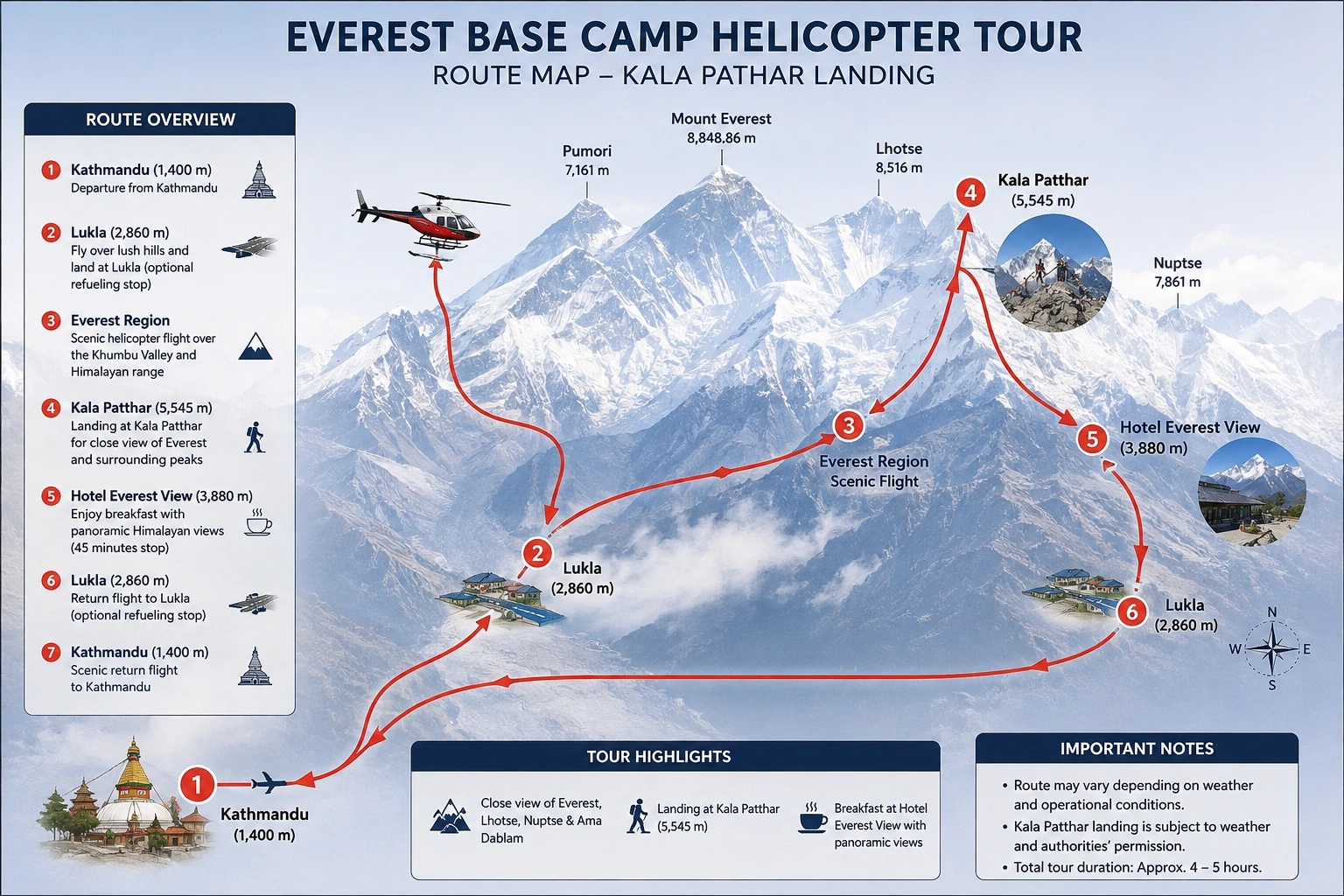
Kathmandu to Lukla
The helicopter departs from Kathmandu and heads toward Lukla, offering views of the changing landscapes as you travel from the Kathmandu Valley toward the Himalayan region.
Refueling at Lukla Airport
The helicopter makes a brief stop at Lukla Airport for refueling. This also provides an opportunity to prepare for the flight toward the higher Khumbu region.
Flight Toward Khumbu, Overflying Everest Base Camp and Kala Patthar
The flight continues toward the Khumbu region, passing over Everest Base Camp and Kala Patthar. From the helicopter, you can enjoy an aerial perspective of the surrounding glaciers, valleys, and some of the world's highest peaks.
Land and Explore Kala Patthar
The helicopter lands at Kala Patthar, allowing you to step out and enjoy close-up views of Mount Everest and the surrounding Himalayan peaks. Due to rapidly changing high-altitude weather conditions, the helicopter can usually remain on the ground for only 8-10 minutes. During this short stop, you can enjoy the scenery and take photographs before continuing the flight.
Flight to Syangboche and Everest View Hotel
The helicopter flies toward Syangboche, where you will have the opportunity to enjoy the mountain scenery around the Everest View Hotel. This section provides panoramic views of Mount Everest and the surrounding Himalayan peaks. Enjoy an optional 45-minute stop at Hotel Everest View for breakfast and panoramic Himalayan views. Breakfast is not included in the package price and must be paid for separately.
Return to Kathmandu and Hotel Drop-Off
After completing the Himalayan flight, the helicopter returns toward Kathmandu. Upon arrival, our representative will assist with your transfer back to your hotel, marking the end of your Everest Base Camp Helicopter Tour.
Looking to Customize This Trip?
We curate bespoke private itineraries tailored to your dates, preferences, and luxury requirements.
Cost breakdown
What's included
Hotel – Airport – Hotel by private vehicles.
Kathmandu to Everest Base Camp -Kala Patthar Landing Helicopter Tour with sharing basis.
Landing charges.
Official expenses.
What's not included
All your food, drinks and personal expenses.
Breakfast at Hotel Everest View Hotel
National Park fee if applicable.
Airport Tax which is 500 NRS
Dates & Prices
Oct 24 – Oct 25, 2026
Oct 25 – Oct 26, 2026
Oct 26 – Oct 27, 2026
Oct 27 – Oct 28, 2026
Oct 28 – Oct 29, 2026
Oct 29 – Oct 30, 2026
Oct 30 – Oct 31, 2026
Oct 31 – Nov 1, 2026
Prices are per person on a twin-share basis. Departures are limited, especially during peak season.
Trip map
Useful information
Everest Base Camp Helicopter Tour: What to Expect?
The Everest Base Camp Helicopter Tour is more than a short flight to look at Mount Everest; it's a short, high-altitude Himalayan experience taking you into the heart of the Khumbu region, where you can see some of the world's highest peaks without spending 12-14 days trekking.
The tour usually begins early in the morning with the helicopter flight from Kathmandu, with stops at Lukla (2,840 m) for refueling or operational arrangements. From there, the flight continues toward Everest Base Camp, passing dramatic valleys, Sherpa villages, glaciers, and peaks like Ama Dablam, Lhotse, Nuptse, and Mount Everest (8,848.86 m). Depending on the flight plan and conditions, you will get an aerial view of the Everest Base Camp at about 5,364 m and the Khumbu Glacier.
One of the major highlights is the Kala Patthar landing at around 5,545 m (18,192 ft). Normally, you only get a short time at this altitude, around 10-15 minutes, because of the thin air, but the view is exceptional. Many tours also include breakfast at Hotel Everest View (3,880 m), where you can enjoy a meal surrounded by panoramic views of Everest and the Khumbu Himalayas.
Because the tour reaches extreme altitude within a few hours, weather and visibility are important factors. Strong winds, clouds, snowfall, or poor visibility can affect the flight or landing. The exact route may therefore change for safety reasons. Overall, expect an early start, breathtaking aerial scenery, a brief high-altitude landing, breakfast with mountain views, and a return to Kathmandu within the same day.

Best Season for Everest Base Camp Helicopter Tour and Weather Guide
Weather plays an important role in the Everest Base Camp Helicopter Tour. The tour can operate throughout the year when conditions are suitable but visibility, wind, clouds and snowfall can affect flight operations. Since mountain weather can change quickly, the final decision depends on the actual conditions on the day.
Autumn (September–November) is generally the best season for an Everest helicopter tour. After the monsoon, the skies are usually clearer and mountain visibility is excellent. Daytime temperatures can be around 15°C to 20°C in lower areas, while mornings and nights are much colder at higher altitudes. October and November are particularly good months for clear views of Mount Everest and the surrounding peaks.
Spring (March–May) is another excellent season, offering clear mornings and good Himalayan visibility. At elevations above 4,000 meters, temperatures can vary considerably, with nighttime temperatures potentially falling to around -15°C. Spring is also the main Everest climbing season, adding another interesting element to the aerial experience.
Winter (December–February) is the coldest season, with daytime temperatures around 10°C to 15°C in some areas and temperatures at higher altitudes dropping below -10°C at night. Despite the cold, dry winter days can provide exceptionally sharp views of snow-covered Everest and other Himalayan peaks.
Monsoon (June–August) brings rainfall, clouds and reduced visibility. Temperatures are milder, but cloudy conditions make flights and mountain views less predictable. Helicopter tours can still operate during suitable weather windows but travelers should allow greater flexibility.
Overall, autumn and spring are the preferred seasons for an Everest Base Camp Helicopter Tour, with October–November and March–April offering some of the best opportunities for clear Himalayan views. Early morning flights are also generally preferred because visibility and flying conditions are often better before clouds and winds develop later in the day.
Even during the best seasons, weather in the Everest region can change unexpectedly. Strong winds, low visibility, clouds or snowfall may cause a flight to be delayed, rescheduled or canceled. Keeping some flexibility in your itinerary is therefore recommended when planning an Everest helicopter tour.

What to Pack for Everest Base Camp Helicopter Tour?
Since the Everest Base Camp Helicopter Tour is a one-day trip, many travelers assume that they do not need to bring anything or take it as a regular day tour inside the valley. While you don't need a heavy trekking backpack or camping gear, the high-altitude environment can be cold, windy, and sunny. A few essential items will make your experience much more comfortable and enjoyable. The things you will require are:
Windproof jacket
Hand gloves and warm hat
Warm trousers or pants
Warm hiking or sports shoes
Sunglass(UV protected)
Sunscreens and lip balms
Camera
Water bottle
Light snacks like energy bars or dry fruits
Diamox for altitude sickness
Who Should Choose the Helicopter Option for an EBC Tour?
The Everest Base Camp (EBC) helicopter tour is designed for travelers who want to experience the world's highest mountain without committing to a long, physically demanding trek. While the traditional EBC trek generally takes around two weeks, a helicopter tour can take you from Kathmandu to the Everest region and back in approximately 4-5 hours, depending on the itinerary and weather conditions.
You should consider the helicopter option if you:
Have limited time: You can experience Everest Base Camp and the surrounding Himalayan scenery in a few hours instead of spending around two weeks trekking.
Prefer comfort and convenience: There is no long walking itinerary, camping, or physically demanding mountain trail.
Are not physically prepared for trekking: The helicopter tour is a great alternative for people who may find the EBC trek too strenuous.
Want to avoid high-altitude trekking challenges: You don't have to spend many days gradually walking toward Everest Base Camp, although altitude can still be a consideration during the landing.
Are traveling with family or older companions: It can be a more accessible way to enjoy the Everest region together, depending on individual health and the operator's requirements.
Want spectacular Himalayan views: The flight offers incredible aerial views of Mount Everest, Lhotse, Nuptse, Ama Dablam, and the Khumbu region.
Want to combine adventure with luxury: A helicopter tour provides a thrilling Himalayan experience while minimizing the physical effort involved.
Everest Base Camp Helicopter Tour Booking Process & Payment
To book your Everest Base Camp Helicopter Tour with Nepal Recreation Tours and Vehicles, simply provide us with a clear scanned copy of your passport, your preferred travel date, and the number of passengers. Our team will then arrange the necessary flight booking and share the confirmation details with you.
For payment, you have flexible options. We accept cash, cards, and online payment for your convenience. Please note that a 4% additional charge applies to card payments, as this fee is charged by the bank/payment service provider. Our team will provide you with all the necessary details and assist you throughout the booking process to ensure a smooth and hassle-free experience.
Cancellation Policy
Cancellations made 7 days or more before the departure date are subject to a 25% cancellation fee, while cancellations made within 7 days of the departure date are subject to a 100% cancellation charge. If the flight is cancelled or disrupted due to weather conditions, technical issues, or other circumstances on our side, we will either provide a 100% refund or reschedule your flight for the next suitable date, based on your preference and availability.

How Safe Is the Everest Base Camp Helicopter Tour and How Many People Can Fly?
The Everest Base Camp helicopter tour is a safe and convenient alternative to the traditional 12-14-day EBC trek, especially for travelers with limited time or those unable to manage long mountain trails. Since the flight operates in high-altitude Himalayan terrain, safety depends on weather, aircraft performance, passenger weight, and the pilot's judgment.
A helicopter can generally carry 4 to 5 passengers during lower-altitude sections, depending on the aircraft, fuel, baggage, and total weight. However, capacity decreases at higher elevations because the air becomes thinner. Everest Base Camp is about 5,364 m (17,598 ft), while Kala Patthar is approximately 5,545 m (18,192 ft).
For a Kala Patthar landing, passengers may be limited to 2-3 people at a time, depending on combined weight and operating conditions. Some operators may allow only two passengers at the highest landing point. High-altitude payload limits can be around 220-250 kg, but the actual limit varies with aircraft type, fuel, temperature, weather, and pilot assessment.
If a group is too heavy for the high-altitude section, passengers may be divided into two shuttle flights from Pheriche or another staging point. This is a standard safety measure that keeps the helicopter within its operating limits.
Weather is a big part of the experience too. Even when everything is ready, the flight can only go ahead if the visibility, wind, and clouds are safe. If the weather changes, the pilot may need to delay the flight, change the route, or cancel it altogether. A little flexibility in your schedule can make a big difference, especially in the mountains, where weather can change faster than expected.
Overall, the Everest Base Camp helicopter tour is a time-saving and practical way to experience Everest without completing the full trek, making it ideal for non-trekkers, families, photographers, and travelers with limited time. Weather checks, weight management, reduced high-altitude loads, and experienced pilot judgment all contribute to safer operations in the Everest region.
Helicopter Pickups from the Everest Trekking Route
Already trekking in the Everest region? Nepal Recreation can help arrange helicopter transfers from selected locations along the Everest trekking route, offering a convenient way to shorten your return journey without retracing several days of walking. Whether you are finishing your trek around Namche Bazaar or returning from higher-altitude locations near Lobuche and Gorakshep, a helicopter transfer can save valuable time and provide impressive aerial views of the Khumbu Valley and surrounding Himalayan peaks.
Potential pickup locations include Lukla (2,860 m), Namche Bazaar (3,440 m), Tengboche (3,860 m), Dingboche (4,410 m), Pheriche (4,240 m), Lobuche (4,940 m) and Gorakshep (5,164 m). However, not every location can accommodate a direct helicopter landing. Pickup arrangements depend on approved landing areas, local restrictions, weather, visibility, aircraft performance, passenger weight, and availability. In some cases, you may need to reach a designated pickup point rather than being collected directly from your lodge.
Transfer Options, Costs and Booking Information
A helicopter transfer from the trekking route differs from a standard Everest Base Camp sightseeing tour departing from Kathmandu. Transfers are arranged according to your current location and destination, while sightseeing tours follow a planned scenic route with designated stops. Depending on availability and your flight plan, you can inquire about one-way transfers to Lukla or Kathmandu, or a separate Everest sightseeing experience.
The final cost depends on your departure point, destination, number of passengers, flight arrangement, and applicable charges. Before confirming your booking, check the total price, airport and landing fees, baggage allowance, passenger weight limits, cancellation terms, and any additional ground-transfer costs. Weight restrictions vary according to the helicopter and operating conditions, particularly at higher elevations.

Weather, Altitude and Operational Considerations
Weather in the Everest region can change rapidly, affecting visibility, departure times, and landing opportunities. Flights may be delayed, rerouted or cancelled when conditions are unsuitable, so allow flexibility in your trekking and onward travel schedule. Confirm the operator's rescheduling and refund policies before departure, especially if you have connecting flights or fixed travel arrangements.
Many pickup locations lie above 3,000 metres, where altitude-related illness can be a concern. A pre-arranged helicopter transfer should not be considered a guaranteed emergency evacuation service. If you or another trekker develops concerning symptoms, seek medical assistance promptly and follow qualified medical advice.
To arrange your helicopter transfer, share your current trekking location, intended destination, travel date, and number of passengers with Nepal Recreation. Our team can check the available options and provide a quotation based on your requested route. Advance confirmation is recommended, particularly for high-altitude pickups, as every flight remains subject to weather, aircraft availability, and operational approval.