- Duration
- 19 days
- Difficulty
- Hard
- Max Altitude
- 5,545 m(18,192 ft)
- Destination
- Nepal
- Activity
- Trekking
- Accommodation
- Hotel in Kathmandu and Tea House in Trekking
- Best Season
- Spring (March–May) & Autumn
- Group Size
- 1-12
- Transport
- Domestic flights, private airport transfers
- Meals
- Breakfast/Lunch/Dinner
- Minimum Age
- 14
- Maximum Age
- 74
Trip Highlight
Crossing iconic high passes: Khongma La Pass (5,535 meters), Tsho La Pass (5,367 meters) and Renjo La Pass (5,362 meters)
Exploring legendary Everest Base Camp (5,364 meters) and hiking to Kala Patthar (5,545 meters)
Trekking through stunning Sherpa villages like Lukla, Namche Bazaar, Tengboche, Gokyo, Lungden, Dingboche and Thame
Opportunity to venture Gokyo Valleys, where you get to witness turquoise glacial lakes and the massive Ngozumpa Glacier
A complete Everest region circuit trek that offers diversity in both landscape and culture
Majestic and stunning vistas of Everest, Lhotse, Ama Dablam, Makalu, Cho Oyu, Pumori and Nuptse
Traversing across a mix of alpine terrains, from rhododendron forest woven trail to high-altitude desert and glacial crossings
A rewarding challenge for trekkers who are seeking adventure, solitude and raw Himalayan beauty beyond the classical EBC route
Trip overview
In the Nepali Himalayas, there are treks that follow well-trodden routes. And then, there is the Everest Three Passes Trek. The way to this trek is a thrilling excursion that dares one to push it further, higher and deeper into the heart and soul of the Himalayas. This is not just merely a trek, it is a passage through some of the most picturesque terrain on earth. Here, every sunrise over the jagged skyline whispers the tales of endurance, silence and transformation.
Winding through the Khumbu region, this odyssey will let you experience the masterwork of nature’s raw and untamed beauty. This journey links the classic Everest Base Camp Trek route with a circuit of three towering Himalayan passes: Khongma La Pass (5,535 meters), Tsho La Pass (5,367 meters) and Renjo La Pass (5,362 meters). Each one of the passes is a gateway into the remote alpine world that is far away from the commercial corridor of the Everest trail.
These passes, high up in the mountain ranges, link with challenges and beauty. At these still and majestic passes, snow-dusted ridges meet endless skies and the silence is so vast that it almost has weight. The three passes trek is designed for a soul-stirring transformation. It does challenge your breath, pace and your limits.
But, in return, it offers you a profound intimacy with the mountains, a sweeping arc of landscapes and a taste of stillness in the world that rarely slows down. So, lace your boots to walk where earth rises into the sky and discover what waits on the far side of each pass.

Itinerary
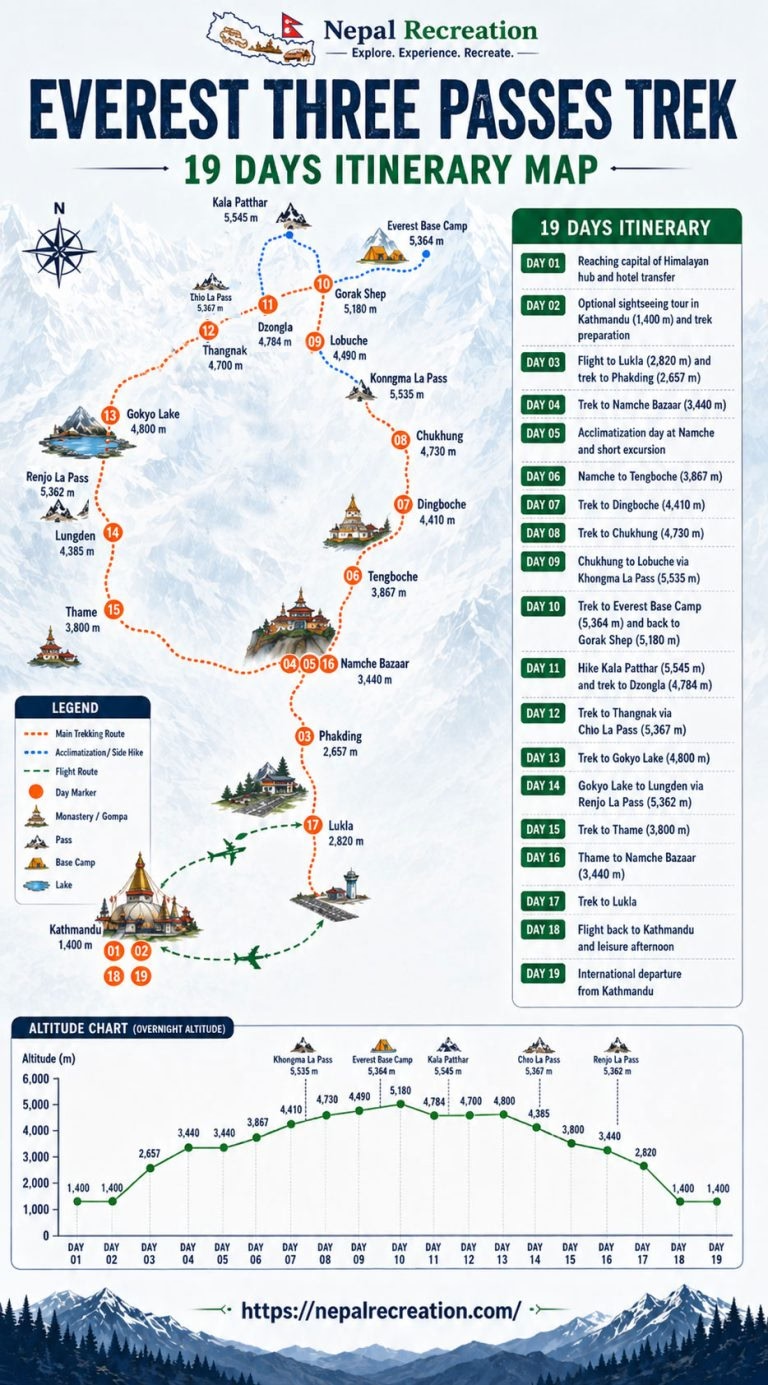
DAY 1:Reaching capital of Himalayan hub and hotel transfer
1,400 m30 minutes 3 star HotelShortly before landing in Kathmandu, you will see a hazy outline of distant peaks. The Tribhuvan International Airport opens its gates to the vibrant city where traditions, architecture and spirituality collide in perfect harmony. Our team will welcome you and bring you to the hotel.
Your hotel will be nestled amidst the cultural heartbeat of the city. Rest, recover and soak in anticipation of the Himalayan journey that lies ahead.
DAY 2:Optional sightseeing tour in Kathmandu (1,400 meters) and preparing for trek
1,400 m7 hours3 star HotelBreakfastToday is the day of gentle immersion into Nepali culture. You will do a sightseeing tour of the select major highlights in the city. You will walk through Kathmandu Durbar Square, sway chants at Swayambhunath and even visit the sacred Hindu temple of Pashupatinath. After completing the city tour, you will then make last-minute preparations for the trek.
This includes securing permits, gear cross-checking, packing essentials and hyping yourself for the thrilling route. The Himalayas are calling.
DAY 3:Flight to Lukla (2,820 meters) and trek to Phakding (2,657 meters): 35 minutes flight and 4 hours trek
2,610 m4 hoursTea HouseB/L/DIn the early morning, a short yet thrilling flight carries you from Kathmandu to Lukla. You will make a touchdown at one of the world’s most iconic high-altitude runways. With the fading of the aircraft buzz, Khumbu air greets you.
After a short rest, your trek begins through Dudh Koshi Valley. The trail meanders past small villages like Chheplung and Ghat. Here, mani stones and chortens line the paths and fluttering prayer flags whisper blessings. Crossing a series of swinging bridges, you will then arrive at Phakding.
It is a riverside village that is nestled in the pine forest. Phakding features quaint lodges and riverside serenity. It is a perfect introduction to the Himalayan lifestyle.
DAY 4:Trek to Namche Bazaar (3,440 meters): 6 hours
3,440 m7 hoursTea HouseB/L/DFrom Phadking, the trail climbs steadily toward the Sherpa villages of Toktok, Benkar and Monjo. Each of these villages is a cultural haven. They are marked by mani walls, yak bells and prayer wheels. At Monjo, you will officially enter Sagarmatha National Park.
There is a checkpoint where your permits will be checked. Trekking beyond Jorsalle on the route further ahead, you will follow Dudh Koshi. You will also traverse the iconic Hillary Suspension Bridge in this stretch. The last formidable section of today’s trail is Namche Hill.
It is a winding ascent through pine forest. But, it is also the stunning point for the first view of Mount Everest, which is at a distance and majestic. You will then finally arrive at Namche Bazaar. It is the largest Sherpa settlement in the region. Namche is a cultural and commercial hub of Khumbu.
DAY 5:Acclimatization day at Namche and short excursion
3,880 m5 HoursTea HouseB/L/DAcclimatization doesn’t mean inactivity. Today, you will hike to higher points to adapt to the thinning air. The popular route takes you Syangboche Airstrip or the Everest View Hotel. Both of which offer breathtaking panoramas of Ama Dablam, Thamseku, Lhotse and Everest.
You can also do alternative hikes to the twin Sherpa villages of Khumjung and Khunde. These twin villages are tucked under sacred Khumbila Peak. There is a monastery in Khumjung that claims it houses a genuine yeti scalp. You can also visit Hillary School, founded by Sir Edmund Hillary in 1961.
Back in Namche, you will rest, rehydrate and prepare for trekking days ahead. The altitude is real now.
DAY 6:Namche to Tengboche (3,867 meters): 5 hours
3,867 m6 hours Tea HouseB/L/DThis day’s trekking trail stretches across dramatic ridgelines beyond Namche. Then, the path drops to the river near Phunki Tenga Village. You will take a break here near the water-driven prayer wheels. After that, it is a steep ascent through a rhododendron forest. This segment is a riot of color in spring.
At the top lies Tengboche, a spiritual center in Khumbu. Tengboche Monastery is a legendary spiritual hub with the stunning backdrop of Ama Dablam. It is one of the most photogenic and revered sites in Nepal. If you arrive early, you can also witness the afternoon chanting ceremony.
Here, you will feel the heartbeat of Himalayan Buddhism that echoes through the valley. Climbers and trekkers take blessings here before moving further with their journey.
DAY 7:Trek to Dingboche (4,410 meters): 5 hours
4,410 m6 hoursTea HouseB/L/DLeaving Tengboche, you will descend through a lush forest of Debuche. Along the way, you will also pass the quiet hamlets of Milinggo and Pangboche. The latter is the oldest Sherpa settlement in the region. You will make a brief stop at Pangbohhce Monastery if time allows.
After crossing Pangboche, the terrain grows starker as trees gradually make way for scrub and stones. On the segment further ahead, you will pass charming settlements of Shomare and Orsho. Here, yak herders graze their animals and trekkers make a brief stop for tea.
There is a wooden bridge over the confluence of the Imja River and the Lobuche River. The path from here rises toward Dingboche. It is a wide and windy valley that is ringed by snow-capped peaks. At Dingboche, Ama Dablam towers to the south and Imja Valley opens up to the east. So, it feels like a doorway to the high Himalayas.
DAY 8:Trekking to Chukhung (4,730 meters): 4 hours
4,730 m5 hoursTea HouseB/L/dToday’s trek in the Everest Three Passes Trek itinerary is short but scenic. It is perfect for acclimatization. After starting your trek from Dingboche, you will move along with Imja Khola to the east. You will walk through wide alpine valleys that are flanked by glaciers and ridges.
There is little vegetation and a high number of rising walls of ice. Thus, this landscape almost feels lunar. Chukhung is a quiet outpost in the shadows of Island Peak and Lhotse. Only a few trekkers venture this far unless they are climbing. So, the lodges here are cozy and unhurried.
Surrounded by mighty walls of rock and ice, Chukhung feels remote and otherworldly. Resting here is like taking a peaceful breath before the rugged pass ahead.
DAY 9:Chukhung to Lobuche (4,890 meters) via Khongma La Pass (5,535 meters): 8 hours
4,890 m10 hours Tea HouseB/L/DToday is one of the most challenging and rewarding parts of the Everest Three Passes Trek itinerary. Before dawn, you will climb steeply out of Chukhung to Kongma La Pass. This is the first and highest of the three passes. Trekking trail winds through glacial moraine, icy boulders and cairn-marked ridgelines.
As you reach the top, prayer flags flutter madly in the wind. The Himalayan panorama also stretches from Makalu to Ama Dablam. The descent is also steep and demanding. You will traverse across Khumbu Glacier before reaching Lobuche. Lobuche is a small settlement that is nestled near the foot of Nuptse.
DAY 10:Trek to Everest Base Camp (5,364 meters) and return to Gorakshep (5,180 meters)
5,364 m8 hours Tea HouseB/L/DFrom Lobuche, the trekking trail snakes through rocky moraines and glacial debris. You will then arrive at Gorakshep. It is the last outpost before Everest Base Camp. After a short rest here, you will push onward to Everest Base Camp itself. Although the summit of Everest is hidden from the base camp, the immense Khumbu Icefall steals the show.
In the peak climbing season, colorful expedition tents dot the glacier. Surrounded by prayer flags and seracs, this sacred ground is the launching point for summit dreams. After absorbing the atmosphere, you will return back to Gorakshep for the night.
DAY 11:Hike to Kalapatthar (5,545 meters) and trek to Dzongla (4,784 meters): 5 hours
4,784 m6 hoursTea HouseB/L/DYou wake up before dawn for one of the most unforgettable sunrise views in the Himalayas. Your ascent to Kala Patthar will unveil the 360-degree panorama of the pristine peaks, which will stun you into silence. From here, Mount Everest is so close that you feel like you could reach it.
Nuptse, Pumori, Ama Dablam and Lingtren also look incredibly majestic. You will see Khumbu Glacier stretching below, glinting and carved. It is a view that doesn’t ask for photos, but for stillness. After descending to Gorakshep for breakfast, the trail breaks westward toward Dzongla.
You will descend through rocky glacial outflow and narrow trails. This segment will offer a fresh perspective on the Cho La region. Dzongla itself is a quiet outpost nestled beneath dramatic cliffs and jagged ridgelines. You will rest in this isolated gem before crossing the next great pass.
DAY 12:Trek to Thangnak (4,780 meters) via Tsho La Pass (5,367 meters): 8 hours
4,780 m9 hoursTea House B/L/DOne of the most dramatic and physically taxing days of this trek is crossing Cho La Pass.. You will begin your adventure before sunrise, climbing steadily over loose rocks and icy slabs. As you approach the foot of the pass, a glacier guards the final ascent.
The top of Cho La feels like a battlefield of ice and sky. It is jagged, wind-blasted and simply exhilarating. Snow often lingers at the summit of the pass and prayer flags flutter widely with the wind. The trail below descends sharply into the rugged valley, which is carved by glaciers.
Winding down into the barren terrain, you will arrive at Thangnak. This is a small hamlet that is tucked against Ngozumpa Glacier. Despite the harsh surroundings, there is warmth at the teahouse. You will take a cozy rest here, preparing for great exploration tomorrow.
DAY 13:Trek to Gokyo Lake (4,800 meters): 4 hours
4,800 m4 hoursTea HouseB/L/DThis is another short trekking day, but it is profoundly scenic. Leaving Thangnak behind, you will traverse the Ngozumpa Glacier. This section is a surreal world of rock and ice. Every step here feels like walking across the spine of a sleeping giant. After careful crossing, the trail ascends gently to Gokyo Valley.
Then, you will get to see Gokyo Lakes, a chain of glacial turquoise jewels. These pristine lakes are cupped between ridges and snow-clad giants. The third lake, Dudh Pokhari, sits beside Gokyo Village. This place is still and spiritual, certainly an oasis at the roof of the world.
DAY 14:Gokyo Lake to Lungden (4,385 meters) via Renjo La Pass (5,362 meters): 7 hours
4,385 m9 hoursTea HouseB/L/DAs you draw closer to the climax of the Everest Three Passes Trek, another epic pass awaits. Your journey begins before dawn and the climb to Renjo La Pass is long. The trail weaves past the upper Gokyo Lakes before rising along narrow zigzag switchbacks.
Although it is a demanding segment, when you reach the top, time will seem to have been frozen. From the summit of this pass, the entire Everest unfruls before you. Everest, Lhotse, Makalu and Cho Oyu stand tall against the horizon. The view here is often considered more impressive than Kala Patthar.
From the summit, you will descend into the Bhote Koshi Valley. It is a steep and dramatic route as you skirt icy slopes and pass ancient stone mani walls. Lunden awaits far below down the road. It is a quiet Sherpa village where trekkers rarely linger. So it has a timeless and untouched air about it.
DAY 15:Trekking to Thame (3,800 meters): 6 hours
3,800 m4 hoursTea HouseB/L/DToday’s trail is a calm and gentle descent along the Bhote Koshi River. The path traces ancient trade routes once used by Tibetan traders. You will walk on worn footpaths lined by centuries-old chortens. Yaks graze lazily in the sun-soaked meadows and the air is filled with the aroma of pine and juniper.
As you close in with Thame, the spiritual energy grows stronger. This high-altitude village is home to a centuries-old Thame Dechen Chokhorling Monastery perched on the cliffside. The quiet surroundings with the flutter of praying flags and timeless chants feel like a sanctuary in the clouds.
DAY 16:Thame to Namche Bazaar (3,440 meters): 5 hours
3,440 m4 hours Tea HouseB/L/DComing back to Namche will feel like visiting an old friend. The path goes down through dense rhododendron and pine forests. Views of Kongde Ri and other distant peaks will add magic to the journey. You will also cross villages as Samde, Phurte and Thamo. These charming Sherpa villages will welcome you with their colorful and chatty greeting.
The quiet presence of mani stones and spinning prayer wheels grounds your journey in the Himalayan tradition. By afternoon, you are back in Namche. The bakeries, gear shops and friendly lodge owner all welcome you back cheerfully after your successful conquest.
DAY 17:Trek to Lukla: 6 hours
2,860 m7 hoursTea HouseB/L/DYour trek on this day will bring a mix of joy and nostalgia. From Namche, the trail dips steeply toward Dudh Koshi. You will retrace your steps across villages like Monjo, Jorsale and Phakding, places you now know well. The trail rises once more to reach Lukla, the final gateway.
DAY 18:Flight back to Kathmandu and leisurely afternoon
1,400 m30 minutes3 star HotelBreakfastYou board the flight back to Kathmandu, watching the mountains shrink into cloud behind you. The city welcomes you with its energy and warmth, in contrast to the quiet height of Khumbu. The rest of the day is yours. Take a hot shower, get refreshed and wander into the temples and alleys that hum with vibrant life.
DAY 19:International departure from Kathmandu
1,400 m30 minutesBAnd when you leave just the city of Kathmandu, you will carry on more than just memories. Although the mountains will lie behind you, lessons-the ones that talk of beauty, resilience, patience, and wonder-stay. Wherever you go next, the Himalayas will echo in your steps.
Altitude Profile
Looking to Customize This Trip?
We curate bespoke private itineraries tailored to your dates, preferences, and luxury requirements.
Cost breakdown
What's included
Airport transfers (arrival & departure)
All necessary trekking permits ( Sagarmatha National Park)
Domestic flights (Kathmandu–Lukla–Kathmandu)
Licensed English-speaking guide.
All meals (breakfast, lunch, dinner) during the trek
Kathmandu Day Tour with Guide.
Three nights tourist standard Hotel in Kathmandu (2 nights before Trek and one night after Trek).
Teahouse accommodations during the trek
First aid kit and oximeter with the guide
Government taxes and service charges
Route Map and Eco Holidays Nepal T-shirt.
What's not included
International flights to/from Nepal
Nepal visa fee on arrival
Travel insurance (mandatory)
Porter if required ($240) Two trekkers can share one Porter.
Personal trekking gear and equipment
Tips for guide and porter
Extra nights in Kathmandu due to early return or delay
Snacks, bottled drinks, and personal expenses
Emergency evacuation costs (if needed)
Dates & Prices
Oct 24 – Nov 12, 2026
Oct 26 – Nov 14, 2026
Oct 28 – Nov 16, 2026
Oct 30 – Nov 18, 2026
Prices are per person on a twin-share basis. Departures are limited, especially during peak season.
Trip map
Useful information
Best Time to Trek
Best seasons (Spring: Mar–May, Autumn: Sept–Nov)
The Everest Three Passes Trek involves a lot of high-altitude, glacial terrains with a bit of difficult-crossings all through. It not only demands physical readiness but also the right environmental conditions. Both autumn and spring offer the most favorable balance of visibility, experience and safety to make the journey memorable.
Spring (Mar to May): It is a vibrant and colorful season in the Khumbu region. As snow starts to melt, the lower valleys start to bloom. Rhododendron flowers splash the hillsides with shades of red and pink. The weather is stable and the skies are typically crystal clear. So, you will be able to enjoy uninterrupted views of Everest, Lhotse and Ama Dablam.
The mornings are crisp and afternoons are comfortably warm at lower altitudes. Snow may still linger on the passes during early March. But by the middle of the month, they are easily passable.
Autumn (Sep to Nov): This is another ideal window for the three passes trek. After the monsoon, the air is clear of dust and haze. The Himalayas emerge in their most pristine form. The trails are also dry and comfortable. Skies remain largely cloud-free and the visibility of the mountain is at its absolute best. Temperatures start to drop gradually by mid-November, especially on passes and at night.
But trek is still enjoyable with good gear. Compared to other seasons, autumn feels more serene and golden. Beautiful festivals like Mani Rimdu, Dashain and Tihar enrich your cultural experience.

Can I trek in Winter (Dec–Feb) or Monsoon (Jun–Aug)?
Winter (Dec to Feb): Winter is a bold but possible choice. The mountains are astonishingly clear and contrast with brilliant blue skies. Untouched snow and almost surreal quietude define this season. However, it does come at a cost. Temperature drops below -20°C at night, lodges remain closed in remote areas and water pipes are frozen.
But the most challenging aspect is that the Himalayan passes are heavily covered in snow. Sometimes they are impassable and even when it is possible, technical gear is essential. If you are an experienced trekker looking for solitude and are equipped for the challenges, you can take part in the exploration.
Monsoon (Jun to Aug): Compared to other seasons, this is the most challenging time for trekking. It is not advisable for most trekkers. The lower part of the trail becomes slippery, leech-infested and prone to landslides. Visibility is often poor due to clouds and rain can persist for days.
Flights in and out of Lukla are frequently delayed or cancelled due to bad weather. At higher up, rain may fall as snow when it’s cold. It further complicated the navigation part on the passes. The weather starts to settle down during the late part of August. The scale of challenges may slightly simmer down, but it is still necessary to be fully prepared.
Trek Difficulty
How Difficult is the Everest Three Passes Trek?
Let’s be honest here. Trekking across three major passes in the Himalayas is not an easy feat. Everest Three Passes Trek is one of the most physically and mentally demanding teahouse treks in Nepal. The standard Everest Base Camp Trek already challenges people with its altitude and terrain.
As for the Three Passes Trek in Everest region, it takes that base and adds three high-altitude passes. These passes have steep ascents and descents. Trekkers sometimes need to traverse across loose scree, ice and even glaciers. The weather is also harsher at altitudes above 5,000 meters.
The lack of oxygen at those elevations adds a layer of complexity. It is not easy to overcome the challenges even for fit trekkers. Some days also include 7 to 9 hours of trekking. It is particularly so during the trek crossing days. The overall journey has been graded as a challenging endeavor.
Trekking days are physically draining and require a good level of stamina, pacing and hydration discipline. Altitude gain also must be managed carefully and rest days are crucial. Yet with all its difficulty, this three pass trek comes with tremendous reward.
Every tough climbing day brings you to a world of silence and the grandeur that few ever experience. If you come prepared, physically, mentally and logistically, this journey is deeply fulfilling.
Is It Suitable for Experienced Trekkers Only?
While it is not mandatory to be a mountaineer or elite trekker, this trek is best suited for trekkers who have prior experience. If you have done prior multi-high-altitude treks like the Annapurna Circuit Trek, the Everest Base Camp Trek, or the Manaslu Circuit Trek, the journey won’t be that demanding.
With experience, you will have a better sense of your body’s acclimatization pattern and stamina. These familiarities are very crucial for high-altitude treks. For beginners, the Everest Three Passes Trek might feel overwhelming. Not just because of altitude, but because of sheer length and remoteness aspects as well.
Still, it’s not completely off the table for the beginners. If you are a new trekker who is determined to do this, you should hire a guide and porters. The guide will help you with navigation, safety and logistics. As for a porter, they help to reduce your physical strain. Both can be critical when you hit those hard trekking days above 5,000 meters.
Physical Fitness and Preparation Required
To prepare for the Everest Three Passes Trek, think of it as a hike. But, not as a regular hike, as an expedition-level challenge which is disguised as a teahouse trek. You will need a mix of cardiovascular, strength and mental resilience. Cardiovascular exercises help with long uphill climbs and altitude stress.
Leg strength and core stability will prepare your body for a tough ascent and for carrying your backpack. As for mental resilience, it will prepare you to tackle cold, fatigue and long trekking days. For this challenging level journey, you should start your preparation at least 2 to 3 months before.
You can include hiking on inclines, stair climbing and altitude practice in your training for a more pleasant result. Also, don’t neglect the mental preparation side. Prepare to embrace discomfort, cold mornings, limited showers, basic food, high winds and long silences.

Trek Route Info
Starting Point (Lukla) and How to Get There?
The journey begins with a thrilling mountain flight from Kathmandu or Ramechhap to Lukla. The Tenzing Hillary Airport in Lukla is a tiny airstrip perched dramatically on the ridge. Most travelers fly via the Ramechhap route during the peak seasons. Flights are usually rerouted from Ramechhap when air traffic is high.
Flights are short (20 to 35 minutes) but are spectacular. In-flight, you will catch the first glimpse of the rugged terrain you are about to explore. There is also a scenic and immersive overland route to reach Lukla on foot. These trails begin from either Jiri or Salleri, two trailheads that are accessible by road.
Route Direction: Clockwise or Counter-Clockwise?
The clockwise direction from Namche> Dingboche> Chukhung> Khongma La> EBC> Tsho La> Gokyo> Renjo La> Thame is the most popular and recommended route. This route allows for gradual acclimatization and strategically places the toughest pass (Khongma La) earlier when trekkers are still fresh.
Going counter-clockwise increases the risk of altitude sickness. Similarly, trekkers will need to face steeper ascents to high passes.
Helicopter or Flight Options
Besides the fixed-wing flights in and out from Lukla, helicopter options are also available for those who are seeking the flexibility of faster access. The helicopter option is especially helpful if the weather delays hit Lukla. You can charter a helicopter between Kathmandu to Lukla, Gorakshep, Gokyo, or Namche for more flexibility and during emergencies.
Accommodation & Food
Teahouse Availability in Remote Sections
One of the great conveniences of trekking in Nepal is the teahouse trekking system. You can complete the entire Three Passes Trek Everest without carrying tents or cooking gear. Along popular stretches of the mainstream route (Lukla to Namche, Namche to Dingboche), teahouses are frequent, comfortable and well-equipped.
As you travel further to Chukhung, Lobuche, Dzongla, Thangnak and Lungden, accommodation becomes sparser and more basic. In the remote corner of the trail, there might be only a few available teahouses. During peak seasons, rooms fill fast. So, start your trek early in the day and pre-book with the help of a guide or agency.
You can expect plywood-walled rooms with twin beds. There will be a basic mattress and thick blankets. But, it is always best to bring a -10°C sleeping bag for comfort.
Food Options Along the Trail
The food along the trail of the Everest Three Passes Trek is surprisingly diverse and hearty. However, the available menus get simpler as you go higher. Most of the lodges offer a standard trekking menu that has been approved by the local lodge committee. This ensures fairness in pricing, quality and availability.
Most common menus at the teahouses are Dal Bhat, Noodles, Fried Rice, Pasta, Momo, Pancake, Porridge, Eggs, Toast, Fries, etc. As for meat items, they are limited and at times absent at higher sections. Most ingredients flow into Lukla and are carried by porters or yaks to higher regions. So, expect higher prices the further you go.

Hot Showers, Electricity, and Wifi Access
Hot Showers: This facility is available at most teahouses below 4,400 meters. After that, it is often a bucket of hot water for a small fee. Solar heating may be inconsistent in colder regions. You can bring wet wipes for days without shower access.
Electricity: You can charge your devices at almost every stop along the trail. But, expect to pay the cost of around US$ 1 to US$ 5 (depending on attitudes). Don’t forget, power banks are gold. Some lodges also use solar, while others rely on micro-hydro or batteries.
WiFi: You will get decent wifi in major stops like Lukla, Phakding, Namche and Dingboche. Everest Link Card System is a popular and reliable way to connect with the world during trek here. As for remote regions, wifi connection may be spotty, slow or nonexistent. Mobile data (Ncell and NTC ) also works in Namche and Tengboche. Beyond those points, the services may not be really reliable.
Cost & Permits
Estimated Cost of the Full Trek
The Everest Three Passes Trek is a once-in-a-lifetime journey and it is also certainly more budget-friendly than many international trekking destinations. However, compared to other shorter treks in Nepal, it does come with a slightly higher price tag. It is especially due to its extended duration, remote location and high-altitude logistics.
On average, you can expect the total cost of the package to range between US$ 1,200 to US$ 2,000. The pricing factor will depend on how you choose to trek, service standard, guide, porter, route taken, side exploration, etc. The standard trek package will cover expenses such as domestic flights, accommodation, food, permits, guide, porter, land transport, government tax, etc.
Trekking with a reputable agency will help you secure a high-value deal at a reasonable cost. They will also ensure safety, local knowledge and seamless logistics. All of these will really be worth it on such a demanding route.
Required Permits:
Permits are mandatory and strictly checked along the route. You will not need a TIMS card for trekking in the Everest region. But, still, two key permits are essential for your journey. You will need to acquire the following permits before starting your trek.
Sagarmatha National Park Permit
Khumbu Pasang Lhamu Rural Municipality Permit
These permits will give you access to a UNESCO World Heritage Site and a rural municipality in Khumbu. The fee for these permits contributes to the protection and conservation of the national park. Similarly, it also supports local infrastructure, environmental preservation and village development.
Note: Carry at least four passport-sized photographs and a copy of your passport. If you are booking through an agency, they will handle the permit requirements for you.
Packing List
Essential Gear for High Passes and Cold Nights
The Everest Three Passes Trek takes place in a setting that requires one to be prepared for harsh conditions. The weather can be unpredictable and is pretty cold at the higher parts of the trail, especially while crossing passes over 5,000 meters. Four-season sleeping bag, down jacket, windproof and waterproof shell gear, headlamp, hydration system, high-altitude sunglasses, etc, are crucial for the trip.

Sleeping Bag, Microspikes, Trekking Poles
A high-quality sleeping bag is crucial for teahouse overnights at high altitudes. Trekking poles help you maintain balance on uneven routes and reduce strain on your knees. They are very important during long descents or icy climbs. Similarly, microspikes are highly recommended. You will need them to cross the Himalayas passes where snow or ice often lingers.
Do I Need Crampons?
For most seasons, full crampons are not necessary. Microspikes are sufficient for traction. However, if you are trekking in late autumn or early spring, there is the possibility of snowfall at the higher regions. Thus, lightweight crampons will offer added security over the icy sections.