- Duration
- 15 days
- Difficulty
- Hard
- Max Altitude
- 5,160 m(16,929 ft)
- Destination
- Nepal
- Activity
- Trekking
- Accommodation
- Hotel and Tea House
- Best Season
- Spring & Autumn
- Group Size
- 1-20
- Transport
- Private vehicle & Local jeep/bus
- Minimum Age
- 12
- Maximum Age
- 75
- Meal
- Breakfast/Lunch/Dinner
Trip Highlight
Breathtaking views Manaslu, Ganesh Himal, Ngadi Chuli, Himalchuli, Shringi Himal, Kang Guru and Annapurna range
A thrilling and memorable journey around the eighth highest peak on earth, Mt. Manaslu (8,163 meters)
Immersing in the Tibetan-Buddhsim influence culture and interacting with Nubri and Tsum ethnic groups
Untouched natural beauty and biodiversity that is rare in more commercialized routes
Epic crossing of dramatic Lake La Pass (5,106 meters), which offers a Himalayan peak expedition experience
Diverse range of terrain from terraced filed, suspension bridged and roaring river to glacier moraine and alpine deserts
Authentic teahouse experience, stay in cozy family-run teahouses that offer insight into Himalayan lifestyle
Trip overview
Tucked away in the mystical fold of Nepal’s mid-western Himalayas lies one of most rewarding and least-trodden trails, Manaslu Circuit Trek. Named after Mt. Manaslu (8,163 meters), this circuit route offers more than just a high-altitude adventure. You will pass through a soul-stirring passage through time, culture and untouched landscape. Unlike its more commercial and popular cousins— Everest and Annapurna— Manaslu region still remains secluded. To this day, it preserves the raw authenticity of Himalayan life.
The trail in this circuit route winds along the banks of the thundering Budi Gandaki River. It carves through lush sub-tropical valleys and rises to the ice throne of Larke La Pass (5,106 meters). In between the route, trekkers will encounter a mesmerizing blend of ecosystems and ethnic diversity. However, this trek isn’t just about the elevation. Each day unfolds the living tapestry of Himalayas. Yak herder guiding their flock across mountain routes, fluttering prayer flags, mountaintop monasteries and distant howl of Himalayan howls through pine trees. Your every step will be a deep exploration of mystical charms of the Himalayas.
Although Manaslu Circuit is physically challenging, it is also deeply humbling. It’s a trail for those who seek solitude over crowd, depth over convenience and genuine connection with nature and culture. Manaslu Circuit offers an unforgettable journey into the spiritual and geographical wilderness. So, even if you are a seasoned trekker or a curious adventurer, this experience will linger in your memory long after the snow-capped wonders fade into the horizon.

Itinerary
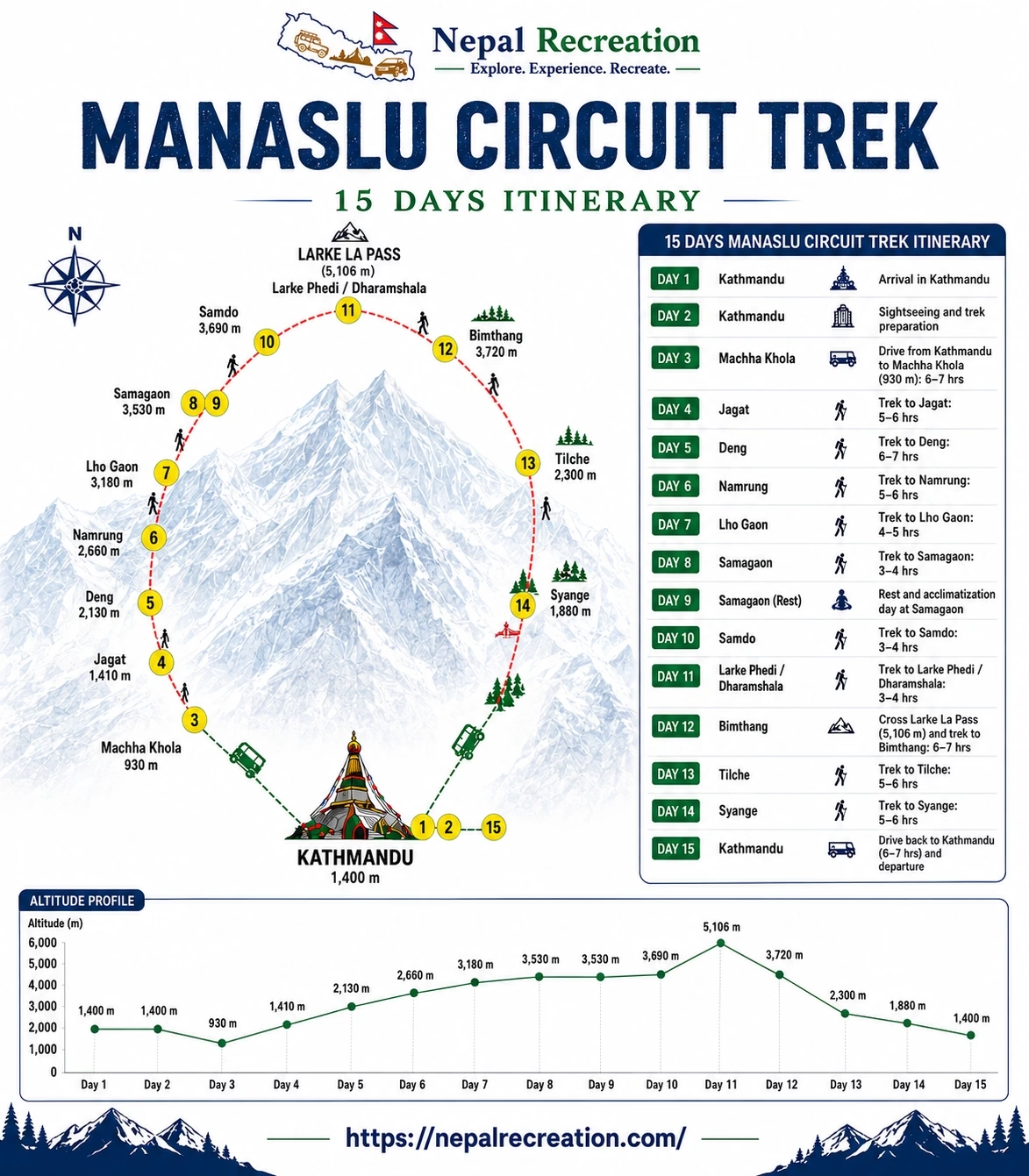
DAY 1:Arrival in Kathmandu (1,400 meters) and hotel transfer
1,400 m30 minutes3 Star HotelYou will land at the TIA Airport, enjoying the first glimpse of distant Himalayas. Our representative will greet you with a traditional Nepali welcome. You will then begin your drive toward the hotel. Along the way, you will admire the tourist scenes, a whirlwind of vibrant colors, prayer flags and rich atoms of incense and species. After checking in at your hotel, take the rest of the day to unwind.
If time and energy allow, stroll through Thamel’s lively alleyways, shops and restaurants. The evening on this first day of Manaslu Circuit Trek itinerary includes a welcome dinner. Your guide will also brief you about the unfolding journey. From your guide, you will learn about route, safety measures, altitude awareness and what to expect.
DAY 2:Sightseeing day and trek preparation
1,400 m7 hours Tour3 Star HotelBreakfastThis day is set for cultural exploration and trek preparation. After a hearty breakfast, a guided city tour will be underway. You will explore cultural soul of the Kathmandu Valley.in depth on this day. The journey starts from Pashupatinath Temple, the holiest shrine in Nepal. You will then move toward Boudhanatha Stupa, which is a peaceful sanctuary. This is one of the largest spherical stupas on the planet. You will also visit Swayambhunath Stupa (Monkey Temple). This temple is perched on a hill, which offers panoramic views of the valley.
It is not possible to explore all the major tourist sites in Kathmandu in a single day. So, this day’s itinerary will explore only a few, as per your preference. The sightseeing tour is over by late afternoon. You will then return to your hotel and make preparations for the trek starting tomorrow. Check equipment, buy or rent essential gear and make final arrangements. The anticipation will build as you pack your bags for wilderness ahead.
DAY 3:Drive from Kathmandu to Machha Khola (930 meters) via Soti Khola (730 meters): 6 hours
890 m8 hours Tea HouseB/L/DManaslu Circuit Trek in Nepal, starts with a scenic drive. You will slowly and steadily transit from urban chaos to the calm rural-mountain realm. As you leave the valley, the landscape unfolds into terraced farms, traditional villages and winding roads. You will also trace river and cliffs along the way. As you pass the lively trading post of Arughat, road becomes more rugged. The terrain shifts from dusty hills to lush forests as you climb higher.
You will notice fewer vehicles, more foot trails and a slower pace of life. Your drive will continue to Soti Khola and you will finally reach your destination. Machha Khola, which means ‘Fish River’ is a small and beautiful settlement on the banks of Budi Gandaki River. This gateway into Manaslu region is surrounded by jungle-clad hills and sound of rushing river below creates a soothing atmosphere.
DAY 4:Machha Kholaa to Jagat (1,410 meters) trekking: 6 hours
1,340 m7 hours Tea House B/L/DThis is your first full trekking day in Manaslu Circuit Trek itinerary. You will begin your on-foot journey by following narrow and meandering trail that moves along Budi Gandaki River. Then, the path snakes through subtropical forests and small settlements like Khorlabesi and Tatopani. There is a natural hot spring at Tatopani that offers a chance to rest tired feet. As you walk on rocky ridges and cross suspension bridges, the trail slowly ascends.
You will also traverse Doban, which is situated on a high shelf of the cascading river. As you move higher, landscape becomes more dramatic. Cliffs rise sharply above and the waterfalls rush down moss-covered rock faces. By the time you reach Jagat Village, you will feel like you have truly entered Himalayan realm. This village is also the checkpoint for Manaslu Conservation Area. From here, the cultural ambiance shifts toward increased Buddhist cultural influence.DAY 5:Trekking to Deng (2,130 meters) via Philim (1,570 meters): 6 hours
1,860 m7 hours Tea House B/L/DFrom Jagat, the trail climbs through terraced farmlands and lush forests. Enjoying spectacular views of Sringi Himal from Saguleri, you will continue on the road to reach a bridge. The trail ahead of the bridge winds up to Philim Village, where you will take a short break. This village is known for its Gurung culture and school, which is supported by Japanese aid. Moving further on the route, you will notice chortens, prayer flags and mani stones. It is an indication of the cultural vibe transition into the deeper part of high Himalayas.
The walk continues through narrow gorges that will reward you occasional glimpse of snow-covered peaks. The terrain might be challenging, but it is rewarding. The road of Budi Gandaki River will keep you company along the way. Upon reaching Deng Village, you will start to notice air becoming crisper and the mountain views more grandeur.
DAY 6:Deng to Namrung (2,660 meters): 6 hours
2,630 m7 hoursTea House B/L/DThe trail on this day’s trek rises steadily and crosses multiple dramatic suspension bridges. You will follow the scenic trails through pine forests and bamboo groves. You will also pass the traditional villages like Rana and Bihi Phedi. Each of these villages offers its own mix of Buddhist culture and Himalayan charm. As you continue walking higher, the stretch introduces breathtaking vistas of Manaslu massif, occasionally peeking through trees.
By the time you reach Namrung Village, you will feel the cultural shift more intensely. This is a traditional Tibetan culture-influenced village. It is filled with prayer wheels, mani walls and ornate gompas. From Namrung, the views of Ganesh Himal, Siringi Himal and Himal Chuli become more prominent.
DAY 7:Trekking to Lho Gaon (3,180 meters): 4 to 5 hours
3,180 m6 hoursTea HouseB/L/DToday’s trek is relatively short and will allow you to have a slower-paced acclimatization. From Namrung, the trail ascends gradually through fir and rhododendron forests. The trail is also occasionally dotted by yak pasture. You will then pass the charming villages of Lihi and Sho. You will encounter traditional stone homes and flag-adorned gateways in this part. Eventually, you will reach Lho Gaon, one of the most picturesque villages in the region.
This village is dominated by the Ribung Gompa, which you can explore in the evening. The view of Manaslu is also in all its glory at this stretch. You will spend your night in charming teahouses. The lodges/teahouses here are often run by Tibetan families. They offer cozy accommodation as well as insight into the life of high-altitude world.
DAY 8:Trek from Lho to Samagaon (3,530 meters): 4 to 5 hours
3,530 m6 hoursTea HouseB/L/DThe trail from Lho to Samagaon is considered a significant cultural and trekking hub in this trek. It is also one of the most visually striking parts as well. Following the ascending route, you will ascend over the tree line. The alpine terrain reveals moraine hills, glacial streams and massive cliffs. The views of Manaslu, Ngadi Chuli and Manaslu Glacier become more dramatic. You will be able to admire this breathtaking panorama more clearly from Shyala Village.
Upon reaching the beautiful Samagaon Village, you will notice the cozy Himalayan lifestyle. The village has beautiful stone houses, yak pasture and vibrant prayer flags flutter in every corner. This village is a key stop for the trekkers in this circuit route. It is also a spiritual center as it houses Pungyen Gompa. This 400-year-old gompa is tucked at the base of Manaslu. Tonight, you will rest in the shadows of the 8th highest peak in the world.
DAY 9:Rest and acclimatization day at Samagaon
4,800 m7 hoursTea HouseB/L/DA rest day along the Manaslu Circuit Trek route is crucial for altitude acclimatization. You will also be able to enjoy a deeper exploration of the area. During this acclimatization day at Samagaon, you can trek to Manaslu Base Camp (4,800 meters), a popular hiking destination. There is also an alternative hike to Birenda Tal, a glacial lake that is just outside of the village.
For cultural experience, you can visit Pungyen Gompa. You will get to interact with monks, learn about local customs and traditions that are shaped by centuries of isolation. Your acclimatization day at Samagaon will be a good day to do laundry, journey and simply absorb the high-altitude landscape.
DAY 10:Trekking to Samdo (3,690 meters) from Samagaon: 5 hours
3,875 m5 hoursTea HouseB/L/DToday’s trek is relatively short. But it is important as you continue adjusting to the thinning air. From Samagaon, the trail ascends gently through alpine meadows and scrubland. You will continue following course of Budhi Gandak River. You will cross a wooden bridge over the river and pass mani walls etched with prayer. Yak pastures and expansive plateaus will be evidence that you are approaching trans-Himalayan terrain.
Eventually, the trail brings you to Samdo. It is a traditional Tibetan refugee village that is just a few kilometers farther from Tibetan border. There are only a few dozen houses here and a network of yak pens. Samdo, which is surrounded by Samdo Ri and Naike Peak, is stark yet peaceful and often veiled in clouds. You can also do an optional hike to an energy ride that offers striking views of Manaslu, Larke Peak and even parts of Tibet on clear days.
DAY 11:Samdo to Larke Phedi/ Dharamshala (4,460 meters): 3 to 4 hours
4,460 m5 hoursTea HouseB/L/DYou will get closer to Larke La Pass on this day’s trek. As you ascend to higher parts of the region, landscape transforms into something more barren and desolate. You will be exploring the high-altitude desert landscape shaped by wind and snow. Along the way, you will also pass Larke Bazaar. This is an abandoned seasonal Tibetan trading post that was once bustling with salt and wool traders. As you venture into the arid landscape, you will cross small streams and navigate a few landslide-prone regions.
Then, you will finally marvel at Dharamshala, which is also known as Larke Phedi. It is a small cluster of stone teahouses that are built especially for the trekkers preparing to cross the pass. With limited food and accommodation options, this stop is all about rest and recovery. Due to high elevation, this day is for early dinner and early sleep. Your journey of crossing the pass begins in the dark next morning. So, proper rest and recovery are essential.
DAY 12:Cross Larke La Pass (5,106 meters) to reach Bimthang (3,720 meters): 7 hours
3,720 m9 hoursTea HouseB/L/DThis is undoubtedly the most exhilarating day, as mentioned in the Manaslu Circuit Trek itinerary. You will put your headlamp to use for the pre-dawn trek. The trail is steep and icy as it snakes through moraines and snowy patches. As you ascend slowly to the top of pass, praying flash flutter at intervals. Reaching the top of this high-altitude Himalayan pass is a profound moment. You will be surrounded by the stunning Hmlung Himal, Cheo Homal, Kang Guru, Annapurna and Manaslu massifs.
After admiring the scenic views and spiritual ambience for a while, you will be on your way down trail from there. The descent are steep, slippery scree slopes go down to glacial basins. After several hours of scrambling in the rocky terrain and battling with high-altitude fatigue, you will arrive at Bimthang. Beautifully perched beneath a curtain of snow-capped peaks, this village boasts grassy meadows, a glacial freshwater stream and shadow of Manaslu’s backside, creating an otherworldly resting place. Here, you will refresh yourself with hot meals and deserved rest after a hard-core trek day.
DAY 13:Trek to Tilche (2,300 meters) from Bimthang: 6 hours
2,300 m7 hoursTea HouseB/L/DAfter venturing through the challenging Himalayan pass, this day’s trek welcomes greenery pastures and warmer air. The trail from Bimthnag drops through alpine landscapes. You will then cross Duhd Khola and enter lush rhododendron and pine woodland. This trekking stretch offers magnificent views of Phungi Himal, Manaslu and Lamjung Himal. On this descending journey, you will pass through charming settlements of Yak Kharka and Karche.
The small clearing amid the lush forest, Gho Village, is a small temporary settlement area of herders. During the warmer season, the pastures are filled with yak grazing peacefully. Eventually, you will arrive at Tilche Village, which is majorly inhabited by Gurung ethnic community. This scenic village is nestled beside waterfalls and terraced fields. Cultural landscape shifts here again. The prayer flags give way to temples and homes here are built in traditional Gurung style. Your journey to Tiliche will be like a return to Human civilization after days of exploring raw and untouched wildernessDAY 14:Trekking to Syange (1,080 meters) via Jagat (1,300 meters) and Dharapani (1,963 meters): 7 hours
1,080 mWalking and drivingTea HouseB/L/DYour final trekking day begins with a descent through a lush forest. You will cross more rivers and eventually rejoin the broader trail that sees more foot and mule traffic. As you continue further, you will cross Dharapani. This is the key junction where Manaslu Circuit and Annapurna Circuit interconnect. With a significant drop in altitude, the environment becomes more subtropical. You will walk across Tal, which is a beautiful village beside a wide waterfall basin.
The trail further ahead stretches to Jagat via Chamje. You will be retracing your steps, but it will be from a richer perspective. Finally, you will reach Syange Village. Here, the terrain is green and alive and the stark contrasts the icy wilderness of the Larke La Pass days before.DAY 15:Drive back to Kathmandu (1,400 meters) and hotel transfer
1,400 m8 hoursB/LYour overland journey for the return back to Kathmandu begins early in the morning. The drive will pass through terraced hills, waterfalls and small roadside villages. The bumpy road will first lead you toward Besisahar. This will be an experience back into the civilization that you left nearly two weeks ago. As you approach Kathmandu, the road smoothens out. However, the buzz of urban city might feel overwhelming after the serene silence of the mountains.
Once you return back to your hotel, take your time to relax. You can also join your trekking group for the celebration of completing the journey. In the evening, you will join a farewell dinner. After reflecting on your incredible journey around the eighth highest mountain in the world, you will take a rest at the cozy hotel.
Altitude Profile
Looking to Customize This Trip?
We curate bespoke private itineraries tailored to your dates, preferences, and luxury requirements.
Cost breakdown
What's included
Airport pickup and drop in a private vehicle
2 nights hotel accommodation in Kathmandu (with breakfast)
All ground transportation (Kathmandu– Machha Khola and Dharapani–Kathmandu) by sharing bus or Jeep.
All necessary trekking permits (Manaslu Restricted Permit, ACAP & MCAP)
Licensed and experienced trekking guide
All meals (breakfast, lunch, dinner) during the trek
Teahouse/lodge accommodation during the trek
First aid kit and basic medical support
Government taxes and service charges
Nepal Recreation T-shirt and route map.
What's not included
International airfare to/from Nepal
Nepal visa fee on arrival
Meals in Kathmandu (lunch & dinner)
Travel insurance (must include high altitude and emergency evacuation)
Personal expenses (snacks, drinks, laundry, etc.)
Extra night Hotel in Kathmandu
Private transports if required Kathmandu to Machha Khola cost $150 and Dharapani to Kathmandu cost $210.
Porter if required ($250) can share 2 trekkers.
Tips for guide and porter
Extra nights in Kathmandu due to early return or delayed trek
Any other costs not mentioned under "Cost Includes"
Dates & Prices
Oct 24 – Nov 8, 2026
Oct 26 – Nov 10, 2026
Oct 28 – Nov 12, 2026
Oct 30 – Nov 14, 2026
Prices are per person on a twin-share basis. Departures are limited, especially during peak season.
Trip map
Useful information
How Difficult is Manaslu Circuit Trek?
The Manaslu Circuit Trek Nepal is considered a moderate to challenging high-altitude trek. It is ideal for experienced hikers or physically fit first-time trekkers. But one factor is sure: this route tests endurance and mental fortitude of the adventurers. This trek covers roughly 177 km in a span of 13 to 17 days. Although walking trails are not technical, the altitude gain, rugged nature and lack of accessibility can be a demanding aspect.
As the trek elevates to major altitudes, trekkers also need to deal with altitude-related challenges. The risk of Acute Mountain Sickness (AMS) demands a slower pace and proper acclimatization days. You will also need to walk through a diverse range of landscapes. During this circuit trek, you will walk across subtropical forests, alpine woodlands, glacial valleys and eventually cross the snow-covered high Himalayan pass.
So, even if it is not technically challenging, trekkers will need a good amount of preparation to conquer this route. Having previous high-altitude hiking experience will certainly be helpful. Beginners are also welcome to join these trails, but they will need good fitness and endurance. It is not easy to match up high-altitude route of this trek without impeccable preparation.

Best Time for Trek
Choosing the right time for trek makes a huge difference in the quality of your experience. If you want clear skies, stable weather and comfortable temperatures, that’s what spring and autumn seasons offer. Spring (March to May) and autumn (September to November) are primary and most preferred periods for trekking in Nepal.
Autumn (September to November): This is a golden season for Manaslu Circuit Trek Nepal. Weather features clear skiers, dry air and very low precipitation. The daytime temperatures are on moderate level (10 to 20°C ). Nights can be cold with a drop in temperature upto -10°C near the Larke la Pass. This is also a festive season, which enhances the cultural experience in the country.
Spring (March to May): Spring is another ideal period for this circuit trek. The trekking conditions are very stable, days are warm and nights can be chilly. Temperatures in this season range from around 12°C to 25°C at lower points. At higher altitudes, it can drop upto -5°C. The rhododendron blooms and peak form of nature make the journey simply enchanting.
What About Off-Season Treks?
The off-season trek in this route is normally not recommended. Monsoon season (June to August) faces heavy downpour. Landlises and has slipper trails. Trekkers also need to overcome other challenging aspects. The high humidity, road blockage, river swell and leeches on trails. are major hurdles in monsoon. Likewise, winter (December to February) has harsh cold and heavy snow. The trail over Larke La Pass and other high-altitude regions is closed due to snowfall.
Although the winter trek offers absolute solitude and raw Himalayan wilderness, navigating this circuit route is not easy. Heavy winter gear and extra physical effort are essential to navigate snow-covered trails. So, if you are a beginner or don’t want to deal with extra challenges, you should do this trek during peak seasons.
Accommodation and Food on Manaslu Trek
Unlike more commercialized trekking regions, Manaslu offers an authentic teahouse experience. The lodges/teahouses along the route are operated by local families. The accommodation and food are basic. But they are heartwarming and evolve as you gain altitude.
Teahouse Accomodation: The teahouses mostly feature twin-sharing rooms with thin ply walls. They have wooden beds and foam mattresses. Attached bathrooms in this remote region are rare. Most teahouses have shared square or sit toilets. Blankets are usually provided, but we recommend you to bring sleeping back to keep yourself warm. Electricity is available for lighting but charging will cost extra. The same goes for hot showers.
Food on Trail: Meals provided at the teahouses along the trekking routes are basic. However, they are carb-rich and energy-packed, which will accommodate your long hours of exploration perfectly. The staple dish that is available throughout the teahouses is Dal Bhat Tarkari. You will also be able to enjoy other menus like Tibetan Bread, Porridge, Noodles, Potato Dishes, Eggs, Soup, etc.
Note: Most menus offered at the teahouses are vegetarian by default. Vgena meals are possible but are in limited number (clarify no ghee or utter to chef). We recommend you to bring protein bars, peanut butter, herbal teabags, snacks and electrolytes for refreshment and energy boost along the way.
What to Pack for Manaslu Circuit?
For proficient packing for this circuit route, you need to balance between essential gear and light-weight efficiency. The porter will carry limited weight (usually 15 kg per trekkker). Also, you will be living out of a backpack for weeks on the mountain. So, packing essentials without going overboard is the key.
Clothing
2 to 3 pairs of moisture-wicking t-shirts
Long-sleeve thermal tops
Thermal bottoms
Flecce or wool mid-layer
Down or synthetic insulated jacket
Waterproof shell jacket
Waterproof shell pant (lightweight and packable)
Light and quick-dry trekking pants
Warm insulated trekking pants for higher elevations
Trekking shorts (optional for warmer lower days)
Moisture-wicking undergarments
Warm beanie or wool hat
Sun hat or wide-brmmed cap
Neck gaiter or buff
Lightweight inner gloves
Insulated outer gloves
Waterproof trekking boots
Lightweight camp shoes or sandals
Gaiter (optional, but useful when muddy)

Trekking Gear and Accessories
Daypack or backpack (25 liters to 354 liters)
Duffel back or large rucksack
Sleeping back (rated for at least -10°C to -15°C)
Headlamp (bring extra batteries)
Water bottles
UV protection sunglass
Water purification filter or tablets
Rain cover for backpack
Microspikes (for early spring or late autumn crossing)
Personal Hygiene and Toileteries
Biodegradable soap and shampoo
Quick-dry towel
Toothbrush and small toothpaste
Face wipes
Deodrant
Toilet paper
Hand sanitizer
Nail clipper and small mirror
Female hygiene products
Small first aid kit with general medications
Other Miscellaneous Essentials
Powerbank
Charging cable and universal adapter
Dry bag or ziplocks
Trash bag
Small padlock
Lighweight thermos
Trekking map or offline navigation app
Board games
Camera
Books and journals
Compression sacks or packing cubes
Solar charger
Duct tape
Health and Safety on Trail
Trekking Manaslu Circuit means venturing into the high-altitude wilderness of Himalayas. Yes, it is an incredibly rewarding experience. But, it also poses certain risks. Here is how to stay safe and healthy during your journey.
Preventing Altitude Sickness (AMS): Altitude sickness is a #1 health concern in high-altitude treks. Especially after crossing 3,000 meters. You need to be watchful for early symptoms of AMS. Persistent headache, loss of appetite, nausea, shortness of breath are some of its general symptoms. It is necessary to descend immediately if symptoms worsen. You also need to adhere to preventive measures. Walking slowly, hydration, proper acclimatization and balanced nutrition will help you prevent AMS.
Foot Care and Blisters: Blisters can be a bothersome issue if your shoes are not comfortable. You will need to walk for multiple hours and if your shoes are not comfy, you will get blisters. So, break in your boots before the trek. For feet hygiene, change socks daily and keep them dry. Treat the hot spots before they become blisters. Carrying a basic blister kit can be really helpful.
Personal Hygiene: Teahouses have limited sanitation in this remote part of Himalayas. It is essential for you to carry wet wipes, hand sanitizer and a small towel. Use biodegradable soap when possible. For toilets, squat style is common in the region. Carry toilet paper and a headlamp/torch as generally toilets are outside of tehouses.
Common Illness and Tips: Avoid meat items, especially at the higher regions. Don’t eat raw vegetables or unpeeled fruits. Make sure to bring anibitoic (Azithromycin) just in case. Dry air and shared spaces can spread germs fast (cold coughs are pretty common). A buff or mask can help you in such a scenario. Even in cold atmosphere, the UV is intense. So apply sunscreen cream regularly (SPF 50+).
Mobile Network and Internet Availability
Manaslu region is remote and largely unaffected by commercial tourism. That means there is limited digital connectivity. However, they are not completely non-existent. There are some connectivity options. But it is important for you to plan ahead.
Mobile Network Coverage: Ncell and NTC are the only available options for mobile coverage. You can buy a data pack, but it might not always be reliable. Ncell’s coverage is better in lower region. NTC’s service is more reliable as you head north. Buy a local sim in Kathmandu. You will need a passport-sized photograph and copy of your identification for that. Get a data plan as per your requirement (3GB to 10GB is enough for most).
Wi-Fi Availability: This service is limited and you will need to pay for it. Teahouses along the route do have Wi-Fi. But you can expect the speed to be slow. It is only reliable for messaging or audio calls. There is no wi-fi around Dharmashala and Larke Pass region.
Charging Your Devices: You can charge your devices at the lodges/teahouses for an extra fee. At some teahouse, the charging outlets may be in dining hall only and not in rooms. So, bring a power bank and consider chargers. This is especially important if you are filming or taking photographs.
Offline Alternatives: For navigation, you can download apps with offline features like Maps.me, Gaia GPS, or AllTrails. Save emergency contact and trek notes on your phone. Also, don’t forget to carry a printed Manaslu Circuit map as backup.

Training and Physical Preparation for Manaslu Circuit
Trekking Manaslu Circuit is nothing like a walk in the park. It is a mult-day, high-altitude adventure that demands stamina, strength and consistency. You will be walking for hours every day on uneven trails. Similarly, you will climb thousands of meters and cross formidable Larke La Pass. That is why structured physical preparation is key. It is especially crucial if you come from a sedentary or low-altitude lifestyle.
You will need to build your cardio capacity. At high altitudes, oxygen is scarce. Your body needs to be efficient at adapting to such an atmosphere. You can do hiking, running, stair climbing, cycling or swimming to develop this aspect. It is also important to prioritize strength and endurance. Work on your leg muscles, core strength, back and shoulders. Still, simulating trekking conditions is the best way to prepare for this trek. Train with a backpack, do multi-day hikes and participate in incline training for the most effective results.
Note: Don’t forget mental preparation for your trek. Build up mental resilience, learn to manage fear and anxiety, stay motivated and use mindfulness and breathing control. This will keep you calm and composed even during the demanding bits.