- Duration
- 14 days
- Difficulty
- Medium
- Max Altitude
- 5,420 m(17,782 ft)
- Destination
- Nepal
- Activity
- Trekking
- Best Season
- Spring & Autumn
- Group Size
- 1-13
- Transport
- Private Transport
- Arrival and Departure City
- Kathmandu
- Minimum Age
- 14
- Maximum Age
- 73
Trip Highlight
A complete Everest-region circuit trek that avoids backtracking and connects three major highlights in one journey
Everest Base Camp (5,364m/ 17,598ft) with direct views of the Khumbu Icefall and climbing routes during peak seasons
Exploring the remote and quieter Gokyo Valley, which offers a peaceful alternative to the crowded main Everest trail
A chain of six glacial Gokyo Lakes, glowing turquoise beneath the towering face of Cho Oyu
High-altitude crossing of Cho La Pass (5,420m/ 17,782ft), which offers stunning views of glaciers, towering peaks, and rugged alpine terrain
Panoramic views from Gokyo Ri (5,357m/ 17,575ft) of the Everest, Lhotse, Makalu, and Cho Oyu in a single frame
Traverse of the Ngozumpa Glacier (36 km/ 22 miles), the longest glacier in the Himalayas
Opportunity to explore the Sherpa culture, traditions, and lifestyle in both the mainstream route and the isolated valleys
Classic teahouse trekking with reliable accommodation, meals, and shelter even at extreme altitude
Ideal trek for experienced hikers seeking variety, solitude, and challenge beyond the standard Everest Base Camp
Trip overview
The Everest Base Camp- Gokyo Lake Trek With Cho La Pass is one of the most complete and rewarding trekking experiences in Nepal. This route goes beyond the world-renowned Everest Base Camp Trek route by linking it with the remote Gokyo Valleys and crossing the high-Himalayan pass Cho La Pass. Our Everest Base Camp Trek with Chola Pass and Gokyo Lake creates a true Himalayan circuit experience rather than a simple and out-and-back trek. This journey takes you deep into the heart of Khumbu, combining two major iconic landmarks like Everest Base Camp and Khumbu Icefall with quieter alpine landscapes, glacial lakes, and high-mountain passes.
While the Everest Base Camp Trek section offers lively Sherpa villages and a strong trekking atmosphere, the Gokyo Valley provides a calmer and more isolated experience with expansive views of the towering peaks and glacial terrain. Crossing the Cho La Pass is the defining challenge of this Himalayan endeavour, which demands endurance and careful acclimatization. As a reward, you will get the rare opportunity to admire the raw Himalayan scenery and a strong sense of achievement. Along the way, highlights such as the Gokyo Lakes, Gokyo Ri viewpoint and Ngzumpla Glacier deliver some of the finest and surreal panoramas in the Himalayas.
Everest Base Camp- Gokyo Lake Trek With Cho La Pass is designed for trekkers who are seeking more variety, solitude and adventure than the standard Everest Base Camp Trek. This journey is ideal for the trekking enthusiasts who want to experience the Everest region in greater depth, both culturally, geographically and spiritually.

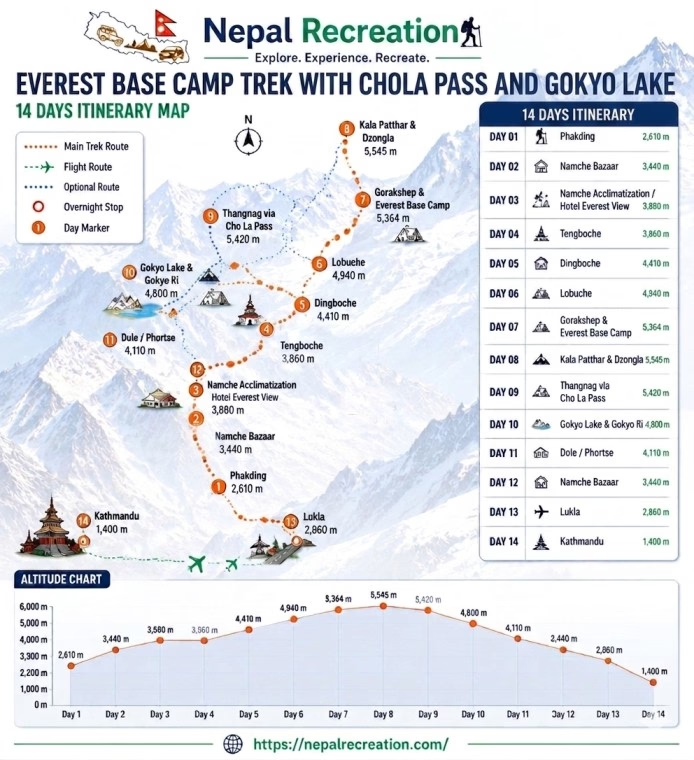
Everest Base Camp Trek With Chola Pass and Gokyo Lake Outline Itinerary Plan
Day 01: Kathmandu (1,400m/ 4,593ft) to Lukla (2,860m/ 9,383ft) flight and then trek to Phakding (2,610m/ 8,562ft): 35 minutes flight and 3 to 4 hours trek
Day 02: Trek to Namche (3,440m/ 11,286ft): 5 to 6 hours
Day 03: Acclimatization day in Namche and hike to Hotel Everest View (3,880m/ 12,729ft): 2 to 3 hours
Day 04: Trek to Tengboche (3,867m/ 12,687ft): 5 to 6 hours
Day 05: Trek to Dingboche (4,410m/ 14,468ft): 5 to 6 hours
Day 06: Trek to Lobuche (4,910m/ 16,108ft): 5 to 6 hours
Day 07: Trek to Gorakshep (5,164m/ 16,942ft) to Everest Base Camp (5,364m/ 17,598ft) and return to Gorakshep: 8 to 9 hours
Day 08: Morning hike to Kala Patthar (5,550m/ 18,208ft) for sunrise view and trek to Dzongla (4,830m/ 15,846ft): 5 to 6 hours
Day 09: Trek to Thangnag (4,700m/ 15,419ft) via Cho La Pass (5,420m/ 17,782ft): 7 to 8 hours
Day 10: Trek to Gokyo Lake (4,800m/ 15,748ft) and after lunch hike to Gokyo Ri (5,357m/ 17,575ft) for sunset view: 6 to 7 hours
Day 11: Trek down to Dole (4,038m/ 13,248ft) or Phortse (3,840m/ 12,598ft): 5 to 6 hours
Day 12: Trek to Namche (3,440m/ 11,286ft): 6 to 8 hours
Day 13: Trek to Lukla (2,860m/ 9,383ft): 6 to 7 hours
Day 14: Fly back to Kathmandu (1,400m/ 4,593ft) or Manthali: 35 minutes

Itinerary
DAY 1:Kathmandu (1,400m/ 4,593ft) to Lukla (2,860m/ 9,383ft) flight and then trek to Phakding (2,610m/ 8,562ft): 35 minutes flight and 3 to 4 hours trek
1,400 mThe Everest Base Camp- Gokyo Lake Trek With Cho La Pass adventure begins early in the morning. You will take a short and spectacular flight from Kathmandu to Lukla. As the aircraft climbs above the Kathmandu Valley, lush hills quickly give way to rugged Himalayan terrain. On clear mornings, you will be able to enjoy breathtaking views of snow-capped peaks and deep valleys. After a brief stop at Lukla, you then begin your trekking journey.
The trail from Lukla descends gradually, following a stone-paved path through the village of Chheplung. From here onwards, the Dudh Koshi River becomes your constant companion. As the path continues, you pass through small Sherpa settlements such as Thado Koshi Gaon and Ghat. This section of the trail offers an excellent introduction to the Khumbu lifestyle. You will witness the stone houses, terraced farmland, suspension bridges, and yaks moving steadily along the paths.
After crossing a few short suspension bridges and gentle forested sections, the trek is mostly gentle as you approach Phakding. This is a peaceful riverside village nestled among pine trees. The beautiful Sherpa village of Phakding serves as a comfortable first overnight stop. You will get enough time to let your body adapt to the high-altitude atmosphere with a relatively short and relaxed trek.
DAY 2:Trek to Namche (3,440m/ 11,286ft): 5 to 6 hours
3,440 mThis day’s trek in your Gokyo Lakes and Everest Base Camp itinerary is one of the most significant parts of the entire journey. Leaving Phakding, you will follow the trail that continues north along the Dudh Koshi. Along the way, you will cross suspension bridges and pass through forested stretches. The trail will also take you through small settlements like Benkar and Toktok.
The trail then reaches Monjo, where you will officially enter Sagarmatha National Park, a UNESCO World Heritage Site. After permit checks, you will continue your walk toward Jorsalle. As you ascend higher, the landscape begins to feel more rugged and enclosed, with steeper valley walls and thicker forests. A short walk from Monjo will then bring you to Jorsalle. This is the last settlement before Namche and a common lunch stop. From here, the trail drops to the river one final time before the challenging section of the day begins.
You will cross the famous Hillary Suspension Bridge, decorated with prayer flags high above the gorge. Then, the route immediately transitions into a long and steady ascent of Namche Ukalo. The climb takes you across dense pine and rhododendron forest and you will gain altitude gradually. Roughly halfway up the climb, a small clearing will offer you the first views of Mount Everest if the weather permits. The ascent continues until it finally opens into the natural amphitheater of Namche Bazaar.
When you reach Namche, you will see colorful houses stacked along the mountainside beneath peaks like Kongde Ri and Thamserku. After arriving at this Sherpa capital, you will immediately sense its importance as the commercial and cultural hub of Khumbu. After a demanding day on the trail, this settlement offers both comfort and anticipation for the higher valleys ahead.
DAY 3:Acclimatization day in Namche and hike to Hotel Everest View (3,880m/ 12,729ft): 2 to 3 hours
3,880 mToday is dedicated to rest and acclimatization. It is a crucial part of safely ascending in the Everest region. Instead of complete rest, on this day, you will take an acclimatization hike to the Hotel Everest View following the “climb high, sleep low” principle. This day’s acclimatization will help you adjust to the atmosphere at higher altitudes. After breakfast, the acclimatization hike begins with a gradual ascent above Namche. You will follow a well-maintained trail toward Syangboche Village.
The path will offer you stunning views of Ama Dablam, Thamserku, Lhotse and Everest. Then, the hike reaches Hotel Everest View, one of the highest placed hotels in the world. From here, you can enjoy the breathtaking mountain vistas that are among the finest in the region. The hike reaches Hotel Everest View, one of the highest-placed hotels in the world, sitting at 3,880 meters. From here, the vistas are among the finest in the region, making it an ideal acclimatization point.
After reaching the hotel, you can take your time to rest, hydrate, and absorb the scale of the Himalayas from up close. Upon your return to Namche, you can visit the Sherpa museum, browse local markets, or simply enjoy a relaxing evening in bakeries. This balanced day of light activity and rest will prepare you well for the higher valleys and pass ahead.
DAY 4:Trek to Tengboche (3,867m/ 12,687ft): 5 to 6 hours
3,867 mYou will leave Namche after a warm breakfast and follow the trail that contours high above the Dudh Koshi Valley. The trekking path begins gently and stretches across wide and well-maintained trails. Along the way, you will also be able to enjoy expansive views of Kongde Ri, Thamserku and distant glimpse of Everest and Lhotse. After a short trek, you will arrive at Kyangjuma Village. This is a small Sherpa settlement that is perched on a ridge and has a few tea shops.
From here, your trekking path undulates through the rhododendron forest before descending down to Phunki Tenga. Then, you will cross a river ahead of the village and stick with the trail that steadily climbs uphill through dense pine and fir forest. Although this section is demanding, it is deeply atmospheric. As the forest gradually opens up, the trekking path reveals the wide meadows of Tengboche. This high altitude settlement is best known for the Tengboche Monastery, the spiritual heart of the Khumbu region.
The monastery is set against the dramatic backdrop of Ama Dablam, and the overall atmosphere and scenery feel surreal here. You will arrive at Tengboche by late afternoon. The combination of the chanting monks in the monastery, alpine silence and stunning panoramas of the towering peaks creates one of the most memorable moments of the trek.
DAY 5:Trek to Dingboche (4,410m/ 14,468ft): 5 to 6 hours
4,410 mToday’s morning begins with crisp mountain air and stunning sunrise views over Ama Dablam and Everest. After enjoying a warm breakfast at Tengboche, you will then prepare for your trekking journey. Leaving Tengboche, you will follow the trail that descends through forested areas toward Debuche Village. You will cross the Imja Khola via a suspension bridge and continue walking on the shaded and calm trekking route.
Beyond Debuche, the landscape gradually transforms as the tree line starts to thin out and the valley opens wider. Then, you trekking trail passes through Pangboche Village, one of the oldest Sherpa villages in the region. Here, you will see stone houses, chortens and cultivated fields that reflect centuries of mountain life. You can also visit the Pangboche Monastery near the village, which will add cultural depth to your trek. From Pangboche, the trail continues across the alpine terrain toward Shomare Village. The vegetation starts to get noticeably sparse and the air thinner as you climb higher.
Then, the trekking trail splits near the Orsho village, the main route continues up the valley toward Dingboche and the branch route heads east toward Imja Valley. A steady climb in the final stretch will lead you to Dingboche. This is a windswept settlement that is surrounded by stone-walled fields. This village feels distinctly alpine and marks a significant altitude gain.
DAY 6:Trek to Lobuche (4,910m/ 16,108ft): 5 to 6 hours
4,910 mLeaving Dingboche, your trekking trail on this day of the Gokyo Lakes and Everest Base Camp itinerary climbs gradually across the open terrain and follows the wide valley, which offers expansive mountain views. Your walking pace also slows naturally as you start to gain altitude. Do take short breaks, stay hydrated consistently and keep yourself warm to mitigate the risk of altitude sickness. Your trekking route will take you toward Thukla (Dughla) Village, a small village at the base of a steep moraine.
After a short break here, you will continue walking toward the Thukla Pass (4,830m/ 15,846ft). At the top of the pass, you will encounter the Everest Memorial, the stone monument that is dedicated to the climbers who lost their lives during expeditions in the Everest region. From the pass, the path follows the lateral moraine of the Khumbu Glacier. Here, the landscape becomes rugged and stark with rocky terrain, glacial debris and the sense of raw Himalayan wilderness.
As you follow the ascending trekking path, the snow-covered peaks such as Pumori, Nuptse, and Lobuche East will dominate the horizon. The final stretch of this day’s trail will bring you to Lobuche, which is a small high-altitude settlement perched amidst the rocky terrain. Air here feels noticeably colder and the environment feels harsh and remote, signs that mark you are now deep in the high Himalayan zone.
DAY 7:Trek to Gorakshep (5,164m/ 16,942ft) to Everest Base Camp (5,364m/ 17,598ft) and return to Gorakshep: 8 to 9 hours
5,164 mThis is the most anticipated day in your Everest Base Camp- Gokyo Lake Trek with Cho La Pass. You will leave Lobuche early in the morning and follow the trail that undulates through the moraines of Khumbu Glacier. As you continue pushing further ahead, you will arrive at Gorakshep, the last settlement before Everest Base Camp. The terrain is rocky and uneven, so you will need to be careful with your footing as the altitude continues to rise.
After arriving at Gorakshep, you will take a short break and rest. Then, dropping your luggage at your designated teahouse, you will continue your trek toward Everest Base Camp. This stretch weaves through glacial debris, ice formation and shifting terrain. Reaching Everest Base Camp is a powerful moment. While the summit of Everest itself is not visible from here, you will stand at the foot of the tallest mountain in the world. During the climbing seasons, colorful expedition tents dot the base camp area.
While you are at the base camp, you can take your time to admire the views, take photographs and relish the serene Himalayan environment. After that, you will retrace your steps on the same route and head back to Gorakshep. Your return to the teahouse will mark the completion of the Everest Base Camp Trek portion. Now, your adventure continues toward Cho La Pass and Gokyo Valley.
DAY 8:Morning hike to Kala Patthar (5,550m/ 18,208ft) for sunrise view and trek to Dzongla (4,830m/ 15,846ft): 5 to 6 hours
5,550 mToday, before moving across the pass, you will take your time to explore the major highlights of the Everest region. Your day begins before dawn with a steep climb to Kala Patthar, the most famous viewpoint in the Everest region. The trail starting from Gorakshep ascends over the rocky terrain to the viewpoint. From the Kala Patthar viewpoint, the sunrise view is an unforgettable moment of this Everest Base Camp Trek with Chola Pass and Gokyo Lake journey.
You will stand face-to-face with Mount Everest and the panoramic views also include Nuptse, Pumori, Changtse and the Khumbu Icefall. After soaking in the sunrise, you will return to Gorakshep for breakfast. Then, after picking your gear, you will leave the main Everest Base Camp Trek route nd head west toward Dzongla. This marks the beginning of the remote Gokyo- Cho La section. Your path traverses the high alpine terrain with dramatic views of Cholatse and Lobuche East.
Then, you will descend along the glacial valleys, enjoying the quieter atmosphere and rugged- isolated landscape. The final approach will then bring you to Dzongla Village. This is a small, windswept settlement that is tucked beneath the towering peaks. Dzongla is perfectly positioned for the crossing of Cho La Pass on the following day. You will get your much-deserved rest and fuel your body with nourishing food before conquering the pass.
DAY 9:Trek to Thangnag (4,700m/ 15,419ft) via Cho La Pass (5,420m/ 17,782ft): 7 to 8 hours
4,700 mAn early start is essential for this day’s challenging and rewarding trek. Crossing the Cho La Pass requires stable weather and careful navigation. So, you will begin your hike before dawn. An early start is essential, as the crossing of Cho La Pass requires stable weather and careful navigation. Leaving Dzongla, your trekking trail climbs steadily over rocky terrain toward the base of the pass.
As altitude increases, the landscape turns stark and glacial. Along the way, you will have to cross the sections covered by ice and snow. The final ascent to Cho La Pass is steep and demanding. But, reaching the top of the pass at 5,420 meters is a major achievement. The view from the top of the pass is dramatic and raw. You will be surrounded by glaciers and peaks like Everest, Lhotse, Nuptse, Ama Dablam and Cho Oyu. After enjoying the views, you will then for the descending part of the trek.
The descent from the pass is equally challenging and involves a steep walk down a glaciated section before transitioning onto rocky moraine. Gradually, the terrain starts to soften as you enter the Gokyo Valley. The trail eventually leads to Thangnag, your rest stop for tonight. Thangnag is a beautiful and remote high-altitude settlement beside the Ngozumpa Glacier. After the intensity of the high Himalaya pass crossing, this village offers peaceful and rejuvenating rest.
DAY 10:Trek to Gokyo Lake (4,800m/ 15,748ft) and after lunch hike to Gokyo Ri (5,357m/ 17,575ft) for sunset view: 6 to 7 hours
4,800 mLeaving Thangnag, you will follow the edge of Ngozumpa Glacier, the longest glacier in Nepal. The route is rocky and uneven, but you will be able to enjoy the sweeping views of distant peaks. As you gain altitude, the first of the Gokyo Lakes comes into view, followed by a series of shimmering turquoise lakes scattered across the remote valley. The trail will gradually lead into Gokyo village, set beside the stunning third Gokyo Lake.
After lunch and a short rest, you will then begin your hike to Gokyo Ri. The ascent is steep and physically demanding, but the reward at the top is extraordinary. From the summit, you will be treated to one of the finest panoramic views in the Everest region. You will be able to relish the breathtaking views of Everest, Lhotse, Makalu, Cho Oyu, and the sweeping curve of the Ngozumpa Glacier, all at once.
As you descend back to Gokyo in the evening, the sunset light that reflects off the lakes will welcome you, creating a calm and surreal atmosphere. This combination of alpine beauty and high-altitude achievement makes your trek on this one of the most memorable parts of the entire trek.
DAY 11:Trek down to Dole (4,038m/ 13,248ft) or Phortse (3,840m/ 12,598ft): 5 to 6 hours
4,038 mAfter exploring all the major highlights of your Everest Base Camp- Gokyo Lake Trek With Cho La Pass, it is time to move along with your descending journey. Your trek begins with a gradual descent from Gokyo. You will walk on the trail that drops steadily through the Upper Valley and pass smaller lakes and glacial streams. As you descend toward Machhermo, the landscape begins to soften. The signs of vegetation return along the trail as altitude decreases.
From here, you can either continue down to Dole, a quiet village surrounded by alpine pastures, or take an alternative route toward Phortse. This alternative village is known for its strong mountaineering heritage and terraced stone houses. Both stops offer a peaceful rest in contrast to the high glacial terrain of the previous days. The warmer air, lower altitude, and reappearance of greenery signal the transition back toward the major section of Khumbu. Your rest stop on this day will provide warm relief after the challenges of Cho La Pass and Gokyo Ri.
DAY 12:Trek to Namche (3,440m/ 11,286ft): 6 to 8 hours
3,440 mToday, you will begin your trek with a steady descent as the trail winds down through the lower Gokyo Valley. Leaving behind the high alpine landscape, your trekking route gradually re-enters zones of pine and rhododendron forests. Breathing becomes noticeably easier as altitude drops, and your body begins to recover from the strenuous days above 5,000 meters.
If you are trekking from Dole, the trail passes through the small settlements of Luza and Machhermo. The valley feels wider here and the stone houses are scattered across gentle slopes. In case if you are descending from Phortse, the route offers a more traditional village experience. You will pass the terraced fields, mani walls, and quiet monasteries that reflect deep-rooted Sherpa culture. Both routes eventually reconnect near Mong La, a high ridge that offers one final, sweeping panorama of the surrounding Himalayan peaks
The descent from Mong La is steep but rewarding; it passes through dense forest and the terrain you are familiar with. Re-entering Namche Bazaar feels like returning to civilization after days in remote high-altitude wilderness. You can enjoy the comfort of warm bakeries, hot showers, and a lively atmosphere in this well-earned rest stop.
DAY 13:Trek to Lukla (2,860m/ 9,383ft): 6 to 7 hours
2,860 mThis is the final day of trekking in your Gokyo Lakes and Everest Base Camp itinerary. Your trail retraces the familiar landscape down the Khumbu Valley. After leaving Namche, the path descends steeply through forested switchbacks toward the Dudh Koshi River. You will cross the high suspension bridges once again and follow the route across the beautiful settlements of Monjo, Benkar, and Dudh Koshi Ghat. You will take short stops along the way for tea and final photographs. The rhythm of the trail feels different now, as you approach the conclusion.
As you climb the final gentle ascent into Lukla, the sense of completion becomes real. What felt like the beginning here days ago now feels like a full-circle moment. You can spend your evening in Lukla celebrating the trek, thanking guides and staff, and enjoying one last night in the mountains.
DAY 14:Fly back to Kathmandu (1,400m/ 4,593ft) or Manthali: 35 minutes
1,400 mAn early morning flight will mark the end of the Everest Base Camp- Gokyo Lake Trek with Cho La Pass adventure on this day. Depending on the season and flight schedules, you will fly either directly back to Kathmandu or to Manthali, followed by a drive to the capital. The short flight from Lukla offers one last aerial view of the Himalayas, rolling hills and eventually the Kathmandu Valley. After landing in Kathmandu, you can feel the contrast immediately. The busy streets, warm air, and modern comforts will replace mountain silence.
Though the trek officially ends here, the experience lingers long after. After checking in at the hotel, you can take your time to rest and relax. Then, you can take a short stroll around the vibrant city, enjoying the nightlife. And, maybe end the day with a delicious traditional meal that represents the mountain culture.
Altitude Profile
Looking to Customize This Trip?
We curate bespoke private itineraries tailored to your dates, preferences, and luxury requirements.
Cost breakdown
What's included
Airport pickup and drop by private vehicle.
Three meals a day (Breakfast, Lunch and Dinner) during the trek.
Trekking lodge (Tea House) accommodations throughout the trek.
All necessary paper works Sagarmatha National park Entry permit and Trekker’s Information Management System (TIMS) permit.
Kathamandu – Lukla – Kathmandu flight with private airport transfer and domestic airport tax.
A highly experienced, helpful, knowledgeable, friendly, English speaking, well trained, Government License holder guide. With all his salary, food, drinks, accommodation, transport and insurance included.
Comprehensive medical supplies(first aid kit will be available)
Arrangement of Emergency Helicopter service (paid by your Travel Insurance Company).
Use of sleeping bag, down Jacket, Duffel bag and walking Poles. (If you don’t have your own, need to return after trip completed.)
Government taxes and official expenses.
Everest base camp trek map.
Oximeter to check your pulse and oxygen saturation and heart rate twice daily. (Very useful to check Altitude Mountain Sickness (AMS) symptoms.) This will ensure you trek is in the safest hands possible for all levels of trekker.
Assistant guide group size above 8+ person.
What's not included
Meals whilst you are in Kathmandu Lunch and Dinner.
Kathmandu Hotel.
Nepal entry visa fee (you may easily issue the visa on arrival at Tribhuvan International Airport – Kathmandu). $30 USD for 15 days Visa.
Your Travel and Medical Insurance.
International Airfare.
Porter if needed ($200).
Your Personal Expenses.
All the alcoholic and nonalcoholic cold and hot drinks on trek. (Those you choose to purchase along the way and during evenings in the Tea Houses).
All desserts sweet things like chocolate, cake, pie, pudding.
Hot shower and battery charging on the tea houses.
Excess baggage more than 15kg for Lukla flight
Dates & Prices
Select start date
Prices are per person on a twin-share basis. Departures are limited, especially during peak season.
Choose Your Departure Date
Run Everest Base Camp- Gokyo Lake Trek With Cho La Pass privately for your group on any date that suits you.
No date selected yet — pick a start date from the calendar.
Trip map
Useful information
Everest Base Camp Trek With Chola Pass and Gokyo Lake Trek Difficulty
The Everest Base Camp- Gokyo Lake Trek with Cho La Pass is considered a moderate to challenging high-altitude trek. This trek is best suited for trekkers who are physically prepared and mentally comfortable with long days in remote Himalayan terrain. While the trekking route follows well-established trails for much of the journey, the combination of altitude, duration, and the Cho La Pass crossing raises the difficulty level of the trek. It is more demanding than the traditional Everest Base Camp Trek route.
During this trek, you will have to walk for about 6 to 8 hours on average. You will need to traverse the rocky and uneven paths with gradual but continuous altitude gain. The challenge here is not about technical climbing. But it is about endurance at high elevation, where oxygen levels drop and recovery takes longer. The most demanding section of the trek is the Cho La Pass (5,420m). Crossing this high Himalayan pass requires an early start, stable weather, and good physical conditioning.
Likewise, altitude is another key factor that defines the trek’s difficulty. You will spend multiple nights above 4,000 meters. Trekkers who respect the pace, stay hydrated, and follow acclimatization guidelines will be able to cope with the altitude gain. However, this trek is generally not recommended for beginners without prior high-altitude trekking experience.
For those who are prepared, the challenge can be deeply rewarding. The effort required to cross Cho La Pass and reach the Gokyo Lakes adds a sense of achievement that goes well beyond the classic Everest Base Camp route. This beautiful blend of multiple highlights of the Everest region makes the trek feel one of the most complete and fulfilling adventures in Nepal.

Best Time to Trek
Choosing the right season for Everest Base Camp Gokyo Lakes Trek is especially important as the route involves high-altitude terrain, traversing across glacial terrain and exposed mountain passes. Although this trek is possible for most of the year, spring and autumn remain the most reliable and safest seasons, for the Everest Base Camp Trek via Gokyo Lakes, particularly for crossing Cho La Pass.
Spring (March to May): Best Overall Conditions
Spring is one of the best times to do this trek. The weather is generally stable, temperatures gradually rise, and the trails are in good condition. The Snow on Cho La Pass is usually manageable. Likewise, the daylight hours are long, which makes the high-altitude days more comfortable.
The rhododendron forests at the lower elevations bloom with diverse shades of pink, white and red. You will also be able to enjoy clear visibility in this season. Spring is also popular with Everest expeditions, so trekkers may see base camp activity, which adds to the overall experience.
Best for: First-time high-altitude trekkers attempting Cho La Pass, photographers, and those who are looking for pleasant conditions and predictable weather.
Autumn (Late September to November): Best for Clear Views
Like spring, autumn is also considered the most popular trekking season for Everest Base Camp and Gokyo Lakes. After the monsoon cloud clears up, the skies are typically crisp and clear, offering excellent visibility of peaks like Everest, Lhotse, Makalu, and Cho Oyu. You will be able to relish the crystal clear views of the surrounding peaks, especially from viewpoints such as Kala Patthar and Gokyo Ri.
The trail conditions are generally dry, and Cho La Pass is usually stable, though colder than in spring, particularly if you are trekking in November. The downside of this fall season is that you will have to deal with higher traffic on the classic Everest Base Camp section. However, the Gokyo and Cho La route remains noticeably quieter once you leave the main trail.
Best for: Trekkers prioritizing mountain views, stable weather, and classic Himalayan conditions.

Off-Season Trekking
Besides the peak seasons, the Everest Base Camp Trek with Chola Pass and Gokyo Lake is also possible during the off-seasons, such as winter (December to February) with the right gear and adequate preparation. Winter trekking is possible but significantly more demanding. Temperatures drop sharply, especially above 4,000 meters. And, Cho La Pass can be blocked by heavy snow or ice. Some lodges in the Gokyo region may close due to low foot traffic.
However, for well-prepared trekkers, winter offers solitude, crystal-clear skies, and a raw Himalayan experience. You will have to note that the flexibility in the itinerary is essential, and crossing Cho La Pass is weather-dependent. However, the monsoon (June to August) brings frequent rain at lower elevations, cloudy skies, slippery trails, and a higher risk of flight delays to and from Lukla.
Snowfall at higher elevations can make Cho La Pass unsafe or impassable. While the Everest region lies partly in a rain shadow, the weather conditions are generally unpredictable, and views are often limited. That’s why the monsoon season is not recommended for this particular route unless you have strong experience and high flexibility.
Packing List
Packing for the Everest Base Camp- Gokyo Lake Trek with Cho La Pass plays a crucial role in both safety and overall trekking experience. Your trekking route passes through varied terrain from forested valleys below to glaciated landscapes above 5,000 meters where temperatures drop quickly. Compared to the standard Everest Base Camp trek, this itinerary includes high mountain passes, exposed alpine sections, and remote valleys.
The trekking days are longer, nights are colder, and available facilities become more basic at higher elevations. So, proper layering, dependable footwear, and essential personal gear are especially important. The focus of your packing should be on warmth, weather protection, and versatile gear suited for changing mountain conditions. Here is our suggested packing list for the Everest Base Camp Trek via Gokyo Lakes:
Clothing Layers
Quick-dry trekking T-shirts
Thermal base layer tops
Fleece or mid-layer jacket
Down or synthetic insulated jacket
Waterproof and windproof outer shell jacket
Trekking pants or trousers
Thermal base layer bottoms
Waterproof over-pants
Comfortable trousers or track pants for evenings
Moisture-wicking underwear
Warm trekking socks
Liner socks (optional)
Warm beanie or wool hat
Neck gaiter or buff
Insulated gloves
Inner liner gloves

Footwear
Waterproof high-ankle trekking boots (well broken-in)
Lightweight shoes or sandals for lodge use
Gaiters (recommended for Cho La Pass snow)
Optional: Microspikes or crampons (season-dependent)
Camping shoes or sandals
Personal Hygiene
Toothbrush and toothpaste
Quick-dry towel
Biodegradable soap and shampoo
Wet wipes
Hand sanitizer
Toilet paper (carry daily supply)
Sunscreen with SPF
Lip balm
Personal medications
Basic first-aid kit
Altitude-related medication
Personal medication (if any)
Gear and Equipment
Backpack (30 to 40L) with rain cover
Sleeping bag rated to at least -10°C to -15°C
Trekking poles (strongly recommended)
Headlamp with spare batteries
UV-protection sunglasses
Reusable water bottles (2) or hydration bladder
Water purification tablets or filter
Power bank (cold-resistant if possible)
Charging cables and adapters
Lightweight dry bags or packing cubes
Trail snacks (energy bars, nuts, electrolytes)
Map or offline navigation app
Optional: Knee support or ankle brace (if needed)
Accommodation and Food During Trek
Accommodation on the Everest Base Camp Gokyo Lakes Trek is primarily in teahouses. You will stay in simple mountain lodges run by local Sherpa families. While facilities are basic compared to city hotels, they are more than adequate for trekking life. These accommodation establishments provide warmth, shelter, and a sense of comfort after long days on the trail. Rooms are generally twin-sharing, with wooden beds, mattresses, pillows, and blankets.
At lower elevations, such as Phakding and Namche Bazaar, lodges are more comfortable and may also have attached bathrooms. However, for hot showers, Wi-Fi, and charging facilities, you will usually have to pay an extra cost. As you gain altitude, especially in Dingboche, Lobuche, Dzongla, Gorakshep, and the Gokyo Valley, facilities become more basic. Rooms are smaller, insulation is limited, and bathrooms are shared. Heating is typically available only in the communal dining area.
As the nights can be very cold, so carrying a proper cold-rated sleeping bag is essential. In overall, the available accommodation facility on this route is clean and functional, designed for trekkers rather than luxury travelers.
Food Option
Food on Everest Base Camp with Gokyo Lake Trek is simple, filling, and carb-focused. The menus along the teahouses have been designed to keep your energy levels stable during long walking days at high altitude. Meals are prepared fresh in teahouses, with fewer options as you go higher. While luxury meals are limited beyond Namche Bazaar, the food options remain reliable, warm, and nourishing for demanding trekking days. Here are the menus that you will find at teahouses during the trek:
Breakfast
Porridge (oat, corn, or Tibetan style)
Tibetan bread (plain or with honey/jam)
Pancakes
Cornflakes with milk
Chapati with jam or honey
Toast with butter and jam
Eggs (boiled, fried, omelet)
Muesli with milk
Tsampa

Lunch and Dinner
Dal Bhat (rice, lentils, vegetables)
Fried rice (vegetable or egg)
Noodles (veg, egg, or plain)
Pasta with tomato or vegetable sauce
Potato dishes (fried, boiled, or mashed)
Vegetable curry with rice
Soup with bread or rice
Thukpa
Momo
Sherpa stew
Sandwiches
Bevereges
Black tea, milk tea
Ginger tea, lemon tea
Garlic soup (often taken as a drink for altitude)
Hot lemon with honey
Coffee (black or milk)
Hot chocolate
Traditional butter tea
Soft drinks and bottled water
Fruit juice (seasonal)
Local alcoholic beverages
Training and Preparation
The Everest Base Camp–Gokyo Lake trek with Cho La Pass is as much a test of the body as it is of the mind. Physically, it demands endurance, strength, and stamina. Long days of walking over uneven trails, steep ascents, and high-altitude passes push your muscles, joints, and cardiovascular system to their limits. Preparing in advance builds the resilience needed to tackle these challenges with energy and confidence. Regular trekking, stair climbing, and endurance exercises help condition the body, while practicing with a loaded backpack familiarizes you with the strain of carrying gear over long distances.
Equally important is mental preparation. The trek can be mentally draining due to early mornings, unpredictable weather, and the sheer isolation of high-altitude valleys. Developing patience, focus, and a positive mindset before the trek helps you stay motivated on difficult days, such as the ascent to Cho La Pass or the approach to Gorakshep. Visualizing the journey, understanding the pacing required, and mentally preparing for discomfort ensures that fatigue doesn’t overwhelm determination.
Ultimately, physical and mental readiness go hand in hand. A strong body without mental resilience may falter under the challenges of altitude, while determination alone cannot compensate for lack of fitness. Proper preparation allows trekkers to move confidently, enjoy the Himalayan landscapes, and embrace the transformative experience of this iconic journey.

Necessary Permits
Doing the Everest Base Camp Trek with Chola Pass and Gokyo Lake is not just about walking. The trail also takes you across the protected and regulated areas in the region. To preserve the fragile Himalayan environment, support local communities, and maintain trails, all trekkers are required to carry the proper permits. You will need to obtain two major permits for this Himalayan journey:
Khumbu Pasang Lhamu Rural Municipality Permit
These permits ensure that your trek contributes to conservation efforts and the well-being of local communities. You can apply for these permits in Kathmandu or Lukla. Most registered trekking agencies will handle all permits on your behalf, which will save you time and effort. Make sure to always carry the original permits, and it is wise to keep photocopies and digital backups as well. Permits are checked at key checkpoints, so make sure they are accessible during the trek.
Everest Base Camp - Gokyo Lake Trek with Cho La Pass Trek Cost
The Everest Base Camp and Gokyo Lakes Trek is one of the most rewarding high-altitude treks in Nepal. It offers iconic Himalayan vistas, remote valleys, and the challenge of a high pass. Naturally, the trek involves more logistics and preparation than standard Everest Base Camp treks, which is reflected in the cost. On average, the total cost per person ranges between USD 1,400 and USD 1,800 for a standard package, depending on how the trek is organized. Factors such as private trek or group joining, transportation option, group size, guide and porters, and quality of teahouses all influence the final price.
For trekkers who prefer everything arranged in advance, a full package is the easiest way to plan. Typical package costs include teahouse accommodation, daily meals, necessary permits (Sagarmatha National Park, TIMS, and Khumbu Rural Municipality), a licensed guide, local transportation, and government taxes and fees. By booking through a registered agency like Nepal Recreation, you can benefit from reliable logistics, safe pacing, and local expertise. Doing a trek with a registered agency also ensures that your focus remains on enjoying the trek rather than managing details.
While this route is not the cheapest trek in Nepal, it provides exceptional value for its unique scenery, high-altitude experience, and the inclusion of Gokyo Lakes and Cho La Pass, which few other treks offer. The trek is designed to be accessible, transparent, and fairly priced. It gives every adventurer the chance to experience the grandeur of the Khumbu region without breaking the bank.
Travel Visa
Before you hit the trail of Everest Base Camp with Gokyo Lake Trek, it is important to ensure that your entry to Nepal is properly arranged. Nepal has one of the simplest visa systems in South Asia. Except for Indian nationals, all foreign visitors need a tourist visa to enter the country. You can choose to the visa upon arrival at Kathmandu airport or at certain official land borders. The process to obtain the Nepal travel visa is usually smooth and fast if you have your passport, passport-sized photos, and the visa fee ready.
For those who prefer to have everything sorted in advance, it is also possible to apply through a Nepali embassy in your home country or the e-visa site. This ensures you arrive in Nepal without any last-minute paperwork stress.
Nepal Tourist Visa Duration and Fees
Tourist visas are flexible, depending on how long you plan to stay:
15 Day Visa: USD 30
30 Day Visa: USD 50
90 Day Visa: USD 125
For a trek like Everest Base Camp Gokyo Lakes Trek, which usually takes 14 to 16 days, a 30-day visa is enough to cover arrival, acclimatization, the trek itself, and some travel time in Kathmandu. If you decide to explore Nepal further, you can easily extend your visa in Kathmandu; you can get a minimum 15-day extension, which will cost USD 45.