- Duration
- 7 days
- Difficulty
- Medium
- Max Altitude
- 5,033 m(16,512 ft)
- Destination
- Nepal
- Activity
- Trekking
- Best Season
- Spring & Autumn
- Group Size
- 1-14
- Minimum Age
- 10
- Maximum Age
- 75
Trip Highlight
One of the most popular short treks of Nepal.
Moderate difficulty level, suitable for beginners, too.
A close encounter with Tamang culture.
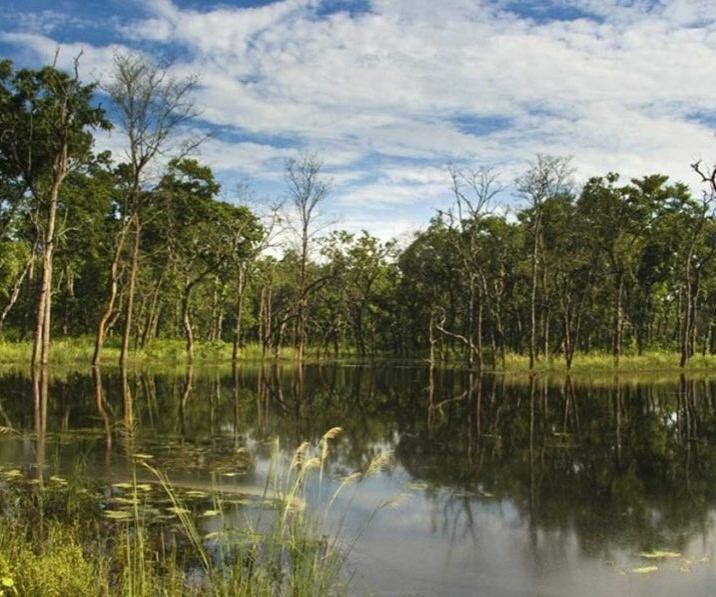
Rich in scenic beauty, home to forests, mountains and lakes.
Less crowded than other trekking routes.
Unlike Everest or Annapurna, Langtang has much calmer trails.
A chance to observe Langtang Village, reconstructed after the earthquake.
Be on the lookout for red pandas, langurs, Himalayan birds, and other indigenous species in the wild.
Be at Tsergo Ri, the highest point of this trekking, to enjoy scenic beauty.
Spectacular views of different Himalayan ranges, including the Langtang mountain range.
Trip overview
The Langtang Valley Trek is one of the most popular short treks among trekkers in Nepal. Located near the Kathmandu Valley, the trek to this destination usually lasts around 7-10 days, a perfect fit for those with limited time.
The trekking location offers something for every trekker. You can explore beautiful cedar woods, enjoy magnificent mountains, or soak in the beauty of the Gosaikunda Lake here.
Kyanjin Gompa, Kyanjin Ri viewpoint, Tserko Ri and the Langtang National Park (32 km away from Kathmandu) are other places you would not want to miss during the trek. The culture of the Tamangs, who reside in this area, is another attraction.
The trek to Langtang Valley, also known as the Valley of Glaciers, begins at Syabrubesi, a village located in the northwest of Kathmandu at an altitude of 1,460 metres. The trek also ends here.
The difficulty level of the trek to the Langtang Valley is moderate. Trekkers can expect long walking days in the terrain that has some steep climbs. You can expect to go up to 4,773 meters during this trek.
The teahouses on the way offer basic accommodations and nice meals. You can expect hot showers as well.
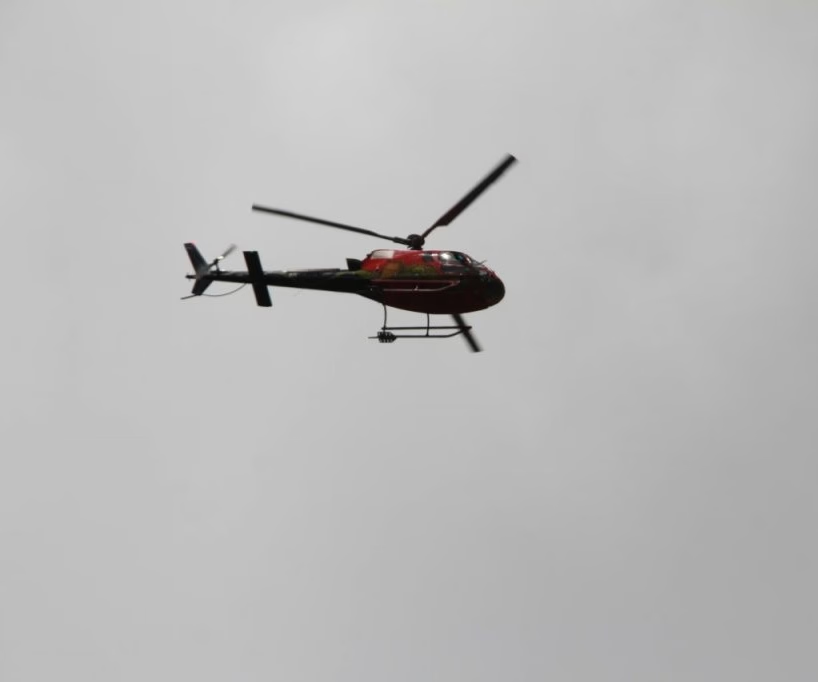
Spring and autumn are the best seasons to be here for trekking, as the weather is favourable during this time. For those who are unable to trek, the Langtang Helicopter Tour is also available.The Langtang National Park entry permit is a must if you wish to go for the Langtang Valley trek. Other than that, you need to think of hiring a guide and porter, take precautions against acute mountain sickness, and consider backup for power and connectivity.

Itinerary
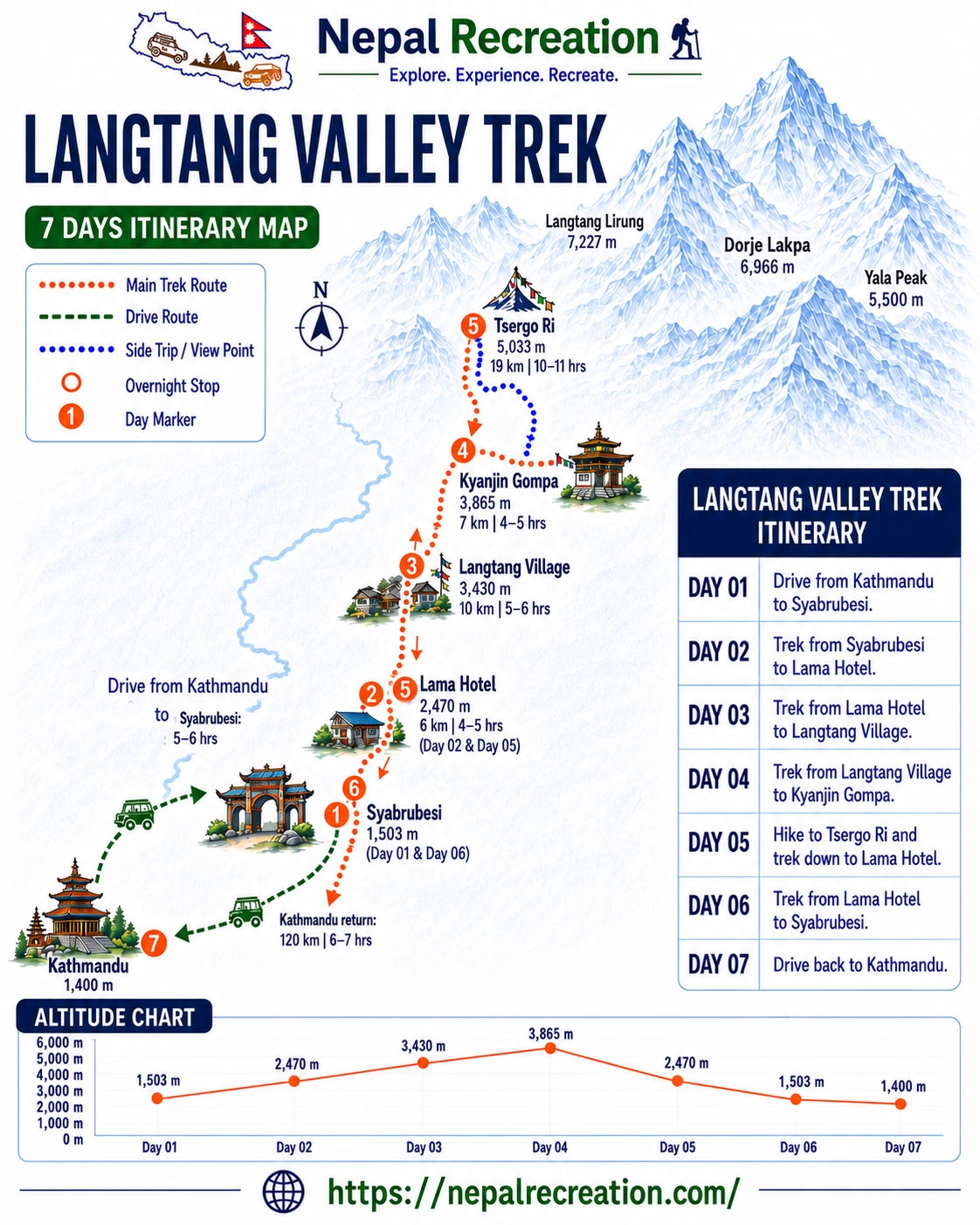
DAY 1:Kathmandu to Syabrubesi
Your journey to the Langtang Valley trek begins with a drive to Syabrubesi from Kathmandu. Choose to take a public vehicle, share a jeep, or rent a private vehicle as per your budget and convenience.
You will reach Syabrubesi after a 7-8 hour drive from Balaju Bypass. The route will follow the Pasang Lhamu Highway along the Trishuli River. The beautiful landscape en route is a treat to your eyes. You can have a short rest at the Trishuli Bazaar after 3-4 hours of driving from Kathmandu.
You will then reach Dhunche, the entry point to the Langtang National Park, in the next 2-2.5 hours of driving from the Bazaar.
You need to stop here briefly to show your trekking permits. Then your drive continues on a steep, rugged path to Syabrubesi. The drive is about 1-1.5 hours, and you reach your destination by late afternoon if you set off from Kathmandu early in the morning.
Syabrubesi village marks the starting point of your trek. You will rest at the teahouses overnight and begin your trek the next day.
Breakfast + Lunch + Dinner
DAY 2:Syabrubesi to Lama Hotel (2,470 m; 6 km; 4-5 hrs)
2,470 mYou start walking after breakfast. The Langtang River trail goes very far in the forest, and the trail is followed. It’s peaceful. All around you, you hear only the river rushing and the birds singing. Hanging bridges and small waterfalls are passed. Your legs begin to go up and down as if they could start working.
You end up stopping a couple of hours later from walking for lunch at a small tea house; their food is simple but always good (dal bhat or some variety of noodles, I am guessing). The second half of the day feels steeper. You often take breaks, you move slowly, and drink lots of water to keep yourself fresh.
By the time you reach the small cluster of lodges in the forest called Lama Hotel, you’ll feel the effort. But you’re also smiling. You surely had started the trek into them, and the mountains showed themselves.
Breakfast + Dinner + Lunch
DAY 3:Lama Hotel to Langtang Village (3,430 m; 10 km; 5-6 hrs)
3,430 mToday, the air will be cooler. Travelling through the forests, you continue on the trail to climb and eventually begin to see snow-covered peaks between the trees. You are crossing a river, and below you, the river rushes, and that is what you will be listening for by sound all day.
As you walk, the forest opens to alpine meadows slowly. You stop up at a viewpoint and are able to get a first clear view of Langtang Lirung further down the valley. It is stunning, it truly makes you feel like you are.
By midday, small villages with stone walls and yaks grazing through them are being passed. You are greeted with quiet smiles from the people here, and they bend their hands to “Namaste.” It’s difficult, though, to describe the stillness of these places. There is a slow pace and a peace to it all.
Langtang Village isn’t like any of the stops before it, and the second you reach it, you are quickly aware. This village was rebuilt in the 2015 earthquake. Living here has a quiet strength of the people. Wonderful days when you get to rest, drink warm tea, and watch the clouds go over the mountains.
Breakfast + Lunch + Dinner
DAY 4:Langtang Village to Kyanjin Gompa (3,865 m; 7 km; 4-5 hrs)
3,865 mThis day feels more relaxed. It climbs rather steadily, but not up too much. The closer you get to Kyanzin Gompa, the more mani walls (walls with prayer carved over them) and more Buddhist chortens and prayer flags. The more you move on, the more the spiritual energy becomes.
The views are incredible. Mountains surround you on all sides now. You can never stop, just to stare at the yaks crawling on earth, at the ice fields that glitter in the rays of the sun, at the endless blue sky over and beyond.
Upon reaching Kyanjin Gompa, you feel as if you have entered another world. The village is small, peaceful, and has large views with stone houses. The monastery rests calmly as antiquated prayer flags flutter in the wind. Neighboring you is a cheese factory, where you can taste the fresh yak cheese.
It is a place to fill your lungs with air and know yourself. There will be a tough day today, but tomorrow will be the toughest day of the trek, but also the day that will be the sweatiest, the most rewarding day of the trek. You’ve earned your rest.
Breakfast + Lunch + Dinner
DAY 5:Tsergo Ri and Trek down to Lama Hotel (5,033 m; 19 km; 10-11 hrs)
5,033 mThis day starts in the dark. You are not one of those people who like to get up early within reason, but approximately at 4 or 5 in the morning, you get up and go outside into the freezing cold. You begin the steep climb of Tsergo Ri (5,000 metres) with all your warm layers on. It’s not easy. It’s tough, going through the gooey trail, going to thin air, each step is heavy.
But you slowly rise above all. The mountain tops are hit with golden light and the sun is rising. When you reach the top, you have no voice. Langtang Lirung, Dorje Lakpa, and so forth stand over 5,000 meters high and are surrounded by Himalayan peaks. The moments you never give up, those will stick with you forever.
You stay as long as you can, and you leave only when your body forces you to begin the long walk down and out. Returning to Kyanjin Gompa, you eat something warm and keep descending.
The Lama Hotel is quite tiring to descend to. The full weight of the day puts a knot in your legs, and your head droops. And it is yet something proud and peaceful. Today, you did something big you would never do: Become someone most people never will.
Breakfast + Lunch + Dinner
DAY 6:Syabrubesi to Lama Hotel, (12 km; 1,503 M; 5–6 Hrs.)
1,503 mThe knees are harder to go down, easier to go down on the lungs. The trail feels familiar now. You pass the same fortress, the same forests, the same bridges and now you recognize the tea house owners along the way.
An appetite for good food is earned by walking hard enough to the organisation’s good work, which consists of lunch in one of the riverside villages. Finally, when you arrive in Syabrubesi, the attitude is completely different. Happy, tired, a bit emotional. You have rummaged through deep forests, remote villages, along sky-high peaks, and now it was finally coming to an end.
Tonight feels like a celebration. You reflect the whole time, you chat to other trekkers, and you keep eating.
Breakfast + Lunch + Dinner
DAY 7:Drive back to Kathmandu (1,400 m, 120 km, 6-7 hours).
1,400 mIn the early morning, the jeep or bus is jumped and back to city life bumpy ride starts. The towns follow from the villages, and the back of the mountains starts to retreat into the rear windows of your car. You know you’re headed to traffic, noise, and Wi-Fi, but something has shifted within you.
Back in Kathmandu, it feels quite strange to be around so many people and so many sounds. But there’s also comfort. A hot shower. A proper bed. Good coffee.
Your thoughts go to the soundlessness of Langtang, you think about Tsergo Ri’s cold wind and the people’s faces as they poured tea and memories onto you.
You didn’t walk all the way through one trek or live a week in a world in which you and yours are not the same. You know it will be on your mind as you put off your boots.
Altitude Profile
Looking to Customize This Trip?
We curate bespoke private itineraries tailored to your dates, preferences, and luxury requirements.
Cost breakdown
What's included
Kathmandu to Shyprubesi by Bus.
Shyprubesi to Kathmandu by Bus.
Accommodation during the trek: Clean and basic tea houses/lodges on a twin-sharing basis
All meals during the trek: Breakfast, lunch, and dinner with tea or coffee
Experienced and English-speaking local guide (being a licensed trekking guide) throughout the whole trek.
Permits and fees: Langtang National Park entry permit and TIMS (Trekkers’ Information Management System) card
First aid kit: Carried by the guide in case of basic medical needs.
Route Map and Eco Holidays Nepal Cap.
Necessary Sleeping Bag, Down Jacket and Duffel Bag return after complete the Trek.
All official fees are included in taxes and service charges by the government.
What's not included
International flights to and from Nepal
Insurance (trekking at high altitude must be covered)
Porter Service: One porter will be provided for two trekkers to carry their baggage (max 12 kg per trekker) ($140) per Porter.
Also does not include lunch and dinner in Kathmandu.
Drinks and snacks during the trek (bottled water, soda, additional snacks)
Boots, sleeping bag, clothes, walking poles, and personal trekking gear, etc., for personal use.
Charging, WiFI, and hot showers in tea houses are usually extra (expensive).
Tips for guide and porter (not required but always appreciated)
On the off chance that you need an emergency evacuation, what are the emergency evacuation costs (check that your insurance policy covers it)
Dates & Prices
Oct 23 – Oct 30, 2026
Oct 30 – Nov 6, 2026
Prices are per person on a twin-share basis. Departures are limited, especially during peak season.
Trip map
Useful information
Cost and Booking Info
However, the Langtang Valley Trek package is affordable for your money. All the things needed on the trek, such as transport, guide, food, permits, lodging, etc, are included in the prices. You need to get to the right place at the right time; they are remote and isolated. After the booking, everything is handled for you until your return to Leh.
The cheaper option is to come with a group. However, we offer discounts for two or more people. The service also extends to those arriving by themselves; there is a small additional charge but we make sure you will have fun. You can get personal care and even decide to join another group for company.
Booking is easy. All you have to do is fill out a short form and pay a small deposit to reserve your space in the retreat. Last of all, we’ll send you all the details. We’ll guide you on what to bring, and when/what time to come. Your arrival in Nepal should mean you can pay the rest.
The booking process is as easy and straightforward as it gets. Simply a book that brings you back to simpler things; therefore, with no hidden costs nor any surprise fees in spite of it being an artistic endeavour. Any questions at all, just ask—we’re glad to do so.

Best Time to Trek
The two best seasons of the year to trek to the Langtang Valley are autumn and spring. Whether you are looking for a 5-day Langtang Valley Trek or a longer one, the six months between these two seasons are the right time. These months have pleasant and stable weather conditions.
But that does not limit you from trekking in winter and monsoon months as well. The amazing view of terraced farms in monsoon and an opportunity to explore the less-crowded area in solitude in winter are the perks.
Best seasons (Autumn: Sept–Nov; Spring: Mar–May)
Autumn is regarded as the best season for trekking in Langtang Valley. September marks the beginning of autumn, which ends in November. As this season follows the monsoon, the weather clears up from September. The trekkers are able to enjoy the majestic views of mountains and other landscapes on their route.
In the lower regions, the daytime temperature ranges from 10°C and 20°C in autumn. Higher altitudes record temperatures from 0°C to 10°C. The moderate temperature during these months makes the trekking experience comfortable.
Early September might experience some rainfall, but overall the rainfall in autumn is minimal. Comparatively dry weather, low levels of humidity, and long sunny days make the trekking experience comfortable and pleasant.
But since it is the peak trekking season in Langtang, the trails can be crowded. It might annoy the trekkers who are in search of solitude while trekking. The other disadvantage: The rates of flights, accommodation, and food can increase.
Spring, which starts in March and ends in May, is regarded as the second-best season to trek to Langtang Valley. The rhododendrons in their full blooms make the trails vibrant places to be.
The weather gets warmer with the end of colder months. Daytime temperature in the lower regions ranges between 10°C and 20°C, higher regions have 5°C to 10°C.
May means the onset of pre-monsoon in Nepal; thus, be wary of occasional evening showers. In the rest of the cases, the May weather is mild — it is apt for trekking.
One can expect to explore beautiful nature in spring, especially the rhododendron blooms and green forests along the trekking trails. You can also watch wildlife like red pandas and langurs in the Langtang National Park.
Tamangs, the locals, celebrate different festivals during this time, and you can celebrate with them, too.
But like in autumn, expect crowded trails, fully occupied lodges and teahouses, and an increase in rates for accommodations, food, flights, and other things.
Can I trek in Langtang in winter or monsoon?
The daytime temperature in winter months — December to February — ranges between 5°C and 10°C and -5°C to 5°C in lower and higher regions, respectively.
Trekking trails in higher altitudes are covered with snow, delaying your trekking journey. You may not be able to trek through the high passes. Yet the sunny days make it a pleasant experience for trekking.
The trekking trails are less crowded in winter, making it the best time for trekkers to trek in solitude.
The accommodation cost and other services needed for trekking become cheaper in winter. Thus, this season makes the Langtang Valley Trek inexpensive.
You also get to enjoy a clear and stunning view of the Langtang Himalayan range during the trek.
Warnings: The freezing temperature at night, snow-covered trails, and shorter days can make the trekking experience challenging.
Meanwhile, monsoon rains are a boon for the Langtang Valley — one can witness the lush green landscapes and blooming flowers, among other things. You can trek in monsoon months (June, July, and August) that record temperatures between 15°C to 20°C at lower regions and 5°C to 10°C in higher altitudes. The trails are quiet as compared to autumn and spring.
But you need to be careful of rains that might make trails slippery; there is a risk of landslides and floods. Also, you might have to deal with leeches and bugs, especially in the lower regions.
Culture & Landscape
The Langtang Valley trek is an experience that lets you explore the rich culture and breathtaking landscapes of the area. Brace yourself not to get overwhelmed by the breathtaking view of the beautiful rhododendron forest. Equally majestic is the view of towering Himalayan peaks and the alpine meadows. The Tamang culture and lifestyle are something you would not miss witnessing during your trek there.
Tamang culture and lifestyle
The Tamang people of the Langtang Valley offer trekkers a rich cultural experience. They speak Tamang language. They follow Tibetan Buddhism — you can see monasteries like Kyanjin Gompa, Buddhist symbols like prayer wheels, mani walls, and chorten.
If you happen to be there during January or February, you can witness them celebrating their traditional Lhosar festival.
Even today they are living a traditional lifestyle — yak herding, cheese making, and agriculture, among others. Yet they have also branched out to businesses like running lodges and teahouses.
Effect of 2015 earthquake and village restoration
The 2015 earthquake in Nepal had a devastating effect on the Langtang Valley. The entire Langtang Village was reduced to rubble due to a catastrophic avalanche triggered by the earthquake. According to The Kathmandu Post, more than 650 people were killed in the disaster.
Following the earthquake, trekkers had avoided Langtang Valley. But the area is seeing a gradual increase in trekkers’ arrival.
Langtang was rebuilt with the support of local communities, international aid agencies, and the Nepal Government. The new Langtang Village was constructed slightly higher up the valley. Earthquake-resistant materials and modern designs have been opted to restore the village.
Now, with restored monasteries and reopened trekking routes, the Langtang Village stands as a symbol of resilience.
Wildlife and scenic highlights
If you are a wildlife enthusiast, the trek allows you to spot species of red panda, Himalayan black bear, snow leopard, Himalayan Thar, musk deer, and different species of birds. The trail also goes through the lush green forests, adding to the scenic beauty of your trekking experience. You can also enjoy the views of Langtang Lirung —the tallest peak in the region—and Dorje Lakpa. Other popular viewpoints include Kyanjin Ri and Tserko Ri.

Trek Difficulty
The Langtang Valley trek is a short expedition with a moderate level of difficulty. This means the trek to this area is suited to those with average physical fitness.
One does not need to have prior experience of trekking to be able to trek to Langtang Valley. Yet the weather conditions also make the trekking experience difficult. The snowfall in winter and slippery trails in monsoon can add to the difficulty level.
How difficult is the Langtang Valley Trek?
The Langtang Valley Trek in Nepal is said to have moderate levels of difficulty. It means the trek is suitable for those individuals who have a moderate level of fitness. This trek requires you to walk for 4-6 hours every day, in general.
You will also experience some challenging climbs as well as some descents. The ascents and descents towards Kyanjin Gompa and Tserko Ri are regarded as comparatively difficult.
If you exercise regularly and have some hiking experience, then the Langtang Valley Trek is something you can try.
Is it suitable for beginners?
Yes, of course. If you are someone in good shape with basic hiking experience, then you can navigate through this trail. The walking distances are not rigorous here, making the trekking experience beginner-friendly.
As the trek does not require technical climbing skills, the beginners will not find it too challenging.
What makes the trek easier is also the well-maintained trails.
You can learn to adjust to the altitude while on this trek as you gain elevation gradually. Moreover, the risk of altitude sickness is lower here as the trek route is at a lower altitude.
Do I need prior trekking experience?
The moderate difficulty level of the Langtang Valley trek does not strictly demand prior experience for trekkers. Yet, the experienced ones say prior trekking experience is highly recommended. Some prior experiences can make your overall trekking experience easier and more fun.
A few reasons why you need to have some kind of experience are:
It helps if you have navigation skills in the mountainous terrain.
You will already know the ways to acclimatise at high altitude and reduce the effects of potential altitude sickness.
Walking, climbing, and descending require physical strength — prior experience helps you build the stamina needed for this trek.
But you need not skip trekking here even if you have no experience. If you have an experienced guide, better services, and a group, and you are fit, then you will be able to do well as a trekker here.
Is it possible to customize the route or shorten it?
The Langtang Valley Trek can be customised or even shortened to fit your interests and activities you want to focus on, as well as your fitness level. You can either choose short treks or customise it to fit your needs. Talk to your trekking company for the kind of itinerary you want.
You can opt for short treks with itineraries of 5 days. On this trip you can focus only on the main village of Langtang and Kyanjin Gompa.
If you want to acclimatize and slow your trekking pace, extend the days for rest.
Rather than covering the entire trekking route, focus on certain highlights of the area. You can choose to explore the villages only or visit the monasteries.
Trek Route Info
The route to the Langtang Valley trek starts and ends at Saybrubesi. Once you reach there via road transportation (bus or jeep), you can begin your trek.
Trekkers generally move upstream along the Langtang River on this route. En route, you can spot red pandas and langurs as well as enjoy the waterfalls, green hills, and panoramic mountain views.
Starting point (Syabrubesi) and how to get there
The Langtang Valley trek generally begins at Syabrubesi. It is a small village located in the Rasuwa district of Nepal. Syabrubesi is known as the gateway to the Langtang Valley. It sits at an altitude of 1,460m. It takes a 7-8 hour drive from Kathmandu to reach Syabrubesi. You can get there either by bus or by jeep.
Local bus: If you are travelling to Syabrubesi from Kathmandu, you can get a local bus that departs from the Machhapokhari New Bus Park. It usually departs between 6:00 am and 8:00 pm. You can buy the tickets at the bus park. But since it is a local bus, expect it to be crowded and stop for the pick-up and drop-off of passengers.
Shared jeep: You can book shared jeeps too for travelling to Syabrubesi. They depart early in the morning, usually between 6:00 am and 8:00 am. They are faster and more comfortable as compared to local buses, yet they can be crowded.
Private jeep: You can rent private vehicles and travel to your destination as per your need. The cost to rent such jeeps is, however, higher.
It is the point where the trekkers get ready for their trek into the Langtang Valley. You can check your trekking gear and buy last-minute essentials here. Usually, you can rest overnight after the drive from Kathmandu in the local guesthouses or teahouses.
The village is home to the Tamangs of Nepal. You can explore the village and its unique culture in your short walk here before the actual trekking.
Main stops: Lama Hotel, Langtang Village, Kyanjin Gompa
Lama Hotel, Langtang Village, and Kyanjin Gompa are the main stops on the Langtang Valley Trek. These points serve as resting places for the trekkers. These places can be called the cultural centres offering you an opportunity to explore local cultures. These stops also offer panoramic views of beautiful landscapes.
Lama Hotel: It is a settlement featuring teahouses amidst the lush green forest. Located at an altitude of 2,470 metres, Lama Hotel is the first stop in the Langtang Valley trek. It takes about 6-7 hours from Syabrubesi to reach there. You can rest here overnight at the teahouses before heading to higher elevations.
Langtang Village: After trekking for about 5-6 hours from the Lama Hotel, you reach the picturesque Langtang Village. Located at an altitude of 3,439 metres, the village was rebuilt after the 2015 Gorkha Earthquake in Nepal. The main highlight here is the Tamang culture as it is a home to Tamang people, you can get to know about their traditions, homes, and local crafts, among other things. The village also offers a majestic view of the Langtang mountain range.
Kyanjin Gompa: Be it a 5-day Langtang Valley trek or a longer one, Kyanjin Gompa is a popular stop for the trekkers. Nestled in the beautiful valley, it is at an altitude of 3,780 metres. It takes about a 3-4 hours’ trek from the Langtang Village to reach here. A Buddhist monastery, revered by the Tamangs, is one place you want to be. You also get to experience traditional festivals along with enjoying panoramic views of mountains and scenary.
Day hikes: Kyanjin Ri or Tserko Ri
If you are also looking to focus on certain viewpoints during the Langtang Valley trek, then day hikes to Kyanjin Ri or Tserko Ri could be the best options.
Kyanjin Ri: Amongst the two, Kyanjin Ri hike is suitable for those looking for shorter and easier hikes. It takes trekkers about 3-5 hours to reach Kyanjin Ri from Kyanjin Gompa. Located at an altitude of 4,774 metres, the trek to this point has a moderate difficulty level.
Why trek to Kyanjin Ri? This is the best place to have a picturesque view of Langtang Lirung Glacier, Changbu, Yiurba, and Tserko Peak.
Tserko Ri: The hike to Tserko Ri is regarded as more challenging because it is at a higher altitude of 4,984 metres. It takes 8-9 hours from Kyanjin Gompa for hikers to reach here. Experienced hikers say it requires an early start if you want to hike to this area. But the hike is worth it — the majestic views of the Langtang mountain range (Langtang Lirung and Yala Peak) welcome you there.

Accommodation & Food
The Langtang Valley trek route is a lesser-known trekking route in Nepal as compared to the Annapurna and Everest Base Camp treks. Yet the accommodation and food here are decent enough, offering a comfortable stay for the trekkers. It is mostly the teahouses that offer accommodation in the Langtang Valley Trek. Some locations have lodges with better facilities. You can also find homestay facilities there if you take the ‘Tamang Heritage Trail,’ an alternative trail.
What are teahouses like?
The teahouses available in the Langtang Valley trek route are owned and managed by the locals, mostly Tamang families. They offer simple yet decent accommodations and meals for trekkers. The accommodations offer comfortable lodging, mostly a twin bed with bedding and blankets, and shared bathrooms in higher altitudes. Some teahouses in lower altitudes might have attached bathroom facilities.
Is there food and hot showers available?
The teahouses and lodges en route to the Langtang Valley trek mostly offer both food and hot showers.
Food: The teahouses offer a range of meals — from local specialties like daal and bhat to noodles, momos, pizzas, sandwiches, and so on. They even provide options for vegetarians and vegans. You can warm yourself with warm tea and other hot drinks in the cold weather.
Hot showers: The facility of hot showers is available at most teahouses along the trekking trail. The water is heated either by solar power or gas. But you need to pay extra for each shower.
Do I need to carry my gear or tent?
You do not need to carry a tent, as the teahouses offer food and accommodation at every stop. But you might need to carry your sleeping bag, sleeping pad, and some other gear to ensure that you have a comfortable sleeping time.
A sleeping bag is recommended for higher altitudes, as the ones provided by teahouses might not be sufficient.
A sleeping pad will be a boon when the teahouse bed is not comfortable for you. It provides insulation and extra comfort.
But do not forget to carry with you rain gear, trekking poles, a water filter or purification tablets, and snacks, as well as your other personal hygiene items. Do not forget to pack layers of clothes to deal with the weather conditions that vary according to altitude and time of day. A first-aid kit is a must. So is a headlamp with extra batteries.
Cost & Permits
You need to understand the associated costs and necessary permits required for trekking in the Langtang Valley before you start your journey.
You need to obtain the permits for entering the Langtang National Park . Such permits are used to control the number of tourists visiting the area as well as to protect the natural environment of the trekking trail.
What permits are required?
Trekkers need to obtain one permit to embark on the Langtang Valley trek:
Langtang National Park Entry Permit
All the trekkers must obtain a permit for the Langtang National Park if they wish to trek in that area. You can trek and stay inside the national park until the permit is valid without paying additional fees. The permit fee is used for the preservation of the park and its ecosystem
Where can I obtain: You can obtain the permit at the Langtang National Park entry point in Dhunche. Or you can get it in Kathmandu, at the head office of the Nepal Tourism Board. One needs to submit your passport, visa, and passport-sized photo and apply for the permit.
TIMS Card
TIMS stands for Trekkers’ Information Management System. The system was implemented in Nepal to ensure the safety of trekkers. But it is no longer required as per the recent decisions of the government.
How much does the Langtang trek cost?
Langtang Valley Trek is the answer if you are looking for a budget-friendly trekking option in Nepal. On average, the trekking cost for an individual for a 7-day trek is $565. With proper planning and careful budgeting, you can enjoy your trek at a lower cost.
The cost covers fees, including those of the permits, guides, meals, services, and accommodations. Nonetheless, the price can vary depending upon the time of the year you choose to trek to the Langtang Valley. The peak tourist seasons, spring and autumn, can make your budget go higher. That’s because the rates tend to increase during these seasons. The cost might increase if you extend your stay, while it may go down if you opt for a very short trek.
Some of the reasons that make trekking to Langtang more affordable are:
Syabrubesi, from where the trek begins, is easily accessible by road, and you can opt for local vehicles to get there. The rate goes down if you choose to share transportation with groups.
The rate of permits is affordable.
The simple teahouses on the trekking trail are more affordable than the luxurious hotels.
If you hire a guide as a group of trekkers, the cost will be divided among the group members, making the trek budget-friendly.
Packing List
Carefully pack your things before heading to the Langtang Valley trek. Experienced trekkers suggest you pack light and smart. The most important thing is a comfortable backpack — it will ensure you have a comfortable trek while keeping your things safe. You might hire a porter to carry your luggage, but that does not mean you have to overpack. Understand the climate and temperature of the area, and pack accordingly.
What should I pack for the Langtang trek?
Here is a breakdown of the packing list for the Langtang trek:
Documents
Valid passport, trekking permit, and visa documentation
Trekking equipment
Backpack with rain cover
Sleeping bag
Trekking poles
Headlamp, extra batteries
Water bottles
Duffel bag
First aid kit
Trekking umbrella
Trekking map, compass, GPS device
Multi-tool, knife
Clothes
Lightweight and moisture-wicking tee-shirts and pants (base layers)
Fleece or down jackets (insulating layers)
Waterproof and windproof jacket and pants (outer layers)
Trekking pants
Insulated gloves, thermal hat
Hiking wool or synthetic socks
Comfortable and breathable undergarments
Wide-brim sun hat/cap
Footwear
Hiking boots with ankle support
Camp shoes, sandals
Personal hygiene
Hand Sanitizer
Toothbrush and toothpaste
Soap
Toilet paper
Wet wipes
Moisturizer, sunscreen and lip balm
You can also pack a camera, smartphone, portable charger, notebook, and pen as per your need. Bring along dried fruits, energy bars, etc., as snacks.
Do I need warm clothes and a sleeping bag?
The Langtang Valley is located at a higher altitude. It means the temperature is cooler, which requires you to carry along warm clothes as well as a sleeping bag. The changing weather conditions at high altitudes can make the evenings and nights colder. So, packing an extra layer of warm clothes is always a must for a safe trek. It will help you battle the cold weather caused by rain, wind, and snowfall.
You can pack thermal undergarments, fleece jackets, or a down vest as your warm companions. Do not forget to carry warm socks and insulated boots along.
You can stay warm and sleep comfortably at night if you bring along a sleeping bag. Even if the lodging facilities and teahouses have bedding and blankets, they might not be sufficient for colder nights. So, invest in a good-quality sleeping bag to ensure your quality sleep when at the Langtang Valley trek.

Altitude & AMS
Altitude sickness, like AMS (Acute Mountain Sickness), is a health condition caused by your body’s reaction to low air pressure and oxygen levels at higher altitudes. Our body starts experiencing the symptoms of AMS typically in areas above 2,400 metres. But some individuals might get affected even in the areas as low as 2,000 meters.
In order to deal with AMS, proper acclimatization is a must.
Maximum Altitude: Kyanjin Ri
At an altitude of 4,773 meters, Kyanjin Ri is the highest point in the Langtang Circuit that the trekkers can trek to. From this point, you can see the breathtaking views of Langtang Lirung, Loenpo Gang, and a range of other mountains. That’s the reason most trekkers opt to go up to this point in their trek to the Langtang Valley.
The trek up to Kyanjin Ri is not regarded as a high-altitude trek. Yet you must acclimatize to avoid the risk of altitude sickness. Before deciding to trek to the Langtang Valley, take proper precautions and also be aware of the potential risks of AMS.
Risk of altitude sickness
As you will be trekking above the altitudes of 2,400 meters, trekking to the Langtang Valley comes with the risk of altitude sickness. Some of the factors that are responsible for increasing your risk of altitude sickness include:
Ascending too quickly does not provide enough time for your body to acclimatize, leading to the risk of altitude sickness
It will be harder for your body to function normally at higher altitudes due to the low oxygen level in the air.
Some people may experience symptoms of altitude sickness at lower altitudes, too.
Your medications, like sleeping pills, can also affect your ability to adapt to the changing altitude.
Moderate symptoms can be treated with medication, proper rest, and intake of fluids.
Symptoms like severe headache, confusion, loss of consciousness, shortness of breath, and chest tightness need immediate medical attention.
How to acclimatize properly?
A proper acclimatization will prevent and reduce your chances of getting AMS and other forms of altitude sickness on your Langtang Valley trek. If you are thinking of trekking to this area, train yourself physically at least 2-3 months before the actual trek. You must be in shape and have good stamina to be able to trek in a comfortable manner.
Here is a brief guide:
Once you arrive in Kathmandu, spend a few days here. Do not immediately get off your plane and head to Syabrubesi. Kathmandu is at an altitude of 1,400 meters, and Langtang Valley is at 4,000 meters. It will allow your body a gradual adaptation.
Start your trek slowly. Do not rush to ascend.
Do not ascend more than 5,00 meters a day, especially in altitudes that are above 3,000 meters.
Priorities rest. Your itinerary must have rest days at different points, like Kyangjin Gompa to allow time for your body to acclimatize.
Stay hydrated throughout the day.
Eat nutritious food.
Avoid excessive caffeine intake, alcohol, and smoking.
If you experience any symptoms of altitude sickness, do not force yourself. Rather, descend to a lower altitude.
Connectivity & Power
The teahouses en route to the Langtang Valley trek have the facilities of electricity, mostly powered by solar energy. You can charge your devices there. The Wi-Fi and phone signals are there, but not always reliable.
Can I charge my phone or camera?
You can charge your devices — phone or camera — at the teahouses in both the higher and lower altitudes. Low-altitude teahouses are mostly connected to the national electricity grid, while higher altitudes use solar power. You are asked for an extra charge for charging your devices in these areas. It is wise to bring portable solar battery chargers along.
Is there Wi-Fi or a phone signal?
Some teahouses have Wi-Fi facilities, but the speed and reliability are something you cannot depend on. Internet access is even limited or unavailable in remote areas and high altitudes.
As for the mobile network, you can opt for the SIM cards from NTC and NCELL. Their coverage is available up to Kyanjin Gompa. But like the Wi-Fi, the network coverage is not reliable, so is the case of mobile data.
Guide & Porter
Hire a guide as well as a porter for your Langtang Valley trek, be it short- or long-term. This ensures a safe and easy trek for you.
Do I need a guide for Langtang?
A guide is mandatory if you want to trek to the Langtang Valley, according to the requirements of the Nepal Government. The government has banned solo trekking in this area not only for international trekkers, but also for local trekkers.
As per this regulation, you need to hire a licensed guide. It ensures the safety of the trekkers. Along with that, a guide can help you to obtain permits and arrange for accommodations and transportation. They are also helpful for you to understand the locale, enriching your trekking experience with cultural facts.
How much do guide and porter services cost?
You can hire a separate guide and a porter or a two-in-one service, too, where one person does both jobs.
If you want to hire a guide only, the guide cost for the Langtang Valley trek costs between $25 and $35 a day.
Porter services cost between $15 and $25 a day. They carry a luggage that weighs up to 20-25 kg at this rate.
If you are hiring one person as both guide and porter, the rate is slightly higher than the standard rate of individual jobs.
Also remember that it is customary to tip them, from $5 to $10 per staff member.
Frequently asked
What Travellers Say
Rated 5.0/5 from 3 reviews.
Great hike
An Excellent Transport services in Nepal

Best tour company