- Duration
- 11 days
- Difficulty
- Medium
- Max Altitude
- 5,160 m(16,929 ft)
- Destination
- Nepal
- Activity
- Trekking
- Best Season
- Spring & Autumn
- Group Size
- 1-12
- Transport
- Private vehicle & Local jeep/bus
- Arrival City
- Kathmandu
- Departure City
- Kathmandu
Trip Highlight
Well-designed 11-day itinerary that covers the core Manaslu Circuit Trek route without unnecessary extra days
Scenic drive from Kathmandu to Machha Khola, which gradually transitions from hills to deep river gorges
Trekking across the authentic Gurung, Nubri, Tsumba and Tibetan-influenced villages such as Jagat, Deng, Namrung, Samagaun, and Samdo
An iconic journey that takes you across the Manaslu Restricted Area, offering a quieter and less-commercial trekking experience
Gradual altitude gain with proper acclimatization built into the itinerary
Optional Manaslu Base Camp (4,800m/ 15,750ft) hike from Samagaun for acclimatization and up-close mountain view
Dramatic change in landscape from lush forests to alpine terrain and glacial valleys
Crossing the challenging and rewarding Larke La Pass (5,106m/ 16,751ft), one of the major Himalayan passes
Rich cultural exposure through monasteries, mani walls, prayer flags, and traditional stone villages
Less crowded and more serene route compared to the Everest and Annapurna regions
Breathtaking vistas of Manaslu, Himlung Himal, Annapurna, Cheo Himal, Kanguru, Cho Himal, Ngadi Chuli, Larke Peak and Ganesh Himal
Ideal balance of adventure, culture, altitude, and time efficiency for trekkers with limited days
Trip overview
The Short Manaslu Circuit Trek is one of Nepal’s most rewarding high-altitude adventures that offers the true essence of the full Manaslu Circuit route in a shorter and more manageable timeframe. This trekking journey takes you across the heart of the Manaslu region, which is known for its remoteness and as a culturally rich part of the Himalayas. The beautiful settlements here are influenced by Tibetan Buddhism and Bon cultures. The traditional lifestyle and the Himalayan culture here remain largely untouched by mass tourism. Over the course of 11 days, you will experience a dramatic transformation in the landscape.
You will have the opportunity to traverse from lush subtropical forest and deep river valleys to alpine terrain, glacial moraines and the foothills of Mount Manaslu (8,163m/ 26,781ft) at its base camp. This Short Manaslu Trek itinerary is structured carefully to allow gradual acclimatization, steady climb and sufficient rest before crossing the Larke La Pass (5,106m/ 16,751ft). This short Manaslu Circuit is perfect for trekkers who want the adventure and the panoramic views of the Himalaya without committing to the full 16 to 18-day itinerary.
Despite being shorter, this trek still delivers the major highlights and the heart of Manaslu: the spectacular views of Mount Manaslu, the sense of isolation, immersion in the unspoiled Himalayan culture and the thrill of crossing one of Nepal’s highest passes. For anyone who is seeking a Himalayan adventure that combines scenery, culture and a manageable schedule, this Short Manaslu Circuit Trek itinerary is an ideal choice.
Short Manaslu Circuit Trek Itinerary (Outline Plan)
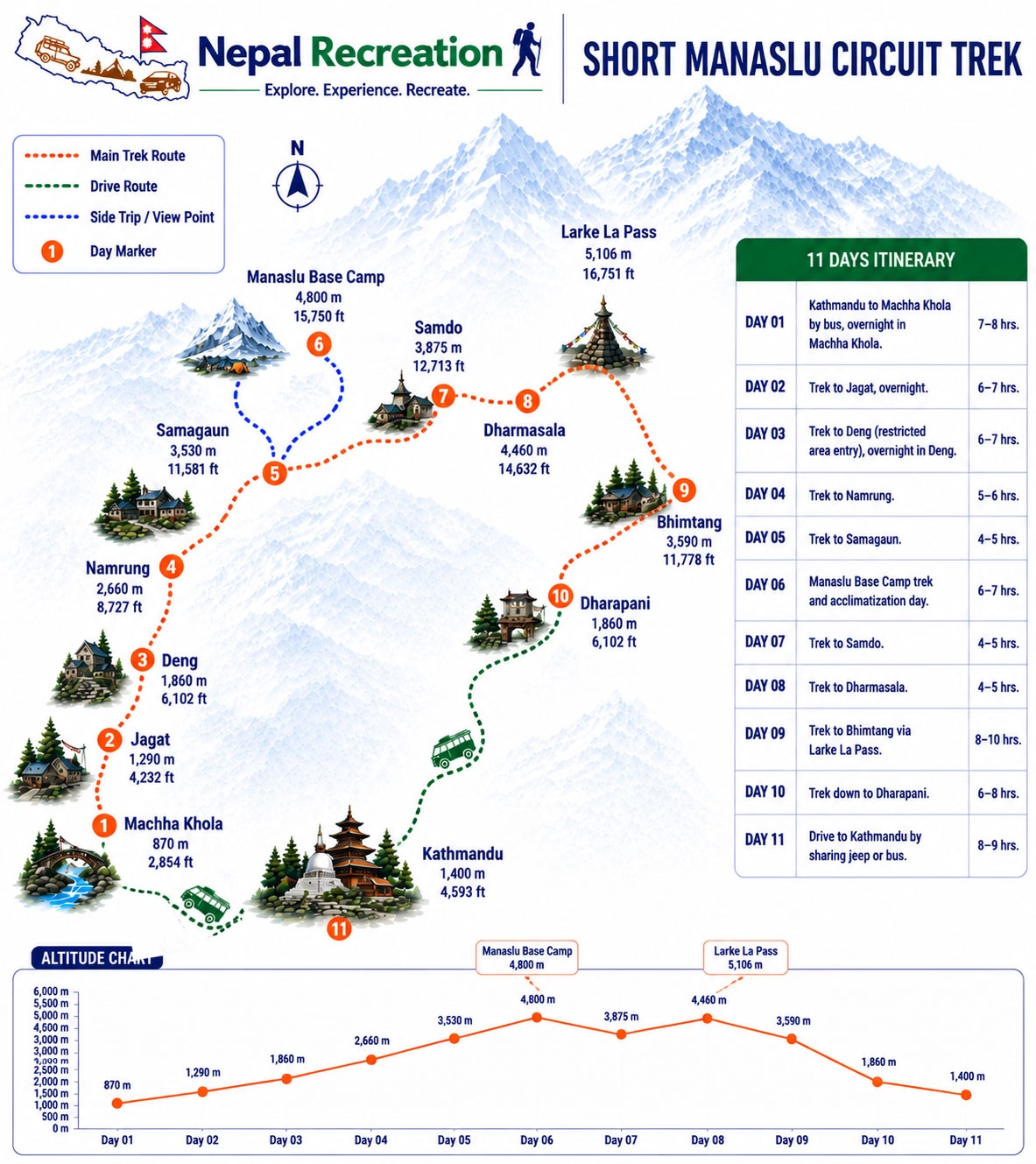
Day 01: Kathmandu (1,400m/ 4,593ft) to Machha Khola (870m/ 2,854ft) by bus, then stay overnight in Machha Khola: 7 to 8 hours
Day 02: Trek to Jagat (1,290m/ 4,232ft), stay overnight: 6 to 7 hours
Day 03: Trek to Deng (1,860m/ 6,102ft) (Restricted area entry), stay overnight in Deng: 6 to 7 hours
Day 04: Trek to Namrung (2,660m/ 8,727ft): 5 to 6 hours
Day 05: Trek to Samagaun (3,530m/ 11,581ft): 4 to 5 hours
Day 06: Manaslu Base Camp (4,800m/ 15,750ft) and acclimatization day: 6 to 7 hours
Day 07: Trek to Samdo (3,875m/ 12,713ft): 4 to 5 hours
Day 08: Trek to Dharmasala (4,460m/ 14,632ft): 4 to 5 hours
Day 09: Trek to Bhimtang (3,590m/ 11,778ft) via Larke La Pass (5,106m/ 16,751ft): 8 to 10 hours
Day 10: Trek down to Dharapani (1,860m/ 6,102ft): 6 to 8 hours
Day 11: Drive to Kathmandu by sharing jeep or bus depending on ability or group size: 8 to 9 hours

Itinerary
DAY 1:Kathmandu (1,400m/ 4,593ft) to Machha Khola (870m/ 2,854ft) by bus, then stay overnight in Machha Khola: 7 to 8 hours
1,400 mYour Short Manaslu Circuit Trek kicks off with an early departure from Kathmandu. After an early morning breakfast, you will head west toward the rural districts of Dhading and Gorkha. You will drive on the Prithvi Highway, enjoying the scenic landscape. Once you pass Dhading Besi, the road shifts from highway to off-road route. Although the vehicle starts to move slowly on the rugged mountain route, you will be able to admire the countryside’s beauty while driving along the Budhi Gandaki River.
As you continue driving toward Arughat, the surroundings feel more village-based. Small roadside shops and farm terraces line the road. From Arughat, you continue toward Soti Khola and drive on a narrower road in the last stretch. The drive from Soti Khola to Machha Khola becomes more rugged and it brings you to the lower valleys where your Short Manaslu Trek will begin. Machha Khola is a riverside village with basic teahouses and it is a practical overnight stop after a long day on the road.
DAY 2:Trek to Jagat (1,290m/ 4,232ft), stay overnight: 6 to 7 hours
1,290 mThis is the first day of the trek in your Short Manaslu Circuit Trek itinerary. After a warm breakfast in Maccha Khola, you will follow the gentle walk along the Budhi Gandaki River upstream. Not long into the day, you will arrive at Khorlabesi Village. From here, the path gradually leads you toward Tatopani, which is popular for its natural hot springs. Most trekkers pause here briefly, as this village offers a natural break point before the trail gets steeper.
After Tatopani, you will follow the trail along the rocky sections that bring you toward Dobhan. This beautiful village is located at the confluence of two rivers. The terrain around Dobhan feels slightly more enclosed and the valley gradually starts to tighten. From Dobhan, you continue walking toward Yaruphant Village. The path starts to widen and you will get clearer river views.
The final trekking segment to Jagat involves a steady climb with a few stone staircases. Jagat is more structured compared to the earlier villages. It has wider walking paths, more organized teahouses and a checkpoint where you will need to register your permit. This is a comfortable place to spend the night before you transition into the restricted region.
DAY 3:Trek to Deng (1,860m/ 6,102ft) (Restricted area entry), stay overnight in Deng: 6 to 7 hours
1,860 mOn this day of you trek on the off-beaten route, you will walk on the trail that gradually rises toward Salleir, leaving Jagat behind. This section is quieter but gives good views of the lush valley. After Salleri, the trail stretches toward Philim Village. This is one of the largest villages in the lower Manaslu area. Philim has a school, scattered houses and a wider layout. As you trek past this beautiful village, you will then push toward Ekle Bhatti. It is a small rest stop with a few teahouses.
From here onwards, the Manaslu Circuit Trek weaves toward Tsum Valley; however, you will continue walking straight into a more forested section. The path becomes shaded and peaceful as you approach Pewa Village, a tiny riverside settlement. During the last leg of this day’s trek, you will walk steadily along the Budhi Gandaki River before climbing into Deng. The energy of this village feels calmer and more remote. Deng marks the clear shift in atmosphere as your trek progresses.
DAY 4:Trek to Namrung (2,660m/ 8,727ft): 5 to 6 hours
2,660 mYou will leave Deng after breakfast and begin your short climb through a dense stretch of forest. A gentle ascent will then lead you to Rana Village, from where you can get your first closer look at the changing landscape of Upper Manaslu. You will then follow the path that sticks close to the Budhi Gandaki River and gradually takes you toward Bihi Phedi. Now, you will start to notice the shift in cultural tone with the influence of Tibetan Buddhism. As you proceed further with the trekking route, you will arrive at Ghap Village.
This village sits in a forested area and has multiple teahouses, usually a common lunch spot among the trekkers. The trail from Ghap will then take you across the mix of forest and mani walls as you head toward Prok. The final section to Namrung involves a steady climb through the thick forest and you will gradually gain altitude. As you get closer to Narmung, the path widens and you will catch clear views of the higher peaks.
DAY 5:Trek to Samagaun (3,530m/ 11,581ft): 4 to 5 hours
3,530 mOn the fifth day of trekking Nepal Manaslu Circuit, your trail from Namrung begins with a gradual climb to Lihi Village. It is a beautiful village that is surrounded by terraced farmlands and small chorterns. The terrain in this part of the route feels more open and the air is noticeably cooler. From the village, you will continue to walk toward Sho Village, where the view of the towering peaks and the surrounding valleys gets wider. After Sho, the route leads you into Lho, one of the most culturally significant villages of the Manaslu region.
Lho Village has a large monastery above the village and is one of the best places to see Mount Manaslu early in the morning. From here, the trail gently ascends through forested sections and open fields as you head toward Shyala Village. The final stretch from Shyala to Samagaun is straightforward and mostly flat. Samagaun is one of the major stopping points on the trek and the main base for acclimatization before you head toward Larkya La.
DAY 6:Manaslu Base Camp Trek (4,800m/ 15,750ft) and acclimatization day: 6 to 7 hours
4,800 mToday is an acclimatization day in your Short Manaslu Circuit Trek itinerary. You will do an acclimatization hike to Manaslu Base Camp early in the morning. Following the steady climb above Samagaun Village, you will cross open fields and moraine ridge toward the base camp. You will trek past Birendra Lake, which is just beneath the main climbing route. From here, the trail continues uphill along the rocky slope, then finally climbs to the base camp. This Manaslu Base Camp Trek experience within the circuit route will provide you opportunity to embrace the beauty of the eighth-highest mountain in the world from up close.
At the base camp, the landscape is barren and open and the altitude becomes more noticeable. Reaching Manaslu Base Camp gives you a clear understanding of the scale of the mountain. After spending some time for acclimatization and relishing the magical Himalayan atmosphere, you will return back to Samagaun on the same route. In the late afternoon, you can take your time to stroll around the village or hike to a ridge to enjoy the sunset views.
DAY 7:Trek to Samdo (3,875m/ 12,713ft): 4 to 5 hours
3,875 mAfter the acclimatization day, you will continue walking on the Manaslu Base Camp Trek route. From Samagaun Village, the trail stretches north along the wide and open valley. You will walk straightforward across the gentle gradient, enjoying the stunning views of the surrounding cliffs and glaciers. As you continue walking further ahead, you will pass a few yak pastures before reaching Kermo Kharka. It is a scattered grazing area that gives you a sense of how isolated this upper region is.
As you continue climbing higher, the valley narrows slightly before opening again toward Samdo, a traditional Tibetan-style village. This village is compact, built on a small ridge and is surrounded by high peaks. Samdo feels more remote than anything you have passed so far and the atmosphere reflects the high-altitude culture of the locals.
DAY 8:Trek to Dharmasala (4,460m/ 14,632ft): 4 to 5 hours
4,460 mYou will leave Samdo after a warm breakfast and follow the trail that starts with a gradual ascent along the wide valley. The trekking route on this day of the short Manaslu Trek is open and exposed. You will traverse across the scattered yak pastures and dry rocky sections. After about an hour, you reach Larke Bazaar, which is a historical trading point with the merchants of Tibet. Today, it is only a small rest area, but it also marks the point where the trail begins to rise more steadily.
From Larke Bazaar, the path climbs gradually along the side of the valley. Along the way, you will be able to enjoy clear views of the surrounding glaciers and rugged cliffs. The air becomes noticeably thinner as you approach Dharmasala (also known as Larkya Phedi). It is not a traditional teahouse, just a basic shelter consisting of a handful of stone lodges built specifically for trekkers preparing to cross Larkya La. The facilities are limited, but it is the only overnight option before the pass. You will rest early here tonight to conserve energy for the most demanding day of your Manaslu Circuit Nepal.
DAY 9:Trek to Bhimtang (3,590m/ 11,778ft) via Larke La Pass (5,106m/ 16,751ft): 8 to 10 hours
3,590 mToday is the main highlight of the Manaslu Trek 11 Days. This is the main highlight and the most challenging day of the entire trek. You will start your trek before sunrise and climb steadily up a long ridge. The early section of the trail will take you across rocky slopes and frozen patches as you are closer to the high alpine zone. The snow conditions on the climbing route may vary depending on the season. But the trail is generally clear enough to follow. After a few hours of walking, you reach the final approach toward Larkya La Pass.
The climb is not extremely steep, but as you gain significant altitude, every step feels heavier. The last section is a slow and steady walk to the top of the pass, which is marked by prayer flags and a small signboard. From the top of the pass, you will be able to enjoy the stunning views of Manaslu, Himlung Himal, Annapurna, Cheo Himal, Kanguru, Cho Himal and Larkya Glacier. After spending some time at the top of the pass and enjoying the scenery, you will then proceed with your descent. The descent toward Bhimtang is long and steep.
You will need to be careful with your footing over loose gravel and snow. After the initial descent, the trail gradually becomes gentler as you climb down into a wide valley filled with glacial debris. The closer you get to Bhimtang, the calmer the landscape becomes. Bhimtang sits on an open meadow with several comfortable teahouses. This overnight stop will feel comforting after the long journey across one of the major Himalayan passes.
DAY 10:Trek down to Dharapani (1,860m/ 6,102ft): 6 to 8 hours
1,860 mAfter crossing a major pass, your trek on this day will feel gentler. Leaving Bhimtang, you will follow the descending trail across the open alpine terrain. After a short walk, you will pass the Pongkar Lake and then the walking route enters a dense forested zone. As you descend to lower altitudes, the vegetation starts to change quickly. You will then arrive at Kharche Village, a small settlement often used for short breaks. From here, you will continue walking on the trail mix of forest paths and stone steps, before descending to Gho, another major village along the route.
From Gho, you will then walk toward Tilije, which is one of the more organized villages in the lower section of the route. Tilije has a beautiful blend of Tibetan-style houses and modern lodges. For the last stretch, you will follow a gentle trail toward Dharpani, a major junction point where the Manaslu Circuit and Annapurna Circuit Trek routes meet. This is where your Short Manaslu Circuit Trek journey comes to an end and you will prepare for the drive back to Kathmandu
DAY 11:Drive to Kathmandu by sharing jeep or bus depending on ability or group size: 8 to 9 hours
From Dharapani, you will begin your return to Kathmandu by road. Depending on the group size and availability, you either take a shared jeep or a local bus. The road from Dharapani to Besisahar is rough and slow. Along the driving route, you will pass through small settlements and agricultural areas, enjoying the stunning scenery. Once you reach Besisahar, the terrain shifts to a smoother highway and the drive becomes more comfortable.
The final stretch brings you back to Kathmandu, completing the Short Manaslu Circuit Trek. You arrive by late afternoon or early evening, depending on traffic and road conditions. Upon your arrival in Kathmandu, you will then be transferred to your hotel by our staff. Get some rest and in the evening you can take a stroll around the vibrant Thamel streets. You can end the journey with a high note, enjoying lavish traditional delicacies, maybe with soothing folk music.
Altitude Profile
Looking to Customize This Trip?
We curate bespoke private itineraries tailored to your dates, preferences, and luxury requirements.
Cost breakdown
What's included
Airport pickup and drop in a private vehicle
All ground transportation (Kathmandu– Machha Khola and Dharapani–Kathmandu) by sharing bus or Jeep.
All necessary trekking permits (Manaslu Restricted Permit, ACAP & MCAP)
Licensed and experienced trekking guide
All meals (breakfast, lunch, dinner) during the trek
Teahouse/lodge accommodation during the trek
First aid kit and basic medical support
Government taxes and service charges
Nepal Recreation T-shirt and route map.
What's not included
International airfare to/from Nepal
Nepal visa fee on arrival
Meals in Kathmandu (lunch & dinner)
Travel insurance (must include high altitude and emergency evacuation)
Personal expenses (snacks, drinks, laundry, etc.)
Private transports if required Kathmandu to Machha Khola cost $150 and Dharapani to Kathmandu cost $210.
Porter if required ($250) can share 2 trekkers.
Tips for guide and porter
Extra nights in Kathmandu due to early return or delayed trek
Any other costs not mentioned under "Cost Includes"
Dates & Prices
Select start date
Prices are per person on a twin-share basis. Departures are limited, especially during peak season.
Choose Your Departure Date
Run Short Manaslu Circuit Trek privately for your group on any date that suits you.
No date selected yet — pick a start date from the calendar.
Trip map
Useful information
How Difficult is Manaslu Trek?
The Manaslu Circuit Trek difficulty is at a moderate to challenging level. This difficulty level is mainly due to the overall length of the trek, altitude gain, and remote location rather than technical difficulty. There are no climbing sections or stretches where you need to use a rope, but the trek demands consistent walking for long days and often on uneven terrain.
One of the main difficult factors of the Manaslu Circuit is its altitude. From Samagaun onward, you will have to walk on the trail above 3,500 meters for several days. You will reach the highest point of the trek at Larkya La Pass at 5,106 meters (16,751 feet). At this altitude, even well-conditioned trekkers can feel the effects of altitude, especially during the pass-crossing day. So, proper acclimatization is the key to success. You should follow a steady walking pace and climb gradually to higher altitudes.
You will also get an acclimatization day at Samagaun (3,530m/ 11,581ft), where you can hike to Manaslu Base Camp Trek (4,800m/ 15,750ft). The trail conditions also add to over difficulty of the Manaslu Circuit. The lower sections of the path take you across the narrow paths, stone staircases, river crossings and occasional landslide-prone areas. At higher altitudes, the terrain becomes more rocky and exposed. There is also a possibility of ice and snow on the pass, depending on the season. Although the trails are technically simple, the demanding sections do require good balance and steady pacing.
Another major element of the Manaslu Circuit Trek difficulty is the remoteness factor. This trail takes you to some of the most isolated parts of the Himalayas. The villages are spread out, facilities are basic and there is limited access to support. So, the trekkers need to be physically and mentally prepared for the long days of trekking with basic comfort. Overall, this trek is well-suited for trekkers who have prior multi-day trekking experience or a good fitness base. With the right preparation, a steady pace and proper acclimatization, it is very achievable.

Best Time to Trek
The best time to trekking Nepal Manaslu Circuit is during the spring (March to May) and autumn (late September to November) seasons. These seasons offer stable weather, clearer mountain views and safer conditions for crossing Larkya La Pass. Spring in particular is a popular choice among the trekkers because temperatures gradually warm in this post-winter season. The trail conditions are also generally stable. However, snow may still be present near Larkya La early in the season, but crossing it is usually manageable. Likewise, the lower sections of the trail are comfortable for walking and the forested trail comes alive with the bloom of rhododendron and seasonal vegetation.
As for the autumn season, it is considered the most reliable season in overall. After the monsoon season ends, the skies are clearer and the visibility is at its best. The trekking trails are also dry and comfortable. The daytime temperatures are ideal for trekking, even at the high-altitude villages like Samagaun and Samdo. Because the weather conditions are more predictable during this season, the pass crossing is generally safer.
The off-season, like monsoon (June to August) and winter (December to February), is generally not recommended for this high-pass trekking. Monsoon season is not recommended due to heavy rainfall, landslides in the lower regions, poor visibility and the leeches along the forested trails. The road access to the trailhead can also be unreliable during this time due to continuous downpour. Similarly, winter comes with heavy snowfall around Larka L, which can make the pass unsafe or completely inaccessible.
Temperatures also drop significantly at higher altitudes, especially in Dharamsala and Samdo. Many teahouses at the higher altitude close as natives migrate to the lower region to escape the cold. So, you will have to manage heavy camping gear, clothes and food for the trek. That’s why the winter season is only recommended for experienced trekkers.
Packing List
Trekking the Manaslu Circuit means you will walk through remote terrain, changing climates, and high-altitude terrains with limited facilities. What you pack for the trek directly affects your comfort level, safety and overall trekking experience. The key to Manaslu Circuit Trek packing list is layering, reliability and being mindful of the weight limit. The list below focuses on essential layers, gear, personal hygiene items and trekking equipment.
Clothes
Moisture-wicking trekking t-shirts
Long-sleeve base layer
Thermal bottom layer
Fleece jacket or mid-layer
Lightweight insulated jacket
Heavy down jacket
Waterproof and windproof shell jacket
Waterproof trekking pants
Trekking pants
Long-sleeve trekking shirt
Thermal sleepwear
Warm beanie or wool hat
Sun hat or cap
Lightweight gloves
Insulated gloves (for high altitude)
Neck gaiter or buff
Undergarments
Wool or trekking socks
Liner socks

Footwear
High-quality trekking boot (broken in and with support recommended)
Lightweight sandals or flip-flops
Optional: lightweight trail shoes
Gaiters
Spare boot laces
Foot warmers (optional)
Personal Hygiene
Toothbrush and toothpaste
Biodegradable soap or body wash
Quick-dry towel
Sunscreen (with SPF)
Lip balm with SPF
Hand sanitizer
Wet wipes/baby wipes
Toilet paper
Small mirror (optional)
Personal medications
Basic first-aid kit
Nail clipper
Feminine hygiene products (if applicable)
Equipment
Trekking backpack
Duffel bag
Rain cover for backpack
Sleeping bag
Trekking poles
Headlamp with extra batteries
Sunglasses with UV protection
Reusable water bottles or hydration bladders
Water purification tablets or a filter
Power bank (high capacity)
Charging cables and adapters
Camera or smartphone
Lightweight lock (for teahouses)
Dry bags or zip-lock bags
Trekking map or offline GPS app
Notebook and pen (optional)
Accommodation and Food During Trek
The primary accommodation on the Manaslu Circuit Trek route is teahouses. These are basic mountain lodges that are run by local families. In the lower villages like Machha Khola, Jagat, and Deng, teahouses are relatively comfortable. There are also options for private rooms in some places. As you climb higher toward Namrung, Samagaun, Samdo, and Dharmasala, the available facilities become simpler and more limited. This is mainly due to the remote location and harsh climate.
Most teahouse rooms are twin-sharing and have wooden beds, mattresses, pillows, and blankets. However, as the insulation is minimal at higher altitudes, carrying a proper sleeping bag is essential. The heating option is usually available only in the dining areas. As for hot showers, they are available in lower villages and often come with an extra cost. Showering facilities above Samagaun and you will need to buy hot water in a bucket for a bath.

The food along the Manaslu Circuit Nepal is simple, filling, and perfectly designed for trekkers. The available menu remains similar throughout the trek, but options gradually reduce as you go higher. The most common and reliable meal along the trekking route in Nepal is Daal Bhat, which includes rice, lentils, vegetables and pickles. It is popular among the trekkers because it is nutritious, freshly cooked, and comes with free refills. Here are other available menus at the teahouses:
Breakfast Menu
Tibetan bread
Chapati with honey, jam, or peanut butter
Pancakes
Porridge
Muesli or cornflakes with hot milk
Toast with butter, jam, honey, or cheese
Eggs: boiled, fried, scrambled, omelette
Hash browns or fried potatoes
Tsampa porridge (common in higher villages)
Lunch Menu
Fried rice (vegetable, egg, or chicken)
Chow mein or fried noodles
Thukpa
Sherpa noodle soup
Momo
Pasta
Rice with vegetable curry
Potato dishes
Soup
Sandwich

Beverages
Tea (black, milk, masala, lemon and ginger
Hot chocolate
Tibetan butter tea
Bottled water
Soft drinks (Coke, Fanta, Sprite)
Energy drinks
Boiled drinking water (recommended)
Local alcohol
Training and Preparation
Proper training and preparation make all the difference when doing the Manaslu Circuit Trek. You will be walking for long days with steady altitude gain and you will need to cross the demanding Larkya La Pass. While the trek does not require technical climbing skills, it does require endurance, stamina and good leg strength. Cardiovascular fitness should be the main focus during the preparation. Exercises such as brisk walking, jogging, cycling, stair climbing or hiking will help you build stamina to walk 5 to 8 hours a day over multiple days the trek. Ideally, you should set your training period for 6 to 8 weeks before the trek.
It is best to gradually increase duration and intensity rather than creating an extreme routine at the initial phase. Strength training, especially for the legs, is equally important for walking on the rugged mountain route. You can do squats, lunges, step-ups, and calf raises to prepare the muscles for steep ascents, long descents and uneven mountain trails. Core strength also matters, as it improves balance and reduces fatigue when you are walking, carrying your backpack. You don’t need to train like a pro athlete; even light bodyweight exercises done consistently can significantly improve trekking comfort.

One of the best and efficient ways to prepare for this trek is to hike on nearby hills or high-altitude points. This will not only prepare you for the rugged mountain route but also help you with acclimatization practice. Like physical preparation, mental preparation is also equally important. Weather changes, long hours of walking can be demanding, you will have to stay at basic accommodation and the mountain route demands require patience and adaptability. So mentally preparing for the trek, like setting realistic expectations, visualizing challenges, practising mindfulness, positivity and preparation for altitude, will enhance the overall experience.
Necessary Permits
The Short Manaslu Circuit Trek is regulated differently from most trekking routes in Nepal. This trail takes you close to the Tibetan border and passes through remote mountain communities, which is why the region is classified as a restricted trekking area. The authorities require trekkers to travel with approved documentation, which has been issued to manage access and protect the landscape and local culture. As this trail takes you across the restricted areas, you cannot do the short Manaslu Trek independently.
All trekkers must obtain the required permits before entering the region. These permits are checked multiple times along the trail at several checkpoints. The most important permit, which is a restricted area permit, can only be obtained through a registered trekking agency. And, a licensed guide is compulsory for the restricted section.
Permits Required for the Manaslu Circuit Trek
Manaslu Restricted Area Permit (RAP)
Manaslu Conservation Area Permit (MCAP)
Annapurna Conservation Area Permit (ACAP)
The Restricted Area Permit (RAP) is necessary to traverse the section of the trek between Jagat and Dharapani (Deng, Namrung, Lho and Samagaun), which is officially designated as a restricted zone. Because of this, solo trekking is not permitted. At least two trekkers are required to apply for the permit and the trek must be conducted with a government-licensed guide. This permit is only issued to authorized agencies and cannot be obtained personally.
The Manaslu Conservation Area Permit (MCAP) is required for entry into the protected Manaslu Conservation region and supports conservation and local development efforts. The Annapurna Conservation Area Permit (ACAP) is necessary at the end of the trek. After completing the circuit route, you will exit through Dharapani and join the Annapurna region.
Note: If you are trekking with a registered operator such as Nepal Recreation, the entire permit process is handled by the agency. You will only need to submit a copy of your passport and passport-sized photographs during the application process
Is This Trek Suitable for Beginners?
The Manaslu Circuit Trek is not generally recommended for complete beginners. Still, it can be suitable for first-time high-altitude trekkers who are physically fit, well-prepared and willing to train in advance. The challenge of this trek comes more from altitude, long walking duration, and remoteness than from technical difficulty. You don’t need to traverse across climbing or rope sections, nor will you need any kind of technical skills for the Short Manaslu Circuit Trek.
However, the trek involves long walking days, often 6 to 8 hours, with steady ascents and descents on the rough mountain terrain. Beginners who have never done multi-day trekking may find the early section of the trek manageable. But the difficulty increases significantly after Samagaun as the altitude rises. Another major factor to be prepared for is altitude exposure. From Samagaun onward, the trail stays above 3,500 meters for several days. You will reach the highest point of the trek at Larkya La Pass (5,106 meters). Beginners who are unfamiliar with high-altitude trekking conditions need to be cautious.

You need to follow a proper acclimatization schedule, maintain a slow pace, stay hydrated and take short breaks along the way. The remote nature of the Manaslu region also adds complexity for beginners. Facilities are basic, the weather can change quickly, and access to medical assistance is limited. This requires mental readiness and the ability to adapt to simplicity and distance from modern comfort. So, in overall, the Manaslu Circuit is best suited for trekkers who already have some hiking experience or a strong fitness base.
Fit beginners who train seriously, trek with a licensed guide, and follow acclimatization guidelines can also complete the trek safely. But those who are looking for an easy or introductory trek may find routes like the Ghorepani Poon Hill Trek or the Langtang Valley Trek more suitable starting points.
Short Manaslu Circuit Trek Cost
If you are drawn to this remote Himalayan journey and wondering how much the Short Manaslu Circuit Trek costs, there is no need to overthink it. This trek is one of Nepal’s budget-friendly routes. The overall price of this circuit trek is shaped largely by the restricted area permit, the region’s remoteness, and the mandatory requirement of a licensed guide. On average, the Manaslu Circuit Trek cost is usually around USD 900 and USD 1,400 per person. However, the final price can differ based on group size, trekking season, route length, and the quality of services and amenities along the trail.
At this price range, most Manaslu Circuit Trek packages typically cover for daily meals, teahouse accommodation, ground transportation, a licensed trekking guide, all required permits, service charges, and government taxes. While booking a package, it is best if you check what your package is offering at a certain price. You also need to understand that booking through an agency is about more than just covering costs. The Manaslu region is an isolated and demanding terrain. Logistical challenges are common along the route.
That’s why having a well-organized trekking package allows you to trek with confidence. Knowing that your permits, accommodation, and daily planning are already taken care of will let you freely focus on the experience itself rather than worrying about the overall details of the trek.
Travel Visa
Arranging a Nepal Travel Visa is one of the first formalities you will need to handle when planning the Manaslu Circuit Nepal. Thankfully, visa process in Nepal is simple and traveler-friendly. Most trekkers get their Visa on Arrival at Tribhuvan International Airport (TIA) in Kathmandu. If you prefer, you can also apply for the visa in advance through Nepal’s official online visa application system. For the majority of visitors, the Visa on Arrival is the easiest option, as it requires minimal paperwork and is processed quickly after landing.
Once you arrive at the airport, you will need to complete a short arrival form on kiosk devices, make the visa payment, and proceed to the immigration counter to get your entry stamp. The entire process usually takes only a short time if the documents and payment are ready. Make sure your passport is valid for at least six months beyond your travel date and has sufficient blank pages.
Your visa duration should comfortably cover the trek itself along with a few buffer days for acclimatization, rest, or possible weather delays. Nepal offers the following tourist visa options:
15 Day Visa— USD 30
30 Day Visa— USD 50
90 Day Visa— USD 125
Since the Short Manaslu Circuit Trek, including the Larkya La Pass crossing, typically follows an 11–day itinerary, you can apply for a 15-day visa or 30-day visa (if you are planning to stay longer). This will provide you enough flexibility for pre-trek preparation, the trek itself, and extra days in case of transportation delays or unexpected changes. If you later decide to extend your stay, you can extend the visa for a minimum of 15 days for USD 45.