- Duration
- 13 days
- Difficulty
- Medium
- Max Altitude
- 5,416 m(17,769 ft)
- Destination
- Nepal
- Activity
- Trekking
- Accommodation
- Tea House
- Best Season
- Spring & Autumn
- Group Size
- 1-20
- Transport
- Sharing transports.
- Meals
- Breakfast/Lunch/Dinner
- Arrival & Departure City
- Kathmandu
- Minimum age
- 12
- Maximum age
- 75
Trip overview
The Short Annapurna Circuit Trek with Tilicho Lake is one of Nepal’s demanding but deeply rewarding iconic trekking routes. This trek is designed for adventurers who want the full Himalayan experience in a shorter timeframe. Our Tilicho Lake Annapurna Circuit Trek combined the dramatic mountain scenery, high-altitude adventure experience and rich cultural encounters across the Annapurna region. From the fertile river valleys to the stark arid landscape of Manang and Mustang, each day of the trek delivers a constant change and contrast with every passing day. A major highlight of this route is the side trip to Tilicho Lake (4,919m/ 16,138ft), a remote alpine lake that is set beneath glacial walls and towering peaks like Tilicho Peak, Khangsar Kang, Nilgiri Himal and Gangapurna.
Although reaching this high-altitude lake requires commitment and effort, the sense of isolation and the raw Himalayan beauty make it one of the most unforgettable moments of the entire journey. Your journey continues over the Thorong La Pass (5,416m/ 17,916ft), a classic Himalayan crossing that marks both physical and emotional high points of the adventure. Beyond the impeccable scenery, the Annapurna Circuit with Tilicho Lake also offers a strong cultural dimension. You will walk through the traditional villages shaped by Tibetan Buddhism, ancient trade routes, and the mountain lifestyles that haven’t changed for generations.
The warm teahouses, stone-built settlements, prayer flags and monasteries are part of daily life along the trail. This will allow you to experience the human side of the Himalayas as close as the mountains themselves. So, in overall, the Short Annapurna Circuit Trek With Tilicho Lake is ideal for trekkers seeking a challenging yet achievable high-altitude journey with true Himalayan experience. This trek balances adventure, culture and scenery, and it feels complete, purposeful and deeply connected to the heart of the Annapurna region.

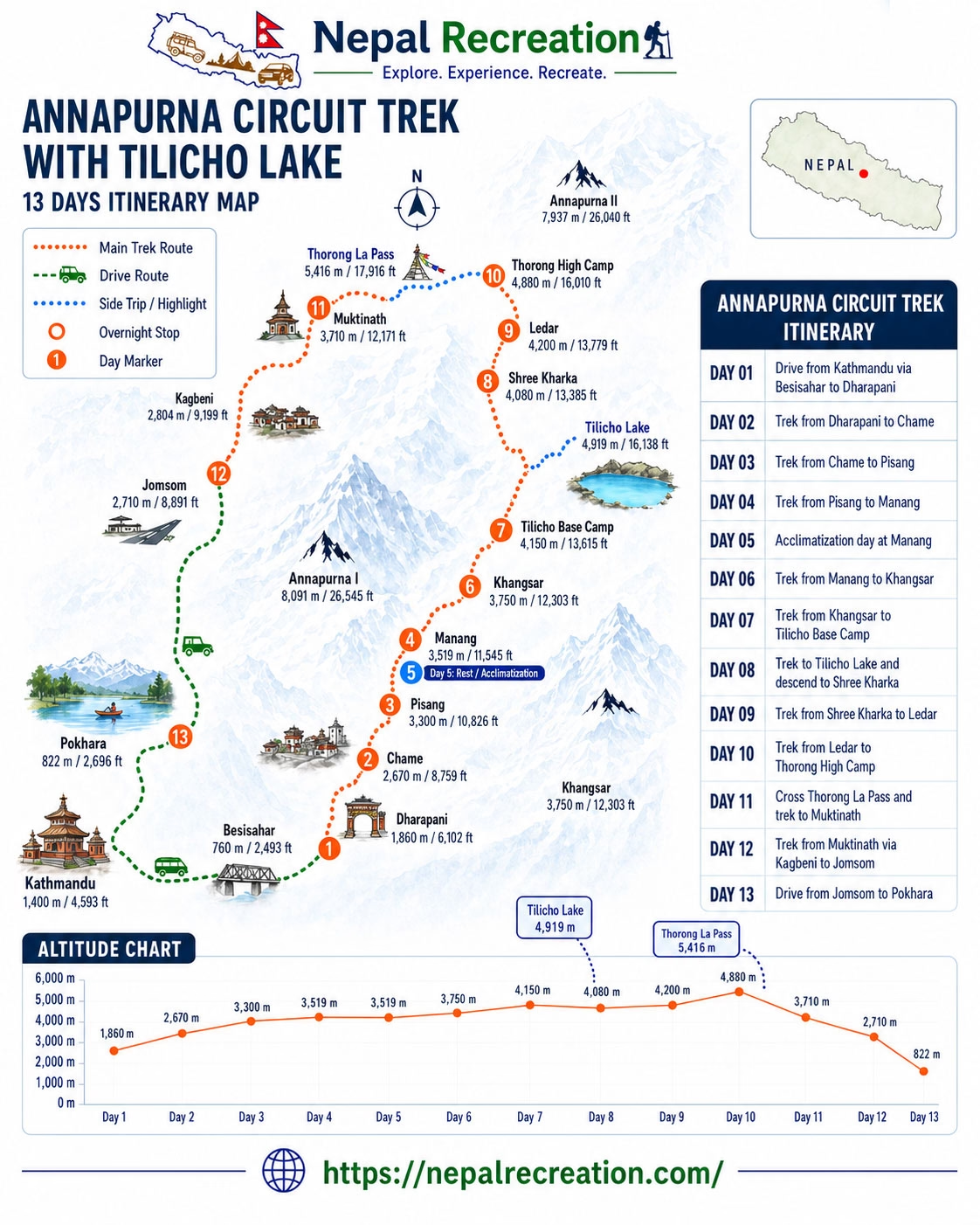
Annapurna Circuit Trek With Tilicho Lake Itinerary (Outline Plan)
Day 01: Drive to Dharapani (1,860m/ 6,102ft) (Kathmandu to Besisahar early by bus, then share a jeep to Dharapani): 8 to 10 hours
Day 02: Dharapani to Chame (2,670m/ 8,759ft): 5 to 6 hours
Day 03: Trek to Pisang (Upper Pisang) (3,300m/ 10,826ft): 5 to 6 hours
Day 04: Trek to Manang (3,519m/ 11,545ft): 6 to 7 hours
Day 05: Rest day and acclimatize at Manang
Day 06: Trek to Khangsar (3,750m/ 12,303ft): 4 to 5 hours
Day 07: Trek to Tilicho Base Camp (4,150m/ 13,615ft): 6 to 7 hours
Day 8: Trek to Tilicho Lake (4,919m/ 16,138ft) and then trek down to Shree Kharka (4,080m/ 13,385ft): 7 to 8 hours
Day 09: Trek to Ledar (4,200m/ 13,779ft): 5 to 6 hours
Day 10: Trek to Thorong High Camp (4,880m/ 16,010ft): 6 to 7 hours
Day 11: Trek to Muktinath (3,710m/ 12,171ft) via Thorong La Pass (5,416m/ 17,916ft): 8 to 9 hours
Day 12: Trek down to Jomsom (2,710m/ 8,891ft) via Kagbeni (2,804m/ 9,199ft): 6 to 7 hours
Day 13: Drive to Pokhara (822m/ 2,696ft): 7 to 8 hours drive

Itinerary
DAY 1:Drive to Dharapani (1,860m/ 6,102ft) (Kathmandu to Besisahar early by bus, then share a jeep to Dharapani): 8 to 10 hours
1,860 mYour Short Annapurna Circuit Trek With Tilicho Lake begins with an early morning departure from Kathmandu to Besisahar. Following winding highways alongside rivers, you will pass the terraced hillsides and small roadside towns. You will drive in a comfortable tourist bus upto Besisahar, then from here onward you will change to a shared jeep. From Besisahar, the driving road toward Dharapani is rugged and rocky. So, switching to a jeep for the driving part deeper into the Marsyangdhi Valley makes your experience more comfortable.
As you continue with the driving route, you will pass through villages like Bhulbhule, Jagat, and Tal. Each of these settlements along the way reveals a gradual transition from lowland Nepal into the heart of the Annapurna region. By the time you arrive in Dharapani, you will be able to feel the cool air and the mountains closing in. This is where your Annapurna Circuit via Tilicho Lake really begins; the noise of the road is replaced by the excitement of the trail.
Breakfast + Lunch + Dinner
DAY 2:Dharapani to Chame (2,670m/ 8,759ft): 5 to 6 hours
2,670 mOn the first day of your Annapurna Circuit with Tilicho Lake Trek, you will follow the Marsyangdi River through dense pine and fir forest, leaving Dharapani. Your trekking path gently climbs through traditional Gurung and Tibetan-influenced settlements such as Bagarchhap and Danaqu, where prayer flags, mani walls, and stone houses hint at the cultural shift coming up ahead. As you continue walking further, you will pass waterfalls and steep cliffs as the valley gradually narrows.
The final stretch of the trek is particularly scenic, and you will be able to enjoy the stunning views of Lamjung Himal and the surrounding peaks from the empty patches. Finally, you enter Chame, the district headquarters of Manang. This high-altitude settlement feels like a proper mountain town, with bakeries, hot springs nearby, and a noticeable rise in altitude. It reminds you that your trek is slowly getting serious.
Breakfast + Lunch + Dinner
DAY 3:Trek to Pisang (Upper Pisang) (3,300m/ 10,826ft): 5 to 6 hours
3,300 mThis day’s walk is considered one of the most visually rewarding sections of the lower Annapurna Circuit. Leaving Chame after a warm breakfast, you will follow the trail that climbs steadily out of the village. The route passes through a dramatic landscape where towering rock faces rise almost vertically from the valley floor. You will then walk past Bratang Village, which is known for its apple orchards. Then, you will continue walking along the carved path above the river.
As you gain altitude, the forest starts to thin out and the scenery starts to gradually open up; the towering Annapurna dominates the horizon. Instead of taking the lower route, you will climb toward Upper Pisang, a quieter village perched above the valley. This ascent feels worth it as you can enjoy wide Himalayan views and a more authentic, less crowded atmosphere in Upper Pisang. This is an ideal place to adapt to the rising altitude.
Breakfast + Lunch + Dinner
DAY 4:Trek to Manang (3,519m/ 11,545ft): 6 to 7 hours
3,519 mYour Annapurna Circuit Trek with Tilicho Lake itinerary for this day will take you to Manang, which is considered the best option for acclimatization and scenery. Leaving Upper Pisang, the trail rises gently through dry alpine terrain, passing ancient villages like Ghyaru and Ngawal. Here, you will be able to witness the stone houses clinging to hillsides beneath vast open skies. With every step, the views of Annapurna II, III, IV, and Gangapurna get wider. This portion is also considered one of the most memorable walking days of the entire Annapurna Circuit Trek.
After crossing Ngawal, the trail gradually descends toward the broad Manang Valley. Landscape here becomes stark, and you will be able to feel the high altitude. After arriving in Manang, you will notice the thinner air immediately. That’s why this cultural and acclimatization hub of the region is a crucial stop before pushing higher into the alpine zone.
Breakfast + Lunch + Dinner
DAY 5:Rest day and acclimatize at Manang
Today of your Annapurna Circuit With Tilicho Lake Trek is all about taking it slow and resting. By the time you reach Manang, your body needs time to adjust to the altitude before pushing higher into the alpine zone. So, this acclimatization stop in Manang is very important. However, instead of staying idle, you will spend your acclimatization day with a short and purposeful walk around the valley. Many trekkers hike toward Gangapurna Lake or climb to viewpoints above the village, where the panorama of Annapurna, Gangapurna, and Tilicho Peak stretches endlessly.
These gentle hikes help your body adapt to thin air conditions while keeping the trekking rhythm intact. Manang itself feels like a mountain crossroads with bakeries, lodges, and spiritual gompas. And, the hum of the trekkers preparing for the higher ground helps you set a mental pace for the demanding stretches. Resting in Manag sets the foundation for the demanding days up ahead.
Breakfast + Lunch + Dinner
DAY 6:Trek to Khangsar (3,750m/ 12,303ft): 4 to 5 hours
3,750 mAfter leaving Manang, the landscape starts to change quickly. Trees thin out, the air grows noticeably drier, and the valley opens to wind-swept terrain. Your trekking trail climbs gradually past Braga, which is one of the most significant spiritual sites in the Manang Valley. As you continue walking further, you will pass yak pasture and seasonal herder settlements.
Walking gets slower as you push for higher altitudes, not because of the path difficulty, but because altitude demands patience. The trail then leads you to Old Khangsar, which offers wide views of Manang Valley and surrounding peaks. From here, Khangsar Village is at a short distance. This village sits beneath the dramatic cliffs and feels remote; it marks your clear transitions from the main Annapurna Circuit Trek route to the less-traveled Tilicho Lake section.
Breakfast + Lunch + Dinner
DAY 7:Trek to Tilicho Base Camp (4,150m/ 13,615ft): 6 to 7 hours
4,150 mBefore you continue with the mainstream Annapurna Circuit Trek route, today, you will head toward the remote Tilicho side valley. The path traverses exposed slopes and narrow sections, with occasional landslide-prone areas that require careful footing. In this remote part of the Himalayas, the surroundings feel raw and isolated. The steep ridges rise sharply above the trail and glacial valleys stretching below. Unlike earlier days, villages on this route are scarce, and the terrain feels far more rugged.
As you approach Tilicho Base Camp, you will witness the massive north face of Tilicho Peak dominating the skyline. This will be a reminder of just how remote this corner of the Annapurna region is. The Tilicho Base Camp itself is stark, cold, and surrounded by rock and ice. Here, you will acknowledge a clear signal that you are deep in high-altitude terrain.
Breakfast + Lunch + Dinner
DAY 8:Trek to Tilicho Lake (4,919m/ 16,138ft) and then trek down to Shree Kharka (4,080m/ 13,385ft): 7 to 8 hours
4,919 mThis is one of the most demanding and rewarding days of the Short Annapurna Circuit Trek with Tilicho Lake. You will start your trek early in the morning as the climb to Tilicho Lake is steep and exposed. The ascent is slow and steady; you can feel every step of your hike in the lungs, but the effort pays off when Tilicho Lake finally comes into view. It is surrounded by towering peaks and glaciers. Tilicho Lake sits silent and immense, its deep blue surface reflecting the surrounding mountains.
After spending time relishing the serene beauty of the lake, you will follow the trail that descends carefully back past Tilicho Base Camp and continues down toward Shree Kharka. The long descent down to a comfortable altitude eases the strain of altitude. Reaching Shree Kharka feels like returning to more breathable air after a challenging high-mountain push.
Breakfast + Lunch + Dinner
DAY 9:Trek to Ledar (4,200m/ 13,779ft): 5 to 6 hours
4,200 mToday, your trail reconnects with the main Annapurna Circuit, and the sense of movement toward the pass becomes more real. The trekking route from Shree Kharka gradually climbs through open alpine terrain and passes through Yak Kharka once again before continuing toward Ledar. The landscape here is wide and quiet, with long stretches of trail spread across barren slopes beneath towering ridgelines.
You will maintain a slow and steady pace, letting your body acclimatize slowly. Ledar is a small and exposed settlement that is surrounded by rock and thin grass. This stop is less about comfort and more about positioning yourself correctly for the tough climb ahead.
Breakfast + Lunch + Dinner
DAY 10:Trek to Thorong High Camp (4,880m/ 16,010ft): 6 to 7 hours
4,880 mLeaving Ledar, you will head toward Thorong High Camp, the last stop before the pass. Today’s walk is shorter in distance but feels heavier with every step. The trail climbs steadily past Thorong Phedi, where many trekkers pause for a short break before climbing higher. From here, the ascent to Thorong High Camp is steep and physically demanding; you will gain altitude quickly over loose terrain.
At this altitude, the air is thin, the landscape is stark, and pace naturally becomes slow. Reaching this high camp is an achievement in itself. It is perched high above the valley and is surrounded by rock and ice. Thorong High Camp offers basic shelter in close proximity to the pass. You will have an early dinner and rest properly as you trek on the next day begins before sunrise.
Breakfast + Lunch + Dinner
DAY 11:Trek to Muktinath (3,710m/ 12,171ft) via Thorong La Pass (5,416m/ 17,916ft): 8 to 9 hours
3,710 mThis is the most challenging and defining day of the Short Annapurna Circuit Trek with Tilicho Lake. Your climb from the high camp begins in the dark, with headlamps lighting the narrow trail as you ascend steadily toward Thorong La Pass. The progress is slow and deliberate. The climbing route is shaped by cold temperatures, thin air, and the sheer altitude. Reaching the pass at 5,416 meters is a moment of quiet satisfaction and celebration. At the very top, the prayer flags whip in the wind, and the vastness of the Himalayas unfolds in every direction.
After spending time at the top of the pass, you will then move along the downhill trail that drops sharply toward Muktinath. As you walk downhill, you will witness a completely different landscape on the Mustang side. As altitude decreases, breathing becomes easier, and the sense of relief is immediate. Arriving in Muktinath feels like stepping back into warmth and civilization after days in the high alpine zone.
Breakfast + Lunch + Dinner
DAY 12:Trek down to Jomsom (2,710m/ 8,891ft) via Kagbeni (2,804m/ 9,199ft): 6 to 7 hours
2,710 mThe final trekking day in your Tilicho Lake Annapurna Circuit follows the wide, windswept floor of the Kali Gandaki Valley. After leaving Muktinath, you will follow the trail that descends gently toward Kagbeni. It is a beautifully preserved village with narrow alleys, ancient monasteries, and a strong Tibetan cultural influence. From here, the path continues along the riverbed. This stretch is famous for the strong afternoon winds that are characteristic of this valley.
The walk is relatively easy compared to previous days at rising elevations, but long and exposed. Reaching Jomsom marks the end of the trekking journey. This town with an airstrip, lodges, and cafes feels welcoming after traversing remote stretches of the Himalayas.
Breakfast + Lunch + Dinner
DAY 13:Drive to Pokhara (822m/ 2,696ft): 7 to 8 hours drive
822 mYour trek officially ends in Jomsom, but the journey continues as you drive south toward Pokhara. This day’s driving route follows the dramatic course of the Kali Gandaki River. The road winds through the dry, wind-sculpted landscapes of Lower Mustang before gradually descending into greener hills. Along the way, you will pass through settlements like Marpha and Tatopani.
In these stretches, the contrast from the high-altitude terrain of the previous days becomes immediately clear as you will be accompanied by warmer air, thicker vegetation, and the return of everyday village life. Arriving in Pokhara feels like a return to comfort and calm, with lakeside streets, warm showers, and an easy pace.
Altitude Profile
Looking to Customize This Trip?
We curate bespoke private itineraries tailored to your dates, preferences, and luxury requirements.
Cost breakdown
What's included
Airport pickup and drop by private vehicle.
Kathmandu to Dharapani and Jomsom to Pokhara sharing transports.
Three meals a day (Breakfast, Lunch and Dinner) during the trek.
Trekking lodge (Tea House) accommodations throughout the trek.
All necessary paper works Annapurna Entry permit and Trekker’s Information Management System (TIMS) permit.
A highly experience, helpful, knowledgeable, friendly, English speaking well trained, Government License holder guide. With all his salary, food, drinks, accommodation, transport and insurance.
Fruits and water purification tablets.
Comprehensive medical supplies(first aid kit will be available)
Arrangement of Emergency Helicopter service (paid by your Travel Insurance Company).
Use of sleeping bag, down Jacket and Duffel bag. (If you don’t have your own, need to return after trip completed).
Government taxes and official expenses.
Annapurna Region trekking map.
Oximeter to check your pulse and oxygen saturation and heart rate twice daily. (Very useful to check Altitude Mountain Sickness (AMS) symptoms.)This will ensure you trek is in the safest hands possible for all levels of trekker.
Assistant guide group size above 8 + person.
What's not included
Meals whilst you are in Kathmandu Lunch and Dinner.
Kathmandu Hotel and extra activities.
Your Travel and Medical Insurance.
International Airfare.
Private Transports.
Your Personal Expenses.
A Porter if needed 220 (1 porter share for 2 trekkers).
All the alcoholic and nonalcoholic cold and hot drinks on trek (those you choose to purchase along the way and during evenings in the Tea Houses).
All desserts sweet things like chocolate, cake, pie, pudding.
Hot shower and battery charging on the tea houses.
Dates & Prices
Oct 23 – Nov 5, 2026
Oct 24 – Nov 6, 2026
Oct 25 – Nov 7, 2026
Oct 26 – Nov 8, 2026
Oct 27 – Nov 9, 2026
Oct 28 – Nov 10, 2026
Oct 29 – Nov 11, 2026
Oct 30 – Nov 12, 2026
Oct 31 – Nov 13, 2026
Prices are per person on a twin-share basis. Departures are limited, especially during peak season.
Trip map
Useful information
Tilicho Lake Annapurna Circuit Trek Difficulty
The Short Annapurna Circuit Trek With Tilicho Lake sits firmly in the moderate to challenging category. Its difficulty is not defined by technical climbing, but by its length, altitude, and cumulative fatigue of the high-altitude trekking. On most days, the trail itself is well-defined and non-technical. However, the difficulty level steadily builds as you move to higher altitudes. Once you cross Manang and head toward Tilicho Lake and Thorong La, altitude becomes the dominant factor. Walking at over 4,000 meters slows everything down. The breathing feels heavier, recovery takes longer, and even short ascending stretches can feel demanding.
The Tilicho Lake section adds another layer of challenge. The terrain is more exposed, and some segments are narrow and prone to landslides. The day hike to Tilicho Lake is physically taxing, followed closely by the approach to Thorong High Camp. Also, the crossing of Thorong La Pass (5,416m/ 17,916ft) is the toughest moment of the trek. It is a long, cold, high-altitude trekking part that requires steady pacing, mental focus, and good acclimatization.
That said, the Annapurna Circuit with Tilicho Lake is not a technical mountaineering route. Trekkers with good physical preparation, patience, and respect for altitude can complete this journey safely. The key challenge of the trek lies in endurance and consistency. You will have to walk for long hours day after day, managing energy, and allowing your body enough time to adapt. If you approach this trek with the right mindset, the difficulty feels demanding but deeply rewarding, rather than overwhelming.

Best Time for Short Annapurna Circuit Trek With Tilicho Lake
The ideal seasons for Short Annapurna Circuit Trek with Tilicho Lake are spring (March to May) and autumn (late September to November). As this route combines high altitude, remote terrain, Tilicho Lake, and the Thorong La Pas, choosing the right time is very crucial. The spring season offers gradually warming temperatures and longer days, which help on demanding sections along the trekking route. During early spring, there can be snow at higher elevations. But by April and May, conditions usually settle, making pass crossings more predictable. The lower sections of the Annapurna region are greener, while the high-altitude landscapes remain raw and dramatic.
Autumn is the most dependable season in overall for trekking in Nepal. After the monsoon clears, the air becomes crisp, visibility improves significantly, and mountain views are at their sharpest. The trekking trails are dry, which is especially important on exposed and landslide-prone sections near Tilicho Base Camp. While nights are colder at higher elevations, daytime trekking conditions are excellent, making autumn the safest and most popular choice for this route.
If you are planning your trek in other seasons, you need to understand that they come with compromises. Winter (December to February) often brings heavy snow around Tilicho Lake and Thorong La, which can shut down the route entirely. Monsoon (June to early September) increases the risk of landslides and cloud cover, reducing visibility and making the Tilicho section less reliable. So, these off-trekking periods are better suited to experienced trekkers with flexible plans.
In conclusion, the spring and autumn seasons strike the right balance between safety, scenery, and overall trekking experience, especially on a demanding route like this one.
Packing List
Packing well for the Annapurna Circuit with Tilicho Lake and Thorong La Pass can make the difference between a tough but rewarding trek and a physically draining one. This route moves steadily from green river valleys into dry, high-altitude landscapes where weather changes quickly and comfort becomes basic. Once you move beyond Manang, facilities thin out, temperatures drop sharply, and recovery after each trekking day becomes slower.
Unlike shorter or lower-altitude treks, this itinerary includes remote side valleys, exposed traverses, and a high mountain pass above 5,400 meters. Early morning starts in freezing conditions are common, especially on the Tilicho Lake hike and the Thorong La crossing. Because of this, your packing priorities should revolve around effective layering, protection from wind and cold, and durable gear that holds up in harsh alpine conditions rather than carrying unnecessary extras.
Keeping your pack efficient and well-organized also matters. Long trekking days at altitude mean even small weight savings help, while reliable footwear, insulation, and personal essentials contribute directly to safety and comfort. Below is a practical packing list designed specifically for the demands of this trek.
Clothing for the Trail
Short-sleeve synthetic trekking T-shirts
Long-sleeve synthetic trekking tops
Thermal base-layer top (mid-weight, moisture-wicking)
Fleece jacket
Insulated jacket (down or synthetic, hooded)
Waterproof, windproof shell jacket with sealed seams
Trekking pants (stretchable, quick-dry)
Thermal base-layer bottom
Waterproof shell pant (full or side zip preferred)
Warm sleeping pants or track pants (used only at night)
Wool or fleece beanie
Sun cap or hat
Neck buff or scarf
Insulated gloves (for Thorong La)
Thin liner gloves
Trekking socks (wool or synthetic)
Thick thermal socks
Moisture-wicking underwear

Footwear
High-ankle trekking boots (waterproof, already broken-in)
Lightweight sandals or slip-on shoes (teahouse use)
Gaiters (for snow, dust, wind)
Sandals or crocs for the teahouse
Microspikes (only in early spring or late autumn if snow is present)
Personal Care and Health
Basic oral care items
Compact quick-dry towel
Eco-friendly soap and hair wash
Cleaning wipes for limited-water days
Alcohol-based hand sanitizer
Daily-use toilet paper supply
Strong sun protection for high-altitude exposure
Lip protection against cold and UV
Prescribed medicines
Compact medical kit for blisters, pain, and cuts
Altitude-related medication as advised by a professional
Trekking Gear and Essentials
Medium-sized backpack suitable for daily trekking
Rain protection for your pack
Sleeping bag rated minimum –10°C (–15°C preferred for cold seasons)
Adjustable trekking poles for long ascents and descents
Headlamp for early starts and power cuts
High-UV sunglasses for snow and altitude glare
Refillable water containers or hydration system
Water treatment solution or filter
Power bank
Necessary charging cables and plugs
Waterproof storage bags for clothing and electronics
Energy-dense snacks for long days
Offline maps or navigation backup
Optional joint support if you have knee or ankle issues
Accommodation and Food During Annapurna Circuit via Tilicho Lake
Accommodation during the Annapurna Circuit with Tilicho Lake Trek is entirely teahouse-based. You will stay in locally run mountain lodges rather than tents or hotels. In the lower villages, rooms are relatively comfortable with twin beds, mattresses, pillows, and sometimes attached bathrooms. As you move higher toward places like Manang, Tilicho Base Camp, and Thorong Phedi, accommodation becomes more basic. The teahouses/lodges at this altitude feature smaller rooms, shared toilets, limited heating, and no insulation beyond wooden walls. Heating is usually available only in the dining area, and even that depends on weather and fuel availability. You should expect cold nights at higher elevations, regardless of season and prepare accordingly.
Food is one of the strengths of trekking in this mainstream region. However, it still follows a practical mountain logic rather than variety for luxury. Menus are surprisingly extensive in lower elevations, offering Nepali, Tibetan, and simple Western meals. As altitude increases, the available options start to shrink, and the portions become more functional, and prices rise due to transport costs. Dal Bhat remains the most reliable meal throughout the trek. It is freshly cooked, filling, and comes with free refills, which is why experienced trekkers rely on it. You can also enjoy other options such as:
Breakfast
Bread/ toast
Oat or corn porridge with sugar or dried fruit
Tibetan flatbread with honey, jam, or butter
Egg omelets or scrambled eggs
Pancakes with syrup or honey
Muesli with milk (if available in higher lodges)
Roasted barley flour (tsampa) mixed with milk or tea for a traditional option
Lunch and Dinner
Dal Bhat: steamed rice, lentils, seasonal vegetables, and pickles
Stir-fried noodles
Simple pasta dishes
Potato-based dishes (boiled, mashed, or fried)
Vegetable or meat stews
Momos
Thukpa (Tibetan noodle soup, often with vegetables, meat or eggs)
Fried rice with vegetables or egg
Flatbread with curry or vegetables
Sandwiches or toast in some mid-altitude lodges

Beverages and Drinks
Tea (milk tea, black tea, or Tibetan butter tea)
Herbal teas like ginger, lemon, or chamomile
Hot lemon water with honey
Garlic soup (popular at high altitude for warmth and digestion)
Coffee (instant or brewed)
Hot chocolate for energy and comfort
Fruit juice (seasonal)
Soft drinks and bottled water
Local alcoholic drinks such as rakshi or chhaang, mostly in lower or mid-altitude villages
Training and Preparation
Good physical and mental preparation is essential for completing the Short Annapurna Circuit Trek with Tilicho Lake comfortably. Although this trek does not demand technical climbing skills, you will still need to overcome long walking days, rugged terrain, and high-altitude sections that can be physically demanding.
For physical preparation, regular cardiovascular activities such as hiking, brisk walking, jogging, cycling, or stair climbing are highly recommended before the trek. These exercises will help you build the stamina and endurance needed for continuous uphill and downhill walking. Strength training for the legs, core, and lower body further supports balance and reduces the risk of fatigue and injury on the rugged mountain trails.

Like physical, mental preparation is equally important, especially when trekking at higher elevations. This high-altitude Himalayan adventure requires patience, focus, and a positive mindset. You will need to deal with altitude, weather changes, and long trekking hours, which can be challenging, so mental preparation is non-negotiable as well. Prepare yourself mentally to walk at a steady pace, taking adequate rest, and adapt to the mountain environment to enhance the overall trekking experience.
With proper physical conditioning and a strong mental approach, you will be able to fully enjoy the scenic beauty and cultural richness of the Annapurna region without feeling overwhelmed by the challenges.
Necessary Permits
When you trek the Short Annapurna Circuit with Tilicho Lake, you will be walking through officially protected areas, so carrying the right permits is mandatory. These permits allow you to enter the region legally while also helping to protect the landscape and support local communities along the trail. You will be asked to show them at several checkpoints, so it’s important to have them with you at all times.
For this trek, you will need just one permit:
Annapurna Conservation Area Permit (ACAP)
You can arrange this permit before the trek begins, usually in Kathmandu or Pokhara. If you’re trekking with a licensed agency, they will take care of the entire process for you, which will save you time for complicated paperwork.
Once on the trail, you should keep the original permits easily accessible, as checks are frequent. It is also a good idea to carry photocopies or store digital backups on your phone, just in case. Having everything prepared in advance will ensure a smooth start and let you focus fully on enjoying the trek.
Is This Trek Suitable for Beginners?
The Short Annapurna Circuit Trek with Tilicho Lake can be suitable for beginners who have a good level of physical fitness and a strong determination to complete a high-altitude trek. While the route does not involve technical climbing or mountaineering skills, it still has long walking days, steep mountain sections, and significant altitude gain. Combined, these all factors can be challenging for unprepared first-time trekkers.
Beginners who regularly engage in physical activities and are comfortable walking for several hours a day can successfully complete this trek with proper preparation. However, the high elevation of Tilicho Lake and the crossing of Thorong La Pass require careful acclimatization and a steady trekking pace. You need to take the rest days seriously and follow the guide’s advice. So, the best option here is to go for a registered and reputable agency and enjoy the trek accompanied by an expert guide, meeting all the preparation criteria.
For those new to trekking, previous hiking experience at lower altitudes is helpful but not mandatory. With adequate training, realistic expectations, and the support of experienced guides, even as a beginner, you can enjoy this trek while safely navigating its challenges.
Short Annapurna Circuit Trek With Tilicho Lake Cost
The Tilicho Lake Annapurna Circuit is a well-rounded Himalayan adventure that blends classic Annapurna trails with a remote side trip to Tilicho Lake and the crossing of Thorong La Pass. As the trek reaches high elevations and passes through less accessible areas, it requires thoughtful organization and reliable support, which is reflected in the overall cost of the package. The average Short Annapurna Circuit Trek with Tilicho Lake cost generally fall between USD 1,200 and USD 1,600 per person. The pricing depends on the level of service and trekking arrangement. The final cost varies based on factors such as group size, private versus group trek, choice of transportation, itinerary length, side excursions, and the number of guides and porters included.
Choosing a full trekking package is ideal for those who want a smooth and stress-free experience. Most standard packages cover teahouse accommodation during the trek, three meals per day, all necessary trekking permits, licensed guides, porter support if required, ground transportation, and government fees. Trekking with a registered company like Nepal Recreation ensures professional planning, safe altitude management, and dependable local expertise throughout the journey.
Travel Visa
Arranging your entry into Nepal is an important step before beginning the Annapurna Circuit via Tilicho Lake. But don’t worry, Nepal has a traveler-friendly visa policy, making it easy for most international visitors to enter the country. Apart from Indian passport holders, all foreign nationals must obtain a tourist visa to travel in Nepal. Most trekkers choose the visa-on-arrival option, available at Tribhuvan International Airport (TIA) as well as several official land border crossings. As long as you have a valid passport, passport photos, and the visa payment, the procedure is usually quick and uncomplicated.

Travelers who prefer to have their documents ready before departure can also apply for a tourist visa through a Nepali embassy or by completing the online visa application in advance. This option is useful for avoiding delays and ensuring a smooth arrival, especially during busy trekking seasons.
Nepal Tourist Visa Duration and Fees
Nepal issues tourist visas in different timeframes to suit various travel plans:
15 Days Visa— USD 30
30 Days Visa— USD 50
90 Days Visa— USD 125
Since the Short Annapurna Circuit Trek with Tilicho Lake typically lasts around two weeks, a 30-day tourist visa comfortably covers trekking days, acclimatization, and travel time before and after the trek. If you decide to stay longer, you can add visa extensions that can be processed in Kathmandu for a minimum of 15 days at a cost of USD 45.