- Duration
- 3 days
- Difficulty
- Medium
- Max Altitude
- 2,215 m(7,267 ft)
- Destination
- Nepal
- Activity
- Trekking
- Best Season
- Spring & Autumn
- Group Size
- 1-13
Trip Highlight
Short and scenic ridge walking just outside Kathmandu, which offers a true Himalayan trekking feel without any major challenges
Sunset and sunrise views from the classic viewpoints around Kathmandu, like Chisapani (2,215m/ 7,267ft) and Nagarkot (2,175m/ 7,135ft)
Sweeping panoramic views of Langtang Himal, Ganesh Himal, Gauri Shankar, Jugal Himal, Number, Jugal, Rolwaling and distant views of Everest, Annapurna and Manaslu
Waking across traditional countryside Sherpa, Tamang, Newar, Brahmin and Chhetri villages, gaining insights into local culture, traditions, lifestyle and farming practices
Traversing the forest trails of Shivapuri- Nagarjun National Park, which is home to rare species like Himalayan black bears, rhesus monkeys, golden jackal, pangolin, yellow-throated marten, etc
Gentle trekking routes that are suitable for beginners, families, senior trekkers and travelers with limited time
Easy accessibility from Kathmandu without the need for domestic flights, which makes the logistics simple and flexible
Comfortable teahouse, lodge and hotel stay, enjoying the warm hospitality of the locals
A perfect blend of nature, culture and soft adventure close to the capital city
Ideal short trek for acclimatization, pre-trek preparation, or a relaxed Himalayan trekking introduction
Trip overview
If you are short on time but still want to experience Nepal’s unparalleled trekking charm, the Kathmandu Valley Trek offers an enriching Himalayan escape just beyond the capital’s edge. Within just a few hours, you will leave the busy streets of Kathmandu and slowly make you way across the forested trails, terraced hillsides and quiet villages with the gentle pace of life. This short 3 Days Trek From Kathmandu proves that you do not need to go far or climb too high to feel truly connected with the mountains. This Kathmandu trek is less about altitude and endurance and more about atmosphere and perspective.
As your trekking trail climbs through Shivapuri- Nagarjun National Park along the ridgeline, the sweeping views of the surrounding peaks unfold gradually. The popular viewpoints along the trail, like Chisapani and Nagarkot, with wide panoramas and peaceful sunrise views that feel surreal so close to the capital. The fascinating blend of nature and culture makes this trek especially appealing. Your trekking route passes through Sherpa, Tamang, Newar, Brahmin and Chhetri settlements, where the traditional houses, prayer flags and terraced farmlands reflect on everyday rural life around Kathmandu Valley.
With comfortable teahouses/lodges, moderate walking hours and easy access from the city, this Kathmandu Valley Trek is ideal for beginners, families, seniors, or travelers who are looking for a gentle introduction to trekking in Nepal. Simple, scenic and deeply refreshing, the 3 Days Trek From Kathmandu is a beautiful reminder that some of Nepal’s most rewarding walks begin right where the city ends.

Kathmandu Valley Trek Itinerary (Outline)
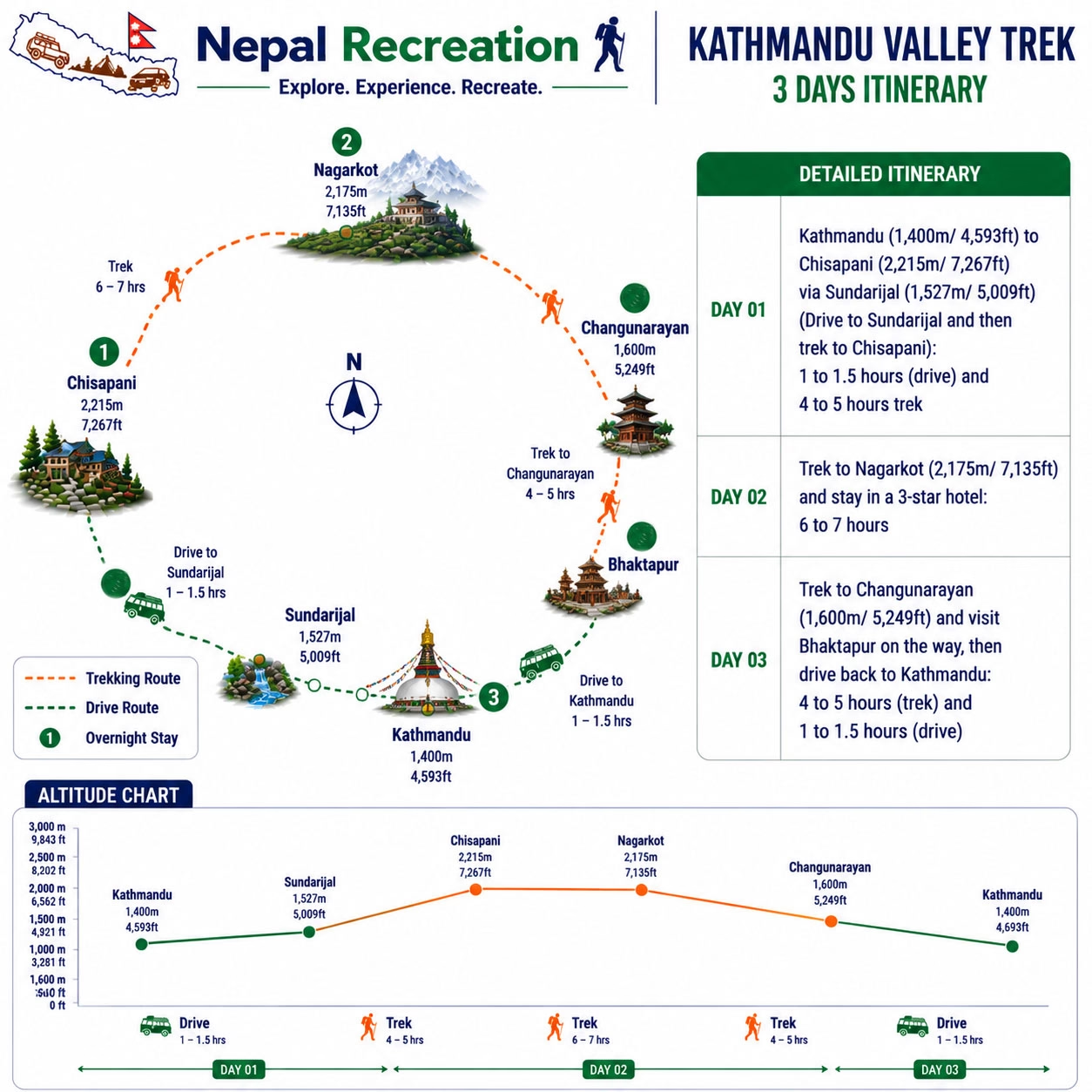
Day 01: Kathmandu (1,400m/ 4,593ft) to Chisapani (2,215m/ 7,267ft) via Sundarijal (1,527m/ 5,009ft) (Drive to Sundarijal and then trek to Chisapani): 1 to 1.5 hours (drive) and 4 to 5 hours trek
Day 02: Trek to Nagarkot (2,175m/ 7,135ft) and stay in a 3-star hotel: 6 to 7 hours
Day 03: Trek to Changunarayan (1,600m/ 5,249ft) and visit Bhaktapur on the way, then drive back to Kathmandu: 4 to 5 hours (trek) and 1 to 1.5 hours (drive)
Itinerary
DAY 1:Kathmandu (1,400m/ 4,593ft) to Chisapani (2,215m/ 7,267ft) via Sundarijal (1,527m/ 5,009ft) (Drive to Sundarijal and then trek to Chisapani): 1 to 1.5 hours (drive) and 4 to 5 hours trek
1,400 mAfter breakfast, you will drive from Kathmandu to Sundarijal, a traditional village and the official entry point to Shivapuri Nagarjun National Park. Your drive will take you across the heart of the city and to the countryside. Your trek begins from Sundarijal, following stone staircases and forest trails alongside old water canals. The ascent leads you through dense oak and rhododendron forest before reaching Mulkharka. This is a small Tamang village that is perched on the hillside.
Mulkharka Village is also an important cultural stop along the route. Trekkers often pause here for lunch while enjoying open views of the Kathmandu Valley below. From Mulkharka, the trail continues gradually uphill through forested trails and open clearings to Chisapani. It is a quiet ridge-top village which is popular for its cool and fresh climate and the stunning panorama. On a clear day, you can enjoy the distant views of the towering Himalayan peaks.
DAY 2:Trek to Nagarkot (2,175m/ 7,135ft) and stay in a 3-star hotel: 6 to 7 hours
2,175 mYou trek on this day of the Kathmandu Valley Trek itinerary begins with a gentle walk out of the Chisapani Village. You will pass through forested trails and open viewpoints to reach the Kutumsang ridge. The route continues to alternate between the wooden paths and small clearings. You will enjoy walking on the long, peaceful stretches above the valley. This day’s route takes you across the small rural settlement of Jhule, which features traditional houses and terraced farmlands that reflect the everyday hill life of the natives.
This section of the trail is less steep and allows you to walk at a relaxed pace while enjoying continuous views of rolling hills. By afternoon, you will arrive at Nagarkot, a well-known hill station and viewpoint. Unlike previous villages along the remote stretches, Nagarkot feels more developed and offers some of the widest Himalayan panoramas in the Kathmandu Valley. Overnight stay in a comfortable 3-star hotel with stunning panoramas of the valleys and Himalayas.
DAY 3:Trek to Changunarayan (1,600m/ 5,249ft) and visit Bhaktapur on the way, then drive back to Kathmandu: 4 to 5 hours (trek) and 1 to 1.5 hours (drive)
1,600 mOn the final day of your Kathmandu Valley Trek, you will head toward Changunarayan, leaving Nagarkot. But, before hat the early morning hike to the viewpoint in Nagarkot offers you breathtaking sunrise views over the Himalayas. After breakfast, you will then begin a gradual descent toward Telkot Village. You will pass through forest paths, farmland, and scattered villages along the way. From Telkot, the trail continues downhill to Changunarayan. This is one of the oldest settlements in the Kathmandu Valley and home to the Changunarayan Temple, a UNESCO World Heritage Site.
This marks the official end of the trekking portion of your Kathmandu Valley Hiking. After exploring Changunarayan, you will then drive back to Kathmandu. On the way, you will visit the Bhakataur Durbar Square, another UNESCO World Heritage Site. You will be able to explore the medieval streets, ancient temples and royal courtyards during this visit. After exploring Bhaktapur, you will then drive to Kathmandu. We will transfer you to your respective hotels.
Altitude Profile
Looking to Customize This Trip?
We curate bespoke private itineraries tailored to your dates, preferences, and luxury requirements.
Cost breakdown
What's included
Airport pick-up and drop in Kathmandu
Accommodation in Kathmandu and on trek
Three meals a day (Breakfast, Lunch and Dinner) during the trek.
Experienced local guide
Trekking permits and entry fees for heritage sites in the valley
Transportation for sightseeing in Kathmandu
Basic first-aid kit
What's not included
International flights to/from Nepal
Personal trekking gear (boots, jackets, sleeping bag, etc.)
Travel insurance (mandatory for trekking)
Tips for guides and porters
Optional activities not mentioned in the itinerary
Any personal expenses or souvenirs
Dates & Prices
Select start date
Prices are per person on a twin-share basis. Departures are limited, especially during peak season.
Choose Your Departure Date
Run Kathmandu Valley Trek privately for your group on any date that suits you.
No date selected yet — pick a start date from the calendar.
Trip map
Useful information
Kathmandu Valley Trek Difficulty
The Kathmandu Valley Trek is generally considered an easy to moderate level trek. Thus, it is one of the most accessible multi-day trekking routes in Nepal. However, it is still a mountain trek where you will have to traverse the uphill routes. Although the 3 Days Trek from Kathmandu doesn’t involve extreme altitude ot technical terrain, it still demands reasonable fitness. You will walk 4 to 6 hours on average on varied trail conditions. There are also continuous ascents and descents along the trekking route. So, little physical conditioning can help you truly immerse and enjoy the journey without missing a beat.
One of the biggest factors influencing element of the Kathmandu Valley Trek difficulty is the terrain. Your trekking trail alternates between the stone staircases, forest paths, dirt tracks and village trails. Although the altitude remains relatively low, the steep ascents and descents can be tiring if you are not accustomed to walking uphill for several hours. In terms of altitude, the trek remains well below the high-altitude zone, which comes with the risk of altitude sickness. You will reach the highest point of the trek at Chisapani, which is at an elevation of 2,215 meters (7,267 feet).
So, the altitude-related issues are extremely rare. Because of this, acclimatization days are not required and this trek is suitable for everyone, from children to elderly trekkers. In overall, the 3 Days Kathmandu Valley Trek is ideal for beginners, families and trekkers who are looking for a short cultural and nature-focussed adventure without the challenges of high-altitude trekking. This short Kathmandu Trek also works well as a pre-trek warm-up or a relaxed alternative for travel enthusiasts who want to experience trekking in Nepal without weeks long commitment.

Best Time to Do 3 Days Trek From Kathmandu
The Kathmandu Valley Hiking can be done almost year-round. However, your experience will change significantly based on the season of your choice. As the trek stays at relatively low altitude, the weather conditions, visibility and trail comfort play a bigger role than acclimatization or high-Himalayan cold. There are two seasons that are considered the best time for Kathmandu Valley Trek: autumn (September to November) and spring (March to May).
Autumn (September to November)
The autumn season is widely considered the best time to trek the Kathmandu Valley. After the monsoon season slowly fades away, the skies begin to clear up and offer crisp mountain views. Similarly, the temperatures are comfortable for hiking during the day and the mornings and evenings remain cool and fresh. The trails are also dry and comfortable as you traverse across the fresh forest and traditional village, active after the farming season. The autumn season also coincides with major festivals in Nepal like Dashain and Tihar. This celebratory vibe adds a cultural dimension to your experience.
Spring (March to May)
Spring is another excellent season for the Kathmandu Valley Trek. During this nature’s peak period, the forests along the Sundarijal–Chisapani section come alive with rhododendron blooms. The overall landscape of the spring season feels vibrant and colorful. In this post-winter season, the temperatures start to gradually rise. Mornings and evenings are pleasant without being too cold. Similarly, the mountain views are also remarkable and you will be able to enjoy unobstructed Himalayan panoramas. This season best suits the trekkers who enjoy greenery, flowers, and warmer walking conditions.
Winter (December to February)
Winter trekking in the Kathmandu Valley is very doable and often underestimated. This capital valley doesn’t receive snowfall and days are usually sunny and clear. So, you will be able to enjoy excellent visibility of the surrounding hills and distant Himalayan ranges even in the winter season. The main challenge of the winter trek is the cold, especially at the higher points of the Kathmandu Valley Trek, like Chisapani and Nagarkot. The early morning and nights can drop close to freezing points at these elevations. So, you will need to make preparations accordingly. The major advantage of winter is that it offers peace and solitude. With proper warm layers, winter can be a rewarding time for the trekkers who prefer calm routes and clear skies.
Monsoon (June to August)
Monsoon is the least recommended season for trekking in Nepal. Although trekking is not impossible, there are set of challenges that the trekkers need to overcome. During the monsoon, the hills turn deep green and lush, rivers are full and the forest feels alive. However, the frequent rainfall can make the trail muddy and slippery. Leeches can appear in the forest section and the mountain views are often blocked by the clouds. You will need proper monsoon gear and you need to be careful with your footing if you are planning a monsoon trek. Kathmandu Valley Trek in monsoon suits those who prioritize the greenery and solitude over the views and comfort.
Packing List
Trekking in Kathmandu Valley does not require the heavy expedition-style gear that you generally require for the high-altitude treks. However, packing smart makes a huge difference since this valley route takes you across forest trails and villages. You will also need to deal with temperature variation, although it is not major. Your main focus while packing for Kathmandu Valley Hiking should be on comfort, proper layers and practicality.
Clothing
Lightweight and quick-dry trekking t-shirts
Long-sleeve trekking shirt
Fleece jacket or lightweight insulated jacket
Waterproof and windproof outer shell
Trekking pants
Lightweight thermal base layer
Comfortable sleepwear for teahouses and hotels
Warm hat or beanie
Sun hat or cap
Lightweight gloves
Several pairs of undergarments
Lightweight scarf or buff
Footwear
Well-broken-in trekking boots or hiking shoes
An extra pair of comfortable walking shoes
Trekking socks
Liner socks
Sandals or flip-flops for evenings

Trekking Accessories
Daypack with rain cover
Trekking poles
Reusable water bottle or hydration bladder
Sunglasses with UV protection
Small dry bag or zip-lock bags
Powerbank and charging cable
Water filtration system or purifying solutions
Notebook or journal (optional)
Camera or smartphone with sufficient storage
Binoculars
Personal Items
Toothbrush and toothpaste
Travel-friendly toiletries (soap, shampoo, deodorant)
Towel or microfiber towel
Hairbrush or comb
Lip balm
Sunscreen with SPF
Tissue paper and wet wipes
Passport, ID, and necessary travel documents
Small money pouch or wallet
Optional: earplugs, small snacks, or comfort items like a book
Accommodation and Food During Trek
One of the biggest advantages of the Kathmandu Valley Trek is the comfort and accessibility it offers. Unlike the high-altitude Himalayan treks, you don’t need to carry heavy gear or sleeping bags. The villages along the way provide clean and cozy teahouses, lodges and hotels that cater to the needs of the trekkers. From the local guesthouses to more established hotels in popular spots like Nagarkot, there is something for every comfort level. Most of the accommodation establishments offer private or shared rooms, general amenities, hot showers (seasonal in some teahouses) and warm hospitality. So, you will be able to relax comfortably after each day on the trail.
During this Kathmandu Valley Hiking, you will also be able to enjoy authentic meals and simple international dishes at the teahouse. As for the 3-star hotel stay in Nagarkot, you can enjoy exquisite meals. The hearty and nourishing meals along the trekking trail will ensure that you stay energized and satisfied throughout your journey. Food options available on this route are fresh, local and heart, perfect for a short and scenic adventure. Here are the menus that you can enjoy during this trek:
Breakfast Menu
Tibetan bread
Porridge or oatmeal
Eggs (boiled, scrambled, fried, or omelets)
Bread or toast with butter, jam, honey or peanut butter
Pancake
Chapati or roti
Cereal
Muesli
Paratha
Sel roti with vegetables
Dinner and Lunch
Dal bhat
Fired rice
Chowmein
Momo
Thukpa
Aloo tama
Sherpa stew
Pasta
Pizza
Soup

Bevereages
Tea (milk, black, lemon, ginger, or masala)
Coffeee
Hot lemon
Hot chocolate
Bottled water
Soft drinks
Local fruit juice (seasonal)
Lassi
Local raksi
Tongba
Training and Preparation
The Kathmandu Valley Trek doesn’t demand an extreme fitness level, but it does require general preparation. The trails involve repeated ascents and descents, stone steps, forest paths, and uneven ground. So, if your body is not used to continuous movement, fatigue can build fast. That’s why basic endurance training matters more than strength. If you walk regularly, do light jogging, or stair climbing for a few weeks before the trek, it can condition your heart and legs to handle long hours of walking.
Preparation means adapting your body to trekking conditions; you don’t need to match up with pro-athlete conditions. Walking with a backpack will train your body for the actual route. Although you don’t have to pour a lot of energy into the acclimatization practice, light hikes to high-altitude terrain can certainly be helpful. As for mental preparation, you should be ready for long hours of walking, simple meals, and limited comfort in the remote part. Once you accept the rhythm of walking, resting, eating, and sleeping, the trek becomes steady and manageable, and of course, more immersive.
Necessary Permits for Kathmandu Valley Trek
Although the Kathmandu Valley Trek stays close to the capital and does not reach high altitudes, parts of the route pass through officially protected regions. The sections like as Sundarijal to Chisapani run inside the Shivapuri–Nagarjun National Park. So, trekkers are legally required to obtain permission before entering the area. This permit system is in place to regulate visitor movement, protect wildlife and forest resources. Moreover, this permit system also supports the long-term maintenance of trails used by both locals and trekkers.
For this trek, the only mandatory document is:
Shivapuri-Nagarjun National Park Entry Permit
This permit can be purchased at official park entry gates such as Sundarijal or Budhanilkantha. If you are trekking through a registered agency like Eco Holidays Nepal, they will handle the permit needs in advance. You must carry the permit throughout the journey, as park officials may request to see it while entering or moving through the national park. Keeping the permit safe and carrying a photocopy or digital backup is recommended, especially for multi-day treks.

Is This Trek Suitable for Beginners?
The 3 Days Trek from Kathmandu is an easy to moderate trek, making it highly suitable for beginners. The trekking trails are well-marked, relatively short, and stay at lower elevations. So, there is no risk of altitude sickness. Each day involves a few hours of walking on gentle slopes, forest paths, and village trails. This allows the new trekkers to build confidence without feeling overwhelmed. The presence of teahouses and lodges along the route ensures comfortable rest stops and access to meals, making logistics straightforward for first-time trekkers.
Beginners can enjoy this trek without intensive physical preparation, though light walking or short hikes beforehand can help with stamina. The Kathmandu Valley Trek itinerary also provides an ideal introduction to Nepal’s trekking culture, local villages, and scenic viewpoints. All of this without the pressure of challenging terrain. For anyone looking for a short, accessible, and rewarding trekking experience near Kathmandu, this trail offers a perfect balance of adventure and ease.
Trek Cost
The Kathmandu Valley Trek is known for being extremely accessible as well as light on the wallet. So, this is definitely one of the easiest treks to plan near Kathmandu. As the trail stays at low altitudes and passes through well-serviced villages, you can enjoy trekking Kathmandu Valley without the high costs. The cost of 3 Days Kathmandu Valley Trek is around USD 200 and USD 400 per person. The exact price will depend on the level of comfort you choose, available services and joining option (group or private).
Generally, the Kathmandu treks package covers teahouse/ lodge accommodation, meals, transport, guide and permits. At Eco Holidays Nepal, we offer the Kathmandu Valley Trek at USD ### per person. This trek is ideal for travelers who want a well-organized journey without unnecessary complications. Our focus is on safe pacing, dependable logistics, and authentic local experiences. We believe that even a short, accessible trek like this should be transparent, fairly priced, and thoroughly enjoyable.

Travel Visa
It is important to ensure that your entry into Nepal is sorted before you join the scenic trails of Kathmandu Valley Treks. Nepal makes it easy for most travelers, offering a straightforward tourist visa process. Except for Indian citizens, all international visitors need to apply for a tourist visa to legally enter the country. Getting the Visa on Arrival is a simple process; you can get it either at Tribhuvan International Airport in Kathmandu or at official land border points. The process is quick as long as you have a valid passport, a completed application, and the necessary fees (in cash).
If you prefer to handle the visa before your trip, you can apply at a Nepali embassy or consulate in your home country. Another convenient option is the online application system, which lets you complete the process ahead of time. After filling out the form, you can bring the printed approval with you when you arrive.
Visa Duration and Fees
Nepal issues tourist visas according to the length of stay:
15 Day Visa— USD 30
30 Day Visa— USD 50
90 Day Visa— USD 125
Since the Kathmandu Valley Trek only takes 3 days, a 15-day visa is sufficient, leaving extra time for arrival, short city tours, and rest. If you decide to stay longer, you can get a visa extension. For that, you will have to purchase at least a 15-day extension, which will cost you USD 45.