- Duration
- 10 days
- Difficulty
- Medium
- Max Altitude
- 3,867 m(12,687 ft)
- Destination
- Nepal
- Activity
- Trekking
- Accommodation
- Tea House
- Best Season
- Spring & Autumn
- Group Size
- 1-20
- Transport
- Flight to Lukla & Private Vehicle
- Arrival & Departure City
- Kathmandu
- Meal
- B/L/D
Trip Highlight
Experience one of the world’s most iconic mountain flights to the gateway of the Everest region
Walking on scenic Himalayan trails that balance natural beauty with comfortable pacing, which makes the trek comfortable and enjoyable rather than exhausting
Take in unforgettable panoramic views of Mount Everest alongside Ama Dablam, Lhotse, Nuptse, Kusum Kanguru, Changtse, Thamserku, and other surrounding peaks
Spend time in Namche Bazaar, where mountain life, Sherpa culture, and modern comforts form a harmonious blend
Visit the historic Tengboche Monastery, a spiritual center set against dramatic Himalayan landscapes
Opportunity to immerse yourself in authentic Sherpa villages, gaining insight into local traditions, daily life, and mountain hospitality
Trekking across the Sagarmatha National Park, home to rare wildlife, alpine forests, and protected Himalayan ecosystems
Enjoy a safer trekking experience with lower altitude exposure and better acclimatization compared to longer Everest routes
Perfect for travelers seeking a true Everest experience without committing to a long or demanding expedition
Trip overview
The Everest Panorama Trek is an ideal journey for trekkers who want to experience the essence of the Everest region without the physical demands of longer high-altitude treks. This iconic Himalayan adventure is designed for those with limited time or who prefer a gentler pace. Everest Panorama Trek Nepal offers a rewarding blend of Himalayan scenery, Sherpa culture, and well-established mountain routes. Despite its shorter duration, this trekking route delivers classic Everest-region highlights, including the sweeping view of Mount Everest alongside Ama Dablam, Lhotse, Nuptse, Kusum Kanguru, Changtse, Thamserku, and other surrounding peaks.
Everest Panorama View Trek is especially suited for first-time trekkers, families, and those with limited time but still wish to walk beneath the world’s highest peaks. The Everest Panorama Trek route follows the classic Everest Base Camp Trek route through Sagarmatha National Park, leading you across suspension bridges, rhododendron forest, and traditional Sherpa settlements before reaching Namche Bazaar and Tengboche. With comfortable teahouse accommodation, well-planned gradual elevation gain, and reliable facilities along the way, this Himalayan endeavour provides a safe and accessible introduction to trekking in the Khumbu region.

Everest Panorama Trek Itinerary Plan (Outline)
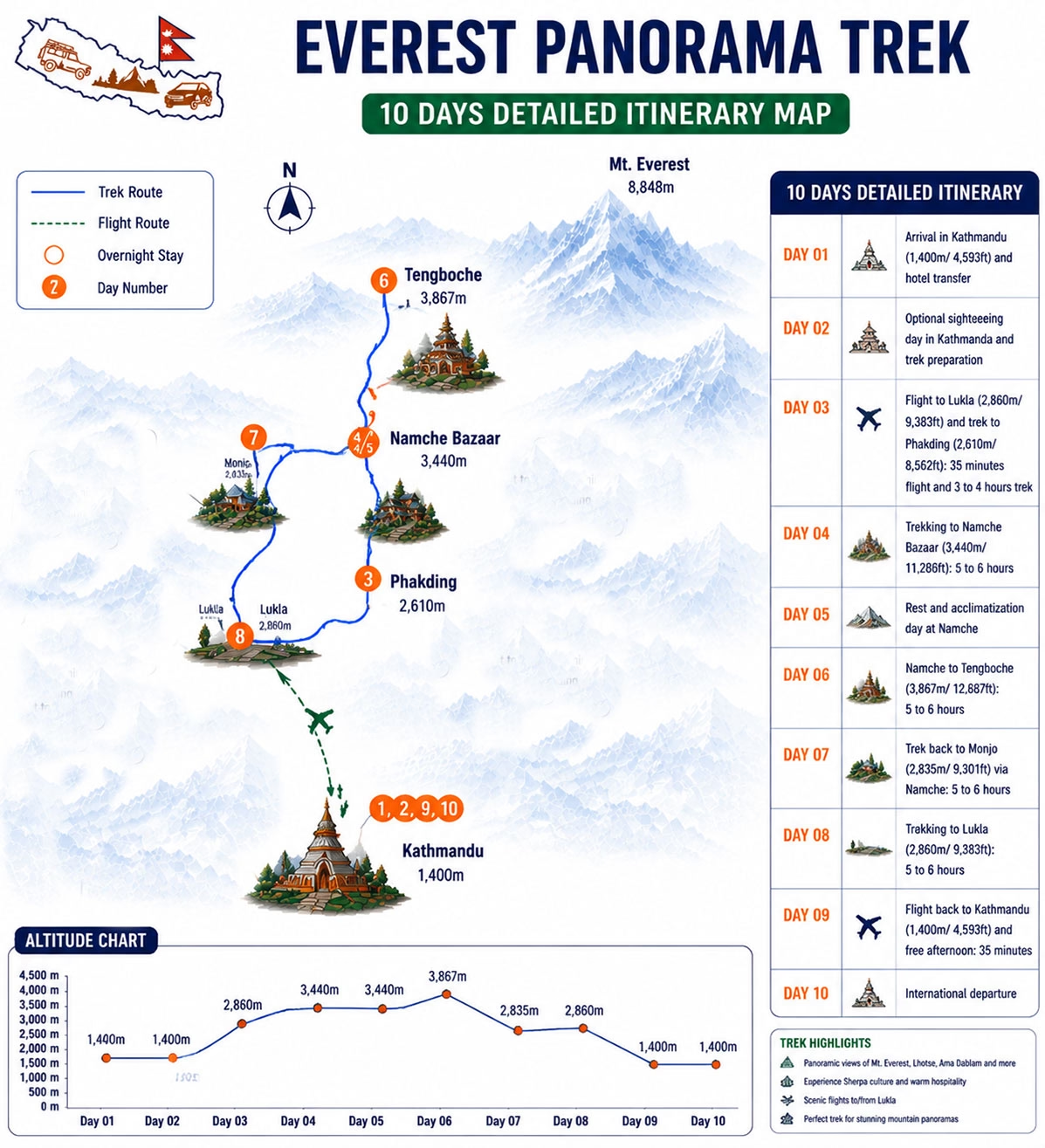
Day 01: Arrival in Kathmandu (1,400m/ 4,593ft) and hotel transfer
Day 02: Optional sightseeing day in Kathmandu and trek preparation
Day 03: Flight to Lukla (2,860m/ 9,383ft) and trek to Phakding (2,610m/ 8,562ft): 35 minutes flight and 3 to 4 hours trek
Day 04: Trekking to Namche Bazaar (3,440m/ 11,286ft): 5 to 6 hours
Day 05: Rest and acclimatization day at Namche
Day 06: Namche to Tengboche (3,867m/ 12,687ft): 5 to 6 hours
Day 07: Trek back to Monjo (2,835m/ 9,301ft) via Namche: 5 to 6 hours
Day 08: Trekking to Lukla (2,860m/ 9,383ft): 5 to 6 hours
Day 09: Flight back to Kathmandu (1,400m/ 4,593ft) and free afternoon: 35 minutes
Day 10: International departure
Itinerary
DAY 1:Arrival in Kathmandu (1,400m/ 4,593ft) and hotel transfer
1,400 m30 minutes 3 star HotelYour arrival in Kathmandu marks the beginning of the Everest Panorama Trek. Kathmandu is not just a transit city; it is where Himalayan journeys are planned, adjusted, and mentally prepared for. After landing at Tribhuvan International Airport (TIA), you will be transferred to your hotel in the city.
This short drive gives you the first glimpse into Nepal’s rhythm, busy roads, traditional houses, prayer flags, and temple spires scattered among modern buildings. After checking in at your hotel, the rest of the day is kept flexible. You can use this time to get some rest after your long flight, organize your documents, and familiarize yourself with the surroundings of Thamel. This area is a trekking hub inside the valley where last-minute gear, currency exchange, and SIM cards are easily available.
You can also visit our office in Paknajol Thamel to collect more information about your journey. In the evening, there will be a briefing by your trek guide who will provide all the information regarding the route, pace, tips, and essential gear. You can end the day with a warm traditional delicacy before returning to your hotel.
DAY 2:Optional sightseeing day in Kathmandu and trek preparation
1,400 m6 hours3 star HotelBreakfastThis second day of your Everest Panorama Trek itinerary balances cultural exposure with practical readiness. Exploring Kathmandu Valley provides insight into the spiritual and cultural foundation of the country before heading toward the Everest region. If you take part in the sightseeing tour, the visit often includes major religious sites like Boudhanath Stupa, Swayambhunath Temple, and Pashupatinath Temple.
Beyond sightseeing, this day is also crucial for trek preparation. You will have sufficient time for final gear checks, sorting out documents, and completing last-minute shopping. Get a good night’s rest, as your adventure will begin early in the morning.
DAY 3:Flight to Lukla (2,860m/ 9,383ft) and trek to Phakding (2,610m/ 8,562ft): 35 minutes flight and 3 to 4 hours trek
2,610 m4 hours Tea HouseB/L/DYour day begins early with a scenic mountain flight from Kathmandu to Lukla. As the aircraft flies toward the east, you will be able to enjoy the stunning views of lush valleys surrounded by rolling hills. The distant peaks also gradually get bigger and clearer as you approach Lukla’s airstrip. Lukla itself is a compact Sherpa settlement built around trekking logistics lodges, bakeries, gear stores, and prayer wheels. After organizing packs and final checks, your trek officially begins with a gentle descent out of Lukla.
Within the first hour, your trekking trail reaches Chheplung Village, a small settlement with traditional stone houses and mani walls. On clear days, the view of Kusum Kanguru above the village is surreal. Your trekking path continues downhill through cultivated fields and pine forest toward Nurning, and you will join the banks of the Dudh Koshi River. After crossing a wooden bridge over the river, you will arrive at Dudh Koshi Ghat.
This village is spiritually significant, with water-driven prayer wheels, a small monastery, and long mani walls lining the trail. The final stretch of the trail remains relaxed and mostly leveled as you head toward Phakding. By afternoon, you will arrive at your rest stop. It is a beautiful spread-out village at the bank of Dudh Koshi. Phakding Village is dotted with lodges, chortens, and monasteries, making it a peaceful place to spend the first night on the trail.
DAY 4:Trekking to Namche Bazaar (3,440m/ 11,286ft): 5 to 6 hours
3,440 m6 hours Tea HouseB/L/DToday’s journey in your Everest Panorama Trek itinerary will introduce you to a noticeable change in terrain as well as effort. As you move deeper into the Khumbu Valley, you will begin to gain altitude steadily. Leaving Phakding, you will follow the trail river northward through forest stretches and small farmlands. Shortly after starting, you will arrive at Toktok Village, a small settlement with a handful of teahouses nestled beside the river.
Your trekking trail then continues toward Benkar, where the valley narrows, and waterfalls cascade down the steep cliffs. From Benkar, the path climbs gently toward Monjo, the last village before entering Sagarmatha National Park. Here, your permits will be checked, and the surrounding starts to feel more remote and protected. From Monjo, the trail stretches toward Jorsalle Village, which will be the final stop for a break before the long ascent to Namche.
Beyond Jorsalle, your trail crosses several high suspension bridges over Dudh Koshi, including the iconic Hillary Suspension Bridge. During the final part, known as Namche Ukalo, you will begin your sustained uphill climb across dense pine and rhododendron forest. From a clearing, halfway on the stretch, you will be able to enjoy the first views of Mount Everest above the ridge alongside Lhotse and Nuptse. Your climb continues until the forest opens, and you will finally arrive at the natural amphitheater of Namche Bazaar.
This is the main trading and cultural hub of the Khumbu; Namche blends traditional Sherpa life with trekking infrastructure. Arriving at Namche marks a major milestone of the Everest Panorama Trek, both in altitude and in immersion into the heart of the eastern Himalayas.
DAY 5:Rest and acclimatization day at Namche
3,880 m5 hoursTea HouseB/L/DThis acclimatization day is essential for letting your body properly adjust to rising altitudes. Although this is a rest day, don’t take it for inactivity; you will do some short acclimatization hikes around Namche Bazaar. Most acclimatization walks begin with a gradual climb above Namche while returning to sleep at the same altitude. A common route leads to the Hotel Everest View trail.
This path offers expansive views of Ama Dablam, Thamserku, Kangtega, and, on clear mornings, Mount Everest itself. Along the way, you pass through traditional Sherpa villages of Khumjung and Khunde, which are known for stone houses, monasteries, and agricultural lands. Khumjung is home to a historic monastery and a long mani wall, while nearby Khunde houses the famous Khunde Hospital. This hospital has been built to serve remote mountain communities. Walking through these traditional villages adds cultural depth to your trek while keeping physical effort moderate.
You will return to Namche in the afternoon, and you can spend the rest of the day resting, hydrating, and preparing for the next stage of the trek. Namche’s cafes and bakeries, viewpoints, and quiet spiritual corners offer a comfortable setting to recover while still staying active to aid acclimatization.
DAY 6:Namche to Tengboche (3,867m/ 12,687ft): 5 to 6 hours
3,867 m6 hours Tea House B/L/DToday, you will leave Namche after a warm breakfast and move along the wide and gently undulating path carved into the hillside. This section offers some of the most consistent panoramic views of Ama Dablam, Lhotse, and Thamserku dominating the horizon. Your trekking trail then passes through Kyangjuma Village, a small settlement with few teahouses perched above the valley. From here, the trail gradually descends toward the Dudh Koshi River and drops sharply to Phunki Tenga Village.
After crossing the river, your trail begins a steady and sustained climb through dense pine and rhododendron forest. This uphill section is slow and physically demanding, requiring controlled pacing. The prayer flags, mani stones, and chortens line the trail as you gain altitude. Gradually, the forest opens up as you reach Tengboche. This spiritual site is situated on a wide ridge surrounded by Himalayan giants. Tengboche is best known for the Tengboche Monastery, the spiritual center of the Khumbu region.
From the monastery, the views of Ama Dablam, Everest, Nuptse, and Lhotse are expansive and striking. The atmosphere here is distinctly calmer and more spiritual than Namche, making it one of the most memorable stops on the Everest Panorama Trek.
DAY 7:Trek back to Monjo (2,835m/ 9,301ft) via Namche: 5 to 6 hours
2,835 m7 hours Tea HouseB/L/DAfter exploring Tengboche, the highest point of this trek, your return journey begins with a descent through the same forested trail back toward Phunki Tenga. This downhill walking stretch through pine and rhododendron forest is easier on the lungs, but you need to be careful with your footing, especially on steeper sections. After crossing the river at Phunki Tenga, your trekking trail climbs gradually back to Kyangjuma Village. You will reconnect with the high contour path above Namche.
The ascent from here is moderate and feels shorter than your previous day’s climb to the descent in altitude. Reaching Namche Bazaar, you pass once again through the bustling hub of the Khumbu region. After a short rest, your trekking trail continues downhill toward Jorsalle, retracing familiar ground. Descending past Jorsalle, you exit Sagarmatha National Park at Monjo, where you spend this night. Sleeping at this lower altitude supports recovery after days you have spent higher in the valley.
DAY 8:Trekking to Lukla (2,860m/ 9,383ft): 5 to 6 hours
2,860 m5 hoursTea HouseB/L/DThis is the final day of trekking in your Everest Panorama Trek itinerary. Leaving Monjo, you will follow the bank of the Dudh Koshi River toward the south. Along the way, you will pass the beautiful settlements of Benkar and Toktok, following the gentle ups and downs across forested sections and cultivated lands. The trail continues through Phakding, where many trekkers stop for lunch or tea. Familiar villages like Ghat (Dudh Koshi Ghat) and Nurning appear again, with prayer wheels, monasteries, and farmland, which reflect on the quieter pace of life in the lower Khumbu.
As you approach Chheplung, the trail begins a gradual ascent back to Lukla. The final climb feels more noticeable at the end of a long day, but it marks the closing chapter of the trek. Arriving in Lukla, this Sherpa town feels lively once more, as trekkers who spend nights here are usually celebrating their successful adventures in the Everest region. This night in Lukla is typically filled with reflection and quiet satisfaction. You have experienced everything: the Sherpa culture, Himalayan landscapes, and the panoramic viewpoints that define the Everest Panorama Trek.
DAY 9:Flight back to Kathmandu (1,400m/ 4,593ft) and free afternoon: 35 minutes
1,400 m30 minutes3 star HotelBYour day begins early in Lukla, as flights to Kathmandu operate in the morning when mountain weather is most stable. After breakfast, you head to the Lukla airport for the short but scenic return flight. The flight back retraces the route over the Khumbu hills, offering a final aerial view of the valleys and mountains that defined your adventure. In just over half an hour, the landscape shifts from remote mountain terrain back to the dense sprawl of Kathmandu Valley.
Upon your arrival in Kathmandu, you will be transferred to your hotel. The sudden change in pace from quiet trails to busy city streets can feel striking. Your afternoon is free, which will allow you time to rest, shower, and recover after days of trekking. Many trekkers use this time to explore Thamel at a relaxed pace, enjoy a proper meal, or simply reflect on the journey.
DAY 10:International departure
1,400 m30 minutes BYour Everest Panorama Trek officially concludes on this day with your international departure from Kathmandu. Depending on your flight schedule, you will be transferred to the airport by our staff. If you have some free time in the morning, you can visit temples or other major highlights that you haven’t explored yet.
Then, with the trek behind you, this final day is mostly logistical. However, it also marks the end of a journey that offered close-up Himalayan views, meaningful village encounters, and a gradual, well-paced introduction to the Everest region. You will not be departing from Nepal with only photographs. There will be a deeper sense of understanding of the mountain life, Sherpa culture, and quiet rhythm of walking across the Himalayas.
Altitude Profile
Looking to Customize This Trip?
We curate bespoke private itineraries tailored to your dates, preferences, and luxury requirements.
Cost breakdown
What's included
Airport pickup and drop by private vehicle.
Three night’s standard twin sharing Hotel in Kathmandu with breakfast.
Three meals a day (Breakfast, Lunch and Dinner) during the trek.
Trekking lodge (Tea House) accommodations throughout the trek.
All necessary paper works Sagarmatha National park Entry permit and Trekker’s Information Management System (TIMS) permit.
Kathamandu – Lukla – Kathmandu flight with private airport transfer and domestic airport tax.
A highly experienced, helpful, knowledgeable, friendly, English speaking, well trained, Government License holder guide. With all his salary, food, drinks, accommodation, transport and insurance included.
Comprehensive medical supplies(first aid kit will be available)
Arrangement of Emergency Helicopter service (paid by your Travel Insurance Company).
Use of sleeping bag, down Jacket, Duffel bag and walking Poles. (If you don’t have your own, need to return after trip completed.)
Government taxes and official expenses.
Guided Kathmandu sightseeing tour with private vehicle.
Everest base camp trek map.
Oximeter to check your pulse and oxygen saturation and heart rate twice daily. (Very useful to check Altitude Mountain Sickness (AMS) symptoms.) This will ensure you trek is in the safest hands possible for all levels of trekker.
Assistant guide group size above 8+ person.
What's not included
Meals whilst you are in Kathmandu Lunch and Dinner.
Nepal entry visa fee (you may easily issue the visa on arrival at Tribhuvan International Airport – Kathmandu). $30 USD for 15 days Visa.
Your Travel and Medical Insurance.
International Airfare.
Porter if needed ($200).
Your Personal Expenses.
All the alcoholic and nonalcoholic cold and hot drinks on trek. (Those you choose to purchase along the way and during evenings in the Tea Houses).
All desserts sweet things like chocolate, cake, pie, pudding.
Hot shower and battery charging on the tea houses.
Tips for the guide, porter and driver (Tipping is expected)
Kathmandu sightseeing monument entrance fees ($30 USD per person).
Excess baggage more than 15kg for Lukla flight
Dates & Prices
Oct 24 – Nov 3, 2026
Oct 26 – Nov 5, 2026
Oct 28 – Nov 7, 2026
Oct 30 – Nov 9, 2026
Prices are per person on a twin-share basis. Departures are limited, especially during peak season.
Trip map
Useful information
Everest Panorama Trek Nepal Difficulty
The Everest Panorama Trek is often described as an easy to moderate-level trek. However, it is nothing like a hike in your backyard. Despite its grading, Everest Panorama Trekking is still a Himalayan adventure that takes you to high-elevation points across varied terrain. This trek does not push extreme altitudes like Everest Base Camp, but it still demands consistent walking, basic fitness, and respect for mountain conditions.
From a physical perspective, the Everest Panorama Trek Nepal involves daily walks of 5 to 6 hours on well-established trails. The paths are clear but not flat; you can expect a continuous pattern of stone steps, gradual ascents, and long descents, especially between Phakding and Namche. The trail is similarly demanding again on the climb from Phunki Tenga to Tengboche. These uphill sections are steady rather than technical; they require good stamina and controlled pacing.
Altitude is present, but it is not major like remote base camps and high passes. The highest point of this trek, Tengboche (3,867m/ 12,687ft), stays below the threshold where altitude problems become challenging. The acclimatization day you will get in Namche will further reduce the risk of altitude sickness. Your stop here will allow your body to adapt naturally before gaining more height.
Likewise, weather and season play a role in perceived difficulty. Clear conditions in spring and autumn make walking comfortable, while winter cold or monsoon rain can increase effort, especially on stone steps and downhill sections. Even so, this trek remains manageable with proper clothing and pacing throughout the year.
In overall, the Everest Panorama Trek is challenging enough to feel rewarding, yet it is approachable for trekkers with basic fitness and preparation. It is ideal for those who want Himalayan scenery, Sherpa culture, and Everest-region views without committing to the physical and altitude demands of longer and higher treks.

Best Time to Trek
Choosing the right time for the Everest Panorama View Trek plays a major role in how enjoyable and comfortable your journey feels. While this low-elevation route remains accessible for much of the year, certain seasons clearly offer better visibility, trail conditions, and overall experience. In general, the best time to do Everest Panaroma Trek is considered during the spring (March to May) and autumn (September to November) seasons.
Spring (March to May): This is one of the best times to do the Everest Panorama Trek. During the months of spring, the temperatures are moderate, the skies are generally clear, and the landscape comes alive with blooming rhododendron forests. Visibility is also excellent during this period, and you will be able to enjoy stunning, consistent views of Ama Dablam, Everest, Lhotse, and surrounding peaks. Because this trek stays below extreme altitudes, spring conditions feel stable and comfortable for most trekkers.
Autumn (September to November): Autumn is considered the most reliable season for trekking in Nepal. After the monsoon rain clears the dust and haze, the mountains appear sharp and dramatic. The daytime temperatures in this fall season are cool but pleasant, and the trails are dry and firm. Autumn offers the clearest panoramic views, making it ideal for trekkers focused on scenery and photography. However, it is also the busiest time on the Everest trails, especially around Namche and Tengboche.
Winter (December to February): The winter season in the Everest region brings fewer crowds and quieter villages, but it also features colder temperatures. While heavy snowfall is uncommon on the Everest Panorama Trek route, mornings and evenings can be very cold, particularly in Tengboche. Walking conditions remain manageable, but extra care is needed on frozen stone steps and shaded forest sections. For trekkers comfortable with cold weather and seeking solitude, winter can still be a rewarding option.
Monsoon (June to August): This is the least recommended period for trekking in Nepal. The frequent rain makes trails slippery, clouds often block mountain views, and leeches may appear on lower sections of the trail. Likewise, due to unpredictable weather, the flights to Lukla are also more prone to delays. While the landscape turns lush and green, the reduced visibility and unpredictable conditions may limit the panoramic experience this trek is known for.
Packing List for Everest Panorama Trek Nepal
Packing for the Everest Panorama Trek requires a practical approach rather than an extreme high-altitude mindset. While this trek stays below 4,000 meters, it still takes you across varied terrain and changing temperatures, from warm river valleys to cold mornings and evenings in places like Namche and Tengboche. So, while packing for the trek, your goal is to stay warm, dry, and comfortable while keeping your pack light and efficient.
Here is a layer-based, experience-tested packing list that has been structured to match real trail conditions in the Everest region.
Clothing
Moisture-wicking thermal tops (2 pairs)
Thermal bottoms (1- 2 pairs for higher villages and evenings)
Fleece jacket or lightweight insulated layer
Lightweight down or synthetic insulated jacket
Waterproof and windproof shell jacket
Waterproof trekking pants or rain trousers
Quick-dry trekking pants (2 pairs)
Long-sleeve trekking shirts (sun and wind protection)
Comfortable evening wear for teahouses
Wool or fleece beanie
Sun hat or cap
Insulated gloves or fleece gloves
Neck gaiter or buff
Footwear
Sturdy, well-broken-in trekking boots with ankle support
Sport or trainer shoes for short hikes
Trekking socks (wool or synthetic, 3- 4 pairs)
Lightweight sandals or comfortable shoes for evenings
Optional gaiters (useful in wet or dusty conditions)

Personal Hygiene
Toothbrush and toothpaste
Quick-dry travel towel
Biodegradable soap or body wipes
Hand sanitizer
Wet wipes or toilet paper
Lip balm with SPF
Sunscreen (high SPF recommended)
Personal medications and basic first-aid kit (blister care, bandages, pain relief)
Foot powder and body spray
Nail cutter and small mirror
Handwash and sanitizer
Gear and Equipment
Daypack (20–30L) with rain cover
Sleeping bag (rated for at least -10°C to -15°C)
Duffel bag (carried by porter)
Trekking poles (highly recommended for descents)
Reusable water bottles or hydration systems
Water purification tablets or a filter
Sunglasses with UV protection
Headlamp or torch with spare batteries
Power bank and charging cables
Camera or smartphone for photography
Small dry bag or zip-lock bags to protect electronics
Accommodation and Food During Trek
Accommodation and food on the Everest Panorama Trek are designed around the traditional teahouse trekking system. So, you can expect your journey to be comfortable without losing the sense of remoteness. Throughout the route, villages like Phakding, Namche Bazaar, Tengboche, and Monjo offer reliable places to eat, sleep, and recover after long walking days. The local teahouses or lodges are typically run by Sherpa families. You can expect the rooms to be simple but functional.
While staying at the teahouses, you will rest in a room with two single beds, a mattress, blanket, and pillow. Bathrooms are often shared, especially in smaller villages, while places like Namche have better facilities, including Western-style bathrooms with hot showers. As you gain altitude, accommodation becomes more basic, and warmth depends heavily on proper clothing rather than room heating. That’s why you are recommended to bring a sleeping bag with you, which is especially essential at higher altitudes.

Food and Bevereage
One of the most memorable parts of the teahouse trekking in the Everest region is the variety and surprising quality of food that you will enjoy along the way. As you ascend through Sherpa villages like Phakding, Namche Bazaar, Tengboche, and Monjo, menus adapt to altitude and resources. You can find traditional Himalayan meals, Indian, Tibetan, and Western-style meals on the menu. Here is the standard food menu in the Everest region:
For Breakfast
Oatmeal or corn porridge
Muesli with milk or hot water
Toast with jam, honey, or peanut butter
Tibetan bread
Chapati or paratha
Eggs (fried, scrambled, or boiled)
Pancakes with jam, honey, or fruit
French toast
Hash browns or fried potato sides
Fresh fruits (when available)
Lunch and Dinner
Dal Bhat (steamed rice with lentil soup, vegetable curry, and pickle) comes with free refills
Thukpa
Fried noodles (veg, egg, or mixed)
Pasta or macaroni
Spaghetti variations
Fried rice (veg, egg, or mixed)
Momo
Sandwiches
Burgers and spring rolls (available in larger teahouses)
Pizza
Soup (garlic, tomato, mushroom)
Sherpa stew
Potato dishes (boiled or fried)
Pudding
Cake and pastries
Beverages
Hot tea (black, milk, masala, ginger, lemon)
Coffee (black or milk)
Hot chocolate
Hot lemonade or lemon-honey water
Green or herbal teas
Packaged juices and soft drinks
Boiled or bottled water
Local alcohol (Chhaang)
Training and Preparation
Preparing for the Everest Panorama Trek requires a combination of both physical endurance and mental readiness. Although this trek is not technical or demanding like other high-altitude adventures, you will still need to walk for around 5 to 6 hours on average. Similarly, you will need to traverse the steady ascents, stone staircases, and diverse terrain. So, building your cardiovascular fitness through brisk walking, jogging, stair climbing, or hiking in the weeks leading up to the trek is essential.
Likewise, strengthening your legs and core through exercises like squats, lunges, and planks will help you to maintain stability on uneven terrain and reduces fatigue during uphill climbs and long descents. Practicing walks with a light backpack in the final weeks before departure also makes the trek feel more manageable. Just because this is a moderate-level trek ideal for beginners, you should’t underestimate its challenges and make adequate physical preparation.
Beyond physical preparation, mental preparation is also equally important. This trek demands patience, adaptability, and a calm mindset, as you may encounter basic teahouse facilities, changing weather, and occasional delays. So, maintaining a steady pace, taking breaks when needed, and accepting the gradual rhythm of trekking will allow you to enjoy the journey fully while minimizing stress and fatigue.
Necessary Permits
Even though the Everest Panorama Trek feels accessible and less demanding than higher Everest routes, it still takes you through protected areas that require official permits. These essential permits are not just formalities; they also help to maintain trails, support local Sherpa communities, and conserve the fragile Himalayan environment. So, trekking without permits is punishable, and you will be fined. That’s why it is best to apply for the permits in Kathmandu.

Required Permits for Everest Panorama Trek Nepal
Sagarmatha National Park Entry Permit
Khumbu Pasang Lhamu Rural Municipality Permit
The national park permit ensures that visitors contribute to the protection of wildlife and mountain ecosystems. You can secure it in Kathmandu at the Nepal Tourism Board or at the park entry point near Monjo. As for the rural municipality permit, it covers the villages and trekking zones within the Khumbu region, including stops like Phakding, Namche Bazaar, and Tengboche. It is available upon arrival in Lukla or can be arranged by a registered trekking agency before your trek begins.
Note: It is important to carry both permits at all times, as officials check them at various points along the trail. Also, keeping extra photocopies and a digital copy is also recommended for convenience
Is Everest Panorama View Trek Suitable for Beginners?
If you are new to Himalayan trekking adventures and wondering whether the Everest Panorama Trek if right choice for you or not. Don’t worry, this is one of the easy-scale trekking experiences with a moderate difficulty level. The Everest Panorama Trek Nepal is well-suited for beginners, provided you have basic fitness and a realistic understanding of trekking in the Himalayas. This route is often chosen by first-time trekkers who want to experience the Everest region without committing to the longer, higher, and more physically demanding trails.
One of the biggest advantages for beginners is the controlled altitude gain. The trek gradually ascends to Namche Bazaar and includes a dedicated acclimatization day before you push for higher elevation. The highest overnight stop at Tengboche remains below 4,000 meters, which significantly lowers the risk of altitude-related issues compared to other high-altitude treks. From a trail perspective, the trek follows well-established and clearly marked paths. There are no technical sections, glacier crossings, or exposed ridgelines that require climbing skills.
Accommodation and food also make this trek beginner-friendly. The route passes through regular Sherpa villages such as Phakding, Namche, and Tengboche, where teahouses will provide you with warm meals, comfortable beds, and places to rest after long days of walking. However, beginners should still prepare properly. Regular walking, stair climbing, or light cardio before the trek will help you build endurance so you can enjoy a seamless experience.
Son, in conclusion, the Everest Panorama View Trek offers the right balance of challenge and comfort for beginners. This journey is demanding enough to feel like a true Himalayan trek, yet safely achievable with the right preparation and sensible pacing.
Everest Panorama Trek Cost
The Everest Panorama Trek offers a rewarding glimpse into the Everest region without the high costs often associated with longer Himalayan trek adventures. Since this trekking route is shorter and stays closer to established settlements along the way, it avoids the complex logistics. As a result, it remains a cost-effective option while still showcasing iconic mountain scenery and Sherpa culture. In general, the Everest Panorama Trek costs between USD 900 and USD 1,300 per person. Variables such as domestic flights, group size, guide and porter services, accommodation level, and transport choices all influence the overall price of the package.
Travelers who prefer a stress-free experience can choose an all-inclusive trekking package. This option typically covers accommodation in local teahouses, meals throughout the trek, Lukla flights, necessary permits, an experienced licensed guide, porter assistance when required, and all government taxes and service charges. At Nepal Recreation, we offer the Everest Panorama Trek at USD ### per person.
Our package has been carefully designed for trekkers who value smooth planning, dependable service, and authentic local support. Our focus is on balanced itineraries, proper acclimatization, and transparent pricing. We believe that exploring the Everest region should be both achievable and memorable, even for those with limited time or budget.
Travel Visa
Before you start the Everest Panorama Trek, it is important to make sure your entry into Nepal is fully sorted. But getting a Nepal Tourist Visa is one of the easiest visa systems in South Asia. It is designed to welcome trekkers and travelers with minimal hassle. Except for Indian citizens, all foreign nationals need a tourist visa to enter the country. Most visitors get their visa upon arrival at Kathmandu’s Tribhuvan International Airport (TIA) or at major land borders. The process is usually quick if you have your passport, a passport-sized photo, and the visa fee ready.
For those who like to plan ahead, you can also apply for a visa through the Nepali embassy in your home country or complete the online e-visa application and print the approval to carry with you. There are three visa options you can apply for.

Nepal Tourist Visa Options and Duration
15 Days Visa— US$ 30
30 Days Visa— US$ 50
90 Days Visa— USD 125
For the Everest Panorama Trek, a 15-day visa is usually enough; it covers your arrival, acclimatization, trekking days, and departure. If you want to stay longer in Nepal to explore Kathmandu, Pokhara, or other trekking regions, you can extend your visa at immigration offices in major cities. You can get a minimum visa extension of 15-days at USD 45.