- Duration
- 3 days
- Difficulty
- Easy
- Max Altitude
- 3,210 m(10,531 ft)
- Destination
- Nepal
- Activity
- Trekking
- Best Season
- Spring & Autumn
- Group Size
- 1-10
- Transport
- Private Transport
Trip Highlight
One of the most thrilling beginner-friendly trekking adventures in Nepal
Classic sunrise view from Poon Hill (3,210m/ 10,531ft) with sweeping panoramas of the Annapurna and Dhaulagiri ranges
Walking through traditional Magar and Gurung villages, immersing in their mountain culture and warm hospitality
Scenic forest trails between Ulleri, Banthanti, Nangethanti, and Ghorepani
Extensive rhododendron forests that are especially vibrant during the spring season
Well-maintained stone staircases and clearly marked trekking trails
Close-up mountain views of Dhaulagiri, Annapurna I, Annapurna South, Hiunchuli, and Machhapuchhre (Fishtail)
Comfortable teahouse accommodation with extensive perks of a mainstream route
Short trekking days and easy-grade trail, making it ideal for beginners and first-time trekkers
Moderate altitude with low risk of altitude sickness
Easily accessible from Pokhara, with no domestic flight requirements
Suitable for travelers with limited time but seeking a true Himalayan trekking experience
Trip overview
The Poon Hill Short Trek 3 Days is one of those rare Himalayan adventures that deliver the big mountain rewards within a short timeframe. This trek is designed for travelers who want to experience Nepal’s trekking culture, breathtaking mountain scenery and peaceful village life without committing to long and demanding itineraries. This 3-day Ghorepani Poon Hill Short Trek is simple, scenic and highly accessible. Your journey starts from Pokhara, the trail quickly leaves the road behind and climbs across the terraced hillsides, traditional Gurug and Magar villages and dense rhododendron forest.
As you climb to higher altitudes, the landscape changes subtly and the presence of the Himalayas becomes more prominent. Despite the short duration, Ghorepani Poon Hill Trek Nepal offers a genuine teahouse trekking experience, immersive mountain hospitality and well-established trails. The highlight of this trek is the early morning hike to Poon Hill (3,210m/ 10,531ft), where a surreal Himalayan panorama unfolds under the first rays of sun. The peaks like Annapurna, Dhaulagiri, Hiunchuli and Nilgiri rise dramatically above the clouds. Which is why Poon Hill is considered one of the most iconic viewpoints in Nepal.
What makes the Poon Hill Short Trek 3 Days especially appealing is the balance it offers. This Himalayan adventure is challenging enough to feel rewarding, yet it is comfortable enough for beginners, families and trekkers short on time. With moderate altitudes, manageable walking hours and easy access, the Ghorepani Poon Hill Short Trek serves as an ideal introduction to Himalayan trekking or a perfect short escape to the Himalayas.

Poon Hill Trek Itinerary 3 Days (Outline Itinerary Plan)
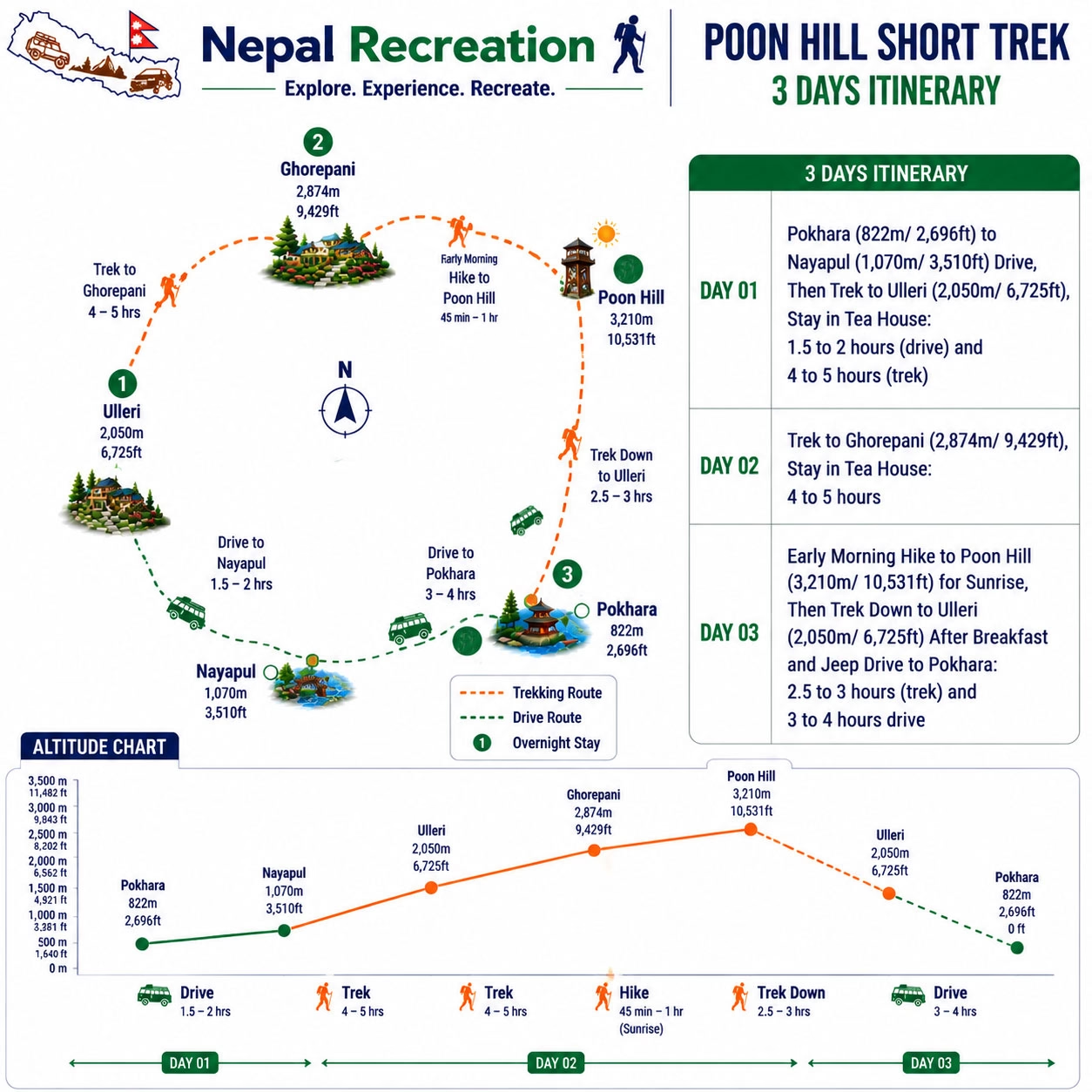
Day 01: Pokhara (822m/ 2,696ft) to Nayapul (1,070m/ 3,510ft) Drive, Then Trek to Ulleri (2,050m/ 6,725ft), Stay in Tea House: 1.5 to 2 hours (drive) and 4 to 5 hours (trek)
Day 02: Trek to Ghorepani (2,874m/ 9,429ft), Stay in Tea House: 4 to 5 hours
Day 03: Early Morning Hike to Poon Hill (3,210m/ 10,531ft) for Sunrise, Then Trek Down to Ulleri (2,050m/ 6,725ft) After Breakfast and Jeep Drive to Pokhara: 2.5 to 3 hours (trek) and 3 to 4 hours drive
Itinerary
DAY 1:Pokhara (822m/ 2,696ft) to Nayapul (1,070m/ 3,510ft) Drive, Then Trek to Ulleri (2,050m/ 6,725ft), Stay in Tea House: 1.5 to 2 hours (drive) and 4 to 5 hours (trek)
822 mYour Poon Hill Short Trek 3 Days begins with a scenic drive from Pokhara. You will leave the calm lakeside atmosphere behind and gradually enter the foothills of the Annapurna region. The driving road on this day follows river valleys and terraced hillsides until you reach Nayapul, which is the official starting point of the trek. From here, your real Himalayan experience begins on foot.
After stretching your legs for a bit, you will proceed further with the trekking part. The trail initially follows the Bhurbungdi Khola and passes through small settlements and lush terraced farms. You will walk through villages like Birethanti, which stands out with its stone houses, prayer flags, and local teahouses, setting the tone for your trekking days ahead. As you continue walking on the trail, it becomes steeper and more demanding, especially after Hile and Tikhedhunga.
You will need to trek the ‘Steps of Ulleri’, which is a popular section of the Poonhill Ghorepani Trek. In this uphill stretch, you will climb over 3,000 steps that lead to Ulleri Village. The climb to Ulleri is one of the physically challenging sections of the trek, but it is also one of the most rewarding. The stone steps rise steadily through forested hillsides, with occasional openings that offer views of the rolling hills and distant mountain ridges.
By the time you arrive at Ulleri, the air feels cooler, and the mountain atmosphere becomes more profound. Ulleri is a charming Magar Village that serves as a crucial stop for trekkers on the Annapurna Sanctuary and Ghorepani Poon Hill Ghandruk Trek routes.
DAY 2:Trek to Ghorepani (2,874m/ 9,429ft), Stay in Tea House: 4 to 5 hours
2,874 mThis day’s trek in your Himalayan adventure feels noticeably gentler and more immersive. You will leave Ulleri behind after breakfast and follow the trail that enters dense rhododendron and oak forests. During the spring season, these forests burst into bright red, pink, and white blooms and turn the stretch into a natural corridor of color. The ascent is gradual and you will get enough time to enjoy the surroundings. You will then arrive at Banthanti Village, a small village
Within the first couple of hours, you reach Banthanti, a small settlement tucked inside the forest. This is a common rest stop where trekkers pause for short breaks. From here, the trail continues gently uphill and takes you deep into the forested trails. Then, the scenic trail across the lush woodland will take you to Nangethanti, another well-known destination in the Nepal Poon Hill Trek. After Nangethanti, the forest gradually begins to thin and the air grows cooler as you approach Ghorepani. Occasional openings between the trees will offer you the first glimpses of the stunning Himalayan peaks.
By mid to late afternoon, you will arrive at Ghorepani, a large and lively village perched on a ridge. Historically, Ghorepani was an important stop for traders crossing between Mustang and the lower regions. And today it is best known as the gateway to Poon Hill.
D
DAY 3:Early Morning Hike to Poon Hill (3,210m/ 10,531ft) for Sunrise, Then Trek Down to Ulleri (2,050m/ 6,725ft) After Breakfast and Jeep Drive to Pokhara: 2.5 to 3 hours (trek) and 3 to 4 hours drive
3,210 mThis is the final day of the Poon Hill Trek Itinerary 3 Days and it begins well before dawn in Ghorepani. You will wake up early in the morning and follow the trail leading upward through the forest. The climb to Poon Hill through a clearly marked stone path takes about 45 minutes to an hour. Although the ascending part is demanding, from the top of the hill, you will be rewarded with Annapurna I, Annapurna South, Dhaulagiri, Machhapuchhre, Hiunchuli, Annapura, Nilgiri and Dhampus Peak.
The view stretches across both the Annapurna and Dhaulagiri ranges, making Poon Hill one of the most accessible yet dramatic sunrise viewpoints in Nepal. After spending some time at the viewpoint, you will then make your descent back to Ghorepani for breakfast. Then, after sorting out the trekking gear, you will prepare for the return trek. You will retrace your steps on the same forested route and pass through Nangethanti and Banthanti.
As you descend to lower altitudes, the forests start to gradually open up and you will approach the staircases of 4 days. By early afternoon, you will arrive at the village and it will mark the official end of your Ghorepani Poon Hill Short Trek. From Ulleri, a jeep drive takes you back through the lower hills toward Pokhara. This return drive offers you a final look at the terraced hillsides and river valleys before your return to the comfort of the lakeside city.
**Monsoon Note: During the monsoon season (June to August), the stone steps can be slippery. So, you will continue your descent toward Hile (1,948m/ 6,391ft) instead of Ulleri. From Hile, the jeep drive back to Pokhara is generally smoother and safer.
Altitude Profile
Looking to Customize This Trip?
We curate bespoke private itineraries tailored to your dates, preferences, and luxury requirements.
Cost breakdown
What's included
Pokhara to Nayapul and Kimche to Pokhara both way transports.
Three meals per day during trekking.
A professional trekking guide with his all expenses.
All permit (Annapurna Conservation Area Project) and TIMS Card.
Tea House accommodation during trek.
Fresh fruits during trek.
Poonhill trek map.
Nepal Recreation T-shirt and Cap
What's not included
Hotel in Pokhara.
Your personal expenses.
All kinds of soft and hard drinks.
Potter if need ($100).
Tips for guide.
Dates & Prices
Oct 23 – Oct 26, 2026
Oct 25 – Oct 28, 2026
Oct 26 – Oct 29, 2026
Oct 27 – Oct 30, 2026
Oct 28 – Oct 31, 2026
Oct 29 – Nov 1, 2026
Oct 30 – Nov 2, 2026
Oct 31 – Nov 3, 2026
Prices are per person on a twin-share basis. Departures are limited, especially during peak season.
Trip map
Useful information
Trek Difficulty
The Poon Hill Short Trek 3 Days is classified as an easy to moderate level of trek. This is one of the most accessible Himalayan trekking experiences in Nepal. However, the ‘easy’ label of the trek does not mean it is effortless. So, understanding where the challenge lies will help you prepare for the trek realistically. The main physical challenge of this Hill comes on Day 01. The climb from Tikhedhunga/Hile up to Ulleri with long stone staircases demands sustained effort. This section can feel tough for first-time trekkers or those not used to uphill walking. However, the pace is manageable and the trail is well-built throughout the stretch.
Beyond Ulleri, the trekking trail becomes noticeably gentler. The route to Ghorepani follows a gradual ascent through forested terrain. There are sufficient and frequent teahouses at Banthanti and Nangethanti, allowing for regular breaks. On the Nepal Poon Hill trekking trail, you don’t have to deal with exposed sections, rocky crossings, or technical segments. Due to this, this trek is suitable for even trekkers with limited mountain trekking experience. Altitude is a major concern during high-altitude treks in Nepal as it is directly related to Acute Mountain Sickness (AMS). However, altitude is not a major difficulty factor on this trek.
The highest point of this trek, Poon Hill (3,210m/ 10,531ft), is not a major elevation point that comes with the risk of altitude-related illness. You will spend most nights below 3,000 meters and our Poon Hill Trek Itinerary 3 Days also allows for natural acclimatization without added pressure. In terms of daily walking hours, you can expect 4 to 5 hours of trekking per day, with a slow and steady pace. The trekking trails are clear, well-marked, and heavily used. All these factors combined add to the overall safety and comfort of the trek.
So, in overall, the Poon Hill Short Trek is ideal for beginners, families, senior trekkers, and travelers short on time. Although this trek has a short itinerary, it still offers a genuine Himalayan trekking experience.

Best Time to Poonhill Ghorepani Trek
The Ghorepani Poon Hill Short Trek can be done throughout most of the year. But, certain seasons clearly offer better weather, clearer mountain views, and a more comfortable experience. Because this trek stays at relatively lower altitudes, it is more flexible than high Himalayan routes, yet timing still makes a noticeable difference. To sum it up, spring (March to May) and autumn (September to November) are considered the two best seasons for Poon Hill Short Trek 3 Days.
Spring is one of the most popular and visually rewarding seasons for the Poon Hill Nepal Trek. During this nature’s season, the forests between Ulleri, Banthanti, and Ghorepani come alive with blooming rhododendrons. The entire trail transforms into a corridor of red, pink, and white flowers. Weather conditions are generally stable in the spring season. Mornings are clear and the sunrise views from Poon Hill are exceptional. Similarly, the daytime temperatures are comfortable for trekking and the night temperatures are cool. The spring season is ideal for trekkers who want both scenery and reliable mountain views.
Like spring, the autumn season is widely considered the best time for Ghorepani Poon Hill Ghandruk Trek. In this post-monsoon season, the air starts to clear and the visibility improves dramatically. You will be able to enjoy sharp and uninterrupted views of the Annapurna and Dhaulagiri ranges. The trekking trails are dry, the skies are mostly clear, and the weather conditions are stable. This fall season is perfect for first-time trekkers and photographers. The only downside is that this peak season receives a high level of crowds, especially in October. But the trail never feels unmanageable.
Off-Season Experience
As the Poon Hill Nepal Trek is a low-altitude adventure, it can also be done during the low seasons like winter (December to February) and monsoon (June to August). However, these off-seasons require some careful considerations. The winter trekking is surprisingly rewarding for those who are prepared for cold mornings. The trail remains open, and snowfall usually stays manageable. Days are often clear, offering stunning mountain views, while nights, especially in Ghorepani, can be cold. Winter Ghorepani Poon Hill Trek is ideal for trekkers who prefer fewer crowds and peaceful trails.
Proper warm clothing and winter trekking gear are essential if you are planning a winter trek. During heavy snowfall, access to Poon Hill may be occasionally limited. But such conditions are usually short-lived. Similarly, the monsoon season brings lush green landscapes and fewer trekkers. But, it also has cloud cover, slippery trails and the lower stretches have leech problems. There are risks of landslides as well, which may affect road access. That said, there are short windows of clear weather, especially early in the morning. With flexibility and the option to descend via Hile instead of Ulleri, the trek can still be completed safely under guided conditions.
Packing List
As the Poon Hill Short Trek 3 Days is short and stays below an extreme altitude. So, while packing for the trek, you should take the smart approach rather than packing heavily. The goal is to stay comfortable during changing temperatures, handle a few hours of uphill walking, and keep your load light enough to enjoy the trail.
Layers (Clothing)
Moisture-wicking trekking t-shirts
Thermal layers
Fleece or light insulated mid-layer
Down or synthetic insulated jacket
Waterproof and windproof outer shell
Trekking pants
Lightweight rain pants (highly recommended in monsoon)
Warm beanie or wool hat
Sun cap or wide-brim hat
Lightweight gloves
Pairs of trekking socks (wool or blend)
Sleepwear (teahouse rooms are unheated)

Footwear
Proper trekking boots or sturdy hiking shoes (already broken in)
Sandals or camp shoes for evenings
Gaiters (optional)
Personal Hygiene
Toothbrush, toothpaste
Quick-dry towel
Toilet paper (always carry your own)
Wet wipes
Hand sanitizer
Sunscreen (UV is strong even in winter)
Lip balm with SPF
Personal medications
Basic first-aid kit
Gear and Equipment
Backpack with rain cover
Trekking poles
Headlamp with spare batteries or torch
Reusable water bottles
Sunglasses with UV protection
Power bank and charging cables
Phone/camera
Small dry bag or zip-locks for electronics
Accommodation and Food During Trek
The accommodation and food on the Poon Hill Short Trek 3 Days are simple, reliable and well-developed. So, this route is ideal for trekkers who want a comfortable introduction to teahouse trekking experience in Nepal without sacrificing the basic needs. All overnight stays during of your Poon Hill Trek Itinerary 3 Days will be at local teahouses. The available facilities, especially in Ulleri and Ghorepani, are better compared to more remote trekking regions. The available room setup is two beds in a single room with mattresses, pillows and blankets.
Rooms in the teahouses are clean but basic and with no heating. So, as night can feel cold, especially in autumn and winter, it is best to bring your own sleeping bag. Bathrooms are usually shared, although some teahouses offer attached bathrooms at an additional cost. Electricity is available in most teahouses, but charging your devices may cost extra, especially in Ghorepani. For hot showers as well, you may need to pay extra. Despite the simplicity, the teahouses are warm, welcoming and family-run. So, they offer glimpses into the Himalayan lifestyle and hospitality.
Food Options: What You Can Expect on the Ghorepani Poon Hill Trek Nepal?
The food on the Ghorepani Poon Hill Short Trek route is surprisingly varied, as it is one of the most popular trekking destinations in the country. You can enjoy the set menus or individual options. The available menus along the teahouse route are pretty much similar, with some basic tweaks. You can expect a freshly prepared meal using local ingredients and the hygiene standards are generally good. Dal Bhat (steamed rice, lentil soup, vegetables and other side dishes/spices) is one of the most popular foods among the trekkers. It is balanced, nourishing and you will get unlimited refills. You can expect other menus like:
Breakfast
Porridge (plain or with honey)
Tibetan bread (with jam, honey, or egg)
Chapati
Toast with butter and jam
Pancakes (plain, banana, apple)
Eggs: boiled, omelette, scrambled, fried
Muesli or cornflakes (limited availability)
Boiled potatoes (seasonal)

Lunch and Dinner
Tibetan bread with curry or honey
Vegetable fried rice
Chowmein (Nepali noodle dish)
Momos
Thukpa
Soup
Eggs (boiled, fried)
Potato dishes
Simple desserts and salads
Pasta or spaghetti
Bevereages
Tea options (Back, Milk, Ginger, Masala)
Instant coffee or black coffee
Hot chocolate
Water (boiled, filtered, mineral bottled)
Local alcohol
Soft drinks
Juice box and energy drinks
Training and Preparation
If you are considering the Poon Hill Short Trek 3 Days and wondering if you need a serious training regime. The blunt answer is No!! You will not need extreme preparation for this trek. But if you turn up completely unprepared, the trek might feel harder than it should. This trek involves several hours of continuous walking, averaging around 4 to 5 hours. The Uleri Steps, which consist of over 3,000 stone steps, can be a real test for beginner trekkers. Although it requires a steady uphill climb, the trail is not technical. The Poonhill Ghorepani Trek difficulty is at an easy to moderate level. So, in overall, you will be able to comfortably enjoy this journey with a moderate level of preparation.
A good way to prepare for the trek is to get used to walking. You can do bris walks on inclined surfaces to prepare for the trek. Stair climbing or practice hikes are also efficient ways to prepare for the stone steps of Ulleri. What matters most for the high-altitude Himalayan trek is leg strength, stamina, and endurance. For a better adaptation, you can train carrying your backpack with some weight. The hiking part, especially with a backpack, will help you familiarize yourself with mountain terrain. If you choose a high-altitude destination, you will also be able to reap the benefits of acclimatization practice.
Necessary Permits
While trekking the Poon Hill route may feel short and straightforward, it is important to understand that this trail takes you across the Annapurna Conservation Area. Because of this, you are required to obtain an official permit before starting the journey. You will only need to get one permit for this trek. The permit system exists to support conservation efforts, trail maintenance, and local communities along the route, which rely on the trekking industry. Trekking without the required permit can result in fines or being denied passage at checkpoints, so securing the permit in advance is essential.
Necessary Permits for Ghorepani Poon Hill Trek Nepal
Annapurna Conservation Area Permit (ACAP)
You can obtain this permit from the Nepal Tourism Board offices in Kathmandu or Pokhara. If you are trekking through a registered trekking agency like Nepal Recreation, the agency will arrange the permit on your behalf. You need to carry the ACAP permit with you at all times during the trek, as it will be checked at designated checkpoints along the route. It is best to keep photocopies and a digital backup of the permit for convenience.
Is This Trek Suitable for Beginners?
The Poon Hill Short Trek is one of the most beginner-friendly treks in Nepal. It is one of the reasons why it remains so popular among trekkers across the world. However, the beginner-friendly scale does not mean that this trek is effortless. Despite the short length and low altitudes, the Poon Hill Short Trek 3 Days is still a Himalayan adventure. Understanding the actual demands of the trek will help you set the right expectations. This trek does not involve technical trails, exposed sections, or high pass crossings. You will walk on well-defined paths, the villages are frequent and the teahouses are available throughout the route.
This makes your trekking experience safe and manageable, even for those who have never trekked in the Himalayas before. One of the biggest advantages for beginners in this Nepal Poon Hill Trek is the moderate altitude profile of the trek. The highest point of the entire trek is Poon Hill, which is at an elevation of 3,210 meters (10,531 feet). You will hike to this viewpoint briefly in the morning and the overnight stays are under 3,000 meters. Due to this gradual ascent, the altitude-related issues are rare compared to high-altitude Himalayan treks.
That said, as a beginner, you should still put effort into physical preparation as you will traverse the inclining route. The downhill stretches are equally demanding on the knees. So, a good level of preparation will make your journey comfortable and enjoyable. The Ghorepani Poon Hill Short Trek is also forgiving in terms of time. The daily walking hours average around only 4 to 5 hours. So, as a beginner, you will have enough time to adjust to the terrain without feeling rushed. On top of that, guides can also easily manage the pace according to your fitness level. That way, this short Himalayan adventure can be enjoyed by solo trekkers, families and even seniors with basic fitness.

Trek Cost
The Poon Hill Short Trek stands out not only for its scenery, but also because it is one of the most budget-friendly Himalayan treks in Nepal. Unlike longer or remote routes that demand heavy logistics, this trek keeps expenses reasonable without compromising your overall experience. The total cost of the Poon Hill Short Trek usually ranges between USD 250 and USD 450 per person. This range depends on how the trek is arranged rather than the route itself. Factors such as private or shared transportation, the use of a licensed guide, porter support, group size, and the quality of services all influence the final price.
If you are a trekker who likes everything arranged in advance, you can go for a full package, which simplifies the process. A typical package cost covers daily meals during the trek, teahouse accommodation, permits, a government-licensed guide, local transportation, and all required taxes and service fees. At Nepal Recreation, we offer the Poon Hill Short Trek at USD ### per person. Our trek is ideal for travelers who want a smooth, well-managed experience without unnecessary add-ons. Our focus is on safe pacing, reliable logistics, and local expertise. We believe a memorable Himalayan trek should be accessible, transparent, and fairly priced, especially for a route as rewarding as Poon Hill.
Travel Visa
Before starting the Poon Hill Short Trek, you need to make sure that your entry requirements for Nepal are in order. The good news is that Nepal’s visa system is one of the simplest in South Asia. Except for Indian citizens, all foreign nationals must enter Nepal on a tourist visa. Most visitors choose to get their visa after arriving in Nepal, either at Kathmandu’s international airport or at designated land border checkpoints. The process is usually quick, provided you have the required documents and payment ready.
For those who prefer to arrange things beforehand, you can apply for the Nepali travel visa through the Nepali embassy in your country. Or you can also fill out the e-visa form online and print it out during travel.
Visa Duration and Fees
Tourist visas are issued based on the length of stay. You can choose a plan that fits your travel needs:
15-day visa: USD 30
30-day visa: USD 50
90-day visa: USD 125
Since the Poon Hill trek itself takes only three days, a 15-day visa comfortably covers the trek, including extra time for arrival, rest in Pokhara, and onward travel. If you decide to stay longer than planned, you can get tourist visa extensions. Extensions are typically allocated for 15 days, with a standard fee of USD 45.