Nepal Travel Tips – A complete Guide For First Time visitors
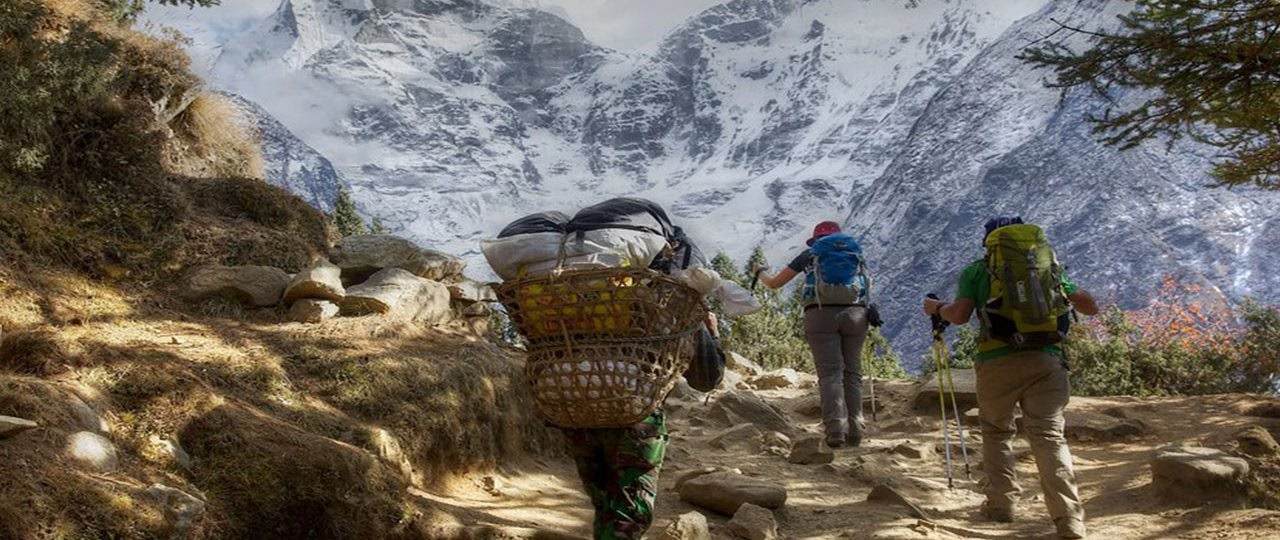
Have you ever wondered about visiting a destination tucked between the towering Himalayas and lush jungle?
Then a trip to Nepal, land of striking contrast and ancient beauty, will be a perfect destination for you. Whether you are dreaming of trekking to Everest Base Camp, soaking in the spiritual serenity of Buddha stupas, or wandering through medieval cities filled with history, Nepal offers an experience unlike any other.
But like any unique destination or travelling in this Himalayan nation comes with its own set of challenges and surprises, that’s where Nepal travel tips can be a lifesaver. You can experience unpredictable weather, cultural customs and many more. There are a lot of things a first-time traveller should know before landing in Kathmandu.
This guide is designed to equip you with the practical travel tips, insightful cultural advice and the essential information you need to enjoy a smooth, meaningful and unforgettable journey through Nepal.
If you are a solo backpacker, part of a guided trekking group, or a family looking for cultural adventure, this blog will help you travel with Confidence, respect and awareness.
So, grab your backpack and let’s explore how to travel smart and respectfully in this beautiful Himalayan nation.

Best Time to Visit Nepal
When the topic comes to visiting Nepal or tour in Nepal, timing can make or break your experience, especially if you are planning to trek, attend local festivals, or enjoy a wildlife safari. Nepal’s climate is incredibly diverse because of its varying altitudes. So understanding the seasons is key to a successful trip. Here is a complete Nepal travel tips based on seasonal variation:
Spring Season ( March to May)
Spring season is mostly recommended for trekking, mountaineering and photography. The weather in this season is mild and stable with clear skies. Daytime weather is pleasant and sunny (18°C – 28°C) and nighttime weather is cool in higher altitudes (7°C – 15 °C). Major highlights of these months are blooming rhododendrons that paint the hills with red and pink splashes. This is one of the best seasons for Everest and Annapurna treks. A tip for you, bring layers for morning and evening and light for the daytime. Popular trails get crowded, so early booking is necessary.
Summer/ Monsoon season ( June to August )
Summer/monsoon season is the best time for cultural exploration, the far western regions and rain shadow areas like Mustang. You will experience hot and humid weather with frequent rain, especially in the afternoons. In the daytime it’s about 25°C – 35°C and at night it’s about 20°C – 25°C. These seasons also include some challenges for you, like landslides in hilly areas and leeches on trails. As a reminder tip for you, wearing waterproof gear is important. This season is ideal for photography of lush landscapes and there are few crowds in cities.
Autumn season ( September to November)
The autumn season is the best time for trekking, festivals and sightseeing. Clear skies, fresh air, and stable temperatures are the weather conditions of this season. Daytime weather is about 20°C – 30°C (warm and dry) and at nighttime it is about 10°C – 18°C ( cool to chilly ). As major highlights this season is Nepal’s busiest travel season. You can experience the Dashain and Tihar festivals during this time. As for the Nepal travel tips for this period, you should plan months in advance because hotels and trails are fully booked.

Winter season ( December to February)
Winter season is best for cultural travel, low altitude treks and city tours. Weather conditions during this season are cold in the mountains and pleasant in the south. Daytime weather is around 10°C – 20°C in cities and below 5°C in the mountains. At nighttime, the temperatures are 0°C – 10 °C in valleys and below freezing at higher altitudes. You have to face challenges like snow in high passes and some lodges are found close to remote regions. As a tip for you, it’s better to wear layers because of the cold mornings and nights, but the days are usually sunny. It will be a great time to visit Kathmandu Valley, Chitwan and Lumbini.
If you are planning for a classic Himalayan trek, then aim for spring or autumn. To explore the city and wildlife, the winter season will be an excellent choice and if you are a budget traveler or crowd-averse, then the monsoon season might surprise you. Nepal spans an elevation from 70 meters (Terai ) to 8848 meters ( Everest), so the temperature can be different in a single day.

Visa and Entry Requirements for Nepal & Types of Visa
As you know, Nepal has its travel-friendly visa system, which makes your traveling much more easier. Nepal welcomes tourists from around the world with easy and accessible visa options. It also includes a visa-on-arrival for most nationalities.

So, for the next part of this Nepal travel tips, let’s explore the required information before you arrive.
Visa on Arrival
The most popular option is ‘Visa on Arrival’, which is available at Tribhuvan International Airport and selected land borders. About eligibility, most of the country’s citizens are eligible except for a few countries like Nigeria, Ghana, Iraq, etc. Some of the needed documents are that you should have a valid passport with at least 6 months remaining. Passport-sized photos and a completed arrival form, which is available at the airport or online.
The fees as of the year 2025, cost are based on how long you want to spend time in Nepal.
15 days: USD 30
30 days: USD 50
90 days: USD 50
You can pay in cash or in USD, EUR ,GBP AUD etc.
Online visa
It is also called the pre-arrival or e-visa. You can apply for this visa by clicking the link https://nepaliport.immigration.gov.np/online . You should fill out the form, upload the required documents and print the confirmation. You should present it on arrival with payment for faster processing.

Embassy visa
It is mostly recommended if you’re entering through less-used border crossings or if you are from a restricted nationality. You can visit the nearest Nepali embassy or consulate. It will take 2–5 working days for the visa process, which depends on the location.
Entry points into Nepal
Nepal can be entered by air or overland and knowing your travel option will help in planning routes and avoiding confusion.
By Air
There is only one international airport in Nepal, Tribhuvan International Airport ( TIA) in Kathmandu, until new airports in Pokhara and Lumbini start operating regular flights.
Major Connection: Delhi, Bangkok, Doha, Dubai, Kuala Lumpur, Istanbul, Singapore, Hong Kong
Facilities: visa on arrival counters, money exchange, ATMs, SIM card stalls and taxis/ prepaid cars.
Tip: In the early morning, you often have fewer flight delays due to clearer weather
By Land
Nepal has multiple open border crossings with India:
Sunauli-Bhairahawa: Main gateway for Lumbini & central Nepal, which is the busiest Crossing.
Raxaul-Birgunj: Access to Kathmandu & Chitwan with good road connection.
Jogbani-Biratnagar: Eastern Nepal access to Illam tea gardens, Dharan
Banbasa– Mahendranagar: Far-western access to Shuklaphanta National Park
Kakarbhitta: Easternmost Crossing gateway to Darjeeling/Sikkim in India.
As additional information, Indian and Nepali nationals can cross freely with a valid ID and foreigners must carry passports and visas.
By Land – From China (Tibet)
Rasuwagadhi– Kerung: Nowadays, the main operational border for tourists after Kodari is closed due to earthquake damage.
Only limited public transport with best accessed via private vehicle or tour group
As this is a high altitude area so you should be prepared for thin air and cold weather.
Other Important Nepal Travel Tips
Extension: For your visa extension, you can extend at the Department of immigration in Kathmandu or Pokhara.
If you overstay, then you have to pay USD 3 per day with additional fees, so plan your visa duration properly.
A transit visa is free for travellers staying less than 24 hours at the airport with a confirmed onward flight.
Travel insurance is strongly recommended for trekking and emergencies, but it is not mandatory for a visa.
Nepal is straightforward for most of the visitors, you just have to ensure a valid passport, cash for visa and the best entry point of your travel style. The rest of the things are simple, follow the signs at the border or airport and then you are ready for exploring Nepal.
Cultural Etiquette and Local Customs in Nepal
Nepal is a country where ancient traditions and spiritual values are deeply rooted in daily life. You should understand and respect these customs, avoiding unintentional offense, which helps to deepen your experience and connection with the people and places you explore.
Here are some important Nepal travel tips for the very first-time travellers to Nepal and these will help you a lot.
Greetings & Social Customs
You should say Namaste with palms together rather than a handshake to greet people respectfully.
In Nepal, the left hand is considered unclean, so you should use the right hand or both when giving and receiving anything.
You should address elders with respect by saying Dai, Didi, Ama, Buwa.
Temple & Religious Site Etiquette
You should always remove shoes before entering temples and monasteries.
Don’t touch statues, offerings or monks during prayer times.
Walk clockwise around stupas and shrines
There are some restricted areas, so always ask before taking photos.

Dress Modestly
Nepal is a conservative society, so you should avoid revealing clothes, mostly in rural areas, temples and religious ceremonies.
For trekking, modest activewear is fine. It is best if you carry a scarf or shawl when visiting sacred places.
For women travellers, you are advised to wear shoulders and knees covering clothes in public or cultural spaces.

Home & Hospitality Norms
If you are invited into someone’s house, you should remove your shoes at the door.
Accept food or tea if they offer you because it will be considered rude to refuse without reason.
Always eat with your right hand only. You should avoid touching communal food with your fingers.
Never step over people, food, or utensils because it is seen as disrespectful.
Things to avoid
In Nepal, there is no culture of public display of affection like hugs and kisses. You should not show affection publicly, especially in public areas.
You shouldn’t point your feet toward people, altars, or religious statues.
Never step on prayer flags, sacred books, or offerings. You should always walk around them with respect
You should never criticize religion or royal history in public places or in groups of people. It can deeply offend.
Respect, humility and curiosity go a long way in Nepal. Local people will be showing cultural awareness and they are very forgiving toward foreign travelers. People here will show cultural awareness, giving you genuine hospitality, a warm welcome, smiles and deeper experiences.
Transportation Tips in Nepal
Travelling around Nepal can be an adventure, which sometimes may be exciting, slow and unpredictable. Understanding your options will be helpful to save time, money and frustration whether you’re traveling between cities or heading towards mountains.
Domestic flights
For longer distances or mountain regions, you can choose domestic flights, which are often the most efficient way to travel. They are fast but depend upon weather conditions.
Popular routes: Kathmandu to Pokhara, Lukla ( Everest region), Bharatpur (Chitwan), Nepalgunj (for western Nepal)
Talking about cost, it will be $80 – $250 on the basis of your destinations and season
If you are booking flights to the mountains, then they are frequently delayed due to weather. It would be more helpful if your schedule were flexible.

Tourist bus/ local bus
Mostly, while travelling to Nepal, tourist buses are more preferred due to high recommendations and safety.
Comfortable, affordable
Available for routes like
Kathmandu – Pokhara, Pokhara – Chitwan, Kathmandu – Lumbini
Prices may vary according to routes, NPR 1,000 – 2,500
You can book from hotels and local agents.
Local bus
Least preferred if you are traveling on long routes having improper road conditions, especially for tourists with luggage.
Cheaper, but crowded, slow and chaotic
Few safety standards
You can also rent a scooter and motorcycle, which may cost you around NPR 1,000– 2500 per day. It’s great for exploring nearby cities and a helmet is mandatory with an international license.
Private cars & Tourist vans
If you are traveling in a group or with flexible itineraries, then it is especially recommended for you. Prices may differ by distance and vehicle type, and can easily be booked from hotels and local travel agencies.
Nepal Travel Tips for Road Safety
You should be so careful while walking on the roads of Nepal because they are often narrow and busy with bikes, animals and people. You should travel in daylight only, avoiding night buses on hilly roads. Carry water, snacks and cash during long trips.
You will find a mix of chaos and charm in the transportation of Nepal. You should have flexibility and patience, then you will find the way, whether to fly to a remote airstrip or to crash down a jungle road. To enjoy the trip, you should plan ahead, expect delays and enjoy the journey much as the destination.
Money and budgeting in Nepal
Nepal is so affordable compared to most travel destinations, but its cost is different depending on what you are trying to experience, like trekking, staying in cities, or having luxury experiences. You will get a huge help if you understand how money works here, which will probably avoid surprises and overspending.
Current exchange: Nepal’s official currency is symbolized as “Rupees”. According to 2025, the exchange rate is NPR 133 = 1 USD. You get coins starting from 1, 2, 5,10 only and notes 5, 10, 20, 50, 100, 500, and 1000. The best location to exchange money for you is a bank and licensed money exchangers. Never exchange currency at the airport unless necessary.

ATMs & Card payment: In Nepal, ATMs are widely available in major cities but very rare in remote areas. You can withdraw NPR 10,000 – 35,000 per transaction with a fee $3 to $5. Credit and debit cards are accepted in upscale places, but cash is king in rural areas. You should carry small notes for taxis, markets and local eateries.
Trekking & Adventure Costs
Everest Base Camp Trek: $1200–$2500 for guide, permits, flights, food, and lodging.
Annapurna Circuit Trek: $800 – $1,800
Short treks(3-5 days): $200 – $500
Adventure sports:
Paragliding in Pokhara:$80-$100
Bungee jumping:$90 – $120
White water rafting: $40 –$70
Bargaining & Market Tips
Bargaining is common in the local Market of Nepal. But it is important to negotiate politely. Never engage in aggressive bargaining and always remember it’s someone’s livelihood.
Budgeting Tips for Nepal
Below are some of the tips for you that will provide great help in your travel and make the experience more amazing.
Always carry small denominations for rural travel
You can use local eateries for cheap and authentic meals
You should book transport and tours locally for better prices rather than online booking
Always track expenses daily because small purchases add up quickly
Prepare an emergency fund aside, which will help you with flight delays, extra nights and health issues
Nepal is a place where your money expenses can stretch far from 20$ to 30$ on the basis of your preference. The main key is to mix cost-saving habits with occasional splurges so you can enjoy the best of Nepal without emptying your bank account
Health and Safety Precautions in Nepal
Nepal is a safe country for travellers, but sometimes in some destinations it comes with certain health and safety challenges, mostly in rural areas. Being prepared before the trip will make your trip smooth and prevent problems.
Vaccinations & Medical Challenges
You are recommended some of the vaccines like Hepatitis A&B, Typhoid, Tetanus/Diphtheria and Rabies. You should always check the latest entry requirements because they change seasonally. You should carry a small first aid kit including the needed medicine, bandage, antiseptic cream and motion sickness tablet.
Altitude Sickness
Planning to trek above 2500 meters? Then altitude sickness is a risk. You might experience symptoms like headache, nausea, dizziness, and shortness of breath if you do not follow a proper acclimatization schedule.
Prevention
Ascend slowly
Drink 3 – 4 liters of water daily
You should take acclimatization during day treks
Avoid alcohol and smoking
Consider Diamox, consult a doctor before use and if symptoms worsen, descend immediately
Water and food safety
Always drink bottled, boiled, or filtered water; don’t drink tap water
Avoid ice unless it’s from pure water
Better to stick cooked foods in rural areas rather than raw salads
Street food is amazing, but choose busy stalls and fresh-cooked food
Road and transport safety
You will find Nepal roads dangerous due to poor conditions and reckless driving
Avoid the night bus
Wear seat belts for safety
Helmets are mandatory for motorcycles/ scooters
Wildlife & Nature Risk
Jungle areas like Chitwan, Bardia always follow your guide’s instructions because wild elephants, regions and crocodiles can be very dangerous. During treks, stay on marked trails while avoiding injury or getting lost. In the monsoon season, leeches are common. Carrying salt or lime juice helps to remove them. If you want to do a jungle safari, it’s the best destination.
Emergency Number
Police: 100
Ambulance: 102
Fire: 101
Tourist police (Kathmandu): +977 -1-4247041
Travel insurance is strongly recommended for all Trekkers, especially for trekkers and make sure it covers medical evacuation. From remote mountain areas, helicopter rescue can cost $5,000– $10,000 without coverage.
At last, a few health precautions and safety habits that will make a difference between your unforgettable trip and a ruined one. So stay aware, pack smart and respect nature’s limits and enjoy the trip.
Packing Essentials for Nepal
Packing for Nepal isn’t just throwing clothes into a bag, it’s actually about adapting to diverse climate, altitude and activities because you would be sweating in the subtropical jungle and shivering at 4,000 meters next. Here are Nepal travel tips regarding what kind of packing is best-suited for your exploration.
Clothing – Layering is key
Base layer: Breathable T-shirt and thermal tois for high altitude
Mid Layer: Fleece jacket or light sweater
Outer layer: Waterproof and windproof jacket
Bottoms: Trekking pants, lightweight trousers, shorts for warm areas
Accessories
Warm hat & gloves (mountain)
Sunhat & sunglasses (lowland)
Scarf or buff for dust protection
Note: Cotton feels comfy and dries slowly, but synthetic blends or merino wool are better for travel
Footwear
Trekking boots should be sturdy, broken in with ankle support.
Casual shoes/ sandals are easy for city sightseeing and a light walk
Socks of wool or synthetic hiking socks are better and blister prevention is key.
Sleeping gear ( for trekkers & remote stays)
Sleeping bag rated for -10°C to – 20°C for high altitude treks. Choose a sleeping bag liner for cleanliness and extra warmth
Toiletries & personal care
Biodegradable soap/ shampoo
Sunscreen and lip balm with SPF
Hand sanitizer & Wet wipes
Toilet paper
Mosquito repellent

Electronic & Accessories
Universal travel adapter, Nepal uses 230V types C/D/M plugs
Power bank
A camera and phone with good storage
Head lamp with spare batteries
Documents & Money
Valid passport
Multiple passport-sized photos
Cash in small denominations
Credit /debit card for bigger expenses
Always pack light yet smart, which ensures you are ready for Nepal’s diverse environment, from humid jungle to icy passes. Remember, flexibility is your best travel tool.
Responsible Travel
Nepal is not just a beautiful landscape, but also a country rich in tradition, spirituality and warm hospitality. As a traveller, actions of yours impact both the environment and the people you meet, so responsible travel ensures you leave behind good memories, not problems.
Environmental Responsibility
Carry in, carry out, always take your trash with you on Treks and avoid single-use plastic.
Always use water purification instead of buying bottled water in the mountains.
Stay on trails that prevent soil erosion and avoid disturbing wildlife habitat
Support conservation areas, visit national parks responsibly and respect park rules
Support the Local Economy
Eat at local restaurants, not just tourist cafes
Buy souvenirs from artisans and cooperatives rather than imported goods
Always hire licensed local guides and porters
Choose homestays or locally owned lodges when possible.
Leave No Trace
Avoid picking plants and disturbing animals
Don’t crave names or leave marks on stone or trees.
Minimize campfire use, gas or lodge kitchen instead.
A trip to Nepal is not just about exploring, it’s about connecting with it. You should respect tradition, protect nature and spend your money where it makes the most difference. Following these, you will not only have a richer journey but also help to keep Nepal’s magic alive for future travelers.