Tour Places in Nepal
Nepal is one of the most versatile trekking destinations across the globe. While many people associate the country with Mount Everest, the Himalayas and trekking, this charming nation offers much more than just the mountain trails.
For a relatively small nation, Nepal packs in an incredible, multidimensional tour-worthy destination, from ancient cities with royal places, lowland jungles with rich biodiversity, serene hill stations, to remote Himalayan villages and centuries-old pilgrimage sites.
Remarkable tour places in Nepal aren’t limited to high-altitude trekking. Some of the most compelling experiences can be found beyond the trail, where the blend of culture, history and nature creates a perfect harmony.
So, whether you are a traveler who is looking for peaceful lakeside towns, UNESCO World Heritage Sites, religious landmarks, cultural festivals, scenic landscapes or thrilling adventures, you will find all of them here. And, often within a day’s travel from one another.
This guide focuses on the major tourist attractions in Nepal that are worth including in any travel plan. These destinations are not limited to one type of traveler. Nepal offers a diverse range of prospects that caters to the interests of every traveler and the experience they are looking for.

Why Visit Nepal?
Home to the Highest Peaks on Earth
If you don’t know, this Himalayan country is home to eight of the 14 highest peaks in the world, including the mightiest of them all, Mount Everest. Every day, you will wake up to the pristine white-clad slopes of the mountain kissed by golden light. Even if you don’t trek, the view from Pokhara, Sarangkot, or Nagarkot will offer the Himalayan beauty at arm’s length.
A Living Tapestry of Culture and Spirituality
Nepal is one of the most spiritually alive places on the planet. Here, you will find Hinduism and Buddhism intertwined and often in the same premises. Here, faith isn’t hidden behind walls; it blends, shapes the streets, rituals and is the pulse of daily life.
Natural Beauty That Goes Beyond Mountains
Although the mountains may steal the spotlight, Nepal’s natural diversity is breathtaking in every direction. The landscape diversity of this beautiful landlocked country is breathtaking. You can walk from the jungle to the glacier, terraced fields to high-altitude deserts, in the same country and sometimes even in the same week.
Haven for Trekkers and Adventurers
Nepal is the ultimate outdoor adventure arena. The geography of the country, which ranges from lowland jungles to high-altitude mountain passes, offers something for every kind of adventurer. If you are into trekking, you can find some of the most iconic and diverse routes on the planet. Beyond trekking, Nepal also delivers world-class adventure sports like paragliding, white-water rafting, bungee jumping, zip-lining and canyoning.
Warmth of the People and Authentic Hospitality
The magic about traveling to Nepal is that the mountains pull you in and the people keep you there. Nepali people are known worldwide for their gentleness, humility and warmth. From the teahouses in the mountain to shop owners in busy alleys, from the low-belt Terai to the high Himalayas, everyone you meet in this country adds a layer to your journey. Hospitality in Nepal isn’t just a service, it’s a soulful connection.
Timeless Traditions and Living Festivals
You may be surprised to find out Nepal doesn’t preserve culture in a museum; it lives on the streets, in rituals and in celebrations that feel like an ancient story. Every month brings out unique and fascinating festivals in the country. And each one of them is deeply symbolic and wildly vibrant.
Affordable Luxury and Deep Value
While exploring Nepal, you don’t need to spend big to feel rich. The value of what you get, whether it is a mountain view, heartfelt cultural delicacy, wildlife safari, or a spiritual experience, far outweighs its cost. Accommodations here range from humble teahouses to boutique hotels. Food options are diverse, delicious and inexpensive. And experiences? Well, it’s often priceless.
Top Nepal Tourist Sites
There are a variety of Nepal tourist attractions that you can explore during your visit. From the cultural heritage sites and spiritual landmarks to natural wonders and wildlife-rich jungles, each corner has its own allure.
These are the most visited and highly recommended tour places in Nepal for both first-time visitors and returning travelers who are looking for a well-rounded experience of the country.
Kathmandu Valley
The capital valley, Kathmandu, is where the identity of Nepal is most densely concentrated. It’s not just a major Nepal tourist attraction that you pass through. It is a place that you study, observe and experience to understand the history of the country and how it came to be what it is today.
This valley comprises three ancient cities of Kathmandu, Lalitpur and Bhaktapur. In its bowl shape lies the country’s cultural core, history, religion and art. For centuries, this capital valley was home to powerful kingdoms and bustling trade routes.
Kathmandu developed its own distinct architectural style, art forms and spiritual practices that blend both Hinduism and Buddhism, which is rarely seen anywhere else. You don’t need to be a religious person to appreciate what this valley offers.
What makes it really compelling is how active and living the heritage in this capital is. Rituals here aren’t performed for the show; they are part of daily life. You will find shrines and temples woven into the streets.
Each city in this valley showcases Nepal’s finest traditional architecture, centuries-old temples, sacred shrines and UNESCO World Heritage Sites. Walking through Kathmandu Valley feels like flipping through the pages of history. Here, every alley, courtyard and rooftop stupas whisper the tales of dynasties, spirituality, art and resistance.

Key Highlights:
Kathmandu Durbar Square
Swayambhunath Temple (Monkey Temple)
Pashupatinath Temple
Boudhanath Stupa
Patan Durbar Square
Bhaktapur Durbar Square
Pokhara- The City of Lakes and Adventure
Pokhara is the second-largest city in Nepal. Located 200 km west of the capital, this beautiful city is often described as the tourism hub of the country. But, in a different way from Kathmandu. The capital valley offers you culture, heritage and crowd energy.
As for Pokhara, it gives you space, stunning views and a chance to just breathe and simply soak in the serene atmosphere. This is the destination where nature and tourism have found a comfortable common ground. At its core, this peaceful city is a palace of natural beauty.
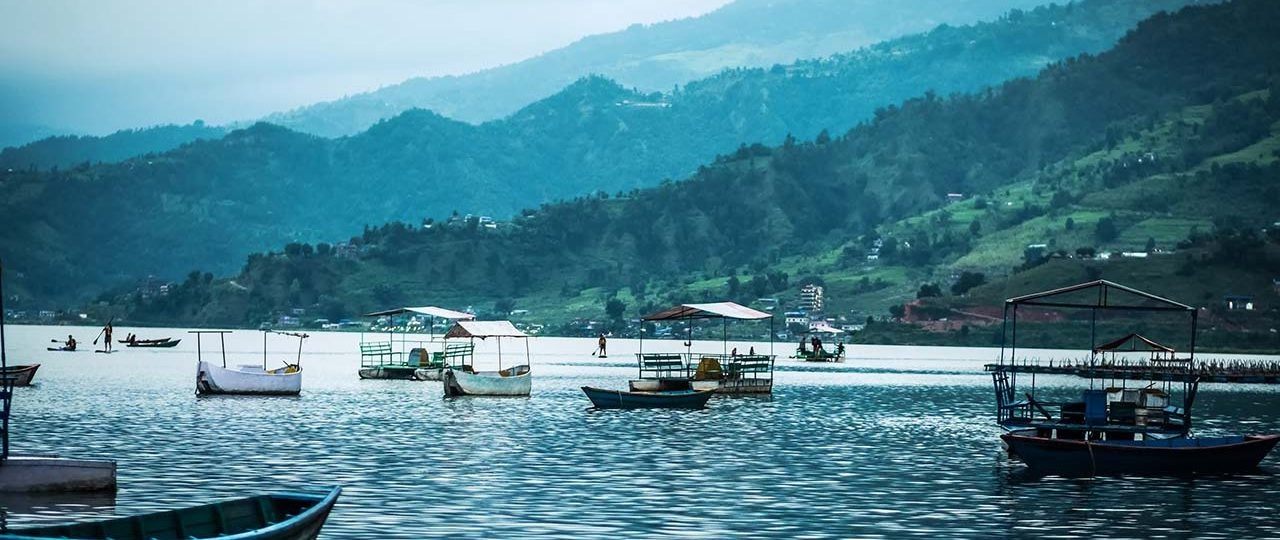
This city stretches across the tranquil water of Phewa Lake with the surreal Annapurna vista in the backdrop. Pokhara isn’t just visually stunning, it is also convenient and flexible for multiple types of travelers.
If you want to explore the mountains, going beyond the mainstream tourist Places at Nepal, Pokhara is gateway to some of the most iconic trails like Annapurna Base Camp Trek, Mardi Himal Trek, Annapurna Circuit and Ghorepani Poon Hill.
In case if trekking isn’t your thing, this adventure sports capital of Nepal has got you covered. You can enjoy adrenaline-pumping sports such as zip-line, paragliding, ultralight flying, or bungee jumping.
But what makes Pokhara really special is how well it balances activity with rest. It also has a strong appeal for families, older travelers and digital nomads. The atmosphere in this city of the lake is quieter, cleaner and life is gentler. So, you can set out on an exploration of the city at your own rhythm.

Key Highlights:
Phewa Lake
World Peace Pagoda
Sarangkot Viewpoint
Devi’s Fall
Gupteshwor Cave
International Mountain Museum
Paragliding
Chitwan- Nepal’s Jungle Paradise
Chitwan is a premier wildlife destination and a major Nepal tourist sites. Located in the subtropical southern Terai belt, this destination offers a completely different experience from the mountains and mid-hills.
The landscape here is covered by dense forests, a wide river and a grassy wetland where a diverse range of Nepal’s biodiversity thrives. The centerpiece of this popular tourist destination in the country is Chitwan National Park, the first-ever national park of Nepal.
This is also a UNESCO World Heritage Site, which was established in 1973 and later granted the status of World Heritage Site in 1984. Chitwan National Park is spread across an area of 952 sq km (367.81 sq mi). This iconic national park boasts over 700 species of flora and fauna.
Chitwan National Park houses 50 species of mammals, over 525 species of birds and over 55 species of amphibians and reptiles. What makes Chitwan rarely special among other popular tourist places of Nepal is how it offers travelers a valuable chance to experience the real and unfiltered nature.
Likewise, besides the incredible natural charm, the cultural side of Chitwan is also quite intriguing. The presence of the Tharu community, the indigenous people of the region, adds cultural charm to your trip. The Tharu villages, traditional homes, good and dances are an important part of the local tourism experience.

Key Highlights:
Chitwan National Park
Canoe Rides
Tharu Cultural Program
Elephant Breeding Center
Bird Watching
Lumbini- Spiritual Birthplace of Buddha
Lumbini is among the most visited tourist sites in Nepal. It is not a city built for tourism but a place of pilgrimage. Lumbini is located in the southwestern part of Terai belt and is renowned across the world as the birthplace of Siddhartha Gautama, who later became Buddha.
Due to its spiritual significance, this quiet and peaceful destination in Nepal attracts Buddhists and spiritual seekers from all around the world. Unlike other destinations that have been heavily commercialized around their spiritual identity, Lumbini still retains a calm and minimalist character.
In fact, when you are visiting this holy site, you can feel the serenity in the atmosphere and it feels like time is standing still. This isn’t a flashy site, nor does it offer much in terms of entertainment. But, it provides a rare atmosphere for reflection and quiet importance that seems to be connected with a higher realm.
At the heart of Lumbini is Maya Devi Temple, which marks the birth spot of Lord Buddha, who was born 563 BCE. The surrounding area includes Ashoka Pillar, Sacred Pusakarini Pond and Monastic Zone. The broader value of this top Nepal tourist attractions isn’t about what you do, but it’s in what you feel.
There are no bustling marketplaces, thrill-seeking activities and nightlife in Lumbini. But, if you are someone who is seeking meaningful travel that connects with deeper global history and belief systems, this birthplace of Lord Buddha will offer something rare and lasting.

Key Highlights:
Maya Devi Temple
Ashoka Pillar
Sacred Garden and Pusakarini Pond
Monastic Zone
Lumbini Museum and World Peace Pagoda
Nepal Places of Interest for Mountain and Nature Lovers
For many travelers who are truly familiar with this Himalayan country, the synonym of Nepal is often with mountains. The Himalayan region in Nepal offers some of the most dramatic landscapes and rewarding trekking experiences in the entire planet.
However, the Himalayan region is not all about the sky-touching peaks. They are also about the ethnic mountain cultures, glacier-fed rivers, remote settlements and conserved biodiversity.
Here are four significant trekking destinations in Nepal, each offering something different in terms of landscape, cultural prospects, difficulty, mountain vistas and sense of accomplishment.
Everest Region
The Everest region, which is also known as Khumbu, lies in the northeastern part of Nepal within the Solukhumbu District. This region, which is often referred to as the core of the Himalayas, is the most iconic trekking destination in Nepal.
Khumbu is located within Sagarmatha National Park, a UNESCO World Heritage Site which was established to protect the delicate Himalayan environment and preserve the unique Sherpa culture. This region is dominated by Mount Everest (8,848/ 29,029ft), the tallest snow-clad peak in the world, alongside other world-renowned peaks like Lhotse, Nuptse, Cho Oyu, Ama Dablam, Makalu and Thamserku.
Besides boasting the towering peaks that dominate the Himalayas, the Everest region is also a deeply spiritual landscape. Here, the Buddhist monasteries, mani walls, praying wheels, cairns, chortens and prayer flags adorn the trail.
The people of Khumbu, primarily the Sherpa community, have developed a rich mountain culture that blends with Tibetan Buddhism. Staying at the local teahouses and enjoying the warm hospitality of the Sherpa people is another major highlight of this region.
The Everest region can be accessed by a short and thrilling flight to Lukla Airport. Starting your adventure in a green hilly area, you will traverse across lush woodland and high suspension bridges to alpine meadows to glacial lakes and moraines, this stunning contrast defines the Everest trekking experience.

Popular Trekking Adventures in the Everest Region
Everest Three Passes Trek
Gokyo Lakes Trek
Ama Dablam Base Camp Trek
EBC Trek and Island Peak Climb
Annapurna Region
The Annapurna region is located in the central part of Nepal. It is just north of the adventure city of Pokhara and falls within the Annapurna Conservation Area, the largest conservation area of the country. Among all other Himalayan trekking destinations, the Annapurna region is considered the most ecologically diverse zone in Nepal.
This second major trekking destination of the Nepali Himalayas revolves around the Annapurna Massif, which boasts the 10th highest peak in the world, Annapurna I (8,091m/ 26,545ft). What sets trekking in Annapurna apart from other regions is the incredible topographical variety it offers.
Within a single trek, you can experience everything, from the tropical rhododendron forests and terraced fields to alpine meadows, glacial moraines and arid high Himalayan deserts. No other trekking destination in Nepal offers such a dramatic environmental shift within such a short distance.
Likewise, the cultural and ethnic diversity of the Annapurna region is also equally compelling. Along the trekking trail, you will encounter Gurung, Magar, Thakali and Tibetan culture-influenced communities. And each of them has its own architecture, cuisine and traditions that offer unparalleled cultural diversity in a single trail.

Popular Trekking Adventures in the Annapurna Region
Annapurna Circuit Trek
Khopra Danda Trek
Langtang Region
The Langtang region is one of the closest trekking destinations from Kathmandu. Situated on the northern side of the capital, this glacial valley is at a distance of about 80 km (49 miles) from Kathmandu. This trekking destination lies inside Langtang National Park, the first Himalayan national park of Nepal.
Despite being so close to Kathmandu, this trekking destination offers a complete alpine experience. That’s why Langtang Valley is often referred to as the most underrated and serene trekking zone in the Himalayas.
During this trek, you will walk across the tropical forest, high yak pastures, deep valleys carved by ancient rivers and the glacial zone. Before the devastating 2015 earthquake in Nepal, the Langtang region was already growing a popular alternative for the commercially packed Everest and Annapurna routes.
Although the region suffered immensely, it gradually rebuilt itself with resilience. Today, this part of the Himalayas stands as both a natural and a cultural gem. Beyond the breathtaking scenery, the engagement with the Tamang and Tibetan Buddhist communities is a memorable charm of the journey.
Langtang is an ideal destination for those who prefer a less crowded route and a more authentic experience farther from the mainstream crowd. Due to proximity to Kathmandu, this trek is logistically more convenient and budget-friendly as well.

Popular Trekking Adventures in the Langtang Region
Gosaikunda Trek
Helambu Trek
Langtang Gosaikunda Helambu Circuit Trek
Manalsu Region
The Manaslu Region is another major trekking destination in Nepal that circumnavigates Mount Manaslu (8,163m/ 26,781ft) in the west-central Himalayas. Situated near the Tibetan border, this is a remote and dramatically beautiful trekking destination renowned for its off-beaten experience.
As this region is a restricted area, you will need a special permit and a registered guide to venture on its trails. But for those who are willing to put in the effort, the reward is incredibly immense.
You will get the opportunity to experience the authentic Himalayan culture, wild landscape and a level of serenity that is hardly found in other trekking regions in the country. The Manalsu region is often referred to as what the Annapurna Circuit Trek used to be about two decades ago, before the road access and mass tourism.
The trekking trails in this off-beaten experience wind through narrow gorges, lush woodland, alpine pastures and the glacial moraines. You will pass through a diverse progression of ethnic zones starting from Gurung and Magar villages at a lower elevation.
Then, you will transition to a heavily Tibetan Buddhism-influenced culture of the Nubri and Tsum ethnic groups. Besides being deeply steeped in Buddhist spirituality, the isolation of the region has helped it preserve the unique cultural and linguistic identity that is hard to find elsewhere.

Popular Trekking Adventures in the Manaslu Region
Tsum Valley Trek
Manaslu Tsum Valley Combined Trek
Nepal Recreation
Travel specialist sharing firsthand stories, comprehensive trekking guides, and expert advice to help you plan your Himalayan adventures.