- Duration
- 12 days
- Difficulty
- Easy
- Max Altitude
- 3,840 m(12,598 ft)
- Destination
- Nepal
- Activity
- Tour
- Accommodation
- Hotel and Tea House
- Best Season
- Spring & Autumn
- Group Size
- 1-15
- Transport
- Private Jeep
- Meals
- 3 meals in Mustang and Breakfast in City
- Arrival City
- Kathmandu
- Minimum Age
- 8
- Maximum Age
- 84
Trip overview
The Upper Mustang Photography Tour is a unique and captivating journey into one of Nepal’s most photogenic and culturally spectacular regions: Mustang. Photographers will find unrivaled opportunities for capturing magnificent landscapes, ancient architecture and untampered local culture during this tour. Because this is a far flung corner of the Himalayas, modern development has hardly touched the region, leaving it like a treasure trove of raw beauty. Everything from towering peaks in the Annapurna and Dhaulagiri ranges to desert like landscapes and quaint Tibetan influenced villages all make for varied subjects to shoot in Upper Mustang.
Upper Mustang is a dream destination for any photographer to capture the natural wonders and rich cultural heritage of this isolated mountain area. This photography tour is ideal for professional photographers, hobbyists or nature lovers. It ranges from landscapes to portraits, architecture, wildlife and any form of cultural documentation. From wide angle snaps of the Himalayas to detailed shots of ancient monasteries down to capturing the daily life of locals, Upper Mustang has it all.
Every nook and corner of Upper Mustang offers something different and exciting for a photographer be it arid, windswept plains, lush valleys, traditional Tibetan villages or historical monasteries. Likewise, from the brightly colored, wind whipped prayer flags to the serious faces of the locals, this Upper Mustang overland tour helps in enriching the preservation of stories and images of this historically steeped land.
In a nutshell, the Upper Mustang Photography Tour is an unmatched adventure of immersing into and capturing the timeless beauty, rich culture and spiritual depth of a centuries old, secluded region.

Prime Attractions of Upper Mustang Photography Tour
Lo Manthang, an ancient walled city with centuries old monasteries, traditional Tibetan architecture and stunning landscapes.
Click away historic cave monasteries of Chosar and Tashi Kabum with unique murals.
The exquisite architecture of Tibetan Buddhist monasteries including Luri Gompa and Ghar Gompa with deep spiritual significance.
Dramatic landscapes characterized by arid deserts, deep canyons, colorful rock formations, red verticle cliffs and towering peaks of the Annapurna and Dhaulagiri ranges.
Pictorials of the Kali Gandaki River making its way through deep valleys against the backdrop of towering Himalayan mountains.
Documentation of people in traditional village life, their whitewashed stone houses and fertile terraced fields.
Tiji festival, a three day event with dances, rituals and praying.
Large expanses of Tibetan Plateau.
Hidden valleys and remote settlements with unspoiled landscapes and traditional ways of life.
Meet and interact with traditionally ethnic tribes of Bon and Lobha of Upper Mustang, rich in customs and culture.
Visits to sacred Champa Lhakang, Namgyal Gompa and Tsechen Shedrubling Monastery School delve deep into the spiritual teachings of Tibetan Buddhism.
The holy shrine of Muktinath, a popular religious site for both Hindu and Buddhist pilgrims with 108 water sprouts and a natural flame that never goes off.
Refreshing walks along serenity at the Phewa Lakeside at Pokhara and taste its vibrant nightlife.
Magnificent sunrise view over the snow laden mountains from stunning Sagargkot viewpoint.
Picturesque overland drive through isolated and rugged bumpy roads of far-flung and remote Mustang area.
Best Time for Upper Mustang Photography Tour
The best times for Nepal photography tour of Upper Mustang are in pre monsoon spring and post-monsoon autumn. These are the periods between March and May and September and November. These months normally promise clear and dry weather which is excellent for photography. The atmosphere and sky are usually free of clouds affording spectacular views of the surrounding Himalayan peaks.
These seasons avoid heavy monsoon rains and also the extreme winter cold that limits visibility and accessibility. The sunlight hours are long and visibility conditions are perfect for capturing vivid colors. There is plenty of time to fully soak up the scenic beauty of the region and take all possible photographic opportunities because of the long days.
May in particular provides some of the most culturally enriching experiences with the Tiji festival adding that unique and vibrant touch to your photography.
Autumn and spring months are particularly striking as the landscapes get painted in diverse hues of nature. The blooming spring flowers and green forests in the lower region make for dramatic and breathtaking shots. On the other hand, mesmerizing multicolored fall foliage in autumn makes the barren Upper Mustang terrain most alluring. With spring blooms and shades of autumn that give vitality to the scenery, landscape photography reaches a whole new level.
In a nutshell, the weather, lighting, visibility and overall conditions over these seasons for photography are ideally perfect. The clear skies, refreshing air and bright sunshine make for great photographs in the Upper Mustang.

Itinerary
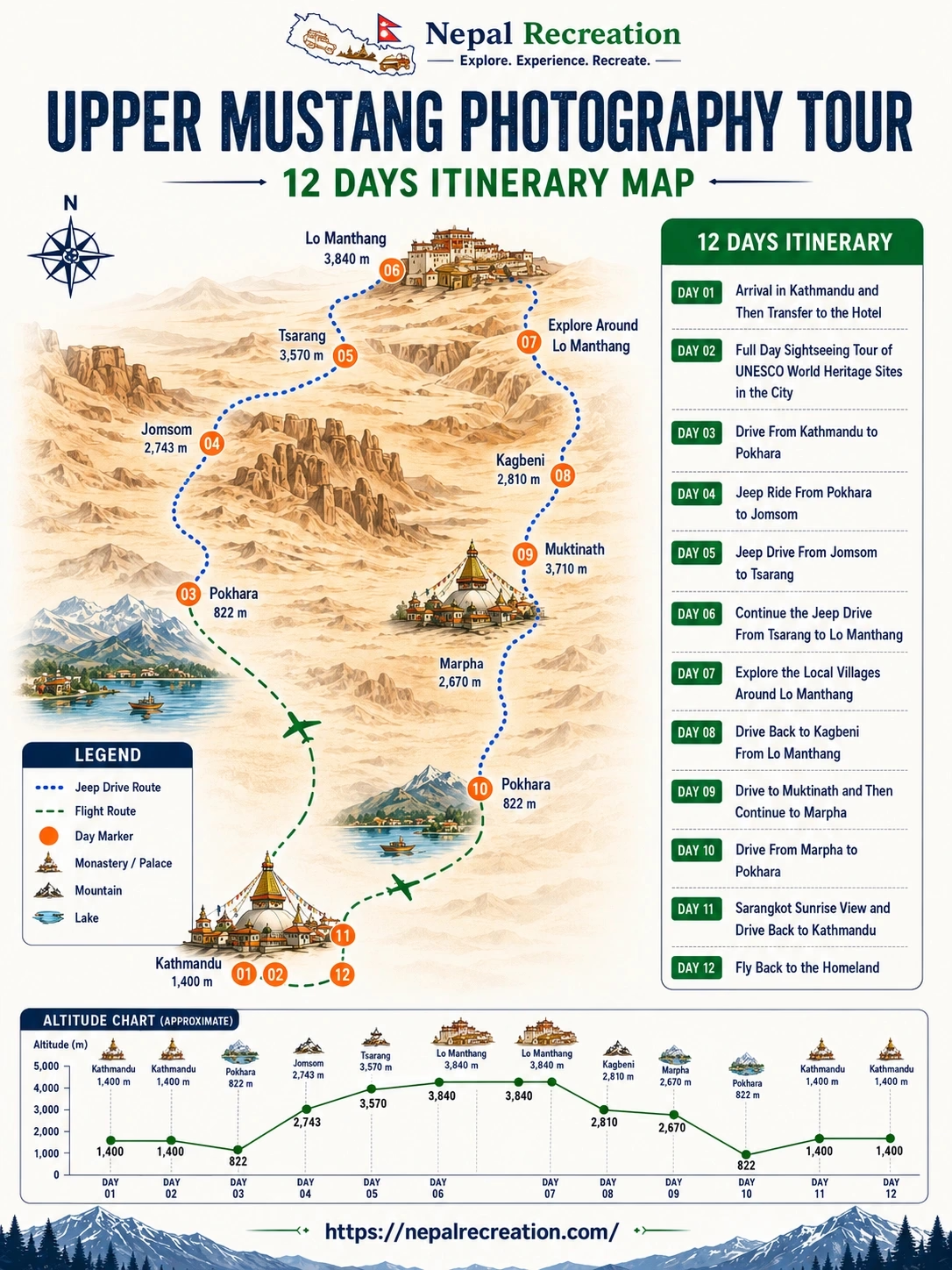
DAY 1:Arrival in Kathmandu and Then Transfer to the Hotel
1,400 m30 minutes 3 star HotelKathmandu Altitude: 1,400 meters
Upon your arrival at Kathmandu, the capital city of Nepal, our airport representative will escort you to the hotel. It is a very short distance from the airport to the hotel and along the way, you will catch glimpses of how bustling the streets and markets of this vibrant capital are.
After reaching the hotel, freshen up and spend the rest of your day at leisure. You can either rest from your journey or take a short walk around the local surroundings to feel the liveliness of the city. You can also visit our office if you have any queries regarding the forthcoming adventure.
Your first night in Kathmandu is the time to get geared up for what is going to be an enthralling beginning, with full hotel facilities and hospitality.
DAY 2:Full Day Sightseeing Tour of UNESCO World Heritage Sites in the City
1,400 m6 hours3 Star HotelBThis will be a whole day sightseeing tour of the Kathmandu UNESCO World Heritage Sites where you can have a look at the rich cultural, religious and historical treasures of this ancient city. After a hearty breakfast in the hotel, we will ride in a comfy private car to explore the architectural richness of the capital.
On this guided city tour, you go first to one of the iconic Buddhist landmarks of Kathmandu, Swayambhunath Stupa. Sitting atop a hill with panoramic views of this city, this stupa is a serene spiritual haven. Here you can find detailed carvings, a prayer wheel and statues of Lord Buddha on its premises.
Next up is the Pashupatinath Temple. It is the most important pilgrim destination in Nepal for all Hindus wherein Lord Shiva is worshipped. This exquisite pagoda style temple is situated on the banks of the holy Bagmati River where cremation rituals are held.
Hereafter, we will drive to the giant Boudhanath Stupa. It is one of the major centers of Tibetan Buddhism. The stupa is also surrounded by monasteries and vibrant cultural marketplaces. The colorful prayer flags and the humming of prayers add to the serenity of this place.
The drive follows next to ancient Durbar Squares: Kathmandu Durbar Square and Bhaktapur Durbar Square which are essentially representative of Nepalese architecture.
Your knowledgeable guide will be with you throughout the day, explaining each site in a cultural sense so that you truly appreciate the heritage and beauty of Kathmandu.
DAY 3:Drive From Kathmandu to Pokhara
822 m7 hours3 Star HotelBPokhara Altitude: 822 meters
Drive Distance: around 200 kilometers
Drive Duration: 7-8 hours
We are on day 3 of the Upper Mustang tour itinerary. This drive from Kathmandu to Pokhara gives you a sneak peek at some of the most beautiful countryside landscapes of Nepal.
Your picturesque overland drive starts after breakfast in the hotel. We will come to pick you up to embark together on this remarkable adventure.
From the hustle and bustle of Kathmandu city, we go to the scenic hillsides and green valleys. Great views of the Himalayan ranges such as Annapurna and Manaslu along the route can be seen from the drive. Trishuli and Marsyangdi River provide continued company during most parts of the drive offering opportunities to pause and enjoy the picturesque surroundings. Various rural towns and villages dot the way to Pokhara which are adorned with colorful terraced farms.
Finally, after a long ride we will approach Pokhara. This tranquil lake town is quite famous for its astounding beauty of nature. Upon arrival, you will be transferred to the hotel for check in and overnight stay.
DAY 4:Jeep Ride From Pokhara to Jomsom
2,700 m7 hoursTea HouseB/L/DJomsom Altitude: 2,720 meters
Drive Distance: around 150 kilometers
Drive Duration: 4-5 hours
After an energizing breakfast at your hotel in Pokhara we will take a jeep ride to Jomsom, one of the vital stops on your Upper Mustang Photography tour. The drive first traverses along smooth roads via Pokhara Baglung Highway passing through lush green hills and terracing farmlands. The landscape becomes ruggedly dramatic as it leaves the valley behind.
The Upper Mustang driving tour by 4WD Jeep will pass through small villages like Dumre and Besisahar, each offering a glimpse into the rural life of Nepal. The ride is perfect for capturing shots of traditional Nepali houses, local people and colorful farming landscapes.
The road continues alongside the Kali Gandaki River via Beni Jomsom Highway where you will be treated to expansive views of the Annapurna and Dhaulagiri mountain ranges in the distance. En route, you can capture the shots of the zigzag roads, rocky cliffs and the abrupt change from verdant valleys to high altitude desert like landscapes as you approach the Mustang region in Jomsom.
After arriving at Jomsom, we will check into a hotel for an overnight stay. Jomsom provides magical views of the Nilgiri and Dhaulagiri peaks. For photographers, the area around this village is ideal to capture dry, wind swept terrain combined with the surrounding snow capped peaks.
DAY 5:Jeep Drive From Jomsom to Tsarang
3,560 m6 hoursTea HouseB/L/DTsarang Altitude: 3,560 meters
Drive Distance: about 80 kilometers
Drive Duration: 3-4 hours
The jeep ride from Jomsom to Tsarang takes one deeper into the heart of Upper Mustang. It is an incredible journey through some very remote and rugged terrain. Leaving Jomsom, the road winds its way through the Kali Gandaki Valley with towering cliffs and barren hillsides rising on both sides.
En route, you will pass through the small Tibetan style village of Kagbeni, Chhuksang and Dhakmar with traditional whitewashed houses and prayer flags. You can capture stunning images of jagged rock formations, deep gorges and the peak of Annapurna and Dhaulagiri Ranges along this drive.
By the time you approach Tsarang, it gets more desolate and mysterious with a red cliff carved with caves and ancient monasteries. This ancient village is an important historical and cultural hub in the Upper Mustang.
The Tsarang Monastery and Tashi Kabum Cave Monastery are some of the photogenic monasteries in the village surrounded by towering walls with intricate architecture. Likewise, a little side trip from Tsarang to Luri Gompa in Luri village is a great photography and exploration opportunity.
DAY 6:Continue the Jeep Drive From Tsarang to Lo Manthang
3,840 m5 hours Tea HouseB/L/DLo Manthang Altitude: 3,840 meters
Drive Distance: around 15 kilometers
Drive Duration: 2 hours
The Upper Mustang Jeep Tour continues to the more desolate and dramatic regions with views of spectacular mountain views and Tibetan influenced culture. Outside Tsarang, the road is more rugged snaking its way across big and open desert plains.
The drive offers glimpses of ancient caves carved into the cliffs and the Himalayan ranges towering in the distance. Likewise, the jagged cliffs and aird valleys contrasting with the clear blue sky are seen in the utmost beauty. All these add to the awe inspiring backdrop for a ride as well as diverse subjects to capture with the camera.
Getting near Lo Manthang, a capital town for Upper Mustang, the scene of fortified walls, centuries old palaces, monasteries and narrow streets lined with traditional homes and chortens all add to the photography themes. Upon arrival, you can explore this magical walled city which has preserved its Tibetan heritage for centuries before retreating into the guesthouse.
DAY 7:Explore the Local Villages Around Lo Manthang
3,840 m6 hoursTea HouseB/L/DToday we will spend the whole day in the forbidden kingdom of Upper Mustang, Lo Manthang. This is an isolated area protecting Tibetan culture and tradition to this day. After a leisurely meal in the guesthouse, you can make excursions into the surrounding areas of the village to peep into the traditional life and architecture in the region.
You can visit the local villages around, such as Chosar and Garphu. You can explore Chosar Cave Monastery in Chosar and click on its ancient architecture, intricate murals and dramatic cliffside setting. In Garphu, you can shoot fabulous snaps of traditional architecture, ancient monasteries, cliffside caves and dramatic barren landscapes.
Lo Manthang itself boasts rich Tibetan influenced architecture, whitewashed homes, fluttering prayer flags, ancient chortens and cliff carved caves that represent the core of the region’s cultural and spiritual significance. It is a unique opportunity to capture the isolation, beauty and rich cultural heritage of this remote region.
Besides, you can go for a walk through the hallowed halls of the five storied, white washed King’s Palace, the oldest structure in the region. The timelessness of the beauty of the Palace and its surroundings, framed by the dramatic desert landscape, is a treat for the photographers.
By late evening, return to the guesthouse for an overnight stay.
DAY 8:Drive Back to Kagbeni From Lo Manthang
2,800 m6 hours Tea HouseB/L/DKagbeni Altitude: 2,800 meters
Drive Distance: 70-80 kilometers
Drive Duration: 4-5 hours
After spending a full day exploring and photographing Lo Manthang, we will now head towards Kagbeni. This is our return journey from the Upper Mustang to the downward regions. The drive goes through the rugged and barren landscapes with panoramic views of surrounding mountains and valleys.
En route, we will pass by several small Tibetan influenced hamlets full of cultural insights. You finally come to Kagbeni, another quaint little village on the periphery of the Lower Mustang Valley. The village has narrow alleys and traditional houses made of mud bricks.
Kagbeni boasts well preserved culture and its traditional settlements offer a peek into lives that have not changed for centuries. The village consists of an ancient monastery and fortress atop a ridge offering stunning panorama of the surrounding desert landscapes and snow capped peaks. It is the ideal spot for both cultural exploration and landscape photography.
DAY 9:Drive to Muktinath and Then Continue to Marpha
2,650 m5 hoursTea HouseB/L/DMuktinath Altitude: 3,710 meters
Marpha Altitude: 2,650 meters
Drive Distance: around 40 kilometers
Drive Duration: 3-4 hours
Following the Upper Mustang tour itinerary, we will drive from Kagbeni to Muktinath. It is an adventurous and photogenic trip that takes you through a portion of Upper Mustang. The beauty of the surroundings keeps changing with every rise upwards toward the sacred site of Muktinath.
On the way, you pass through narrow serpentine roads, rock faces and colorful villages in traditional style. The towering Himalayan ranges dominate most of the scenery. Gradually, we will reach Muktinath and make a brief stop here to explore.
The eternal flame along with the holy water taps and springs and the prayer wheels are the highlights of the temple. Photographers can capture the spiritual context of this pilgrimage site. Moreover, it displays breathtaking views of the surrounding valley and snowy peaks providing great opportunities for landscape photography as well.
From Muktinath, the journey continues to Marpha. On the drive down the valley, you can capture the contrast between the emerald greenery on the valley floor and the alpine desert landscape.
Marpha is a village in the Kali Gandaki Valley with white washed stone houses, quaint streets and a rich Tibetan culture. The hamlet is also very famous for its apple orchards. After arrival in Marpha, check into tonight’s accommodation and spend some time contemplating today’s amazing experiences.DAY 10:Drive From Marpha to Pokhara
822 m7 hours3 Star HotelB/LPokhara Altitude: 822 meters
Drive Distance: 139 kilometers
Drive Duration: 4-5 hours
The drive from Marpha to Pokhara is a scenic journey that takes you back through the stunning landscapes of the Kali Gandaki Valley and the lower Mustang region. The drive winds its way on narrow mountain roads passing through lush forests, terraced fields and charming villages like Tatopani and Beni. It follows the Kali Gandaki River with spectacular views of surrounding mountains.
The terrain changes from the arid landscapes of Upper Mustang to greener and more fertile valleys as you descend. Along the way, you pass cascading waterfalls, picturesque rivers and peaceful rural settlements that offer excellent opportunities for landscape and cultural photography.
Arriving at Pokhara, our Upper Mustang Tour comes it an end. The natural setting of green hills flanking serene Phewa Lake and a Himalayan backdrop is the perfect photography theme in this lake city. After a long day of travel, you can retreat to the coziness of your accommodation or go for an evening walk in the lakeside areaDAY 11:Sarangkot Sunrise View and Drive Back to Kathmandu
1,400 m7 hours3 Star HotelBKathmandu Altitude: 1,400 meters
Drive Distance: approximately 200 kilometers
Drive Duration: 7-8 hours
Early in the morning, we will drive to the Sarangkot Viewpoint for the fascinating view of the sunrise over the Himalayan range. The summits of Annapurna and Dhaulagiri, tinged with golden light in dawn, are amazing to watch. Sunrise time is also the best to shoot dramatic photographs of the mountains, lakes and valleys below.
After sunrise viewing, you will get back to the hotel for a meal before setting off for a long scenic drive back to Kathmandu. Following the Prithvi Highway which amazingly twists through lush hills, villages and riverside landscapes, we will head towards the capital. You will be dropped off at your hotel upon arrival in Kathmandu where you can spend the rest of the time the way you please.
DAY 12:Fly Back to the Homeland
1,400 m30 minutsBIt is a day to say farewell to Nepal. Though the journey of the Nepal photography tour might be over the stories and photographs will always remain. They will remind you of the remarkable adventure through the most breathtaking region of the world.
Our airport representative official will come to receive you at your hotel following your departure schedule. So, stay prepared and ready for the airport transfer until then.
After a short smooth ride, you will reach the airport. Have a safe journey ahead. We hope to see you soon in your next adventure.
Altitude Profile
Looking to Customize This Trip?
We curate bespoke private itineraries tailored to your dates, preferences, and luxury requirements.
Cost breakdown
What's included
Private 4WD Jeep for all overland transportation as per itinerary
Special Upper Mustang Permit & Annapurna Conservation Area Permit (ACAP)
Accommodation 3 star standard in Kathmandu and Pokhara as per itinerary.
Teahouses accommodation during the tour
Kathmandu - Pokhara - Kathmandu by Tourist Bus.
All meals (breakfast, lunch, dinner) during the tour
Professional English-speaking guide
Kathmandu City Tour.
1 Hour boating on Phewa Lake.
Route Map and Nepal Recreation Tours and vehicles T-shirt.
Necessary Sleeping Bag and Down Jackets provided.
Experienced driver & necessary support staff
Mineral Waters
First aid kit & emergency support
What's not included
International airfare & Nepal visa fees
Travel insurance (mandatory)
Personal expenses (laundry, drinks, snacks, extra meals)
Tips for guide, driver & staff
Additional expenses due to unforeseen events (weather, road blockage, delays)
Dates & Prices
Oct 25 – Nov 6, 2026
Oct 27 – Nov 8, 2026
Oct 29 – Nov 10, 2026
Oct 31 – Nov 12, 2026
Prices are per person on a twin-share basis. Departures are limited, especially during peak season.
Trip map
Useful information
What Makes Upper Mustang a Haven for Photography?
Wildlife Photography
The Upper Mustang Region lies in the Annapurna Conservation Area which is home to several valuable wildlives. It is a habitat of animals including Himalayan Tahr, Blue Sheep, Musk Deer and Wild Yak along with Snow Leopard that is spotted in high altitude parts of the region. These birds, the Himalayan Monal, Himalayan Griffon Vulture, Chukar Partridge and Eurasian Eagle Owl, among many others, attract birdwatchers with their cameras.
Wildlife photography takes great patience to snap good pictures from quiet observations with knowledge about their nature. Mostly, large and open landscape backgrounds give breathtaking scenery to this challenging task of snapping wild pictures. Likewise, Telephoto lenses are perfect for shooting birds and animals from a distance without disturbing their natural habitat.
The tough landscape and unpredictable weather conditions require specialized skills in handling wildlife photography in Upper Mustang. Photographers must wait to get the creatures in motion or in some pretty interesting settings. Shooting can also get complicated because of the high winds, frequent dust storms and rapidly changing weather. Being prepared with the right equipment and adaptable is key to getting the shots.

Landscapes Photography
The Upper Mustang Region possesses some of the most dramatic and unique terrains on Earth. Generally characterized, it is a barren, arid area with deep canyons, cliffside villages and wide plateaus. Likewise, the mountain ranges of Annapurna and Dhaulagiri are often dusted with snow while the Kali Gandaki River weaves its way through the valley below. All these combine to create a landscape unlike any other.
The unique geological features of the Upper Mustang Region include desert like terrain with rocky outcrops and wind eroded cliffs that reflect the beauty and uniqueness of nature. These are the themes that carry the essence of the rugged beauty of Upper Mustang while setting the scene for dramatic and striking photographs.
The Upper Mustang offers endless photographic opportunities where you can take wide and open shots of unspoiled nature in all its beauty and seclusion. From huge plateaus to multicolored rocks and deep serpentine canyons, photographers can find an array of dynamic backdrops for breathtaking shots.
Cultural Photography
Mustang represents a preferred destination for cultural photography, offering incomparable possibilities in shooting the essence of Tibetan culture and Buddhism. The architecture here reflects a lot of Tibetan influence with flat roofed buildings, wood carved frames and white washed walls. Everywhere you turn, monasteries, prayer wheels, stupas, chortens and prayer poles dot the landscape. These architectural elements set against the backdrop of towering mountains give an otherworldly feel to any photograph.
There is also a chance to document the resilient lives of the locals who continue to uphold their ancient traditions. It is a view into the day to day life and culture of the people while clicking portraits of natives dressed up in vibrant traditional attire. Whether it is capturing the expressions, the texture of ancient walls or the beads of prayer malas each frame speaks of a deep attachment to heritage and faith.
A visit coinciding with the Tiji Festival allows a rare glimpse into and opportunity to capture in frames the most vibrant moments of the culture. This annual festival commemorates the triumph of good over evil and is filled with traditional dances, ceremonies and rituals, very dynamic and colorful for photographers.
From the intricate murals inside monasteries to fluttering prayer flags and sacred rituals carried out by locals, Upper Mustang is a haven that offers a wealth of visual stories. This will help you deepen understanding of the culture of this hidden land while enriching your photography portfolio.

Challenges of Upper Mustang Photography Tour
The high altitude environment of Upper Mustang presents a number of challenges for photographers. Navigating uneven mountain landscapes can cause physical strain and unstable footing making it harder to focus and capture sharp images.
Similarly, consecutive days in the high altitude mountainous environment increase the possibility of altitude sickness. Without good acclimatization, it will be difficult for your body to adjust to the height. The main thing is, at such altitudes the air is thin and breathing can become more difficult. This shortness of breath will affect your ability to steady yourself while shooting.
For this, ascend gradually to enable your body to acclimate to the altitude. This will help reduce breathlessness and improve your focus. Take some deep breaths and steady yourself before snapping. It is also advisable to use a tripod or lean your camera against something firm for sharp and clear shots.
The Upper Mustang region can get very windy and arid with strong sunlight during the day. The dust and moisture can affect your gear (battery drain, fogged lenses) and shooting conditions. Hence, keeping up with the weather forecast allows you to prepare for changes in conditions and enables you to plan your shots. You can make full use of the golden hours with stable weather and great lighting. Similarly, polarizing filters are perfect for overcast days that will saturate the colors in your images.
Besides that, places with power, Wi-Fi or camera repair shops will also be few and far between in the remote Upper Mustang. In this respect, backup batteries, extra memory cards and high quality gear become essential.
Preparations for the Best Upper Mustang Photography Tour
Physical and Mental Readiness
The Upper Mustang Jeep tour is an alpine ride that takes you to an elevation of around 4,000 meters. So, if possible, do some cardio or hiking in preparation for the tour. This will help you to adjust efficiently to the thinning air and low oxygen levels of the alpine zones.
The mental preparation required for the high altitude journey of the Upper Mustang overland tour involves embracing challenges, adaptability and an open mindset. Equally important will be preparation for delays, changes in plans and waiting for certain specific moments to get the best pictures.
Research the Region
The Upper Mustang represents a very rich Tibetan culture and it is better to understand the customs and history of this place to be able to take some meaningful pictures. Iconic will be monasteries, prayer flags and traditional architecture. A bit of reading about them may help add depth to your shots.
Likewise, sometimes the area gets quite arid and windy in the winter and spring months because of clear skies and intense sunlight. So, make sure you know what kind of weather conditions to expect for photography based on what time of the year you will be going.
Gear Preparation
Take all the gear you may want such as camera body, lenses, filters, tripod, cleaning kits and memory cards and make sure you try them all before going out. Upper Mustang is dry, dusty and windy and all these conditions can be really harsh on the equipment. Carry protective cases for your gear like lens hoods and weather sealing bags to save your gear. A rain cover for your camera bag is a good idea though rainfall is minimal.
Backup Plans and Flexibility
Be prepared for weather disruptions or changes in plans. Flexibility is key in regions like Upper Mustang where road conditions, weather or local issues can cause delays or changes in the itinerary.
Likewise, always carry extra memory cards and spare batteries for your camera as well as extra lenses. By doing this, you definitely won’t miss out on capturing great shots due to a technical malfunction.

Essential Photography Gear for the Upper Mustang Tour
Planning an Upper Mustang Tour where you will get to explore rugged terrain, ancient monasteries and breathtakingly beautiful landscapes requires photo gear that can capture everything in the best possible way. Here’s a list of essential photography gear for your adventure:
DSLR or mirrorless cameras: For great image quality and versatility
Cameras with good low light performance
Wide angle lens
Standard zoom lens
Telephoto lens: For shooting from a distance
Prime lens: For portraits, shooting in the dark and awesome bokeh (background blur)
Tripod
Polarizing filter: For removing undesirable glares from the sun and enriching colors of the landscape
ND Filter: For controlling exposure and allowing to make long exposure shots even in the daytime.
Filters for low light situations
Portable power bank
Extra batteries and memory cards
External hard drive or portable storage: To back up photos regularly during the trip
Weatherproof camera bag
Lens cleaning kit
Drone
Best Locations for Photographing the Upper Mustang
Lo Manthang
The ancient capital of the Upper Mustang, Lo Manthang features historical palaces, narrow streets and traditional Tibetan architecture. The backdrop of surrounding mountains makes it a perfect place for capturing both portraits and wide landscapes.
You can shoot:
Thubchen monastery
Local life
Traditional homes
Spectacular mountain scenery
Prayer flags
Yak caravans
Dry landscape

Tsarang
A quiet village with spectacular views over the valley. Tsarang’s very ancient monastery and red clay houses make great subjects against a dramatic backdrop of cliffs and mountains.
You can shoot:
Tsarang monastery
Local villagers
Scenic mountain views
Traditional stone houses
Kagbeni
It is a quaint village located at the confluence of the Kali Gandaki River and Jhong River. The village itself is very ancient, almost mystic in appearance with narrow alleys and historic architecture.
You can shoot:
Unique architecture
Kali Gandaki River
Ancient Kagbeni monastery
Dramatic cliff formations
Muktinath
It is a sacred pilgrimage site. The dramatic surroundings of arid landscapes and the view of the Annapurna range provide stunning backdrops.
You can shoot:
Muktinath Temple
Pilgrims
Water spouts
Panoramic views of the Annapurna and Dhaulagiri mountain ranges

Marpha
Famous for its apple orchard, Marpha is a very pretty village with whitewashed stone houses with narrow streets. It is surrounded by dramatic mountain landscapes and is a peaceful place to capture rural life.
You can shoot:
Whitewashed houses
Apple orchards
Local markets
Surrounding mountains
Ideal Time of Day for Photographs in Upper Mustang
The best times of day to shoot in Upper Mustang are indeed in the golden hours. The soft light during the early morning and late afternoon period provides for a magical shooting of the landscape and people of this isolated Upper Mustang Region. This gentle warm light gives a wonderful flush to the terrains while enhancing their texture and color with depth.
The morning light in particular is mystical because it lights up towering peaks of the Annapurna and Dhaulagiri ranges transforming the landscape into a breathtaking scene of serenity and wonder. Likewise, you can take incredible silhouettes of yourself or the natural elements against a colored sky at golden sunset hours.
Normally, It is not ideal to shoot around noon or shortly after as the overhead sun creates high contrast between shadows and overexposed areas in your photo. However, if you are shooting in more shaded areas midday can work well since the harsh sunlight won’t be a major issue.
Overall, the early morning and late afternoon offer the best conditions for stunning, well lit photographs of Upper Mustang’s dramatic landscapes and cultural scenes.
Photography Tips During Upper Mustang Tour
Try after sunrise and before sunset time (golden hours) for amazing clicks. This early morning and late afternoon time provides soft warm light that vastly improves the visibility and beauty of the landscape.
Use wide angle lenses to show the vastness of the terrain and shoot from high vantage points for the best panoramic pictures.
Use a polarizing filter to reduce glare, enhance colors and improve contrast when shooting because intense sunshine in the region causes harsh reflections and wash out details.
Bring extra batteries and memory cards for your camera. Cold temperatures at higher altitudes can very fast drain your batteries and there may also be limited electricity or charging facilities.
Protect your camera gear from dust and moisture.
Look for natural frames provided by the environment to add depth to your photographs. For instance, shooting through monastery windows or using the foreground of leaves or rock formations can make your images more dynamic.
Slow the shutter speed by using a longer exposure time than normal to portray motion in all your action photos.
A tripod stand will help support longer exposures and keep your images sharp and stable with no motion blur.
Avoid flash photography inside temples and monasteries, for it may disrupt the peaceful atmosphere as well as the praying monks and lamas.

Consider black and white photography for dramatic landscapes or portraits as the lack of color will intensify textures, patterns and contrasts in your photos.
Back up your photos on multiple memory cards and carry a portable power bank to keep your gears powered up.
Use drones for stunning aerial photography but before that, check the local regulations relating to drone operations.
Always ask permission before taking portraits of the locals and their religious artifacts or practices.
Also Read: