Where is Mount Everest?
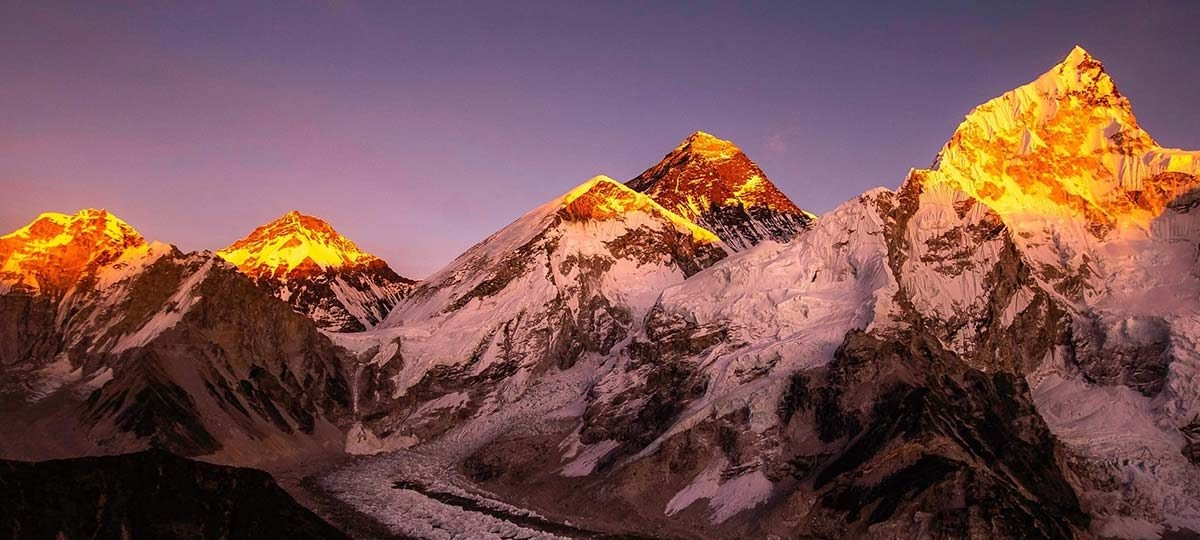
Mount Everest is located in Asia, which is the largest continent in the world. It lies in the Himalayan mountain range, which stretches across several Asian countries. The Himalayas are famous for having the highest mountain on Earth, and Mount Everest is the tallest of them all.
In the world map, Mount Everest is found in Southern Asia between the two countries Nepal and China. The mountain stands exactly on the border of two countries. The southern side of Mount Everest is in Nepal, and the northern side is in Tibet, which is an autonomous region of China.
Mount Everest is part of a long chain of mountains formed millions of years ago when two huge land plates pushed against each other. This movement slowly lifted the land and created the Himalayas. That is why this area has many very high peaks close together.
Looking at the location simply, Mount Everest is in Asia, in the Himalayas, and on the Nepal-China border.
Because of the location, Mount Everest is very important to both countries and to the world. People from different countries travel to this region to see, study, and climb the mountain. Understanding where Mount Everest is located in the world helps you to understand why it is so special and famous everywhere.
Which Country Owns Mount Everest?
Many people ask, Which country owns Mount Everest? The simple answer is that no single country owns Mount Everest completely. The mountain is shared by two countries, Nepal and China.
Mount Everest stands exactly on the border between these two countries. The southern side of the mountain is in Nepal, and the northern side of the mountain is in China, in an autonomous region called Tibet. Because the summit lies on the border, both countries have equal importance when it comes to Mount Everest.
In Nepal, Mount Everest is known as “Sagarmatha,” which means “Forehead of the sky”. In Tibet, it is known as “Chomolungma,” which means “Goddess Mother of the world”. These names show how deeply the mountain is respected by local people on both sides.
Nepal and China each control their own side of Mount Everest. They issue climbing permits, manage tourism, and protect the environment in their areas. Climbers can choose to climb Everest from either the Nepal side or the Tibet side while depending on permission and conditions.
So, instead of being owned by one country, Mount Everest is a shared natural wonder. This shared ownership makes Everest a symbol of cooperation between Nepal and China. This is a mountain that belongs to the whole world, not just one nation.

Where is Mount Everest Exactly in Nepal and Tibet?
Mount Everest is located exactly on the border between Nepal and Tibet (China). The position of Mount Everest can be understood more clearly by looking at both sides separately.
On the Nepal side, Mount Everest lies in the Solukhumbu District of eastern Nepal. This area is a part of Sagarmatha National Park which is a protected area. It is also a UNESCO World Heritage Site. The park is famous for high mountains, glaciers, and Sherpa villages. Most climbers and trekkers enter this region by flying to Lukla Airport and then walking for several days to reach Everest Base Camp (South Base Camp).
On the Tibetan side, Mount Everest is located in Tingri County of the Tibet Autonomous Region of China. This side is more open and wide with high plateaus instead of deep valleys. Visitors can reach the North Base Camp of Everest by road by using vehicles from Lhasa or nearby towns.
Even though the land looks different on each side, the summit of Mount Everest is the same. It lies right on the international border. Because of this special location, Mount Everest connects two countries, two cultures, and two ways of reaching the world’s highest mountain.
Can Mount Everest Be Seen From Kathmandu?
Many visitors visiting Nepal wonder, Can Mount Everest be seen from Kathmandu? The simple and clear answer is No. Mount Everest can not be seen directly from Kathmandu City.
Kathmandu is about 160 kilometers, or around 100 miles, away from Mount Everest. Between Kathmandu and Everest, many hills and mountains block the view of Everest. Because of this, even on very clear days, Mount Everest is not visible from the city.
However, this does not mean people in Kathmandu can not see mountains at all. On clear mornings, visitors can see beautiful peaks like Langtang, Ganesh Himal, and Dorje Lakpa from some viewpoints around the valley. These mountains are closer and easier to see.
If you want to see Mount Everest without trekking, there are two popular options. First one is you can take Mountain Flights from Kathmandu. It offers you clear views from the airplane. The second option is travelling to places like Nagarkot or doing the Everest Base Camp Helicopter Tour.
So, while Mount Everest can not be seen from Kathmandu, there are still easy and safe ways for visitors to enjoy views of the world’s highest mountain without climbing it.
Can Mount Everest Be Seen From Space?
Due to the immense stature of this tallest natural structure on the planet, you might be curious if Mount Everest can be seen from space. The simple answer is yes, Mount Everest can be seen from space, but not in an easy way.
From space, astronauts and satellites can see Mount Everest because it is the highest point on Earth. Modern satellites take very clear photos of the Himalayas and Mount Everest appears as a part of a long line of tall mountains. Scientists use these images to study glaciers, snow, and climate change.
However, Mount Everest can not be clearly seen with the naked eye from very far space, like the Moon. The mountain is tall, but it is also very narrow compared to the size of the Earth. From high above, it looks small and blends in with nearby peaks.
Astronauts in low Earth orbit, such as those on the International Space Station, can sometimes spot Mount Everest under the perfect weather conditions, especially when the sky is clear and there is no cloud cover.
So, Mount Everest can be seen from space using cameras and satellites, but it is not easy to see just by looking. This fact shows how huge our planet is, even when we talk about the tallest mountain in the world.

Can You Visit Mount Everest Without Climbing?
Yes, you can visit Mount Everest without climbing to the top. Many people think Everest is only for expert climbers, but this is not true. The mountain is accessible to tourists, trekkers, and even older people who want to experience it safely.
The most popular way is to visit the Everest Base Camp in Nepal. This is the area at the foot of Mount Everest. Here you can see the massive peak without climbing roped or using oxygen. The trek to Everest Base Camp usually starts at Lukla Airport. It takes about 12-14 days round-trip. Along the way, trekkers stay in teahouses, enjoy local food, and experience Sherpa culture. The trails are well marked, making it safe for reasonably fit beginners.
Another way to visit Everest without climbing is the North Base Camp in Tibet (China). This side is more accessible by road, and so people can reach here by using vehicles. From here, you can get close to the mountain, see glaciers, and enjoy the views without trekking for many days. This makes Everest reachable even for those people who can not walk long distances.
Visitors do not need climbing experience, special equipment, or oxygen tanks. They just need basic fitness, proper clothing for cold weather, and travel permits issued by Nepal or China.
In addition, many people take helicopter tours from Kathmandu that fly close to Everest. It provides spectacular aerial views of the mountain and surrounding peaks. This is a quick way to experience Everest without trekking or climbing at all.
Visiting Mount Everest without climbing is safe, exciting, and memorable. It allows you to experience the world’s highest mountain. You can enjoy the stunning landscapes and understand their cultural and natural importance without facing the dangers of high-altitude climbing.
Why Mount Everest is Important and Why Its Location Matters?
Mount Everest is not just the highest mountain in the world, but its location makes it extremely important. It is a part of the Himalayas on the Nepal-China border. This location affects nature, science, and culture in many ways:
Impact on Climate and Water
Mount Everest’s high peaks help to control rainfall and wind patterns in South Asia. The glaciers around Mount Everest store freshwater, which slowly flows into rivers. It is used by millions of people for drinking, farming, and electricity. Without these glaciers, life in the surrounding areas would be much harder.
Scientific Importance
Because Mount Everest is still slowly rising, scientists study it to understand earthquakes, plate movements, and climate change. Its glaciers also give clues about how global warming is affecting mountain regions.
Cultural and Spiritual Importance
Mount Everest is sacred to the local Sherpa people in Nepal and local communities in Tibet. It is a place of respect, prayer, and cultural traditions. Its location makes it central to local beliefs and festivals.
Adventure and Tourism
Mount Everest’s location makes it one of the most visited mountains in the world for trekkers and climbers. The mountain connects nature, culture, and adventure, which is the reason why millions of people are fascinated by Everest.
Information on Permits, Borders While Visiting Mount Everest
Mount Everest is shared by two countries, Nepal and China. Because of this, visitors need different permits depending on which side they want to visit. The southern side in Nepal and the Northern side in Tibet have their own rules for travellers and climbers.
On Nepal’s side, anyone who wants to trek to Everest Base Camp must get a trekking permit from the Nepal government. If someone wants to climb the mountain, they need a climbing permit. This permit is more expensive, and it includes safety rules. The south route is most popular for climbers and trekkers because it has more teahouses, guides, and easier access.

On the Tibet (China) side, visitors need a Chinese travel permit and usually a guide with them. Vehicles can go closer to the North Base Camp. This makes it easier for those people who can not trek long distances. The North Route is famous for climbers, but it requires more planning due to the cold winds and high plateaus.
Because the summit of Mount Everest is on the border, both countries have rights over it. This is why knowing which country owns which side of Mount Everest is important for planning a visit. Travelers must respect local laws, customs and safety guidelines.
Even if you are not climbing Mount Everest, understanding the borders and permits is essential. It ensures a safe and smooth experience while visiting the world’s highest mountain.
How Mount Everest Attracts Adventure and Tourism?
Mount Everest is not only the highest mountain in the world, but it is also one of the most popular destinations for adventure and tourism. People from all over the world come to see, trek, or climb this famous peak. Its location is in the Himalayas. It is on the Nepal-China border. As it is on the border between these two countries, it is accessible in different ways depending on what trekkers want to do.
The most popular activity is the Everest Base Camp Trek in Nepal. Many tourists walk for several days from Lukla to Base Camp. They enjoy beautiful mountains, rivers, and Sherpa villages along the way. This trek is possible without climbing skills. It also allows people to experience Everest closely.
To those who can not trek, you can do helicopter tours from Kathmandu or nearby areas, or directly to the base camp, which provides you with spectacular aerial views of the mountain and surrounding peaks. On the Tibetan side, visitors can drive close to the North Base Camp, which makes Mount Everest reachable even for those people who have limited time or mobility.
Mount Everest also attracts professional climbers. The south route, Nepal, and the North Route, Tibet, are the famous paths to the summit. Both of these sides require permits, guides, and safety measures. It clearly shows how its location affects adventure tourism.
Tourism around Mount Everest benefits local Communities in both Nepal and Tibet. Visitors support lodges, guides, and local businesses. Visitors also learn about culture, religion, and nature. Safety, respect, and proper preparation are important factors for a successful trip.
So, Mount Everest’s location and height make it a magnet for adventure, tourism, and cultural experiences while attracting millions of people around the world every year.
Nepal Recreation
Travel specialist sharing firsthand stories, comprehensive trekking guides, and expert advice to help you plan your Himalayan adventures.