Nepal Pilgrimage Tour
Nepal is a sacred destination for both Hindu and Buddhist pilgrims, where centuries-old temples, stupas, monasteries, and religious traditions remain part of everyday life. A Nepal pilgrimage tour can begin in the Kathmandu Valley, where sites such as Pashupatinath, Boudhanath, and Swayambhunath bring together worshippers, monks, local devotees, and visitors. From here, the journey can extend across Nepal to sacred places in the hills, Himalayan valleys, and southern plains, creating a pilgrimage experience that goes beyond visiting individual religious sites.
The diversity of Nepal’s pilgrimage destinations allows travelers to experience different religious traditions within one journey. Janakpur, with the famous Janaki Mandir, is closely associated with Goddess Sita and the Ramayana tradition, while Lumbini is recognized as the birthplace of Siddhartha Gautama Buddha. Further north, Muktinath sits at approximately 3,800 meters and holds significance for both Hindu and Buddhist pilgrims. Other important sites, including Namo Buddha, Manakamana, Dakshinkali, and Budhanilkantha, can be included depending on the purpose and duration of the tour.
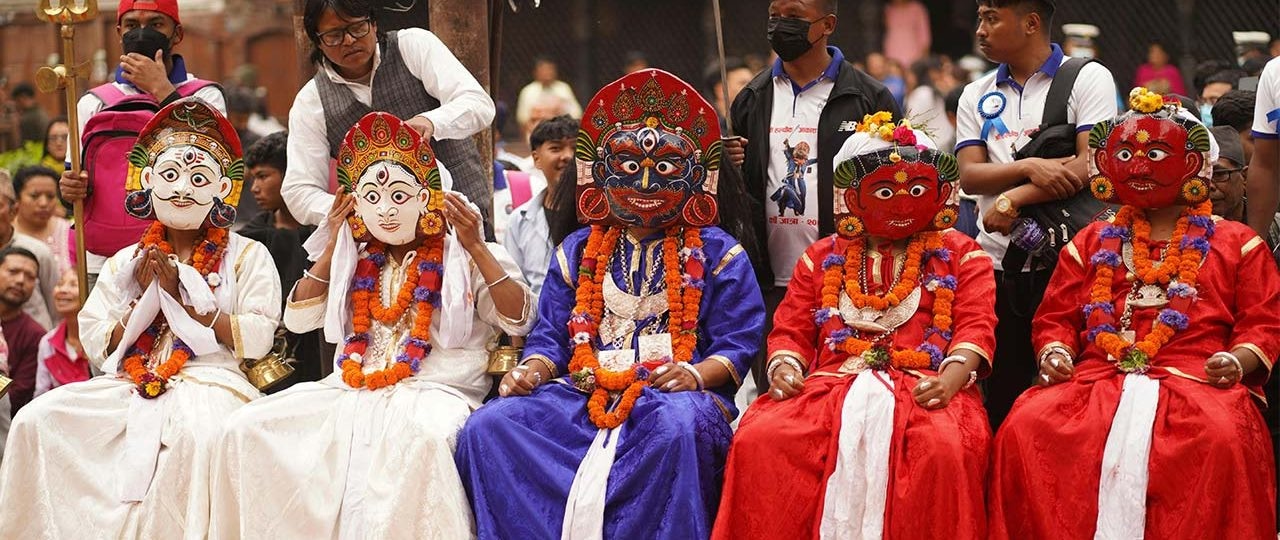
A pilgrimage in Nepal is also a journey through changing landscapes and local life. The route may move from Kathmandu’s historic courtyards and busy temple squares through green hills, river valleys, traditional settlements, and finally into the dry Himalayan scenery around Mustang. Along the way, travelers can attend prayers, observe religious ceremonies, spin prayer wheels, visit monasteries, receive blessings, and experience local customs. This combination of worship, heritage, culture, and Himalayan scenery gives the journey a deeper dimension than a conventional sightseeing tour.
The itinerary can be tailored according to religious interests, age, mobility, group size, and available time. A 1 to 3 day pilgrimage can focus on Kathmandu and nearby sacred sites, while a 10 to 15 day journey can connect Kathmandu with Janakpur, Pokhara, Muktinath, and Lumbini. Private transportation, domestic flights, suitable accommodation, rest days, and reduced walking schedules can be arranged where necessary, making the journey practical for families, senior pilgrims, and travelers who want to explore Nepal’s sacred places without rushing from one destination to another.
Why Choose Nepal Pilgrimage Tour?
Nepal makes pilgrimage travel special because sacred places are spread across very different landscapes, from ancient temples in Kathmandu to the plains of Lumbini and the high mountains of Muktinath. You can build a journey around your faith while also experiencing Nepal's villages, rivers, mountains, and everyday culture.

Sacred Hindu Heritage
For Hindu pilgrims, Nepal offers several important places that can be combined into one journey. Pashupatinath Temple is a major spiritual stop in Kathmandu, while Muktinath, at around 3,800 meters, adds a very different mountain pilgrimage experience. Janaki Mandir in Janakpur, Dakshinkali Temple, and Budhanilkantha can also be included depending on your route and available time.
Important Buddhist Sites
Nepal is equally significant for Buddhist pilgrims. Lumbini, traditionally recognized as the birthplace of Gautama Buddha, offers a peaceful pilgrimage experience away from the busy cities. In Kathmandu, Swayambhunath and Boudhanath provide easy access to important Buddhist heritage, while Namo Buddha, located around 1,750 meters, offers a quieter hilltop setting with mountain surroundings.
Pilgrimage Meets the Himalayas
What makes the journey memorable is what happens between the sacred sites. A pilgrimage route can take you through terraced hills, mountain villages, rivers, monasteries, and changing landscapes. Instead of spending the entire trip moving from one temple to another, you get to experience the people and places that make Nepal feel alive.
Private Travel for a More Comfortable Journey
A private pilgrimage tour gives you more control over the day. You can start early, take breaks when needed, spend longer at a temple, or adjust the pace for elderly family members. Hotel pickup and drop-off also remove much of the hassle. For longer routes such as Muktinath, domestic flights can replace lengthy road journeys, allowing more time for the pilgrimage itself.
Major Pilgrimage Destinations in Nepal
Nepal’s pilgrimage destinations range from ancient temples beside the Bagmati River to Buddhist monasteries in the hills and sacred sites high in the Himalayas. The experience also changes from place to place; some are busy centers of daily worship, while others offer a quieter setting for prayer and reflection.
Pashupatinath Temple
For Hindu pilgrims, Pashupatinath is one of Nepal’s most important sacred places, dedicated to Lord Shiva. The temple complex sits beside the holy Bagmati River, where pilgrims can witness traditional cremation rituals at the ghats. The wider Pashupati area contains numerous temples, shrines, and religious spaces. One of the most memorable times to visit is during the evening Bagmati Aarati, which begins at around 6:00 PM according to the Nepal Tourism Board. The combination of lamps, chanting, music, and the river creates a very different atmosphere from a daytime temple visit.
Practical tip: Non-Hindus cannot enter the main Pashupatinath temple, although the surrounding complex and views from permitted areas can still be explored. Current Nepal Tourism Board information lists NPR 1,000 for foreign visitors entering the temple area.
Muktinath Temple, Mustang
At approximately 3,800 meters, Muktinath takes pilgrimage into the Himalayan landscape. The site is sacred to both Hindus and Buddhists, making it particularly significant for travelers following either tradition. Near the temple are 108 sacred water spouts, while the nearby Jwala Mai shrine is known for its naturally burning flame. Getting there is part of the experience. Travelers can fly to Jomsom from Pokhara and continue by road or on foot, while road access is also possible. Because of the elevation, it is worth allowing time to travel comfortably rather than treating Muktinath as a quick stop.
Janaki Mandir, Janakpur
Janaki Mandir is closely associated with Goddess Sita, or Janaki, making Janakpur an important destination for pilgrims following the Ramayana tradition. The pilgrimage becomes more than a temple visit here, as the city also introduces travelers to Mithila culture, art, festivals, and local traditions. For a deeper visit, travelers can combine Janaki Mandir with nearby religious and cultural sites rather than spending only a few hours in the city. It works particularly well as part of a longer Hindu pilgrimage circuit in southern Nepal.
Lumbini
For Buddhist pilgrims, Lumbini is the central destination in Nepal, traditionally recognized as the birthplace of Siddhartha Gautama, the Buddha. The heart of the site is the Maya Devi Temple, where archaeological remains and the Marker Stone identify the traditional birth spot. The Ashoka Pillar, erected in 249 BCE, provides important historical evidence connected with Lumbini’s identification as the Buddha’s birthplace. The Sacred Garden also includes the Puskarini Pond, ancient ruins, monasteries, and other monuments. The wider Lumbini area has an international character, with monasteries representing different Buddhist traditions, making it possible to experience more than one Buddhist culture in a single visit.
Swayambhunath
Perched on a hill above Kathmandu, Swayambhunath combines Buddhist and Hindu traditions within one sacred complex. The main stupa is surrounded by smaller shrines, temples, prayer flags, and religious artwork. The hilltop setting is part of its appeal. After visiting the religious monuments, you can look across Kathmandu Valley, making Swayambhunath a destination where spiritual heritage and the landscape come together.

Boudhanath Stupa, Kathmandu
Boudhanath is one of Kathmandu’s most important Buddhist pilgrimage sites and an important center of Tibetan Buddhist traditions. The large white stupa is surrounded by prayer wheels, monasteries, shops, cafés, and a long-established Buddhist community. A visit is most rewarding when you slow down rather than simply taking photographs. Walking around the stupa, turning prayer wheels, observing devotees making their ritual circuit, and visiting nearby monasteries give you a better sense of why Boudhanath remains an active place of worship.
Namo Buddha
Located in the hills of Kavre, Namo Buddha offers a quieter alternative to Kathmandu’s busier pilgrimage sites. The area is known for its Buddhist monastery, sacred surroundings, and views across the Himalayan landscape on clear days. It is a good addition for travelers who want to slow down after visiting Boudhanath and Swayambhunath. Rather than rushing through several monuments in one day, you can spend more time around the monastery and surrounding hills.
Other Important Pilgrimage Sites
Nepal has many more sacred destinations that can be added according to your faith, route, and available time:
Dakshinkali Temple, an important Hindu temple dedicated to Goddess Kali, south of Kathmandu.
Budhanilkantha Temple, known for the large reclining image of Lord Vishnu.
Guhyeshwari Temple, an important Shakti pilgrimage site located near Pashupatinath.
Changunarayan Temple, an ancient Vishnu temple in the Kathmandu Valley and a useful addition to a heritage-focused pilgrimage.
Manakamana Temple, a popular hilltop pilgrimage destination that can be reached conveniently by cable car.
Halesi Mahadev, a major Shiva pilgrimage site in eastern Nepal, also significant to Buddhist and Kirat traditions.
Pathibhara Temple, a high-altitude pilgrimage destination in eastern Nepal, requires a longer journey and additional walking.
Planning tip: You do not need to visit every site to have a meaningful pilgrimage. A better itinerary usually combines destinations that fit naturally into the same route, for example, Pashupatinath, Boudhanath, Swayambhunath, and Guhyeshwari in Kathmandu, or Lumbini with other religious and cultural sites in southern Nepal. This keeps travel time manageable while leaving enough time for the actual pilgrimage experience.
Nepal Pilgrimage Tour Cost
The cost of a Nepal pilgrimage tour depends mainly on your route, number of travelers, hotel standard, transportation, and whether you use domestic flights. A short Kathmandu pilgrimage can be relatively simple, while adding Muktinath, Lumbini, or other distant destinations increases the cost because of longer road journeys and flights.
What Usually Makes Up the Cost?
Cost Category | What to Expect |
Private vehicle | Cost depends on the vehicle, distance, number of travel days, and group size. A private car or SUV is useful for families and elderly pilgrims because the itinerary can be adjusted around their pace. |
Domestic flights | Particularly useful for longer routes such as Pokhara to Jomsom/Muktinath or Kathmandu to Lumbini/Bhairahawa. Flights can save considerable road travel time, although fares vary by season and availability. |
Hotels | Budget, 3-star, 4-star, and luxury accommodation are generally available. Hotel choice can significantly change the total package price. |
Guide | A licensed guide can be added for temple history, cultural explanations, local assistance, and help coordinating sightseeing. |
Meals | Breakfast is commonly included in organized packages, while lunch and dinner may be either included or paid separately depending on the package. |
Entrance fees | Heritage and pilgrimage sites have their own fees. For example, the current Nepal Tourism Board list shows NPR 1,000 for Pashupatinath, NPR 400 for Boudhanath, NPR 200 for Swayambhunath, and NPR 700 for Lumbini, and so on for foreign visitors. |
Temple donations & rituals | Optional puja, offerings, and special rituals are normally separate from the basic tour price. At Pashupatinath, for example, official puja rates currently range from NPR 2,100 for Panchamrit Puja to higher-priced special rituals. |
Permits | These depend on the destination. Muktinath, for example, involves the Annapurna Conservation Area fee for applicable visitors; special permits may apply if the itinerary enters restricted areas. |

Sample Nepal Pilgrimage Tour Prices
Published packages give a useful indication of the market, although the exact price of your tour will depend on the inclusions and group size 2 to 3 persons.
Tour Example | Duration | Pax | Price Per Person |
Kathmandu, Pokhara, Muktinath, budget tour | 6 nights, 7days | 2 to 3 persons | $630 |
Kathmandu, Pokhara, Muktinath, standard tour | 6 nights, 7days | 2 to 3 persons | $720 |
Kathmandu, Pokhara, Muktinath, luxury tour | 6 nights, 7days | 2 to 3 persons | $1150 |
Muktinath private vehicle (only) | 3 nights, 4 days | 1 to 5 persons | $550 |
These are published package examples, not fixed market rates, and inclusions differ between operators. For example, some packages include domestic flights, while others use a private vehicle for the journey.
How to Keep Your Pilgrimage Tour Cost Practical
For most travelers, the easiest way to control the budget is to decide first which destinations are essential. A Kathmandu-only pilgrimage requires much less transportation than a route combining Kathmandu, Lumbini, Pokhara, and Muktinath. Traveling as a small private group can also reduce the per-person transportation cost, while choosing flights for only the longest sections can save both time and additional hotel nights.
Best Time for a Nepal Pilgrimage Tour
Nepal can be visited for pilgrimage throughout the year, but the best time depends on where you want to go and how much road or mountain travel your itinerary involves. Spring and autumn generally offer the easiest conditions for combining several destinations, while Kathmandu, Lumbini, and Janakpur remain practical choices during winter.
Spring: March to May
Spring brings generally mild temperatures and clearer conditions, making it comfortable for temple visits, sightseeing, and longer road journeys. March and April are particularly pleasant for combining Kathmandu with destinations such as Pokhara, Lumbini, or Janakpur. Mountain views are also possible, although visibility can become hazier toward late spring.
Autumn: September to November
For travelers who want comfortable weather and Himalayan scenery, autumn is one of the most popular periods. After the monsoon, the air is often clearer, giving better views around places such as Pokhara, Namo Buddha, and Muktinath. October and November are especially useful for multi-destination pilgrimage tours, although popular sites and hotels can be busier.
Winter: December to February
Winter is a good time for Kathmandu, Lumbini, and Janakpur, where daytime sightseeing can remain comfortable. The situation is different at higher elevations. Muktinath, at around 3,800 meters, can be extremely cold, and snow or winter conditions can affect road and flight operations. If Muktinath is part of your pilgrimage, check transport conditions before departure.
Monsoon: June to August
The monsoon brings frequent rain, particularly across Nepal's hill and lowland regions. Road journeys can take longer because of wet conditions, landslides, and traffic disruptions, while flights can also face delays when visibility is poor. However, this does not stop all pilgrimage travel; Kathmandu, Lumbini, Janakpur, and other lower-altitude destinations can still be visited with a flexible itinerary.
Planning tip: If your priority is a comfortable multi-destination pilgrimage with easier road travel and Himalayan views, spring and autumn are generally the most convenient seasons. For a Kathmandu-focused spiritual trip, however, you have considerably more flexibility throughout the year.
.webp)
Nepal Pilgrimage Tours for Families, Groups, and Senior Travelers
A private Nepal pilgrimage tour can be adapted to suit families, groups, and older travelers, especially when the itinerary is planned around comfort rather than trying to visit as many places as possible in a short time.
Nepal Pilgrimage Tour for Families
Traveling with family makes a pilgrimage more meaningful, but different ages and preferences require a comfortable plan. A private vehicle allows you to travel together, take breaks when needed, and spend more time at temples that matter to your family. We can arrange family rooms, flexible sightseeing schedules, and customized religious stops to make the journey enjoyable for both adults and children.
Nepal Pilgrimage Tour for Groups
A private pilgrimage tour is a practical choice for friends, relatives, and religious groups traveling together. Depending on the group size, we can arrange a suitable car, SUV, or larger tourist vehicle with an experienced driver and guide. Shared accommodation, coordinated transfers, and a flexible itinerary help keep the group organized while making transportation costs more manageable per person.
Nepal Pilgrimage Tour for Senior Travelers
Senior travelers can enjoy a Nepal pilgrimage tour with careful planning and a relaxed pace. Private transportation reduces unnecessary walking, while conveniently located hotels, luggage assistance, and direct transfers make the journey more comfortable. Domestic flights may help reduce lengthy road travel on selected routes. For destinations such as Muktinath, at approximately 3,800 meters, additional care is essential. Even with convenient transportation, the altitude can cause health problems, and the journey should include appropriate rest, gradual acclimatization where possible, and realistic walking expectations. A customized itinerary allows more time for prayer, rest, and sightseeing without rushing.
Nepal Recreation
Travel specialist sharing firsthand stories, comprehensive trekking guides, and expert advice to help you plan your Himalayan adventures.