Annapurna Base Camp Helicopter Tour vs Trek: Pros, Cons & Which Is Better?
Reaching Annapurna Base Camp is one of the most memorable ways to experience the Himalayas of Nepal. Surrounded by enormous mountain walls, glaciers, alpine landscapes, and some of the country's most famous peaks, Annapurna Base Camp offers a Himalayan experience that stays with travellers long after they return home.
There are two popular ways to experience this remarkable destination: trekking to Annapurna Base Camp or taking an Annapurna Base Camp helicopter tour.
The traditional trek takes several days and turns the journey itself into part of the adventure. A helicopter tour, on the other hand, allows you to fly deep into the Annapurna Sanctuary and reach the base camp area in a matter of hours.
So, which option should you choose?
The answer depends on what matters most to you. Your available time, physical fitness, travel budget, interest in local villages, preference for adventure, and desire for comfort can all influence the right choice.
If you want to walk through Himalayan villages, forests, suspension bridges, and mountain trails, the Annapurna Base Camp trek offers a complete journey through the region. If your priority is saving time while still experiencing the spectacular scenery of Annapurna Base Camp, an Annapurna Base Camp helicopter tour provides a very different way to reach the same destination.
In this guide, we compare the two experiences in detail, including Annapurna Base Camp helicopter tour cost, trekking duration, difficulty, scenery, safety, best seasons, altitude, itinerary, preparation, and the advantages and disadvantages of each option.
Annapurna Base Camp at a Glance
Annapurna Base Camp, commonly known as ABC, lies at approximately 4,130 metres (13,550 feet) above sea level inside the Annapurna Sanctuary.
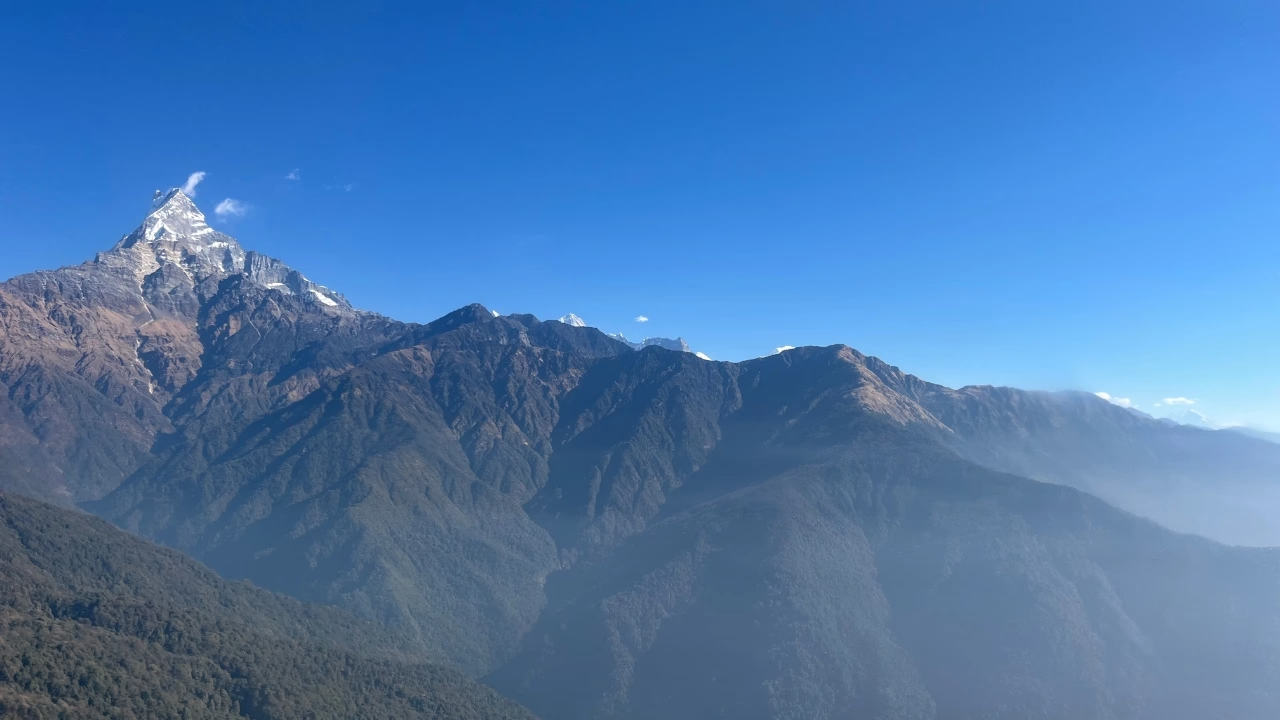
The destination is surrounded by an impressive collection of Himalayan peaks, including Annapurna I, Annapurna South, Hiunchuli, Gangapurna, and Machhapuchhre, also known as Fishtail.
Unlike some Himalayan destinations that require a long expedition, Annapurna Base Camp can be reached through a relatively short trekking itinerary. This makes it popular among travellers who want a genuine Himalayan adventure without spending several weeks in the mountains.
The area is also famous for its changing landscapes. Depending on your route, you can experience subtropical vegetation, terraced farmland, rhododendron forests, mountain villages, alpine terrain, and dramatic high-altitude scenery during one journey.
For travellers who cannot spend a week or more trekking, a helicopter flight provides another way to experience the destination.

What Is an Annapurna Base Camp Helicopter Tour?
An Annapurna Base Camp helicopter tour is a scenic mountain flight that takes travellers from Pokhara toward the Annapurna Sanctuary and the base camp area. Instead of spending several days walking through the foothills, you fly over valleys, forests, villages, ridges, and mountain terrain before reaching the high Himalayan landscape.
When weather and operational conditions allow, the helicopter lands at the designated landing area near Annapurna Base Camp. Travellers can then spend a limited amount of time taking photographs and appreciating the surrounding mountains before returning by air. The biggest attraction is simple: you can experience Annapurna Base Camp without dedicating an entire week to trekking.
This makes the tour particularly appealing to:
Travellers with short holidays
Families
Couples
Older travellers who prefer less strenuous travel
Photographers
Luxury travellers
Visitors who want to combine Annapurna with other destinations in Nepal
Experienced hikers who simply do not have enough time for another multi-day trek
The helicopter experience is not a replacement for trekking in every respect. It provides access to the destination, but it does not reproduce the journey through the villages and mountain trails.
What Is the Annapurna Base Camp Trek?
The Annapurna Base Camp trek is a multi-day Himalayan walking journey through the Annapurna region. The exact itinerary can differ depending on the trailhead, transportation arrangements, acclimatisation schedule, and route chosen. A common journey passes through areas such as Ghandruk, Chhomrong, Bamboo, and Deurali before entering the Annapurna Sanctuary and reaching base camp. One of the special characteristics of the trek is the dramatic change in scenery.
You may begin among green hills and cultivated terraces and gradually move through dense forests before reaching a much more rugged alpine environment. Along the route, trekkers can experience:
Traditional Himalayan villages
Stone-paved paths
Suspension bridges
Rhododendron forests
Mountain streams
Waterfalls
Teahouses
Terraced farmland
Alpine valleys
Snow-covered mountains
Annapurna Sanctuary landscapes
The destination is important, but for many trekkers, the journey is just as valuable.
Annapurna Base Camp Helicopter Tour: What Is the Experience Like?
A helicopter flight provides a completely different perspective of the Annapurna region.
Leaving Pokhara
Most helicopter tours begin from Pokhara, one of Nepal's major tourism centres. As the helicopter leaves the city, the urban landscape gradually changes into green hills, agricultural terraces, forests, and mountain valleys. The landscape changes quickly as you move toward the higher elevations. From the air, the winding rivers, ridges, settlements, and valleys create a perspective that is impossible to experience from the trekking trail.
Flying Toward the Annapurna Sanctuary
As the helicopter approaches the Annapurna region, the scenery becomes increasingly dramatic. Mountain peaks begin to dominate the horizon, and the landscape changes from forested hills to rugged alpine terrain. On a clear day, travellers may have views of several famous Himalayan peaks.

Arriving at Annapurna Base Camp
The most anticipated part of the journey is reaching the base camp area. At approximately 4,130 metres, the surrounding mountains create an enormous natural amphitheatre. Depending on the conditions, travellers may see:
Annapurna I
Annapurna South
Annapurna III
Hiunchuli
Gangapurna
Machhapuchhre
Glacier-covered slopes
High Himalayan ridges
The amount of time spent on the ground depends on operational requirements, weather, safety considerations, and the conditions on the day.
Annapurna Base Camp Trek: What Is the Experience Like?
The trek is slower, but that is precisely what makes it attractive to many travellers. Instead of simply arriving at the destination, you gradually move toward the mountains. Each day offers something different. You might begin your morning walking through a village, cross a suspension bridge over a mountain river, continue through rhododendron forest, stop at a teahouse for lunch, and finish the day surrounded by Himalayan peaks.
The physical effort becomes part of the experience. When you finally reach Annapurna Base Camp after several days of walking, the destination carries the memory of everything you experienced along the trail. For many trekkers, that sense of achievement is an important part of the adventure.
Annapurna Base Camp Helicopter Tour vs Trek: Advantages and Disadvantages
Aspect | Annapurna Base Camp Helicopter Tour | Annapurna Base Camp Trek |
Time Required | Can generally be completed within several hours, depending on the itinerary and operating conditions. | Usually requires approximately a week or more, depending on the itinerary. |
Physical Effort | Requires much less physical effort because there is no need for several days of uphill and downhill hiking. | Physically demanding, with long walking days, steep sections, stairs, and altitude. |
Main Experience | Focuses on convenience, aerial views, and reaching ABC in a short period. | Makes the journey itself an important part of the adventure. |
Mountain Views | Offers incredible aerial views of valleys, ridges, forests, rivers, villages, and Himalayan peaks. | Provides changing landscapes as you gradually travel from lower-elevation vegetation to alpine mountain scenery. |
Time in the Mountains | Relatively short, with limited ground time at ABC. | Allows you to spend several days surrounded by Himalayan landscapes. |
Cultural Experience | Limited cultural interaction because you do not spend several days travelling through mountain communities. | Offers opportunities to experience local hospitality, mountain lifestyles, traditional architecture, and teahouse culture. |
Photography | Excellent aerial photography and opportunities to capture the Annapurna landscape from above. | Provides more opportunities to stop, photograph landscapes, explore viewpoints, and interact with local communities. |
Accommodation | Generally does not require several nights in mountain teahouses; travellers can usually return after the flight. | Requires accommodation in mountain teahouses or lodges along the trekking route. |
Cost | Generally more expensive because of aircraft, fuel, crew, aviation fees, and operational arrangements. | Generally requires lower direct transportation costs but involves several days of accommodation, food, and trekking expenses. |
Weather Dependence | Highly dependent on weather, visibility, wind, and other flying conditions. | Weather can affect trail conditions and trekking plans, including rain, snow, and other mountain conditions. |
Altitude | Travellers reach the high-altitude environment quickly, so altitude remains an important consideration. | Altitude is encountered progressively during the trek, with several days of walking through changing elevations. |
Sense of Achievement | Provides the opportunity to experience ABC without completing a multi-day trek. | Reaching ABC after several days of walking can provide a strong sense of personal achievement. |
Preparation Required | Requires warm clothing, personal essentials, and preparation for high-altitude conditions. | Requires more preparation, including appropriate clothing, footwear, trekking equipment, permits, and physical preparation. |
Exploration Opportunities | Limited because the visit is relatively short. | Greater opportunities to stop, explore, photograph, and experience the surrounding communities and landscapes. |
Best Suited For | Travellers with limited time, those who prefer convenience, and those who do not want a multi-day trek. | Travellers who enjoy hiking, have enough time, and want an immersive mountain and cultural experience. |
Annapurna Base Camp Helicopter Tour vs Trek: Cost Comparison
Cost is one of the most important factors when choosing between an Annapurna Base Camp helicopter tour and trek. A helicopter tour typically costs more because you are paying for an aviation service rather than travelling on foot. The final price can vary depending on the departure location, shared or private helicopter, number of passengers, aircraft availability, fuel and aviation charges, airport fees, permits and local charges, transportation arrangements, travel season, and package inclusions.
An Annapurna Base Camp trek has a different cost structure. The total expense may include transportation, guide services, porter services if required, accommodation, meals, permits, personal expenses, and trekking equipment. The overall cost can therefore vary depending on the type of services you choose and how long you stay in the region.
For the most accurate and current price, travellers should confirm the complete package details and inclusions with their chosen operator before booking. It is also important to check whether transportation, permits, meals, accommodation, and other services are included in the quoted price so you can understand the total cost of your Annapurna Base Camp helicopter tour or trek.
Which Is More Difficult: Helicopter Tour or Trek?
There is a significant difference in the physical demands of an Annapurna Base Camp helicopter tour and trek. A helicopter tour requires minimal physical effort compared with trekking, making it a suitable option for travellers who prefer a shorter and more comfortable way to reach Annapurna Base Camp. However, the helicopter journey takes you to an altitude of approximately 4,130 metres above sea level, so travellers should still be aware of the possible effects of high altitude.

The Annapurna Base Camp trek is considerably more physically demanding. Depending on the itinerary, trekkers may spend several hours walking each day on uneven mountain trails with regular ascents and descents. The overall difficulty can vary based on several factors:
Physical fitness and previous hiking experience
Daily walking distance and pace
Weather and trail conditions
Backpack weight
Altitude and acclimatisation
Individual health and physical condition
Travellers who are accustomed to long-distance walking and mountain trails may find the trek more manageable. Those with limited hiking experience may require more preparation and a slower pace. Proper equipment, adequate rest, suitable acclimatisation, and careful planning can help make the trekking experience more comfortable and manageable.
Difficulty verdict: The Annapurna Base Camp trek is significantly more physically demanding than the helicopter tour. The helicopter option involves minimal walking and physical exertion, while the trek requires several days of hiking, endurance, and gradual adjustment to increasing altitude.
Annapurna Base Camp Trek vs Helicopter: Scenery Comparison
Both the Annapurna Base Camp helicopter tour and trek offer spectacular Himalayan scenery, but they allow you to experience the landscape in different ways. From a helicopter, you can enjoy a wide aerial view of the mountains, valleys, ridges, glaciers, forests, villages, Himalayan peaks, and the beautiful Annapurna Sanctuary. The flight gives you a broader perspective of the
entire landscape and allows you to see the mountains from above.
During the Annapurna Base Camp trek, the scenery changes gradually as you walk through the region. You can experience forests at close range, mountain rivers, traditional villages, teahouses, suspension bridges, waterfalls, terraced fields, changing vegetation, and different mountain viewpoints along the trail. You also get opportunities to see the Himalayan peaks from various angles throughout the journey.
The main difference is that a helicopter tour provides a wide aerial perspective, while trekking offers a closer and more gradual experience of the landscape. Your choice can depend on whether you prefer seeing the Annapurna region from above or experiencing its natural surroundings step by step along the trekking trail.
Best Time for Annapurna Base Camp Helicopter Tour and Trek
The Annapurna Base Camp region can be visited during much of the year, but the experience varies considerably depending on the season and weather conditions. Spring and autumn are generally popular periods for both trekking and helicopter tours because conditions can be more favourable for mountain views and outdoor activities. Summer and monsoon bring more rain, cloud, and reduced visibility, while winter brings colder temperatures and the possibility of snow at higher elevations. When planning your trip, it is important to consider both the trekking conditions and the possibility of weather-related changes to helicopter operations.
Spring, from March to May, is a popular season for visiting the Annapurna region. During this period, lower elevations can become colourful with blooming rhododendrons, adding another dimension to the trekking experience. Mountain views can also be excellent when weather conditions are suitable, making spring appealing for both trekkers and travellers taking scenic helicopter flights. Summer and monsoon, from June to August, bring more rain, cloud, and reduced visibility. Trekking may still be possible in some conditions, but wet and slippery trails and leeches at lower elevations can make the journey less convenient. For helicopter travellers, poor visibility and changing weather may result in flight delays or cancellations.
Autumn, from September to November, is another highly popular period for trekking in Nepal. Following the monsoon, clearer atmospheric conditions can provide excellent mountain views, with October and November often being particularly busy travel months. Winter, from December to February, brings colder temperatures and the possibility of snow at higher elevations. Clear winter days can still offer beautiful Himalayan scenery, but travellers should be prepared for cold conditions and possible snow around higher parts of the route. Whether you choose a helicopter tour or trek, checking the current weather and operating conditions before departure is important because mountain conditions can change quickly.
Best Season for Annapurna Base Camp Helicopter Tour and Trek: At a Glance
Season | Helicopter Tour | Trekking Experience | What to Expect |
Spring March–May | Generally favourable when weather permits | Excellent trekking conditions | Rhododendron blooms, pleasant conditions, and beautiful mountain scenery |
Summer / Monsoon June–August | More weather interruptions, delays, or cancellations possible | Wet and rainy in many areas | Clouds, rainfall, slippery trails, and reduced visibility |
Autumn September–November | Often favourable with good visibility when conditions are suitable | One of the most popular trekking periods | Clearer mountain views, stable conditions, and busy trails |
Winter December–February | Cold and dependent on weather conditions | Cold with possible snow at higher elevations | Crisp mountain views on clear days, colder temperatures, and possible snow |
Important: No season can guarantee clear skies or successful helicopter operations. Mountain weather can change quickly, so helicopter passengers should keep some flexibility in their travel plans and be prepared for possible delays, itinerary changes, or cancellations when conditions are unsuitable.
What Should You Pack for an Annapurna Base Camp Helicopter Tour?
Warm insulated jacket – Provides essential warmth in the cold, high-altitude environment of Annapurna Base Camp.
Fleece or warm mid-layer – Adds extra insulation and can be layered according to the temperature.
Thermal clothing – Helps retain body heat during your time at higher elevations.
Warm trousers – Choose comfortable trousers that provide protection from cold temperatures.
Gloves – Keep your hands warm and protected from cold mountain winds.
Wool or thermal socks – Help keep your feet warm and comfortable.
Hat or beanie – Provides warmth and protection from cold temperatures and wind.
Comfortable shoes – Wear secure and comfortable footwear for walking around the landing area.
Windproof outer layer – Helps protect you from strong and cold mountain winds.
Sunglasses, sunscreen, lip balm, and hat – Protect your eyes, skin, and lips from strong sunlight, wind, and dry conditions.
Personal essentials – Carry your passport or identification, camera or smartphone, power bank, personal medication, small daypack, and water bottle. Avoid large trekking luggage unless your operator permits it.
What Should You Pack for the ABC Trek?
Trekking boots – Choose comfortable, well-fitting boots with good grip for uneven and sometimes slippery trails.
Trekking poles – Helpful for maintaining balance and reducing pressure on your knees during steep sections.
Warm clothing – Pack thermal layers, a down jacket, warm sleeping clothes, gloves, and a hat for cold conditions.
Waterproof jacket – Protects you from rain, snow, wind, and changing mountain weather.
Backpack – Use a comfortable backpack with enough space for your daily essentials without making it unnecessarily heavy.
Sleeping bag – Depending on your itinerary and accommodation, a suitable sleeping bag can provide additional warmth during cold nights.
Water bottle and purification method – Carry a reusable water bottle along with purification tablets, a filter, or another suitable method for treating drinking water.
Sunglasses and sunscreen – Protect your eyes and skin from strong sunlight and glare at higher elevations.
Personal medication and first-aid supplies – Carry any regular medication you need along with basic first-aid items for minor injuries and common trekking needs.
Headlamp, power bank, and toiletries – These are useful for early-morning walks, keeping electronic devices charged, and maintaining personal hygiene during the trek.
Important personal essentials – Keep your necessary documents, valuables, and other small personal items safely packed and easily accessible.
If you choose to travel with a porter, part of your luggage can be carried for you, allowing you to walk with a lighter daypack. However, it is still best to pack carefully and carry only the items you genuinely need.
Altitude Considerations at Annapurna Base Camp
Annapurna Base Camp sits at approximately 4,130 metres above sea level, which is high enough for altitude-related symptoms to occur. One important difference between an Annapurna Base Camp trek and helicopter tour is the rate at which travellers gain altitude.
Trekkers generally reach higher elevations gradually over several days, while helicopter passengers can arrive in the high-altitude environment much more quickly. Choosing a helicopter tour does not automatically remove altitude-related considerations, so travellers should understand how their bodies may respond to the elevation and avoid assuming that skipping the trek means altitude is no longer a concern.
While staying at Annapurna Base Camp, travellers should avoid unnecessary physical exertion, drink fluids appropriately, and pay attention to how they feel. It is important to follow the instructions of the helicopter crew, guide, or other responsible personnel and inform someone promptly if you begin to feel unwell. Significant symptoms should never be ignored. Travellers with specific medical concerns or questions about their ability to travel to high altitude should seek professional medical advice before planning an Annapurna Base Camp helicopter tour or trek.
Safety: Helicopter Tour vs Trek
Safety considerations are different for an Annapurna Base Camp helicopter tour and the Annapurna Base Camp trek. Both require proper planning, attention to weather conditions, and following the guidance of experienced professionals.
Helicopter Safety
Helicopter flights in the Himalayas depend heavily on weather and operating conditions. A responsible helicopter operator may postpone, change, or cancel a flight when conditions are considered unsuitable.
Important helicopter safety factors include:
Weather conditions: Mountain weather can change quickly and may affect flight operations.
Visibility: Fog, clouds, and poor visibility can make flying or landing difficult.
Wind: Strong or unpredictable winds can affect helicopter operations.
Aircraft performance: Aircraft capability and operating limitations are important, particularly in high-altitude areas.
Passenger weight: The total passenger and baggage weight can affect flight operations and may be subject to operator limits.
Landing conditions: The availability and condition of suitable landing areas can influence the itinerary.
Air traffic: Flight routes and schedules may be affected by other aviation activity in the region.
Aviation regulations: Helicopter operators must follow applicable aviation rules, safety procedures, and operational requirements.
Flight delays or cancellations: Travellers should be prepared for changes when weather or other operational conditions are unsuitable.

Trekking Safety
Safety during the Annapurna Base Camp trek involves different challenges because travellers spend several days walking through changing mountain environments. Physical preparation, appropriate equipment, weather awareness, and adequate acclimatisation are important parts of trekking safely.
Important trekking safety considerations include:
Altitude: Higher elevations can affect the body, making gradual ascent and awareness of altitude-related symptoms important.
Weather: Mountain weather can change rapidly and may affect trekking conditions.
Trail conditions: Trails can vary from relatively easy paths to steep, uneven, or challenging sections.
Slippery paths: Rain, snow, ice, or wet surfaces can make some sections more difficult to walk safely.
Long walking days: Several hours of walking each day can lead to tiredness and reduced concentration.
Fatigue: Rest, hydration, nutrition, and maintaining a comfortable pace are important during the trek.
Navigation: Trekkers should follow established routes and the recommendations of their guide when applicable.
Medical emergencies: Serious symptoms or injuries require prompt attention and may require evacuation or other assistance.
Changing mountain conditions: Trail and weather conditions can change during the journey, so plans may need to be adjusted.
Acclimatisation: Trekkers should allow adequate time for acclimatisation and follow their guide's recommendations regarding pace and altitude.
Permits for Annapurna Base Camp
The Annapurna Base Camp (ABC) route lies within the Annapurna Conservation Area, so travellers need to follow the applicable conservation-area entry and travel requirements before visiting the region. Depending on your travel arrangement, the required documentation may be handled by your trekking agency, helicopter tour operator, or guide.For trekkers, permit and registration requirements are an important part of preparing for the journey, while helicopter travellers should also confirm whether the necessary arrangements are included in their tour package. It is important to understand what is covered before departure so you can avoid delays or unexpected requirements during your trip.
Permit requirements, fees, application procedures, and other entry regulations can change, so travellers should confirm the latest information before travelling. When booking an Annapurna Base Camp helicopter tour or trek, ask your operator which permits or documents are required, whether the fees are included in the package price, and whether you need to provide passport details, photographs, identification, or other documentation. Carry the required identification and travel documents with you during the journey, and confirm all permit arrangements with your operator before departure to ensure your Annapurna Base Camp trip goes as smoothly as possible.
Pokhara vs Kathmandu for an Annapurna Helicopter Tour
When planning an Annapurna Base Camp helicopter tour, choosing the right departure point can make a difference in your overall travel experience. Pokhara is generally the more practical departure point for flights to Annapurna Base Camp because it is closer to the Annapurna region. This usually means a shorter flight and more time enjoying the Himalayan scenery. However, Kathmandu departures may also be available, depending on the helicopter operator, weather conditions, and flight arrangements.
Pokhara Departure
For most travellers, Pokhara is a convenient starting point for an Annapurna Base Camp helicopter tour. Its location makes it closer to the Annapurna region, and travellers staying in Pokhara can easily arrange their helicopter flight without making an additional journey to another city. A Pokhara departure can also fit naturally into a wider itinerary that includes sightseeing around Pokhara, Phewa Lake, Sarangkot, or other nearby attractions.
Key advantages of departing from Pokhara include:
Closer to the Annapurna region
Generally shorter flight time
Convenient for travellers already staying in Pokhara
Easy to combine with Pokhara sightseeing and other activities
A practical option for travellers planning an Annapurna-focused itinerary
Kathmandu Departure
A Kathmandu departure can be convenient for travellers whose Nepal itinerary is primarily based in the capital. Depending on the operator and flight arrangements, travelling directly from Kathmandu may allow you to avoid making a separate journey to Pokhara before starting your helicopter tour.
Key advantages of departing from Kathmandu include:
Convenient for travellers staying in Kathmandu
Can fit easily into a Kathmandu-based itinerary
May reduce the need for separate travel to Pokhara
Suitable for travellers with limited time in Nepal
Which Departure Point Should You Choose?
The choice between Pokhara and Kathmandu for an Annapurna Base Camp helicopter tour depends largely on your itinerary, travel time, and flight arrangements. Pokhara is generally closer to the Annapurna region, while Kathmandu can be more convenient if you are already based in the capital.
Prices, flight duration, availability, routing, and departure arrangements can vary between operators. Always confirm the exact departure point, flight schedule, total duration, and inclusions with your helicopter tour operator before booking.
Who Should Choose the Helicopter Tour?
The Annapurna Base Camp helicopter tour is a good option for travellers who have limited time in Nepal and do not want to spend several days on a trekking trail. It is suitable for those who prefer a more comfortable and convenient way to reach ABC while enjoying spectacular aerial views of the Annapurna mountain range and surrounding Himalayan landscapes. Families and travellers who may not want the physical demands of a multi-day trek can also find the helicopter option more convenient.
A helicopter tour is also a practical choice for travellers who want to combine Annapurna Base Camp with other destinations in Nepal within a shorter itinerary. It can be especially appealing to photography enthusiasts who want to capture the mountains and landscapes from above. For those who want to experience Annapurna Base Camp without spending a week or more on the trail, a helicopter tour provides a shorter alternative while still offering the opportunity to see the Himalayan scenery up close.
Who Should Choose the Annapurna Base Camp Trek?
The Annapurna Base Camp trek is ideal for travellers who enjoy hiking and have enough time to spend several days in the mountains. It is a great choice if you want to experience traditional Himalayan villages, stay in local teahouses, walk through forests and changing landscapes, and enjoy the journey as much as reaching the destination. The physical challenge of trekking also makes reaching Annapurna Base Camp a rewarding achievement.
This trek is especially suitable for travellers who are interested in local culture, mountain communities, and immersive Himalayan experiences. Rather than simply arriving at the base camp, you spend several days surrounded by dramatic mountain scenery, with opportunities to meet local people, explore villages, and experience the Annapurna region at a slower pace.
Final Thoughts: Annapurna Base Camp by Helicopter or Trek?
Annapurna Base Camp is a beautiful Himalayan destination that can be experienced in different ways. A helicopter tour is a quick and comfortable option that offers amazing views of the mountains, valleys, and landscapes from above. It is a good choice for travellers who have limited time or do not want to spend several days trekking. The Annapurna Base Camp trek provides a slower and more immersive experience, allowing you to walk through villages, meet local people, stay in teahouses, and enjoy the changing landscapes along the way. Both options offer a different experience, so your choice can depend on your time, budget, physical comfort, and travel preference.
Book Your Annapurna Base Camp Experience
Whether you choose a helicopter tour or trek, planning your Annapurna Base Camp experience carefully is important. For a helicopter tour, weather, flight availability, passenger numbers, routing, and operating conditions can affect the final arrangements. A trek requires appropriate preparation, including suitable clothing, trekking equipment, permits, accommodation, and enough time for the journey. Before booking, confirm the latest itinerary, price, inclusions, permits, and operating conditions with your travel provider. It is also important to keep some flexibility in your plans because Himalayan weather can change quickly. With proper preparation, you can enjoy Annapurna Base Camp in the way that best matches your travel style.
Nepal Recreation
Travel specialist sharing firsthand stories, comprehensive trekking guides, and expert advice to help you plan your Himalayan adventures.