Which Is Better for Tourists: Nepal or Bhutan?
Nepal and Bhutan are two of South Asia’s most fascinating Himalayan destinations, but they offer very different ways to experience the mountains. Both countries are home to dramatic Himalayan scenery, traditional villages, Buddhist monasteries, colorful festivals, and communities whose cultures have developed around the mountains for centuries. Yet, the experience you get in Nepal can be quite different from what you find in Bhutan.
Nepal is generally the more diverse and flexible destination. The country offers everything from the high Himalayas and famous trekking routes to subtropical forests, wildlife parks, historic cities, and lakeside towns. Travelers can trek toward Mount Everest, explore the Annapurna region, go on a jungle safari in Chitwan, visit ancient temples in Kathmandu, or relax around Pokhara. Nepal also has a broad range of accommodation, transportation, tours, and activities, making it possible to plan trips at very different budgets.
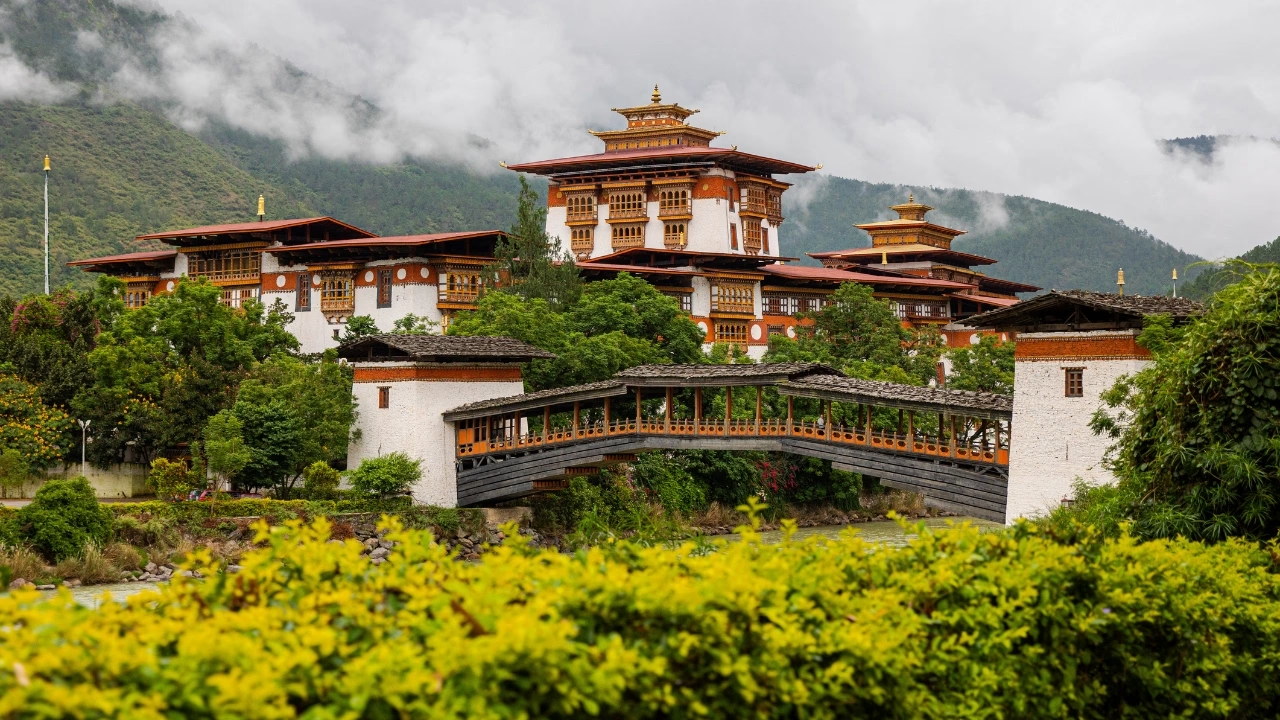
Bhutan, on the other hand, is known for its quieter atmosphere and carefully preserved cultural identity. The country places greater emphasis on controlled and sustainable tourism, and much of the travel experience revolves around Buddhist monasteries, dzongs, traditional architecture, mountain valleys, and local customs. Places such as Paro, Thimphu, and Punakha offer a slower-paced experience where cultural heritage is often as important as the landscape itself.
This does not mean that one country is simply better than the other. The better destination depends on what you want from your trip. If your priority is trekking, adventure, wildlife, geographical diversity, or greater budget flexibility, Nepal may be the stronger choice. If you prefer peaceful surroundings, Buddhist culture, traditional architecture, and a more structured Himalayan journey, Bhutan may suit you better.
In this guide, we compare Nepal and Bhutan across mountains and scenery, trekking, culture, adventure activities, wildlife, costs, transportation, accommodation, food, family travel, honeymoon experiences, photography, entry requirements, and the best time to visit. By the end, you should have a clearer idea of which Himalayan destination fits your travel style, budget, and expectations.
Nepal vs Bhutan: Quick Comparison
Nepal and Bhutan may look similar on a map because both sit in the Himalayas, but the experience they offer tourists differs. Nepal is generally more varied and flexible, with a much wider choice of trekking routes, adventure activities, wildlife experiences, accommodation, and travel styles. Nepal Tourism Board highlights trekking regions ranging from
Everest and Annapurna to Langtang, Manaslu, Mustang, Kanchenjunga, and Dolpo.
Bhutan offers a more structured travel experience, with a strong focus on cultural heritage, Buddhist traditions, monasteries, dzongs, nature, and peaceful mountain landscapes. Bhutan's tourism system also includes a Sustainable Development Fee (SDF), currently set at US$100 per adult per night for most international visitors, which is one reason its travel costs are structured differently from Nepal's.
Here is a quick comparison to help you understand the major differences before looking at each category in detail:
Factor | Nepal | Bhutan |
Best For | Trekking, adventure, culture, nature, wildlife | Culture, monasteries, peaceful travel, traditional experiences |
Mountain Experience | Excellent, with major Himalayan trekking and mountaineering | Excellent, with scenic valleys and Himalayan landscapes |
Trekking | Extensive range of short, moderate, and challenging treks | Fewer routes, but includes distinctive high-altitude treks |
Adventure Activities | Very extensive trekking, rafting, paragliding, mountaineering, bungee jumping and more | More focused on trekking, hiking, cycling, rafting and outdoor experiences |
Wildlife | Excellent from Himalayan ecosystems to subtropical national parks | Good particularly for Himalayan forests and rare mountain wildlife |
Cultural Experience | Very diverse, combining Hindu, Buddhist, Tibetan, Newar, Sherpa, Tharu and other traditions | Strong and distinctive Buddhist cultural heritage |
Budget Flexibility | Wide range of budget, mid-range and luxury options | More structured, particularly because of the daily SDF |
Accessibility | More international flight connections and wider transport options | More limited international air connections and a more structured travel system |
Independent Travel | Generally more flexible, although some trekking areas require permits and/or guides | More regulated and structured than typical independent travel in Nepal |
Ideal Trip Length | Around 7–21+ days depending on trekking and destinations | Around 5–14 days for many first-time cultural and nature trips |
The table is only a starting point. Nepal's advantage is variety: a traveler can combine Kathmandu's heritage sites, a few days in Pokhara, a Himalayan trek, and a wildlife safari in one trip. Nepal also has extensive trekking infrastructure, although permits and guide requirements apply on many routes.
Bhutan's advantage is its focused experience. Rather than trying to offer everything, Bhutan places considerable emphasis on preserving its environment, culture, and traditions. Its tourism model is designed around a more controlled experience, with the SDF contributing to environmental protection, cultural preservation, infrastructure, and other national programs.
One important point: the cost and entry requirements should not be judged from this table alone.
Nepal has its own visa, trekking-permit, protected-area, and activity fees, while Bhutan has visa requirements and the SDF for most international visitors. These details can change, so they are better examined separately later in the article.
In simple terms: choose Nepal if you want more variety, trekking, adventure, wildlife, and flexibility; choose Bhutan if you want a quieter, culturally focused Himalayan journey with strong Buddhist heritage and a more structured tourism experience.
Which Is Better for Trekking: Nepal or Bhutan?
If trekking is the main purpose of your Himalayan trip, Nepal is the better choice for most travelers. Both Nepal and Bhutan offer spectacular mountain trails, but Nepal provides a much wider range of routes, landscapes, difficulty levels, and trekking infrastructure.
Trekking in Nepal
Nepal offers trekking routes for almost every type of traveler, from short and moderate hikes to demanding high-altitude journeys. Popular options include:
Everest Base Camp – one of the world's most famous high-altitude treks.
Annapurna Circuit – crosses the 5,416 m Thorong La Pass.
Annapurna Base Camp – shorter route into the Annapurna Sanctuary.
Manaslu Circuit – remote and culturally rich.
Langtang Valley – accessible from Kathmandu and known for mountain and Tamang cultural experiences.
Mustang – famous for its dry Himalayan landscape and Tibetan Buddhist heritage.
Mardi Himal – a shorter trek with excellent Annapurna views.
Nepal also has many other short and long trekking routes, making it easier to match a trek to your time, fitness, budget, and experience.
Trekking in Bhutan
Bhutan has fewer trekking routes, but several are spectacular and remote:
Snowman Trek – one of Bhutan's most challenging treks, crossing several passes above 4,500 m.
Jomolhari Trek – a demanding high-altitude trek reaching around 4,930 m.
Druk Path Trek – a shorter option, usually around 5 days, reaching about 4,200 m.
Short cultural and nature hikes – suitable for travelers who want scenery without a long expedition.
Bhutan's treks are particularly appealing for travelers who want quiet trails, remote landscapes, Buddhist culture, monasteries, and traditional villages.
Verdict: Nepal for Trekking
Nepal wins mainly because of variety and flexibility. You can choose from short scenic treks to multi-week high-altitude adventures, with extensive teahouses, lodges, guides, and trekking services on popular routes.
Bhutan is an excellent alternative if you prefer remote wilderness and a quieter, culturally focused trekking experience. But for travelers who want the widest choice of routes, difficulty levels, and budgets, Nepal is the stronger trekking destination.
Which Country Is Better for Culture and History?
Both Nepal and Bhutan offer rich Himalayan cultures, but their cultural experiences are quite different. Nepal stands out for its remarkable ethnic and religious diversity, while Bhutan offers a more concentrated experience centered on Vajrayana Buddhism and traditional Bhutanese culture.
Culture and History in Nepal
Nepal has a long history shaped by Hinduism, Buddhism, and numerous ethnic communities. The Kathmandu Valley is particularly important, with its ancient temples, stupas, courtyards, and historic cities such as Kathmandu, Patan, and Bhaktapur.
Travelers can experience different traditions across the country, including:
Newar culture in the Kathmandu Valley
Sherpa culture in the Everest region
Tharu culture in the Terai
Tibetan-influenced traditions in the Himalayan regions
Hindu and Buddhist temples, monasteries, and stupas
Major festivals such as Dashain, Tihar, Indra Jatra, and Tiji
This diversity means a journey through Nepal can expose you to very different languages, cuisines, religious practices, architecture, and festivals within the same country.
Culture and History in Bhutan
Bhutan's cultural identity is more strongly centered around Vajrayana Buddhism. Its landscape is dotted with monasteries, temples, and dzongs, which traditionally served both religious and administrative purposes.
Visitors can experience:
Ancient Buddhist monasteries and temples
Impressive dzong architecture
Buddhist festivals and masked dances
Traditional Bhutanese buildings and arts
Mountain communities with distinctive customs
A strong emphasis on preserving Bhutanese traditions
Bhutan's cultural experience is therefore more focused and consistent, with Buddhism deeply connected to everyday life, architecture, festivals, and national identity.
Verdict: Nepal or Bhutan for Culture?
Choose Nepal if you want cultural and ethnic diversity. Its combination of Hindu and Buddhist traditions, numerous ethnic communities, historic cities, Himalayan cultures, and festivals offers a broader cultural experience.
Choose Bhutan if you want a deeper focus on Buddhist culture and traditional Himalayan heritage. Its monasteries, dzongs, festivals, and carefully preserved traditions create a more concentrated cultural experience.
Overall: Nepal wins for cultural diversity, while Bhutan is particularly strong for a focused Buddhist cultural experience.
Nepal vs Bhutan for Families, Couples, and Solo Travelers
Nepal and Bhutan can both suit different types of travelers, but the better choice depends largely on travel style, budget, comfort, and interests.
For Families
Nepal is generally better for families who want variety and flexibility. It offers family-friendly destinations such as Pokhara and Chitwan, where travelers can enjoy mountain views, boating, wildlife safaris, cultural sightseeing, and easy walks without committing to strenuous trekking. Nepal also provides a wider range of accommodation, transportation, and activity options for different budgets.
Bhutan is ideal for families looking for a quieter cultural experience. Its monasteries, dzongs, scenic valleys, and comfortable sightseeing itineraries can work well for children and older travelers, particularly those who prefer a slower pace. Both countries can accommodate travelers who do not want demanding hikes.
Best choice: Nepal for variety and flexibility; Bhutan for peaceful cultural travel.
For Couples and Honeymoon
Nepal is a strong choice for couples who want adventure combined with relaxation. Pokhara offers mountain-view hotels, lakeside experiences, luxury resorts, boating, paragliding, and easy access to short Himalayan hikes. Couples can also combine their stay with cultural sightseeing in Kathmandu or nearby heritage towns.
Bhutan is better suited to couples seeking peace and intimacy. Scenic mountain drives, quiet valleys, monasteries, traditional architecture, and luxury resorts create a slower and more private honeymoon experience.
Best choice: Nepal for adventure and variety; Bhutan for tranquility and culture.
For Solo Travelers
Nepal is generally better for independent solo travelers. Its extensive network of hostels, guesthouses, teahouses, transport services, trekking agencies, and group tours makes it easier to travel on different budgets and meet other travelers. It also provides a much wider selection of trekking routes, although some routes require guides and permits under current regulations.
Bhutan offers a more structured experience, which can be attractive to solo travelers who prefer organized transportation, cultural sightseeing, and a predictable itinerary. However, it provides less flexibility and can have higher overall travel costs because of its tourism system and Sustainable Development Fee.
Best choice: Nepal for freedom, social travel, and budget flexibility; Bhutan for organized and peaceful solo travel.
Best Time to Visit Nepal vs Bhutan
The best time to visit both Nepal and Bhutan is generally spring (March–May) and autumn (September–November). These seasons offer pleasant weather, clearer mountain views, and good conditions for outdoor activities.
Season | Nepal | Bhutan |
Spring (Mar-May) | Excellent for trekking and flowers | Excellent for trekking and sightseeing |
Summer (Jun-Aug) | Monsoon: rain in most areas | Rainy in many regions |
Autumn (Sep-Nov) | Excellent clear skies | Excellent; clear mountain views |
Winter (Dec-Feb) | Good in lower areas | Good, but cold at high elevations |
Best Months by Activity
Trekking: March–May and September–November
Cultural tours: October–November and March–May
Photography: October–November and March–April
Wildlife: October–March in Nepal; spring and autumn in Bhutan
Festivals: Depends on the specific festival, as many dates follow lunar calendars.
Overall: October–November is the best all-around period for both countries, especially for trekking, mountain views, photography, and sightseeing.
Nepal vs Bhutan: Pros, Cons, and Final Verdict
Nepal and Bhutan both offer remarkable Himalayan experiences, but their strengths are quite different. Nepal is more diverse, flexible, and adventure-oriented, while Bhutan is quieter, more culturally focused, and more structured.
Country | Main Advantages | Main Limitations |
Nepal | Huge trekking variety, more adventure activities, diverse landscapes and cultures, wide accommodation choices, and more budget options | Busy tourist areas, traffic in major cities, some infrastructure challenges, and crowded popular trekking routes during peak seasons |
Bhutan | Strong cultural preservation, peaceful atmosphere, beautiful Himalayan scenery, distinctive Buddhist heritage, and controlled tourism | Fewer trekking options, more structured travel costs, less tourism infrastructure, and less flexibility for independent travel |
Final Verdict: Is Nepal or Bhutan Better for Tourists?
There is no single winner for every traveler. The better destination depends on what you want from your Himalayan holiday.
Best for trekking: Nepal
Best for adventure: Nepal
Best for cultural diversity: Nepal
Best for Buddhist heritage: Bhutan
Best for wildlife: Nepal
Best for budget flexibility: Nepal
Best for peaceful luxury travel: Bhutan
Best for independent travel: Nepal
Best for a first Himalayan adventure: Nepal for most travelers
Overall, Nepal is the better choice for travelers who want variety, adventure, trekking, wildlife, cultural diversity, and flexible travel options. Bhutan is the better choice for those seeking a peaceful, culturally focused journey with strong Buddhist traditions, traditional architecture, and a more structured travel experience.
FAQs: Nepal vs Bhutan
1. Is Nepal or Bhutan better for tourists?
It depends on your travel style. Nepal is better for trekking, adventure, wildlife, cultural diversity, and budget flexibility, while Bhutan is better for travelers seeking peaceful surroundings, Buddhist heritage, traditional architecture, and a more structured travel experience.
2. Is Nepal cheaper than Bhutan?
Generally, Nepal offers more budget flexibility. You can find budget hostels, guesthouses, teahouses, local transport, and affordable food. Bhutan has a more structured tourism system and a Sustainable Development Fee for most international visitors, which can make the overall trip more expensive.
3. Is Bhutan safer than Nepal?
Both are generally suitable for tourists when normal travel precautions are followed. The more important difference is travel style: Bhutan has a more controlled and organized tourism system, while Nepal offers greater freedom for independent travel.
4. Which is better for trekking, Nepal or Bhutan?
Nepal is better for trekking overall. It has a much wider range of routes, including Everest Base Camp, Annapurna Circuit, Langtang, Manaslu, Mustang, and Mardi Himal. Bhutan has excellent but fewer routes, such as the Snowman, Jomolhari, and Druk Path treks.
5. Which country has better mountains, Nepal or Bhutan?
Both have spectacular Himalayan scenery, but Nepal is the stronger choice for dramatic high-mountain experiences and trekking variety, including views of Mount Everest and other 8,000-meter peaks. Bhutan is particularly appealing for combining mountain scenery with forests, valleys, monasteries, and traditional villages.
6. Can I visit Nepal and Bhutan on the same trip?
Yes. Combining Nepal and Bhutan can make an excellent Himalayan trip. A common approach is to spend several days exploring Nepal before flying to Bhutan for a shorter cultural and scenic experience. Check current flight schedules and entry requirements when planning.
7. How many days do I need in Nepal compared with Bhutan?
For a first visit, 7–14 days in Nepal can cover major highlights, while 5–10 days in Bhutan can provide a good introduction to its main cultural and natural attractions. Longer trips are recommended if you want to include a multi-day trek in Nepal or a major trek in Bhutan.
8. Is Nepal or Bhutan better for a honeymoon?
Nepal is better for couples who want adventure and variety, with destinations such as Pokhara, mountain-view hotels, cultural sites, and outdoor activities. Bhutan is better for couples seeking peace, privacy, Buddhist culture, scenic valleys, and luxury experiences.
Nepal Recreation
Travel specialist sharing firsthand stories, comprehensive trekking guides, and expert advice to help you plan your Himalayan adventures.