
Chitwan Jungle Safari: An Epic Wildlife Experience in Nepal
When most people think of Nepal, the first images that come to mind are usually snow-covered Himalayan peaks, trekking trails, and ancient mountain villages. But Nepal has another side that is just as fascinating: its wild and subtropical lowlands. In southern Nepal, Chitwan offers a completely different travel experience, where dense forests, open grasslands, rivers, and wetlands become the setting for an unforgettable wildlife adventure.
At the heart of this experience is Chitwan National Park, Nepal's first national park and one of the country's most important protected areas. Established in 1973, the park covers 952.63 square kilometers of forests, grasslands, wetlands, and river ecosystems. It is part of the Terai Arc Landscape and is recognized as a UNESCO World Heritage Site, highlighting its importance for biodiversity and conservation.
A Chitwan Jungle Safari allows travelers to explore this diverse environment with experienced guides and naturalists. Rather than simply visiting a zoo or wildlife center, you are entering a living ecosystem where animals move freely in their natural habitat. A quiet jeep ride through the forest or a canoe journey along the Rapti River can suddenly turn into a memorable wildlife encounter.
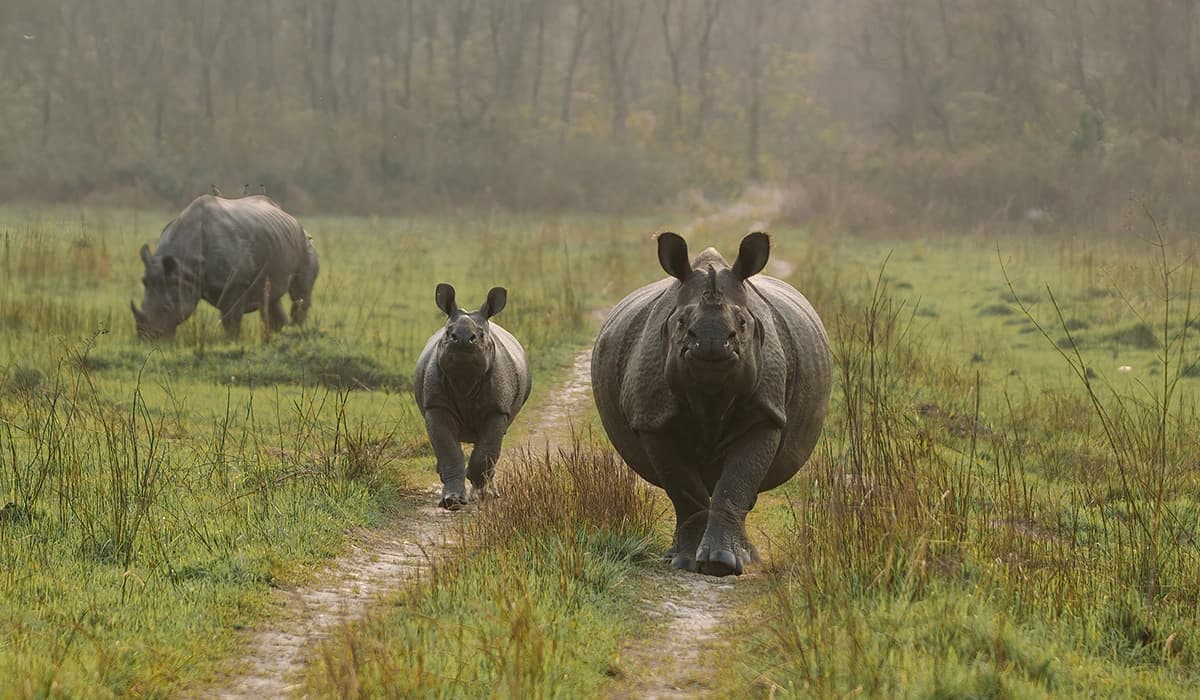
Chitwan is particularly famous for its greater one-horned rhinoceros, while the park also provides habitat for Bengal tigers, wild elephants, sloth bears, leopards, deer, wild boars, crocodiles, and hundreds of bird species. Seeing these animals is never guaranteed, and the unpredictability is actually part of what makes a safari exciting. One moment you may be watching a herd of deer across the grassland; the next, your guide may quietly point toward a rhinoceros emerging from the forest.
But a Chitwan Trip is not only about spotting animals. It is also about experiencing the landscape and culture of the Terai, from peaceful rivers and jungle trails to local Tharu communities and their distinctive traditions.
In this guide, we will explore everything you need to know about a Chitwan Jungle Safari, including the wildlife you may encounter, different safari activities, the best time to visit, and practical tips for making your wildlife adventure safe, enjoyable, and responsible.
What Makes Chitwan Jungle Safari Special?
A Chitwan jungle safari is special because it gives you a chance to see Nepal’s wildlife in its natural habitat. While Nepal is mostly known for Mount Everest and Himalayan trekking, Chitwan offers something completely different: subtropical jungle, tall grasslands, rivers, and wild animals living in the same environment.

The biggest highlight for many visitors is the chance to see the one-horned rhinoceros, one of the most famous animals in Chitwan National Park. Depending on the safari route and conditions, visitors may also see deer, monkeys, wild elephants, crocodiles, and different bird species. Seeing a Bengal tiger is possible but rare, which makes a real sighting especially exciting.
Chitwan is also suitable for first-time wildlife travelers because there are different ways to explore the area. A jeep safari allows visitors to cover larger parts of the jungle, while a canoe ride offers a quieter way to look for crocodiles and birds along the river. These activities make it possible to experience the park without needing trekking experience or advanced outdoor skills.
For travelers planning a wildlife trip to Nepal, Chitwan offers an experience that is very different from trekking in the Himalayas. It combines wildlife, nature, and adventure in a way that is accessible even if you have never been on a safari before.
Why Choose a Chitwan Jungle Safari?
Choosing a Chitwan jungle safari makes sense if you want an experience that offers more than one activity in a short trip. Instead of spending your whole day doing the same thing, you can combine a jeep safari, canoe ride, birdwatching, nature walks, and cultural experiences.
Wildlife is obviously a major reason to visit, but Chitwan offers a variety of experiences. The park is home to one-horned rhinoceroses, deer, monkeys, wild boar, crocodiles, elephants, and many bird species. Tigers, leopards, and sloth bears also live in the area, although they are much harder to spot. What you see depends on your safari route, the season, and simply how lucky you are that day.
Chitwan is also a good choice for people who want an adventure without committing to a long trek. You do not need previous trekking experience or days of physical preparation. A short 2- or 3-day stay can give you several different experiences, which makes it easy to include in a wider Nepal itinerary.
There is also the Tharu cultural experience outside the national park. After a day in the jungle, visitors can spend time learning about the local community and its traditions instead of returning to a hotel with nothing else to do.
That is probably the biggest reason to choose Chitwan: it gives good value for the time you spend there. Even on a short visit, you are not limited to one activity. You can experience wildlife, rivers, forests, local culture, and different types of safaris without needing to travel to several destinations.
Wildlife You Can See in Chitwan
One of the main reasons people visit Chitwan is the chance to see wildlife in its natural environment. However, it is important to know that there is no fixed list of animals you will definitely see on every safari. Wildlife moves freely, and sightings depend on the safari route, time of day, season, and luck.
One-Horned Rhinoceros
The greater one-horned rhinoceros is one of the animals visitors have the best chance of seeing in Chitwan National Park. They are often spotted near grasslands, open areas, and water sources. Seeing a rhino in the wild is very different from seeing one in captivity, especially when it suddenly appears from the tall grass.
Bengal Tigers and Leopards
Chitwan is home to Bengal tigers and leopards, but visitors should understand that seeing either animal is rare. A safari does not guarantee a tiger sighting. Sometimes you may only hear stories about recent sightings or see tracks and other signs that an animal has passed through the area.
Deer and Other Grazing Animals
Several species of deer live in and around the park. Spotted deer and sambar deer are among the animals visitors may see during a safari. You may see them alone, in small groups, or moving quickly through the forest after sensing danger.
Crocodiles
Chitwan's rivers are home to crocodiles, and a canoe ride is often one of the best ways to look for them. Mugger crocodiles and gharials can be found in the Chitwan area. You may see them resting quietly on riverbanks, often looking like part of the landscape until you notice them.
Wild Elephants and Other Mammals
Chitwan is also home to wild elephants, wild boar, monkeys, and sloth bears. These animals are less predictable, and some are harder to spot than others. This is why every safari can be different.
Birds and Smaller Wildlife
Birds and smaller wildlife consistently turn a standard safari into an active, multi-layered tracking experience. Chitwan National Park and its surrounding buffer zones host over 540 recorded bird species more than two-thirds of Nepal’s total bird population ranging from the iconic Great Hornbill and Stork-billed Kingfisher to the critically endangered Bengal Florican, Grey-headed Fish Eagle, and Lesser Adjutant Stork.
Alongside resident waterbirds like the Ruddy Shelduck, these avian populations share the ecosystem with crucial smaller species, including Gharials, Marsh Muggers, Smooth-coated Otters, Indian Rock Pythons, and Monitor Lizards. Often, tracking these bird calls, riverbank reptiles, and small mammals yields a far richer safari experience than simply driving in search of Chitwan's large mammals.
The best way to approach wildlife viewing in Chitwan is to stay open-minded. Going in with only one animal on your list can make you miss everything else happening around you. A good safari is not always about seeing the rarest animal. Sometimes it is about noticing how the entire jungle works together.

Best Jungle Safari Experiences in Chitwan
Chitwan offers more than one way to explore the jungle, and each experience shows a different side of the park. If you have enough time, combining a couple of activities can give you a better wildlife experience than relying on just one safari.
Jeep Safari
A jeep safari is the best option for covering larger areas of the jungle in a short time. You travel through forests, grasslands, and open tracks where you may see rhinos, deer, monkeys, wild boar, and other wildlife. It is a good choice for first-time visitors and travelers with limited time.
Best for: Covering more ground and looking for larger land animals.
Canoe Ride
A canoe ride offers a slower and quieter experience on the river. It is especially good for looking for mugger crocodiles, gharials, and water birds along the riverbanks. Because the canoe moves quietly, you also get a different feeling of being close to the natural environment.
Best for: Crocodiles, water birds, and a peaceful wildlife experience.
Jungle Walk
A guided jungle walk lets you experience the forest at a slower pace. With a trained naturalist, you can learn about animal tracks, footprints, plants, bird calls, and other signs of wildlife that are easy to miss from a vehicle.
Best for: Travelers who want to understand the jungle, not just spot animals.
Bird Watching
Chitwan is also a great place for birdwatching, with forest, grassland, and wetland species found across the area. Even if you are not a serious birdwatcher, this activity can make you notice a different side of the jungle.
Best for: Nature lovers, photographers, and anyone who enjoys a quieter experience.
Which one should you choose? If you have limited time, a jeep safari and canoe ride give you a good mix of land and river wildlife. If you have an extra day, adding a jungle walk or birdwatching activity can make your Chitwan experience more complete.
Tharu Culture and Local Experience
A visit to Chitwan is not only about wildlife. The region is also closely connected to the Tharu community, whose traditions, lifestyle, and history are part of the Terai experience.
Visitors can explore Tharu villages, see traditional-style homes, and learn about a community that has lived around Chitwan’s forests, rivers, and grasslands for generations. This adds useful context to the jungle safari because it shows that Chitwan is not just a national park, but a region shaped by both nature and local communities.
You can also try Tharu food, which often includes rice, lentils, vegetables, fish, or meat prepared using local ingredients and cooking styles. In the evening, many visitors enjoy a Tharu cultural dance, with traditional music, drums, and performances.
Adding a Tharu cultural experience to your itinerary gives you something meaningful to do outside the safari. It creates a better balance between wildlife, local culture, and food, especially if you are spending two or three days in Chitwan.
Best Time for a Chitwan Jungle Safari
Chitwan can be visited throughout the year, but the experience changes a lot depending on the season. The best time depends on what matters most to you: comfortable weather, better wildlife visibility, birdwatching, or fewer crowds.
October to February: Best for Comfortable Weather
This is one of the most popular times to visit Chitwan. The weather is generally cooler and more comfortable, especially from November to February. Days are pleasant for jeep safaris and canoe rides, while mornings and evenings can be cold and sometimes foggy.
This period is a good choice if you are visiting Nepal for trekking or sightseeing and want to add Chitwan to the same trip. However, winter fog can occasionally reduce visibility during early-morning activities.
Best for: Comfortable travel, general wildlife safaris, and combining Chitwan with a Nepal trip.
March to May: Best Time for Wildlife Viewing
For many wildlife lovers, the hotter months before the monsoon can be one of the best times to visit. As temperatures rise, animals may be easier to spot near water sources and open areas. Grassland conditions can also improve visibility in some parts of the park.
The downside is the heat. Midday can become very hot, so early-morning and late-afternoon activities are usually more comfortable.
Best for: Wildlife viewing and visitors who can handle hot weather.
June to September: Monsoon Season
The monsoon brings heavy rain, high humidity, and lush green landscapes. The jungle looks beautiful, but rain and muddy conditions can make travel less convenient. Wildlife can also be harder to spot because vegetation becomes thicker.
Some safari activities or routes may be affected by weather and park conditions, so this is not the best period if your main goal is a full wildlife safari experience.
Best for: Green scenery, fewer tourists, and travelers who do not mind rain.
Best Time Overall
If you want the most comfortable overall experience, October to March is a good time for a Chitwan jungle safari. If your main priority is wildlife viewing, the warmer and drier months around March to May can be especially rewarding, but you should be prepared for high temperatures.
Time of Year | Weather | Safari Experience |
October–November | Pleasant | Good overall experience |
December–February | Cool, sometimes foggy | Comfortable but colder mornings |
March–May | Hot and dry | Better wildlife viewing in many areas |
June–September | Hot, humid, rainy | Lush, but weather can affect activities |
Practical tip: If you are planning a Chitwan safari mainly to see wildlife, do not choose your dates based only on the weather forecast. Ask your safari operator which activities and park routes are operating during your travel period, especially during the monsoon.
Final Thoughts
Chitwan is more than a place to go wildlife spotting. The jungle is the main reason most people visit, but the experience becomes much bigger once you spend time there. A jeep safari takes you through forests and grasslands, a canoe ride shows you a quieter side of the park, and the
Tharu cultural experience gives you a connection to the people and traditions of the region.
What makes the safari exciting is that nothing is guaranteed. You may enter the jungle hoping to see a tiger and come back without one. Or you may expect an ordinary safari and suddenly find yourself watching a rhino appear from the grass or a crocodile resting by the river. You never fully know what is waiting around the next corner.
That is also why it is important not to judge your Chitwan trip only by how many animals you see. The sounds of the jungle, the river, the smaller wildlife, the changing landscapes, and the local culture all become part of the experience.
In the end, you may travel to Chitwan with a list of animals you want to see. But when the trip is over, you will probably remember much more than a wildlife checklist. You will remember the quiet moments, the unexpected sightings, the feeling of moving through a real jungle, and everything else that made the experience feel like Chitwan.