What Are the Requirements to Travel to Nepal?
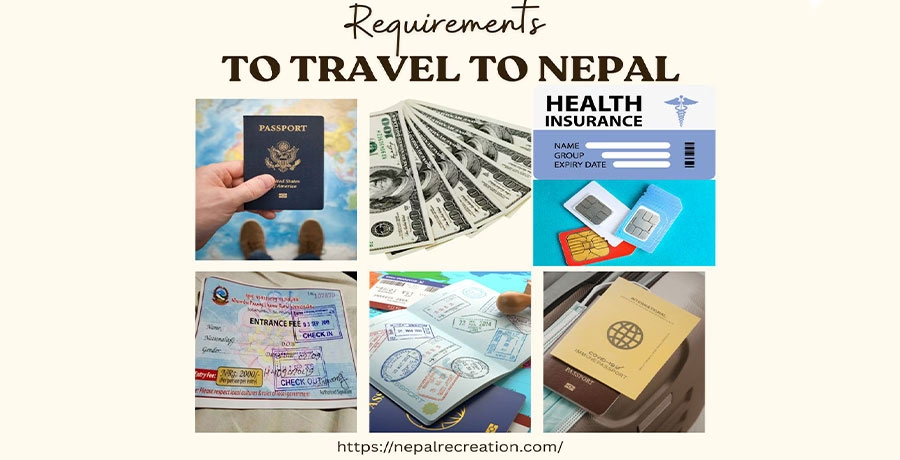
Dreaming of a trip to Nepal? Whether it is snow-capped peaks, ancient temples, or warm smiles welcoming you, planning makes all the difference. Before packing your bags, let’s learn the essential travel requirements to enter and explore Nepal without any stress or confusion.
Introduction: Gateway to the Himalayas
Nepal is one of the most magical travel destinations in Asia. This beautiful landlocked country is tucked between China and India. Nepal is known for the towering Himalayas, spiritual temples, and the friendly nature of Nepali people. From trekking to Mount Everest to wandering through Kathmandu’s narrow lanes, each corner of Nepal has a story to tell.
Before you start your journey, there are a few important things to know. Travelling to Nepal is simple, but it still requires proper preparation. You will need the right documents, a valid visa, and sometimes specific health and trekking permits. All these things depend on where you plan to go.
The Nepalese government welcomes all visitors from around the world, but each traveller must meet certain entry conditions. These conditions include having a valid passport, completing the visa procedure, and following customs and health rules.
Our ‘What Are the Requirements to Travel to Nepal’ guide will explain all the requirements step by step. It will help you to focus more on enjoying adventure and less on paperwork. We will cover visa details, passport validity, vaccinations, trekking permits, currency rules, and other important travel essentials.
By the end, you will know exactly what you need before boarding your flight. Let’s start your Nepal journey in the right way with preparation, clarity, and excitement.

Visa Requirements for Nepal
Getting a visa for Nepal is quite simple in comparison to many other countries. The Nepali government has made the process easy to welcome travellers from all over the world. Whether you are planning a short vacation, a long trek, or a spiritual journey, you will need a valid visa to enter the country.
Types of Tourist Visas
These are the three main ways to obtain a tourist visa for Nepal :
Visa on Arrival: Most travelers can get their visa directly at the Tribhuvan International Airport in Kathmandu or at land border entry points such as Bhairahawa, Birgunj, and Kakarbhitta. You will need a valid passport, one passport-size photo, and a visa fee in cash, preferably in USD. As for the visa fee, you will have to pay USD 30 for 15 days, USD 50 for 30 days, and USD 125 for 90 days.
Pre-Arrival Visa (Embassy/Consulate): If you plan to arrange everything beforehand, you can apply for a visa at a Nepalese Embassy or consulate in your country. This option will help you avoid queues at the airport.
Online Visa (E-Visa): Travellers can also apply online via the Department of Immigration’s official website. You will have to fill out the online form, print the confirmation, and present it upon arrival to pay the visa fee.
Visa Extensions: If you plan to stay longer, you can extend your visa at the Department of Immigration in Kathmandu or Pokhara. Visa extensions are granted for a minimum of 15 days with a small daily fee after that.

Some Important Notes:
Some nationalities, such as Nigeria, Ghana, and a few others, are not eligible for a visa-on-arrival, so visitors must apply in advance.
You should always check your passport’s validity and must have at least 6 months’ validity.
You should keep your visa copy safe during travel. It may be required for hotel check-ins or for trekking permits.
Passport and Travel Documents
Your passport is the most important document while traveling to Nepal. Without a passport, you are not allowed to enter or leave the country. Therefore, it is essential to keep your passport valid, safe, and accessible throughout your trip.
Passport Validity: Before flying for any trips, you should check whether your passport is valid or not for at least six months from your intended arrival date. Nepalese immigration authorities strictly follow this rule. If your passport is close to expiring, then renew it before your journey to avoid any last-minute trouble at the airport.
Photocopies and Backups: You should always keep photocopies of our passports and visa pages separately from the originals. These copies can be a lifesaver if our passport gets lost or damaged. Many travellers also store a digital copy on their phone or email for quick access.
Return or Onward Ticket: Sometimes, the immigration officer may ask for proof of onward travel or a return flight ticket to ensure that you have planned to leave before your visa expires. Having this return or onward ticket makes your entry smoother.
Entry and Exit Stamps: When you enter Nepal, make sure you receive an official entry stamp at immigration. Likewise, you shouldn’t forget to get an exit stamp when you leave. Missing these stamps can confuse future visits.

Some Safety Tips :
You should keep your passport in a zip-locked pouch or a waterproof holder during treks.
You need to avoid handing it to anyone except hotel staff for registration or officials.
If you lost your documents, immediately report it to the nearest police station and contact your embassy or consulate in Kathmandu for assistance.
Vaccination and Health Requirements
Staying healthy during your Nepal trip is just as important as having the right documents. Nepal does not have many strict medical entry rules, but taking proper health precautions helps to ensure a safe and enjoyable journey. Health precautions are especially necessary if you plan to trek in remote or high-altitude areas.
Recommended Vaccinations
There are no mandatory vaccinations for most travelers entering Nepal, unless you are arriving from a yellow-fever-affected country. In this case, a yellow fever vaccination certificate is required. However, doctors and travel clinics often recommend several vaccines to travellers for better protection:
Hepatitis A: Necessary for protection against food and water-borne illness.
Typhoid: Necessary for common places where hygiene conditions vary.
Tetanus and Diphtheria: It is basic but important boosters for travellers.
Japanese Encephalitis: It is recommended that you stay in rural or lowland areas for long periods.
Rabies: Mostly advised for trekkers or volunteers who may come into contact with animals.
Travel Insurance
You are strongly recommended to have travel health insurance. Make sure it covers emergency evacuation, hospitalization, and trip cancellation due to illness. Medical services in remote mountain regions can be expensive, and insurance gives peace of mind.
Some of the Health and Safety Tips:
You should drink only boiled or bottled water to avoid stomach issues.
Always wash or sanitize your hands before meals.
You should carry a basic first-aid kit, which includes medicine for altitude sickness, cold, or stomach problems.
If you are trekking above 3,000 meters, you should ascend slowly to prevent acute mountain sickness (AMS).
You should visit a doctor or a travel clinic 4 to 6 weeks before departure to review your vaccination status.
By taking these small precautions, you can focus on enjoying the beauty of Nepal without worrying about health surprises.
Trekking Permits and Special Permissions
Trekking is one of the main reasons behind many travellers visiting Nepal. From the popular Everest Base Camp trail to the peaceful Annapurna region, Nepal offers you world-class trekking experiences. But before you start walking through the Himalayas, it is important to know that trekking in Nepal requires official permits. These permits help to protect the environment, ensure safety, and support local communities.

Main Types of Trekking Permits
TIMS Card (Trekkers Information Management System)
This card is mandatory for most trekking routes in Nepal. It keeps a record of trekkers for their safety and rescue purposes. It is available at the Nepal Tourism Board office in Kathmandu or Pokhara. You can also get it through registered trekking agencies.
National Park or Conservation Area Entry Permit
Treks passing through areas like Sagarmatha National Park (Everest region), Annapurna Conservation Area, or Langtang National Park require separate entry permits. The fees for entry permits vary depending on the location. It usually costs between NPR 2,000 to 3,000 ( USD 15 to 25).
Restricted Area Permit
Some remote and border regions, such as Upper Mustang, Manaslu, Dolpo, and Kanchenjunga, are considered restricted areas. These areas require special permits issued by the Department of Immigration in Kathmandu. You must trek with a licensed guide and at least two people for safety reasons in this area.
Some Useful Tips for Permits
You should always carry your permits during the trek. They are checked at several checkpoints.
You should not lose them; you might need them when leaving the region.
Keep multiple copies of the permits and also a digital copy securely
You can easily obtain most permits through registered trekking agencies if you do not want to handle the paperwork yourself.
Note: Proper permits ensure your trek is legal, safe, and supports Nepal’s conservative efforts
Currency, Customs, and Rules
Before stepping into Nepal, it is good to understand a few essential rules about money, customs, and entry regulations. Knowing these ahead of time helps to avoid unnecessary stress at the airport or land border checkpoints.
Currency in Nepal: The official currency is the Nepalese Rupee (NPR). 1 USD equals roughly 130-135 NPR, but the rate varies daily. You can exchange foreign currency at banks, licensed money changers, and hotels. ATMs are available in major cities like Kathmandu or Pokhara, but remote trekking areas may not have any. You can bring cash in small denominations for rural travel, as digital payments are limited. You should avoid using Indian 500 and 2,000 notes because they are not accepted in Nepal.
Declaring Money and Valuables: If you bring more than USD 5,000 or equivalent in cash, you must declare it at customs when you arrive. Expensive items such as professional cameras, drones, and laptops may need declaration forms to avoid problems during departure.
Custom Regulations: Nepal allows travellers to bring in personal belongings, clothes, and limited electronics for personal use duty-free. However, you should avoid carrying drugs, arms, or ammunition. They are strictly prohibited. You can not take antiques, animal skins, or religious artifacts out of Nepal. Never carry gold or silver ornaments above the permitted limit.
Entry Rules for Indian Citizens: Indian nationals do not need a visa to enter Nepal, but they must carry a valid identification, such as a passport, voter ID, or Aadhaar Card for air travel.

Note: Understanding these simple currency and customs rules ensures a smooth entry and exit from Nepal. You can focus on your Himalayan adventure instead of paperwork hassles
Local SIM Card, Insurance, and Emergency Information
Once you have landed in Nepal, staying connected and insured is just as important as having your visa and passport. Whether you are trekking in the mountains or sightseeing in the cities, these small preparations make your trip more comfortable and secure.
Getting a Local SIM Card
Getting a Local SIM card in Nepal is easy and affordable. The two major providers are Ncell and Nepal Telecom (NTC). Both offer prepaid SIMs with internet data, local calls, and international call options. Here is how to get one :
Carry a copy of your passport and one passport-size photo.
Visit an official SIM card counter at Tribhuvan International Airport or any local store in major cities.
Choose a package that fits your travel needs. Daily, weekly, or monthly plans are available.
SIM activation usually takes just a few minutes.

Having a local SIM will help us navigate maps, contact hotels, or call for help during the trek. Local SIM will especially help in remote regions where Wifi may not work well.
Travel Insurance
No matter where you go in Nepal, travel insurance is a must. It should cover medical emergencies and evacuations, like helicopter rescue, trip delays or cancellations, lost baggage, or gear. For trekkers, you should ensure your policy covers altitudes above 4,000 meters; many do not by default.
Emergency Contacts
Tourist Police: 1144 (available 24/7)
Police: 100
Ambulance: 102
Fire Service: 101
You should keep these numbers handy. Nepal is generally safe, but having emergency details ready adds peace of mind.
Conclusion: Ready for the Nepal Adventure
Now that you understand what are the requirements to travel to Nepal, you are ready to begin an unforgettable journey. Nepal is one of the most welcoming countries in the world. It is peaceful, spiritual, and full of breathtaking natural beauty. Whether you are visiting for a short holiday or an extended trek, preparing your documents and understanding the rules will make your experience completely stress-free.
Starting with the basics, you should have a valid passport and tourist visa. You should not forget about health precautions, insurance, and any permits you will need for trekking regions. You should carry some local currency, keep your SIM card active, and always note the emergency contact numbers just in case. With these steps completed, you will find that entering and exploring Nepal is simple and enjoyable.
Travellers who come with full preparation not only enjoy smoother trips but also help to get connected with Nepal’s people and culture. The country rewards curiosity, respect, and adventure. Every valley, temple, and trail has something special to share, from the prayer flags of the Himalayas to the calm of Phewa Lake in Pokhara.
So, pack light, stay curious, and let Nepal’s mountains, monasteries, and smiles welcome you. With the right travel requirements in place, the only thing left to do is experience the magic of Nepal.