Best Things to Do in Pokhara: Adventure, Nature & Culture
Pokhara is a destination where a single day can include a peaceful boat ride, a Himalayan sunrise, an exciting adventure activity, and an evening spent exploring local food and lakeside streets. Located in Nepal’s Gandaki Province, the city is known for its lakes, mountain scenery, outdoor activities, and cultural diversity. It also serves as an important starting point for journeys into the Annapurna region.
However, the best way to experience Pokhara is not simply to visit its famous landmarks. It is to combine different experiences: watch the mountains change colour at sunrise, explore natural formations shaped by water, discover traditional neighbourhoods, meet local communities, and leave time to enjoy the slower rhythm of lakeside life.
Whether you are visiting Nepal for the first time, travelling with family, planning a romantic holiday, or seeking outdoor adventure, this guide covers the best things to do in Pokhara and how to make the most of your visit.
1. Enjoy a Boat Ride on Phewa Lake
Phewa Lake is one of Pokhara’s defining landscapes and an ideal place to begin exploring the city. Surrounded by green hills, settlements, and mountain views on clear days, the lake offers a peaceful contrast to Pokhara’s busy streets.
Rent a traditional wooden boat and spend time on the water, enjoying the changing scenery along the shoreline. You can also visit Tal Barahi Temple, which stands on a small island in the lake. The experience is especially appealing in the early morning, when the water may be calmer, and the surrounding hills are reflected on its surface.
What to do at Phewa Lake:
Take a leisurely boat ride across the lake.
Visit Tal Barahi Temple by boat.
Photograph the surrounding hills and Himalayan views when visibility is clear.
Walk along the Lakeside waterfront after boating.
Enjoy a lakeside café or restaurant with a view.
Travel tip: Wear a life jacket when boating and follow the boat operator’s safety instructions. Mountain reflections depend on weather and visibility, so they are not guaranteed.
2. Watch the Sunrise from Sarangkot
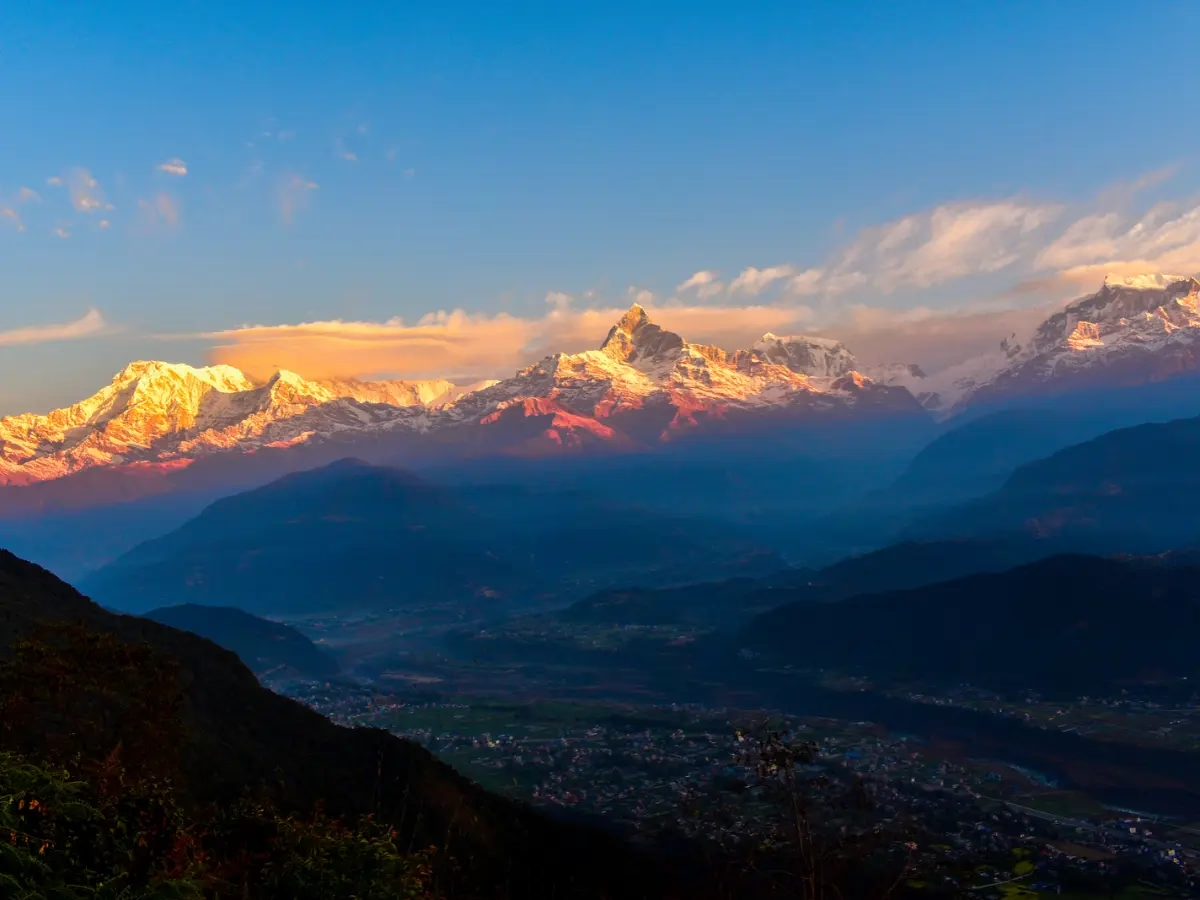
Sarangkot is one of the best-known viewpoints around Pokhara, offering a broad view of the valley and the surrounding Himalayan ranges. On a clear morning, the first sunlight gradually illuminates the mountain peaks, creating a memorable start to the day.
The early departure is worthwhile for travellers who enjoy photography, peaceful mountain scenery, or simply watching the landscape wake up. Sarangkot is also associated with paragliding, making it possible to combine a sunrise visit with an adventure activity later in the day.
Highlights of Sarangkot:
Sunrise views over the Annapurna region on clear mornings.
Panoramic views of Pokhara Valley and Phewa Lake.
Photography opportunities in changing morning light.
Access to paragliding launch areas and other outdoor experiences.
Travel tip: Leave early enough to reach the viewpoint before sunrise. Cloud cover can hide the mountains, particularly during the monsoon, so keep your schedule flexible.
3. Experience Tandem Paragliding over Pokhara
For visitors seeking an activity beyond sightseeing, tandem paragliding offers a different perspective on Pokhara. Flights commonly launch from the Sarangkot area and provide aerial views of the valley, lakes, villages, and surrounding hills. On clear days, the Himalayas may form the backdrop.
You do not generally need previous paragliding experience for a tandem flight because you fly with a qualified pilot. However, the activity depends on weather conditions, operator procedures, and safety requirements.
Before booking, check the operator’s credentials, equipment condition, insurance arrangements, and cancellation policy. Follow the pilot’s instructions throughout the experience.
Best for: Adventure seekers, couples, photographers, and travellers looking for a memorable activity.
If you prefer to keep your feet on the ground, Pokhara also offers lakeside walks, viewpoints, and short hikes. More information about flying experiences is available through the Nepal Tourism Board's guide to paragliding and ultralight flights.

4. Explore Davis Falls and Gupteshwar Mahadev Cave
Davis Falls and Gupteshwar Mahadev Cave provide an opportunity to explore two contrasting natural attractions in the same part of Pokhara.
Davis Falls is known for water that disappears into an underground passage rather than continuing along an ordinary open stream. Its appearance changes with the season and water flow, with the monsoon often bringing stronger water movement.
Nearby, Gupteshwar Mahadev Cave is a limestone cave associated with Hindu worship. Inside, visitors can explore its underground passages and religious areas, subject to access and safety conditions. Parts of the cave can be damp or slippery, so appropriate footwear is important.
Things to know before visiting:
Allow time to explore both attractions without rushing.
Be cautious around wet surfaces and restricted areas.
Respect religious practices and signs inside the cave.
Check local access conditions after heavy rainfall.
These attractions are especially suitable for travellers who want to combine natural scenery with a glimpse of Pokhara’s religious traditions.
5. Visit the World Peace Pagoda
The World Peace Pagoda, also known as Shanti Stupa, stands on a hill overlooking Phewa Lake and the Pokhara Valley. Its peaceful setting makes it a good place to step away from the city’s activity and appreciate the surrounding landscape.
Visitors can reach the pagoda by a combination of road travel and walking, depending on their chosen route. Some travellers approach from the lakeside by boat and hike uphill, while others use road access where available.
The destination is not only about the viewpoint. Its quiet atmosphere encourages visitors to slow down, observe the surroundings, and appreciate the spiritual significance of the site.
What makes it worth visiting?
Wide views of Phewa Lake and the valley.
A peaceful setting for reflection and photography.
An opportunity to combine a short hike with sightseeing.
A different perspective on Pokhara’s landscape.
Dress respectfully, keep noise low, and follow any local guidance around the religious site.
6. Discover Begnas Lake and Rupa Lake
If you want to experience a quieter side of the Pokhara region, consider spending time at Begnas Lake or Rupa Lake. These lakes offer a slower atmosphere than the main Lakeside area, with surrounding hills, local settlements, and opportunities to observe everyday life away from the busiest tourist streets.
Begnas is a good choice for a relaxed outing involving boating, lakeside dining or simply enjoying the scenery. Rupa Lake can appeal to travellers interested in quieter landscapes and birdlife, although wildlife sightings vary by season and conditions.
Ideas for a lake excursion:
Spend a few hours by the water.
Enjoy local food at a lakeside establishment.
Take photographs of the hills and surrounding countryside.
Look for birds from a respectful distance.
Combine the visit with a scenic drive around the valley.
These lakes are ideal for travellers who prefer a less hurried day and want to see more than Pokhara’s central tourist area.
7. Explore Mahendra Cave and the Seti River Gorge
Pokhara’s natural landscape extends beneath the surface as well as across the valley. Mahendra Cave offers a look at an underground limestone formation, while the Seti River Gorge reveals how water has carved a deep channel through the surrounding landscape.
Inside Mahendra Cave, visitors can see rock formations and narrow passages. Conditions may be dark, damp, or uneven, so follow marked routes and local safety instructions.
The Seti River Gorge provides a contrasting experience. In certain parts of the city, the river flows through a deep, narrow gorge that is not always obvious from street level. Viewpoints and designated access areas allow visitors to appreciate this geological feature safely.
Travel advice: Choose authorised access points, avoid climbing onto unstable edges, and never enter restricted river areas. Conditions around rivers and caves can change, particularly after heavy rainfall.

8. Visit the International Mountain Museum
Pokhara is closely connected to Himalayan trekking, mountaineering, and mountain communities. The International Mountain Museum provides useful context for understanding these connections beyond the views seen from the city.
A museum visit can help travellers learn about Himalayan geography, mountaineering history, mountain cultures, and the lives of people who live in high-altitude regions. It is particularly worthwhile before or after a trek because it adds background to the landscapes and communities encountered along the way.
Why include it in your itinerary?
Learn about the Himalayas and mountain environments.
Explore mountaineering history and achievements.
Understand aspects of mountain communities and traditions.
Enjoy an indoor activity if the weather is unsuitable for outdoor plans.
Check current opening arrangements before travelling, as operating hours and visitor facilities can change.
9. Experience Pokhara’s Local Culture in the Old Bazaar
Pokhara’s Old Bazaar offers a different atmosphere from the modern cafés, hotels and shops around Lakeside. Traditional trading streets, local shops, historic architecture, and religious sites provide a window into the city’s older urban character.
Walk through the market at a relaxed pace and observe how local commerce continues alongside everyday community life. You can browse practical goods, look for traditional items, and explore the surrounding streets without treating the area simply as a photo stop.
The neighbourhood also reflects Pokhara’s diverse cultural influences. Gurung, Magar, Newar, and other communities contribute to the wider cultural identity of the region, though traditions and experiences vary between communities.
Ways to explore respectfully:
Visit local shops and support small businesses.
Ask permission before photographing people.
Dress appropriately when entering temples.
Avoid blocking narrow streets or market entrances.
Take time to understand the neighbourhood rather than rushing between landmarks.
For additional background on Pokhara’s landscape, heritage and attractions, consult the Nepal Tourism Board's Pokhara destination guide.
10. Visit Bindhyabasini Temple and Other Religious Sites
Pokhara’s cultural experiences are not limited to museums and traditional markets. Temples and other religious places remain part of everyday life, bringing together worship, festivals, and community gatherings.
Bindhyabasini Temple is an important Hindu shrine situated on elevated ground in the city. Visitors can observe its religious atmosphere and, when conditions are clear, enjoy views from the surrounding area.
Tal Barahi Temple on Phewa Lake and the World Peace Pagoda offer other opportunities to explore the religious diversity of the region. Each place has its own setting and traditions, so it is worth approaching them as active religious sites rather than simply tourist attractions.
Visitor etiquette:
Follow posted rules about footwear and entry.
Ask before photographing worshippers or ceremonies.
Keep conversations quiet in prayer areas.
Respect restricted sections and ongoing rituals.
If you visit during a local festival, expect that crowds, access, and opening arrangements may differ from normal days.
11. Try Local Nepali Food and Thakali Cuisine
Food is an important part of understanding a destination, and Pokhara offers opportunities to try familiar Nepali dishes alongside regional specialities and international cuisine.
Look for dal bhat, momo, thukpa, sel roti when available, and Thakali-style meals. Many restaurants around Lakeside cater to international travellers, while local neighbourhoods may offer a more everyday dining atmosphere.
Rather than choosing every meal based on the view, consider trying at least one restaurant that focuses on local cooking. Ask about ingredients, spice levels, and preparation if you have dietary requirements.
Food experiences to try:
Dal bhat: A traditional meal of rice, lentil soup, and accompanying dishes.
Momo: Dumplings served steamed or fried, often with a dipping sauce.
Thukpa: A noodle soup popular in Himalayan regions.
Thakali meal: A regional-style meal often served with rice, lentils, vegetables, and pickles.
Local tea and snacks: A simple way to pause during a day of sightseeing.
Respect local food customs and avoid wasting food. If you have allergies, explain them clearly because ingredients and preparation methods can vary between restaurants.
12. Take a Short Hike or Plan an Annapurna Trek
Pokhara is an important gateway to trekking routes in the Annapurna region. Not every visitor needs to undertake a multi-day trek, however. Short hikes around the valley can provide rewarding views and a taste of the region’s walking trails.
Depending on your fitness, available time, and the route chosen, you can explore nearby hills, walk to viewpoints, or arrange a longer guided hike. Travellers with more time may use Pokhara as a base before setting out on routes such as the Ghorepani–Poon Hill trek or Mardi Himal trek.
Before choosing a route, consider elevation gain, trail conditions, weather, available daylight and your own experience. For multi-day treks, check current permit and guide requirements, and arrange appropriate equipment and insurance.
Choose your walking experience:
A short viewpoint walk: Suitable for travellers with limited time.
A half-day hike: A way to explore the hills and surrounding settlements.
A multi-day trek: Best for visitors who want a deeper experience of mountain landscapes and village life.
The right route depends on your schedule and ability, not simply the distance shown on a map.

13. Try Other Adventure Activities around Pokhara
Paragliding is not the only way to add excitement to your trip. Pokhara and its surrounding areas offer several other activities, though their location, season, duration, and availability differ.
Possible options include:
Ziplining: A high-speed ride above a valley or hillside, depending on the operator and route.
Ultralight flights: Scenic flights that offer an aerial view of the lakes, valley, and mountains when weather permits.
Kayaking: A water-based activity that allows you to explore parts of Phewa Lake.
Mountain biking: A way to explore selected roads, trails, and countryside routes.
Rafting or canyoning: Activities available through operators in suitable locations around the region.
Bungee jumping or giant swings: Options for travellers seeking a more intense adrenaline experience, subject to location and operating arrangements.
Before booking, check exactly where an activity takes place. Some experiences advertised as Pokhara activities may require travel outside the central city. Confirm transport, equipment, minimum age or health restrictions, insurance, and cancellation terms.
For a broader overview of available activities and local tourism planning, see the official Pokhara Tourism website.
14. Enjoy Lakeside after Sunset
After a full day of sightseeing, return to Lakeside for a relaxed evening. The area offers restaurants, cafés, souvenir shops, and places to sit near the water. Depending on your preferences, you can enjoy a quiet dinner, browse local products, or take a gentle walk along the waterfront.
Lakeside is also a practical base for many visitors because it offers a range of accommodation and dining choices. However, the busiest streets can be lively, so travellers seeking a quieter stay may prefer accommodation away from nightlife areas.
Things to do in the evening:
Enjoy dinner featuring Nepali or international dishes.
Browse locally made crafts and souvenirs.
Relax at a café.
Take a walk through well-lit public areas.
Plan the next day's activities with local weather and transport conditions in mind.
If you purchase souvenirs, ask about the origin of products and choose items that do not involve wildlife or protected natural materials.
15. Explore Pokhara’s Surrounding Countryside
If you have extra time, look beyond the best-known city attractions. The surrounding valley includes rural settlements, terraced fields, hills, and smaller lakes. A day excursion can offer a better understanding of how the region’s natural environment connects with agriculture and local life.
You might choose a scenic drive, a guided countryside walk, or a visit to a quieter lakeside area. Keep the itinerary flexible, as travel times can be affected by road conditions, weather, and local traffic.
For travellers who have already visited the main sights, these slower experiences can provide a useful balance to adventure activities and busy tourist areas.
Best Time to Visit Pokhara
Pokhara can be visited throughout the year, but the experience changes with the seasons. Weather affects mountain visibility, walking conditions, and whether adventure activities can operate.
Season | What to expect | Best suited for |
Spring (March–May) | Warmer days, greener landscapes and generally favourable conditions for outdoor plans, though haze or cloud can affect views | Hiking, sightseeing and adventure activities |
Autumn (September–November) | Often clearer mountain views and comfortable conditions, although weather can still vary | Mountain photography, trekking and sightseeing |
Winter (December–February) | Cooler mornings and evenings, with clear days possible | City sightseeing, lake visits and relaxed trips |
Monsoon (June–August) | Frequent rain, lush scenery, possible leeches on trails and reduced mountain visibility | Flexible itineraries and travellers comfortable with changing conditions |
Autumn and spring are popular choices for travellers hoping to combine mountain views with outdoor activities. Nevertheless, no season guarantees clear skies. Check the forecast before booking activities that depend on visibility or safe operating conditions.
How Many Days Do You Need in Pokhara?
The ideal length of stay depends on whether you want a quick city break, a mix of adventure and culture, or a base for trekking.
One day in Pokhara
If you have only one day, focus on a few attractions rather than attempting to cover the entire city.
Start with sunrise at Sarangkot if weather and transport allow.
Visit Phewa Lake and Tal Barahi Temple.
Explore Davis Falls and Gupteshwar Mahadev Cave.
Finish with dinner around Lakeside.
This is a busy itinerary, so adjust it based on travel time and the opening arrangements of individual attractions.
Two days in Pokhara
Two days provide a more balanced introduction.
Day 1: Visit Sarangkot, enjoy a boat ride on Phewa Lake, explore Tal Barahi Temple, and spend the evening in Lakeside.
Day 2: Visit Davis Falls and Gupteshwar Mahadev Cave, explore the International Mountain Museum or Old Bazaar, and finish with a cultural or food experience.
You can replace a sightseeing stop with paragliding or another adventure activity if that is a priority.
Three days in Pokhara
Three days allow you to explore at a slower pace.
Day 1: Sarangkot sunrise, Phewa Lake and Lakeside.
Day 2: Davis Falls, Gupteshwar Mahadev Cave, the International Mountain Museum and Old Bazaar.
Day 3: Begnas Lake or Rupa Lake, a short hike, or a pre-booked adventure activity.
If you are planning a multi-day trek in the Annapurna region, allow additional time rather than squeezing the trek into this city itinerary.
Practical Travel Tips for Visiting Pokhara
A little preparation helps you enjoy Pokhara without rushing or overspending.
Getting there: You can travel to Pokhara by road or take a flight from Kathmandu. Road journeys can be scenic but are affected by traffic, roadwork and weather, so leave a suitable time buffer.
Getting around: Taxis, local transport, private vehicles, bicycles and walking can all be useful, depending on distance and your itinerary. Agree on fares or confirm the pricing method before starting a journey.
Accommodation: Options range from budget guesthouses to mid-range hotels and higher-end properties. Lakeside is convenient for dining and activities, while quieter areas may suit travellers who prefer less nightlife.
Budget: Costs vary by accommodation, transport, meals and activities. Paragliding, ziplining, ultralight flights and guided excursions can increase the overall budget. Confirm current prices directly with providers rather than relying on old online rates.
Clothing: Bring comfortable walking shoes, layers for cool mornings and evenings, sun protection, and rain protection when travelling during wet weather.
Safety: Use reputable operators for adventure activities, follow guides' instructions and avoid entering caves, rivers or restricted viewpoints without authorisation.
Responsible tourism: Carry reusable water bottles where practical, avoid littering, respect religious sites and support local businesses that treat workers and the environment responsibly.
Conclusion
The best things to do in Pokhara go beyond visiting famous landmarks. The city offers the chance to move between calm lakes, dramatic natural formations, Himalayan viewpoints, local markets, religious sites, and outdoor adventures all within one trip.
For a first visit, combine Phewa Lake, Sarangkot, one or two natural attractions, and an evening in Lakeside. Add paragliding or another adventure activity if you want more excitement, or choose a quieter lake, museum, or countryside excursion if you prefer a slower journey.
Most importantly, give yourself time to enjoy Pokhara rather than trying to see everything at once. With a flexible itinerary and a balance of adventure, nature, and culture, you can experience a more meaningful side of this remarkable Nepalese destination.
Nepal Recreation
Travel specialist sharing firsthand stories, comprehensive trekking guides, and expert advice to help you plan your Himalayan adventures.